

Falling is a serious subject for my senior personal training clients. According to the CDC, falls are the leading cause of injury for adults 65 years and older, and over 14 million older adults experience falls every year.
When I work with a client in their 50’s, 60’s, 70’s or beyond, I always incorporate dynamic balance training into their routine. These types of exercises enhance your body’s ability to maintain equilibrium during movement. Since falls rarely happen when we’re standing completely still, it’s important to practice your balance while shifting your body weight or moving through different planes of motion.
The following are my 3 favorite dynamic balance exercises to strengthen your stabilizing muscle groups and sharpen your proprioception (or the sense of your body’s position in space). You’ll only need a step to get started, but as you get stronger, adding tools like dumbbells can make the exercises more challenging.
Latest Videos FromTom’s Guide
How to do the 3 dynamic balance exercises
Speak with your doctor before starting any new exercise or workout program. If you’re a beginner, consider working with a certified personal trainer or physical therapist. They can help you learn proper form, provide corrections or modifications, and progress the exercises appropriately once you’re ready.
You’ll just need a raised platform for these exercises. A stair in your house will do, but you can also use an aerobic stepper if preferred.
You may like
Perform one set of 8-10 reps for each exercise, 2-3 times per week. As your balance and strength improve, increase to 4-5 times per week. You can also add additional sets of 8-10 reps.
These dynamic balance exercises can be done on their own or as a warm-up for other activities. Here’s how to do them:
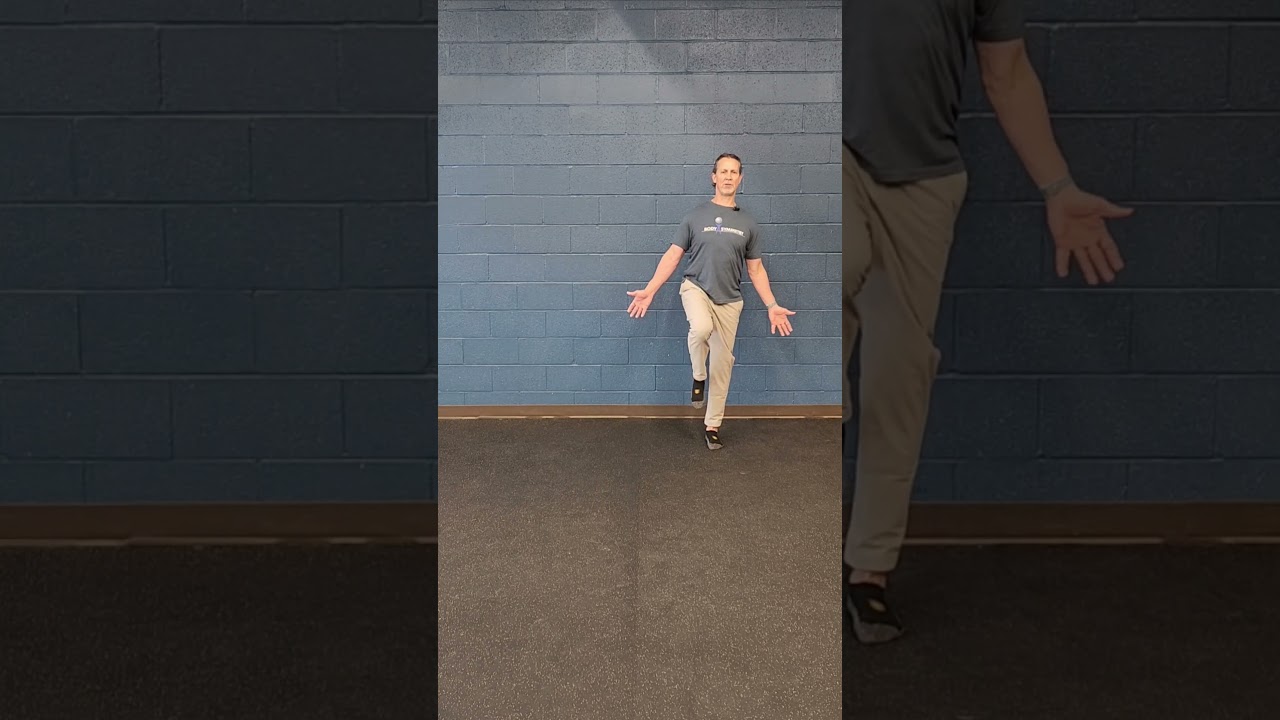
1. MarchesStand tall with your feet hip-width apart.Engage your core.Lift your left knee to a 90-degree angle.Pause briefly.Lower your left foot to the ground.Lift your right knee to a 90-degree angle.Pause briefly.Lower your right foot to the ground.Continue alternating between your two sides for 8-10 reps per leg.If needed, hold on to a wall or chair for additional support.2. Step up to balanceStand tall with your feet hip-width apart.Engage your core.Place your left foot on the platform.Press your body weight into your left foot and step up onto the platform.Bring your right knee in front of you to a 90-degree angle.Pause briefly.Lower your right foot back onto the ground.Lift your left foot off the step and back onto the ground.Continue for 8-10 reps, then repeat on the other side.If needed, hold onto the wall or a chair for additional support.3. Lateral step to balance
Lateral Step Into Single Leg Balance – YouTube
Watch On
Stand tall with your feet hip-width apart.Engage your core.Step your left foot to your left side.Lift your right knee to a 90-degree angle.Pause briefly.Step your right foot to your right side.Lift your left knee to a 90-degree angle.Pause briefly.Continue alternating between your left and right sides for 8-10 reps per side.If needed, hold onto a wall or chair for additional support.Benefits of the 3 dynamic balance exercises
Traditional exercises like balancing on one foot can definitely improve your overall sense of equilibrium. But the majority of serious falls happen when we’re moving and changing direction, so we must practice balancing during movement.
The exercises in this routine all train your body to stabilize while your center of gravity changes. Both the marches and the lateral step move side to side, which mimics everyday movement like stepping around an object or avoiding a collision with something coming towards you.
The step up to balance moves up and down, mimicking the everyday movement of climbing stairs or getting up from a seated position.
By sharpening your sense of balance in these planes of motion, senior adults can move with more confidence and independence.

Follow Tom’s Guide on Google News and add us as a preferred source to get our up-to-date news, analysis, and reviews in your feeds. Alternatively, you can read our content on the Tom’s Guide app available now for iOS and Android.