
“We attempted to cut and unwind some of the line, but quickly realised helping this bird needed more specialist care, so one of our rangers dropped all of her work for the day to race the bird to specialist vets at Wildbase in Palmerston North.”
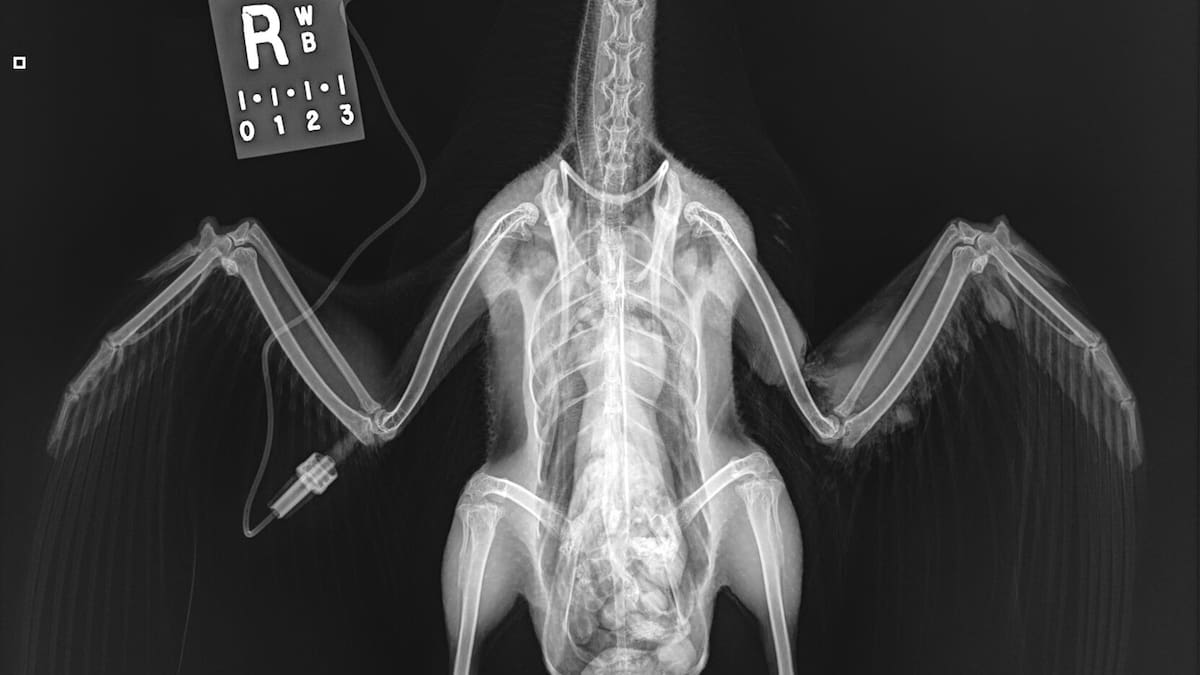
The injured whio on a x-ray plate.
A detailed examination by the vets showed severe damage from a loss of blood flow to the left wing due to the wrapped fishing line.
Vets determined the wing would need to be amputated.
Whio cannot survive in the wild with only one wing, so given the extent of the injuries, the decision was made to euthanise it.
DoC Taupō Fishery’s James Barnett said it was upsetting to see such an icon of New Zealand’s waterways suffer.
“We don’t know exactly what happened here, but as anglers we can help prevent accidents like this.
“Prevention is better than the cure – and one way is to be aware of your surroundings and avoid casting near whio.
“Another real biggie, and something we often deal with as rangers, is discarded fishing line and other materials.”
The fishhook in the whio’s foot.
Barnett said anglers should never leave old line or flies around, which could entangle native birds.
Whio are a threatened river-specialist duck found only in New Zealand, with fewer than 3000 remaining, the DoC statement said.
Whio and trout both thrive in clean, clear, cold and fast-flowing waterways.
Barnett said sharing rivers with native wildlife was a privilege.
“Protecting whio is part of protecting the environment that we love to fish in.”
Nowak said despite the sad outcome, staff were grateful to the angler who noticed the bird was in trouble.
“If you ever come across a native bird like whio in distress while out naturing, please call 0800 DOC HOT (0800 362 468), and we can advise on the best thing to do in the situation that bird is in.”