
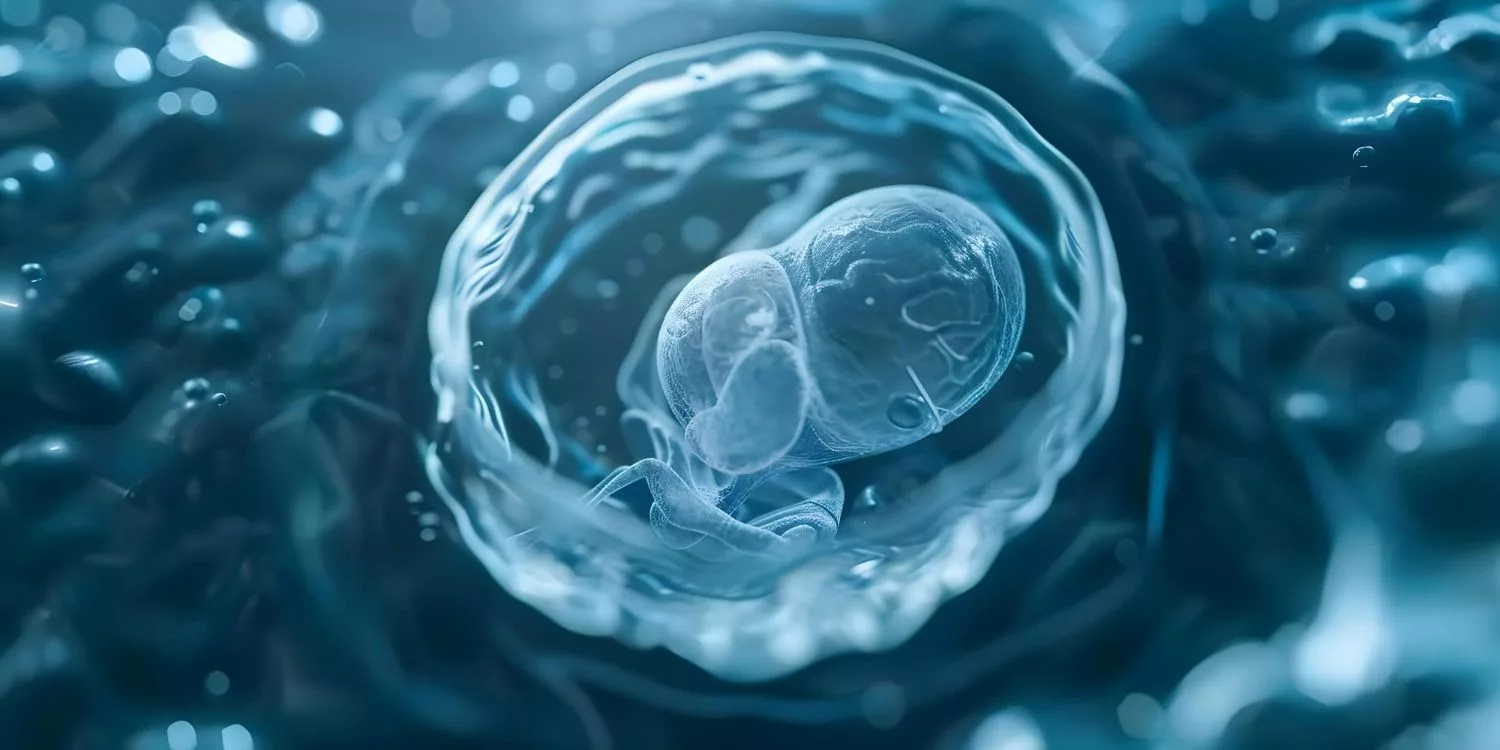
For decades, scientists have dreamed of peering into the earliest days of human life, those fragile moments when a fertilized egg becomes a tiny ball of cells, and the foundations of pregnancy are laid. But studying real human embryos is fraught with ethical and technical challenges.
Enter blastoids: stem-cell-generated structures that have several of the characteristics of embryos– an exciting new development. While these blastoids are not embryos (and cannot become them), they do provide us with a glimpse of what may be the least understood aspect of biology.
Yet here’s the million-dollar question: if something looks like an embryo, does it act like one?
Researchers at the University of Sydney have developed a powerful computational framework to test just that. Their study, published in Cell Systems, systematically compared four leading blastoid-generation methods against a detailed reference map of natural human embryo development.
The map itself is a feat: the team harmonized more than 14,000 single-cell transcriptomes, snapshots of RNA activity inside cells, from real embryos spanning the critical days before and after implantation. This created a kind of “atlas” of how cells normally differentiate and organize themselves.
The results of the test against the atlas showed some models did a good job capturing key aspects of early embryonic development; they produced the three main cell types of a blastocyst. Other models did poorly, misidentifying some cell types or creating cell types that had no representation within any known embryonic stage. There were no models that accurately represented a natural human embryo.
Embryo models are not merely academic anomalies. These models may assist in resolving many of the unknown factors associated with fertility, miscarriages, and successful pregnancies. However, until we can evaluate the reliability of these models, there is the potential that researchers will make inaccurate conclusions.
“Human embryo models have enormous potential for studying the earliest days of an embryo’s development, but there has been no consistent way to assess how accurately these reflect real human development,” said Associate Professor Pengyi Yang, lead author.
“Our framework allows researchers to compare these models against a detailed biological reference and determine which cell types and developmental processes are faithfully reproduced, and which are not.”
In other words, this isn’t just about building better models; it’s about knowing what they can reliably tell us.
The findings highlight both sides of the story. On the one hand, some blastoids do a decent job of mimicking early development, offering a valuable tool for research. On the other, they are not biologically equivalent to real embryos.
“The encouraging finding is that some models capture important aspects of early embryonic development relatively well, although each model has limitations,” Yang explained.
“But our study also shows that current models are not biologically equivalent to real human embryos, and researchers need to be careful about the conclusions they draw from them.”
The Sydney group believes that by developing a uniform measurement system, they will be able to make rapid strides forward. All of the groups’ data and software are accessible to everyone; therefore, researchers around the globe may use the same measurements to evaluate other models.
“If we’re going to use these systems to answer important biological questions, we first need to know what they can reliably tell us,” Yang said.
“Our work provides a roadmap for improving embryo models and ensuring scientific claims remain grounded in what the models can actually support.”
Why does this issue have significance for society? The science behind embryonic modeling is related to issues that affect millions of people: treatments for infertility, complications during pregnancy, and the ethical use of reproductive science. Through its explanation of the limitations and possibilities of embryonic models, the study ensures that future advancements are based upon a firm foundation.
The first thing you will notice is that there is another reminder of how much appearance can be misleading when we are dealing with science. When viewed through a microscope, a blastoid appears as if it is an embryo. However, only when you examine the molecular makeup of the blastoid, can you determine if it is close enough to the actual thing. This new method has given researchers a better understanding of the earliest signs of life.
Journal Reference:
Siqu Long, Hani Jieun Kim, Nazmus Salehin et al. Systematic transcriptomic evaluation of blastoid models of early human development. Cell Systems. DOI: 10.1016/j.cels.2026.101738