
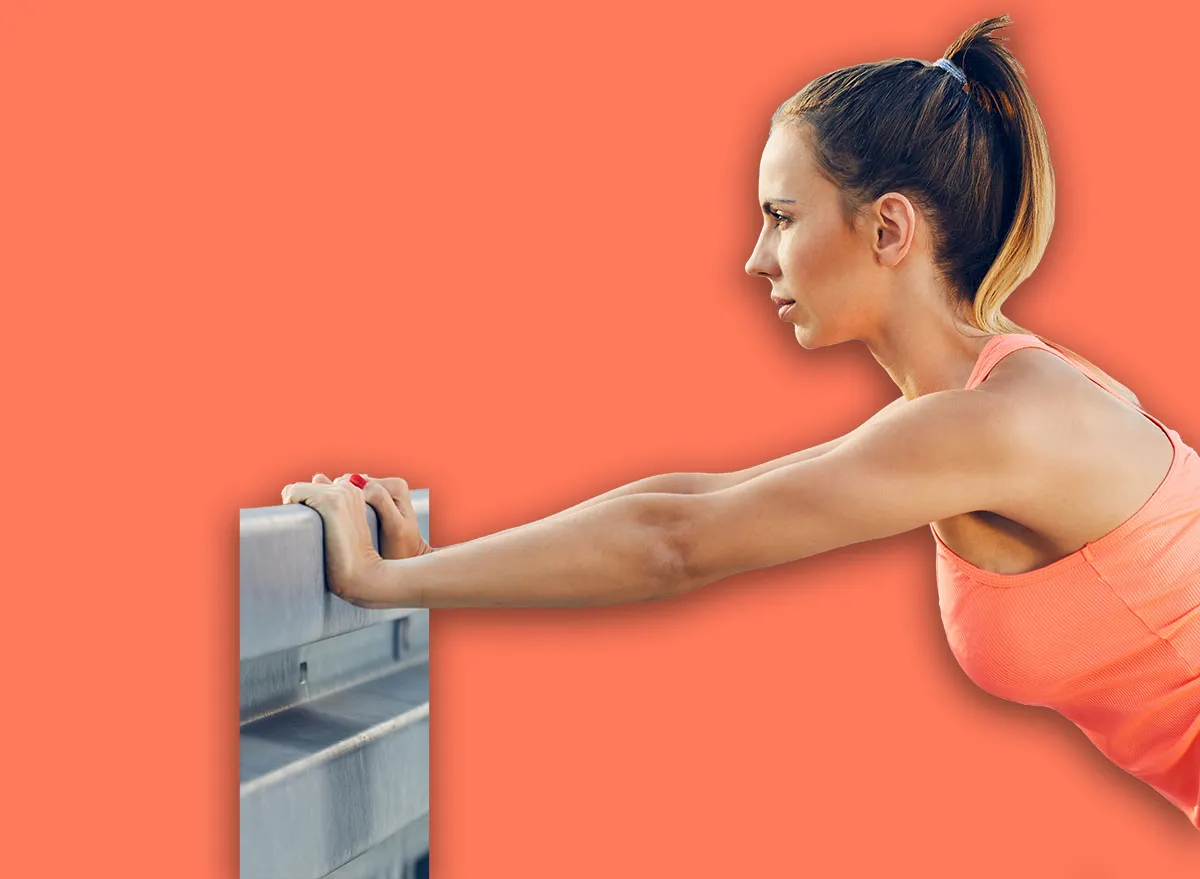
Building a strong, defined core is essential for more than aesthetics.
Most people might describe a six-pack as an exceptionally toned set of abs. The muscle responsible for this impressive aesthetic is the rectus abdominis, a long muscle situated along the front of your abdomen. Although everyone has this muscle, developing strong, sculpted abs requires the right diet and workout regimen.
Many of us would love to have a six-pack, but wonder how to even get started. We spoke with Layne Nordquist, SVP of Fitness at VASA Fitness, who has 15+ years of training experience and 10 fitness certifications, including NASM, FMS and CFSC, and learned four wall exercises that can help build a six-pack after 65.
Before getting started, it’s important to address the importance of a strong core. After all, there are many other benefits beyond aesthetics. According to Nordquist, the core serves as the foundation for essentially every movement you make, including walking, getting up from a seated position, carrying heavy grocery bags, climbing stairs, staying balances, and lifting something off a counter.
“A strong core can support better posture, balance, stability and overall movement quality. Those qualities become increasingly important as we age because maintaining strength and physical function helps us continue doing the activities we enjoy and living independently,” Nordquist tells us.
You don’t need to head to the weight room in order to make progress in your core strength. In fact, all you really need is a sturdy wall to get started right at home.
“One of the biggest advantages of wall exercises is accessibility. For some older adults, the hardest part of a floor exercise isn’t necessarily the exercise itself—it’s safely getting down to the floor and back up again,” Nordquist explains. “A wall provides an external point of support, which can reduce balance demands and allow someone to focus on creating tension, controlling their movement and using proper technique. Many wall exercises are also very easy to progress or regress. Changing your foot position, body angle, range of motion, resistance or tempo can significantly change the difficulty.”
A wall can be an excellent training tool—not simply an “easier” way to work out. Below are four wall exercises to add to your routine.
Wall Plank
“The wall plank is one of my favorite starting points because it trains the core to resist extension and stabilize the spine without requiring someone to get down on the floor. As strength improves, you can make it more challenging simply by moving your feet farther away from the wall. You can also easily progress this move to the floor as you gain strength and need increased resistance,” Nordquist says.
Begin by standing tall facing a wall, about arm’s length away from the surface.
Place your palms flat against the wall at shoulder level, shoulder-distance apart.
Walk your feet back until your body is straight from head to heels.
Brace your core and squeeze your glutes.
Hold the plank for 20 to 30 seconds.
Wall Mountain Climbers
“This adds movement to the wall plank and challenges the abdominals to stabilize the pelvis and spine while the legs are moving. It also incorporates hip flexion, coordination and balance, making it a very functional core exercise,” Nordquist explains.
Begin by standing tall, roughly a foot away from a wall.
Place your hands on the surface at shoulder height.
Activate your core.
Drive one knee up to your chest and hold for a moment before lowering.
Continue to alternate sides.
Wall Dead Bug
6254a4d1642c605c54bf1cab17d50f1e
“I like this exercise because it teaches one of the most important functions of the core: maintaining trunk and pelvic control while the arms and legs move independently. It can be a great standing alternative to the traditional dead bug performed on the floor,” Nordquist points out.
Begin standing tall with your back pressed flat against the wall.
Extend your arms ahead of you.
Brace your core.
From this position, alternate lifting one knee at a time and lowering the opposite arm toward the wall.
Wall Pallof Press
“This trains anti-rotation, which is incredibly important for real-life activities. Your core isn’t just designed to create movement; it’s also responsible for resisting unwanted movement and keeping your spine and pelvis stable while you walk, lift, carry and reach,” Nordquist explains.
Begin standing tall beside a wall with a resistance band securely anchored to it at chest level.
Hold the band at your chest.
Brace your core and slowly press your hands straight out ahead of you without allowing your torso to rotate toward the anchor point.
Repeat on the other side.
Alexa Mellardo
Alexa is a freelance writer, editor, and content strategist based in Greenwich, CT. She has 11+ years of experience covering wellness, fitness, food, travel, lifestyle, and home. Read more about Alexa