
The firm is evaluating domain-specific AI tools for key tasks.
“A big one for us is Relativity for e-discovery, then there are others like Luminance for due diligence tasks. These have pay-per-transaction models so they get charged directly to clients,” McLaren says.
“We rolled out Microsoft Copilot about six months ago for what we call general assistance. The value of Copilot is that we are a Microsoft ship and it connects to our set-up. It gets used for help drafting emails and searching for certain correspondence or files. Its integration is critical.”
Russell McVeagh is trialling legal-specific general assistance tools including Harvey, a US-based tool, Legora and Thomson Reuters Co-Counsel.
McLaren says it is important to engage with clients and get their consent when using AI tools: “We need good governance and training, because it’s a major investment, there’s huge potential but risk as well. We have been taking our time to make sure we get this implementation and launch right.”
Russell McVeagh’s cautious approach stems from understanding the reputational stakes. McLaren points to the recent Deloitte Australia incident, where a government report was riddled with AI hallucinations and errors.
“We can’t afford that. Our reputation is number one,” he says. Rather than simply providing user manuals, Russell McVeagh is educating staff on how generative AI actually works, teaching staff about what creates hallucinations, and how to craft effective prompts and proper verification processes.
There’s huge potential but risk as well. We have been taking our time to make sure we get this implementation and launch right.
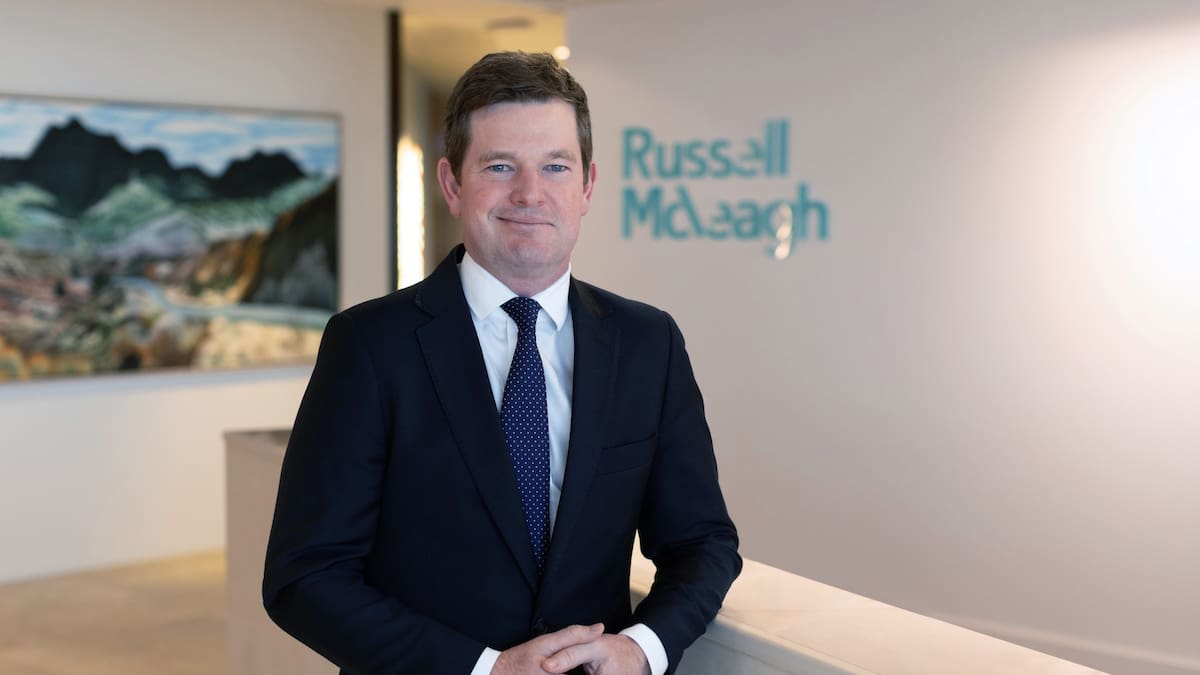
Ben McLaren, Russell McVeagh CEO
“It’s not just, ‘Here’s the tool, this is the manual.’ It’s educating our people on how the technology works so they understand what a hallucination is and what they can do to minimise that risk.” A pilot group representing different practice groups is testing tools before wider rollout, with an announcement expected soon on their primary legal-specific AI platform.
Russell McVeagh’s focus on reputation protection extends to other aspects of risk management. McLaren says the risk and compliance landscape has become significantly more complex over the 15 years he has worked in the legal sector. The firm recently created its first general counsel-style role to address these issues.
He says: “We needed someone senior who focuses on risk day in, day out. Partners naturally focus on their clients’ issues and the firm’s own risk becomes a secondary priority.”
McLaren identifies cybersecurity as a significant risk. Putting the right technology in place is only part of the solution. “Cybersecurity awareness among our people is critical. We need our people to spot phishing or understand the consequences of clicking the wrong link.”
The firm runs monthly cybersecurity training and has made completion mandatory. Staff must be up-to-date to be eligible for pay rises and bonuses.
McLaren points to a large law firm hack in Australia as a cautionary tale. “The CEO said it was devastating in terms of disruption and rebuilding client trust. We can’t reduce risk to zero, but we can minimise it.”
Russell McVeagh recently established a presence in Queenstown, now an office of 15 people. The expansion came through conversations with founding partner Tony Sycamore and reflects the Central Lakes region’s strong economic performance.
“The South Island is performing better economically than the North and the Central Lakes region is one of the best performing in the country,” McLaren says.
The office targets a different client segment to Russell McVeagh’s traditional focus on large corporates and government. “There’s considerable wealth down there, it’s not just tourism anymore.”
He says the firm smashed its first-year targets even after setting lofty goals and recently added partner Sam Nelson, strengthening its Queenstown capabilities.
McLaren officially started as CEO on December 1 after six years as CFO and COO working with predecessor Jo Avenell.
Russell McVeagh operates differently from many law firms that tend to be run by partners, with a team of professionals providing management expertise. Specialist CEOs are relatively rare.
He says: “I’ve got all my shareholders in the business with me day-to-day. There’s a level of scrutiny that can be challenging, but they’re involved in decision-making.”
Big decisions like long-term leases or five-year strategies require partnership votes. “It’s a consultative model where we do the background work, then sit down with partners and managers together on the big ones.”
McLaren is building on the cultural transformation led by Avenell following the Dame Margaret Bazley report seven years ago. The firm has embedded respect as a core value and recently set its 2030 strategy with the partnership.
“We are doubling down on diversity and inclusion goals. We are under-represented in terms of women in the partnership and want to get that to 40%. Everyone’s aligned that this is really important.”
He says the firm has built a strong pipeline of women ready for partnership over recent years.
Russell McVeagh has also implemented policies focused on sustainable work-life balance. Juniors who work beyond certain hours in a fortnight must take immediate time off. “It’s about understanding the ebb and flow of private practice while making sure our people are looked after and well supported.”
Under Avenell’s leadership, the firm has strengthened commercially despite challenging conditions. McLaren says Russell McVeagh’s litigation practice has performed strongly in major class actions, while the Natural Hazards Commission (formerly the Earthquake Commission) remains a significant client.
Private equity work has been quieter recently, but McLaren expects an uptick. “When the economy is struggling, private equity tends to put the cue in the rack and focus on managing their portfolio businesses rather than new investments.”
The firm completed major transactions including the sale of Fonterra’s retail businesses. It has added partners in construction and banking, with new recruits bringing expertise in major infrastructure projects. This positions Russell McVeagh for what McLaren sees as a $200 billion infrastructure pipeline that will require foreign investment and public-private partnerships.
Russell McVeagh is an advertising sponsor of the Herald’s Dynamic Business report