
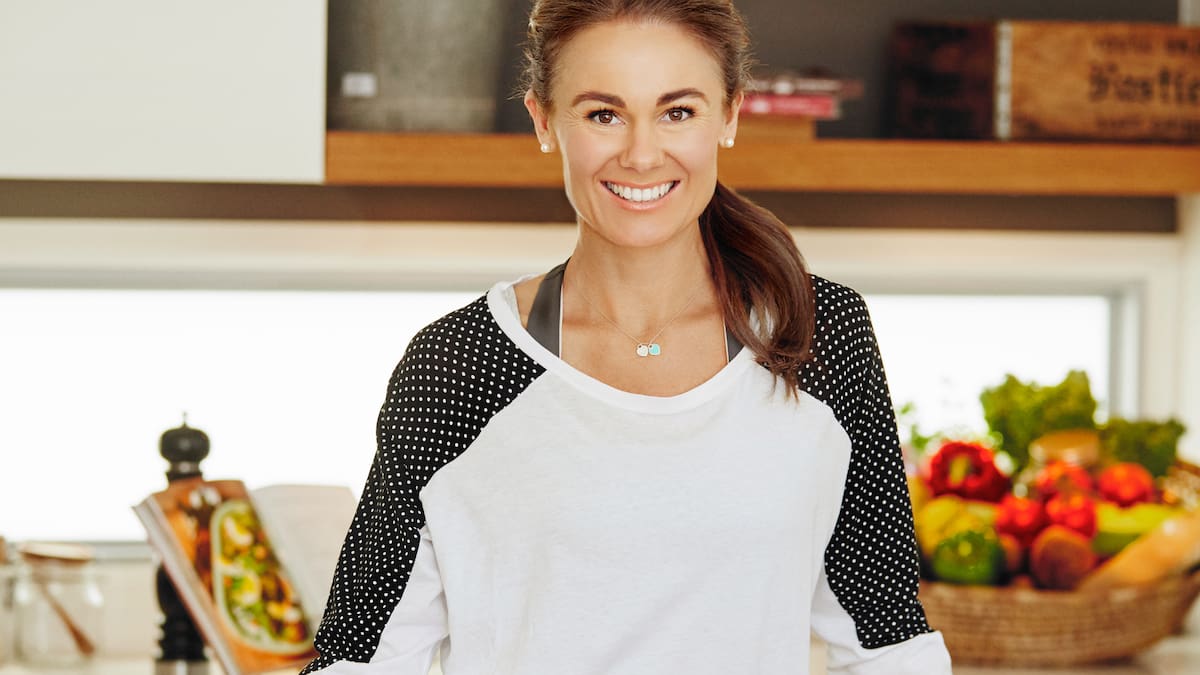
‘Whenever I’m doing my food shop’, writes Dr Libby, ‘I’m reminded that it’s the small, consistent choices that end up having the greatest impact on our health.’
Donald Glover was recently quoted as saying “everybody has two lives and the second life starts when you realise you have one”. His
comment arose during an interview where he shared he’d survived a stroke, and it led me to reflect on my own appreciation for life. Thirty years ago, there were concerns I had a serious health condition so when I learnt back then – after months of investigations – that I didn’t, the relief was profound, and I’ve lived ever since far more connected to how precious life is. It also cemented health as my number one value and as a result, that experience has had a lasting impact on my food choices.
So when I was asked to write about my weekly shop, initially I hesitated. I typically don’t write about what I do, as I worry that, given my job, people perceive I’m suggesting we all follow suit – yet I’m not. There’s no one way for us all to eat. A common thread, however, is that we are better off eating food rather than junk.
Food and nutrition science are also topics I’ve had the time and privilege to study, so I share these snapshots into my buying habits from a place of awareness of and gratitude for not only my education but also my access to fresh produce and being able to afford it. Yet even when I couldn’t afford it and lived week to week, I prioritised eating nutritiously, choosing not to buy any new items for an extended period of time, because food quality mattered so much to me.
Whenever I’m doing my food shop, I’m reminded that it’s the small, consistent choices – the ones we make without much fanfare – that end up having the greatest impact on our health. What goes into our basket becomes what we put into our body and those elements then literally create the structure of our body and all of its cells and tissues, either supporting them to work efficiently – or disrupting that – as a result of what we consistently do. Meal after meal, that flow-on effect is something worth pondering for us all.
Food messaging can feel so noisy these days. Trends come and go, often cycling back every couple of decades, each promising to be the “answer”. One of the simplest ways I cut through all of that is to come back to fresh produce. There’s no marketing spin on a bunch of spinach. No bright packaging on a head of broccoli. Just real, whole foods that our body knows exactly what to do with.
I’m conscious about packaging – avoiding produce that’s been wrapped in plastic, both out of concern for our precious environment and also to minimise exposure to the microplastics that risk infiltrating the food and hence our body. For this reason, I tend to gravitate to my local organic grocers or farmers’ markets. I’m passionate about buying direct from the growers where possible and farmers markets are a great way of being able to trace where your food is coming from and how it’s grown.
Seasonal food usually means it doesn’t come with a huge transport footprint. Photo / Getty Images
The fruits and vegetables I buy are usually in season, as local as possible, spray free and/or organic. I want to avoid pesticide and herbicide sprays on my food, which need to be detoxified (their structure changed) before they can be eliminated from our bodies. Biodynamic and regenerative farming practices are not only better for the nutritional profile of the foods but are also kinder to our planet. Seasonal food usually means it’s been grown locally and doesn’t come with a huge transport footprint. I have veggie gardens in my backyard and grow as much of my own produce as I can. Dear friends own and run a grocer nearby to where I live and any produce I grow that we can’t eat in time, is given to them to sell. The joy in sharing home-grown produce is right up there for me.
Animal products are another I won’t compromise on. Any meat, eggs and butter I buy are certified organic or from regenerative farms. I want to ensure that the animals were raised on the food that best suits them – grass versus grain fed meats, for example, have different nutritional profiles, with grass-fed being my choice. Organic also means the absence of antibiotics or other potentially problematic substances in the farming process – all of which are things I care about when it comes to my food. This is all purchased at my local organic butcher or at the farmers’ market.
Another thing you’ll notice about my groceries is the abundance of colour. Green, purple, red, orange, yellow – I aim for as much diversity as I can in my fruits and vegetables. The pigments in plants act as antioxidants in humans and we simply can’t get the phytonutrients our bodies rely on without this colour variety. Each shade offers something slightly different – one might support your liver’s detoxification pathways, another your immune system or your vision. When you fill your basket with a rainbow, you give your body the broad spectrum of nutrients it needs to function beautifully. It’s one of the simplest, most powerful ways to nourish yourself well.
If I buy packaged foods, they’re usually organic or, at the very least, made from whole, recognisable ingredients. Rice, buckwheat, gluten free bread, brown rice crackers and extra virgin olive oil tend to be staples in my pantry, while locally made bone broth and sauerkraut are features in the fridge. I’m vigilant about reading ingredient lists because manufacturers can change formulations without notice. If I see preservatives, additives, poor quality oils, numbers, flavours, fake sugars, colours or any ingredient I don’t recognise or understand, it simply doesn’t go in my basket. I want my food to be food – not a chemistry experiment.
If I’m hosting friends and chips and dip are going on the table, I’ll buy crisps made from three ingredients: potatoes, extra virgin olive oil and salt. The dip will usually be an organic hummus, without preservative or poor quality oils. No one attending will know – it all just tastes yum scrum as evidenced by the empty bowls. If I’m serving nachos, the packaged corn chips are made from organic corn, avocado oil and salt, and I can’t help but add more veges to the topping than you’d likely get with a takeaway version.
It can be helpful to think about eating in a flexitarian way. Photo / Getty Images
I don’t focus on these factors though when I’m eating outside my own kitchen. In a book I wrote almost 10 years ago now, I wrote about how helpful it can be to think about eating in a flexitarian way. This means you don’t go without less nourishing foods that you might love, you just don’t eat them every day. For example, there is a world of difference in our health if we eat hot chips five times a week every week, versus 10 times a year. It is what we habitually do that primarily fosters or diminishes our wellbeing, not what we occasionally do.
Some people do well with structured guidance when it comes to their food, and some encouragement to care more for their precious selves can foster beneficial change. While for others, particularly those with a tendency to – or who are at risk of – an eating disorder, rules or rigidity around food can stem from fear and it’s hard to be healthy when you are so frightened. With my choices, I seek to reflect my gratitude for life in them, which at times means taking deep care and other times, relaxing and enjoying whatever food might be being provided.
The rise of ultra-processed foods has meant that entire aisles in the supermarket no longer contain anything our grandparents would recognise as nourishment. Many of these products are engineered to be addictive, incredibly sweet or hyper-palatable, yet offer very little in the way of genuine nutrition. They can crowd out the foods that sustain us. So when I shop, the thought that quietly guides me is something along the lines of: Will this support my body, or will it ask more of it? That question alone helps me choose the simplest, most life-giving foods – the ones that leave me feeling energised long after the groceries are unpacked.
When I walk through the market, I’m not chasing trends or rules. I’m simply choosing what helps me feel clear, energised and well – the same things I want for you. Small choices, made consistently, create the biggest changes over time. So let your trolley reflect the kind of care you want to extend to yourself. Fill it with colour. Choose quality where you can. Read the labels. Favour foods that still resemble where they came from. And remember that every meal is another chance to nourish yourself. Every shop is an opportunity to bring home more of the goodness your body is quietly asking for. You don’t need perfection. Just presence, curiosity and kindness for the remarkable body you live in.
Dr Libby Weaver PhD is a nutritional biochemist, 13 times bestselling author and international keynote speaker. For more on supporting yourself through stressful periods visit Drlibby.com.