
When people ask me for exercise advice as a fitness writer and coach, my go-to line is: “Go for a walk, have an apple and lift something fairly heavy.”
Is this an oversimplification? Undoubtedly. But it highlights the fact that most health and fitness benefits stem from simple activities. The problem is, simple doesn’t sell, and in many cases, fitness has been overcomplicated for commercial gain. Fitness fads come and go, and through this, people are persuaded to buy all manner of expensive supplements, exercise machines and recovery tools, all while overlooking the power of a decent sleep, regular movement and a balanced diet.
This rings true among the many fitness experts I quizzed on exercising for better health in 2025. Whether I was interviewing sport scientists, researchers, coaches, athletes or otherwise, a selection of common denominators quickly arose that are almost universally recommended to help you look, feel and function better.
Below, I’ve structured their insights into a six-step plan designed to take someone from minimal movement to being a competent and confident exerciser. Through this process, myriad health benefits await, including improved heart health, stronger bones and joints, lower risk of many chronic diseases and increased functional capacity. In short: it is intended to help you live better for longer.
The exercises experts recommend for improving health and fitness
One of the biggest mistakes people make around the New Year is shooting too high with their fitness goals. The idea is admirable, but when you fall short of your lofty self-assigned targets – five gym trips per week, running 10km or losing a significant amount of weight in a few weeks, for example – your motivation inevitably wanes.
As a result, the second Friday in January has been dubbed “quitter’s day” as it is supposedly the moment when most people fall off the fitness wagon. The evidence behind this date is questionable, but the underlying idea remains relevant: most health goals fail.
In an attempt to prevent this, I have structured the tips below into six steps: establishing a foundation of movement, strength training, adding some intensity into your movement, moving in varied ways, exercise snacking and finally introducing some form of formal exercise. The steps are listed in order of importance, with step one representing the essential base of the exercise pyramid and step six being an optional but optimal inclusion for health.
Each step contains expert insights and rationale behind its inclusion and benefits, followed by a digestible prescription for you to try. You do not have to follow it word for word and do all six stages – rather, the prescriptions are there to provide you with more strings to your bow when squeezing movement into a busy lifestyle.
Read more: Four science-backed ways to make your daily walk even better for your health
open image in gallery
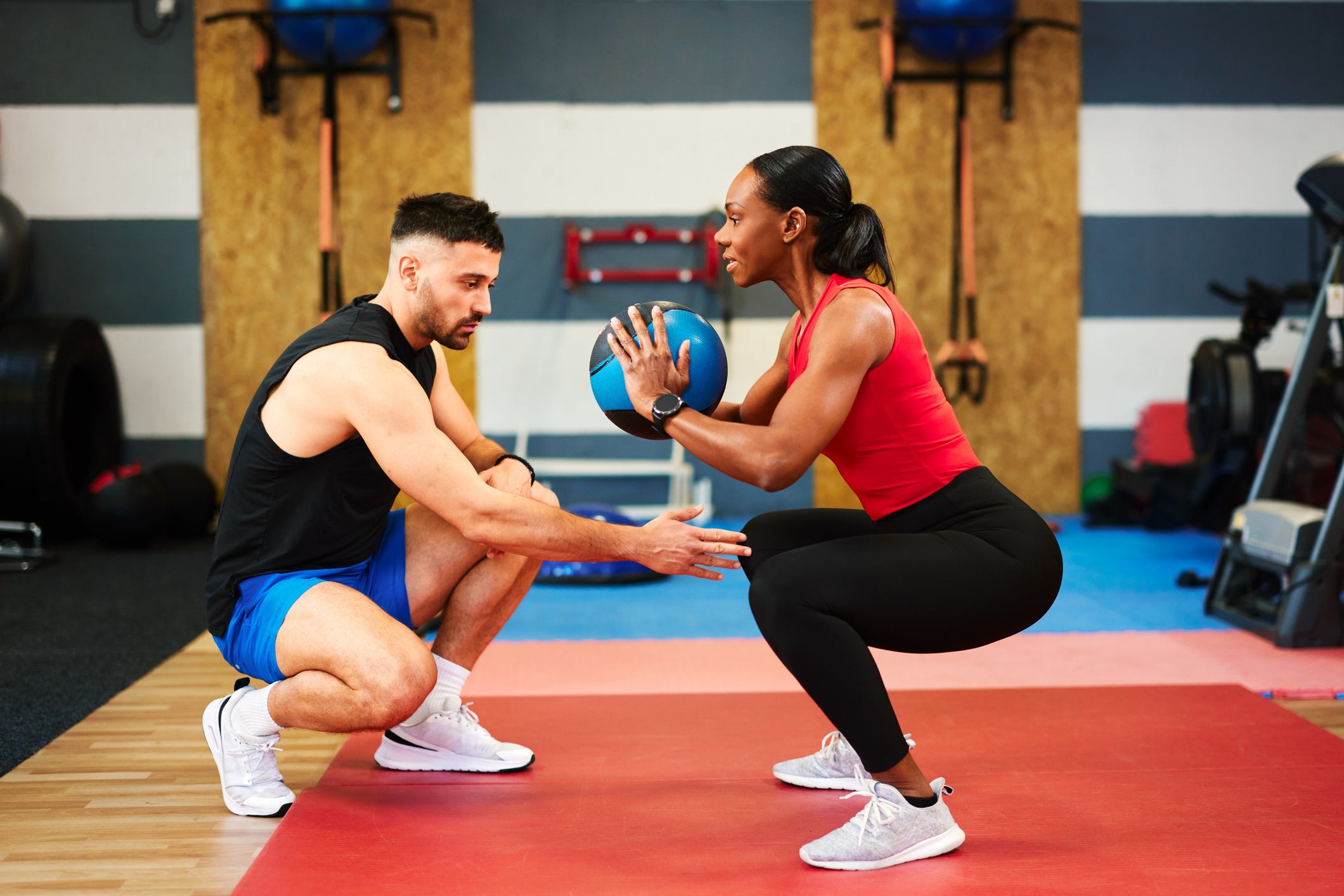
Regular movement and exercise are among the best things you can do for health and longevity (Getty/iStock)
Step one: Establish a foundation of movement through walking or other lifestyle activities
Consistent daily movement is different from structured exercise, requiring no specialist equipment and occurring organically during your day – for example, walking to the office or doing housework. It is also a non-negotiable component of good health.
This is why experienced trainers such as Perform365 founder Dan Lawrence and Well To Lead’s Ollie Thompson include daily step counts in their prescriptions to clients.
“NEAT stands for non-exercise activity thermogenesis – movement outside your structured training window,” says Lawrence. “It’s one of the easiest levers to pull for improving energy expenditure without adding stress from more intense exercise.
“It can account for a large portion of your daily calorie burn – often more than your actual workouts. People with higher NEAT tend to find fat loss easier and [weight] maintenance more sustainable, because they’re burning more energy through daily movement without needing extra training sessions.”
Thompson adds that breaking up long sedentary periods with regular movement can “support muscle and joint health by keeping your body engaged more consistently”.
Researchers I have spoken to are also behind the idea that incidental movement, and walking in particular, should form the foundation of your weekly activity.
“[Recent studies] are showing that walking, not necessarily in particularly large volumes, is associated with large reductions in risk of all-cause mortality,” says Dr Elroy Aguiar, an associate professor at The University of Alabama.
“For example, a lot of these studies are showing that, for older adults, 4,000 steps per day might be associated with a lower risk of all-cause mortality. If you’re moving into younger populations, that number shifts up to about 7,000 or 8,000.”
Prescription
Where possible, make lifestyle choices that increase your daily movement levels, such as swapping the escalator for the stairs or getting off the bus one stop earlier than usual. If your average daily step count is currently below 5,000, start by aiming to accumulate 30 minutes of brisk walking per day. This, done five days per week, would see you meet the World Health Organisation’s physical activity guidelines for adults aged 19-64. From here, try to raise your daily step count to at least 7,000 steps per day. To do this, find your current daily average step count on your phone’s health app, then add 10-20 per cent to this and treat that as your goal for a month. If you do this successfully, repeat this process with your new average. Continue this until you reach 7,000.
Read more: The common foods that can reduce inflammation and improve heart health, according to experts
open image in gallery
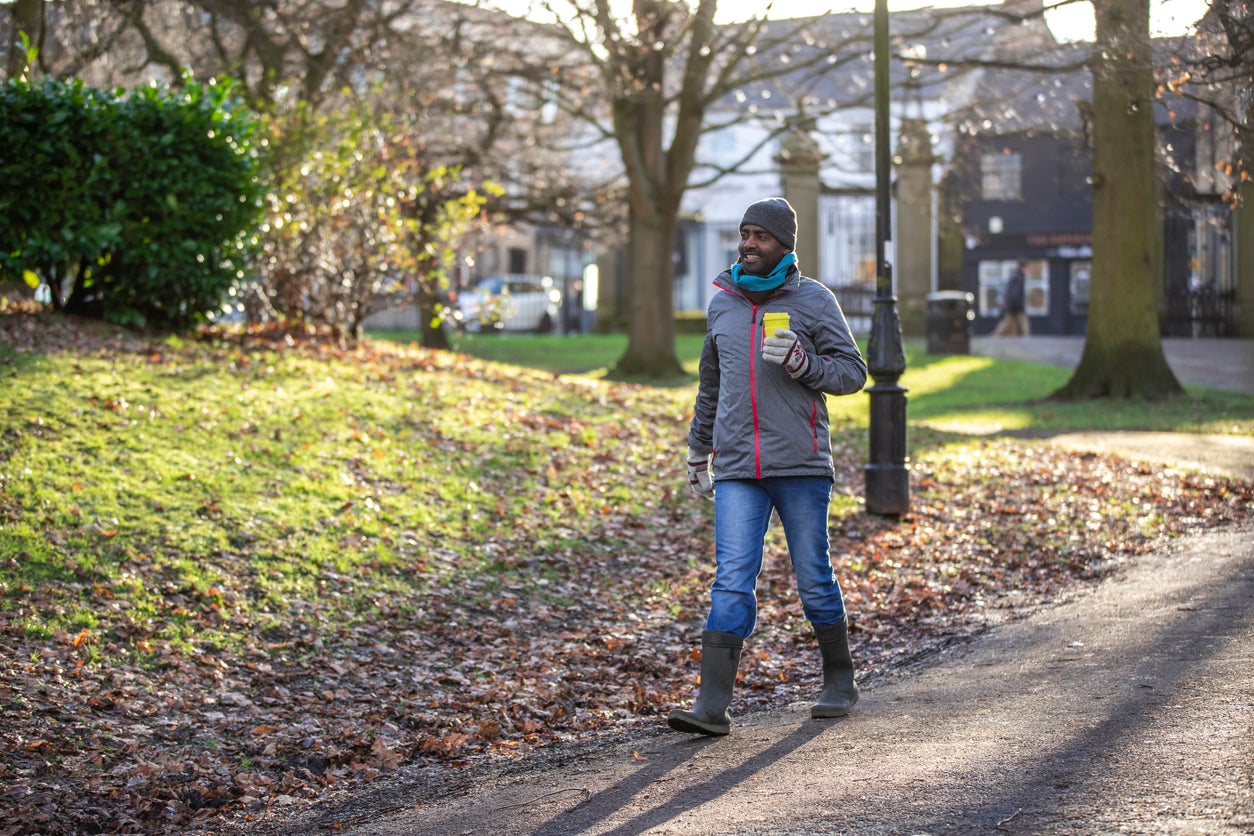
Incidental daily movement such as walking should form the bedrock of your weekly activity levels (Getty/iStock)
Step two: Strength training
It might surprise people to see strength training featured so highly on this list. But without fail, every expert I have spoken to in recent years has highlighted its importance for all populations.
“One of the most underrated behaviours, especially for women, is strength training,” says Emily Capodilupo, senior vice president of research, algorithms and data at wearable company WHOOP. “The best thing you can do to prevent diabetes is put on lean muscle mass.”
Building strength and muscle will not only benefit your metabolism. It also has a transformative effect on your physical capacity, helping you live better for longer while maintaining independence as you age.
”After about age 30, you lose one per cent of your muscle mass per year if you don’t actively intervene to prevent that,” Capodilupo explains. “When you think that our lifespan has increased fairly dramatically over the last 50 years, you need to be building more muscle in your twenties and thirties, and then actively sustaining it so that you can live independently in your eighties and nineties.”
Performed correctly, strength training will also boost joint health, bone density and more, says Dr Athalie Redwood-Brown, a senior lecturer in sport science at Nottingham Trent University.
“It’s going to help with sarcopenia [age-related muscle loss], osteoporosis and rheumatoid arthritis,” she says. “It’s also going to improve lots of other aspects of our health such as cardiac health, mobility and lung function.”
Strength training is seen as intimidating by many, but it is more accessible than conventional wisdom might have you believe. It is the act of overcoming resistance, whether by lifting weights or grappling with gravity through body weight exercises. For beginners, sitting down in a chair then standing up again 10 times, without using your hands to help, is a good place to start.
It doesn’t have to take a huge chunk of your day either. Two 20-minute weekly strength training sessions will deliver the stimulus most people need to significantly improve how they look, feel and function, according to experienced certified strength and conditioning coach Danny Matranga.
“The average person wants the most results from the least amount of time in the gym, and I respect that – the gym isn’t everybody’s happy place,” he says. “If time is of the utmost importance and you want the most gains from the least number of trips to the gym, total body programmes are very effective.
“When you’re a novice, you can go into the gym and do a pushing exercise [like a press-up] and a pulling exercise [like a dumbbell row] for your upper body, something like a squat for the front of your legs and a deadlift for the back of your legs, and then you can walk away after four exercises having trained every single muscle in your body.
“From just two 20-minute sessions of resistance training a week, you will have better blood sugar, better bone density, better cognition and better motor control. Physically, you’ll have more muscle, probably less body fat, and less pain in your joints. Aesthetically, you’ll probably look way better in your clothes, and you’ll see areas like your arms, thighs, glutes and tummy start to change.”
Prescription
If you are a beginner, try Dr Redwood-Brown’s four-week bodyweight workout plan, featured in The Independent. If you have access to weights, you can then progress to Matranga’s formula to create your own full-body workouts, or follow the example in the video below.
Read more: Longevity expert says this diet is more effective than Ozempic at changing the human body
Step three: Introduce intensity into daily movement
The amount you move is only one piece of the puzzle; the intensity of your movement also plays a key role in determining the impact it will have on your body.
Intensity simply refers to how hard your body is working, and it is relative to the individual. For example, a fast run for an Olympian might provide the same stimulus for the heart and lungs as a brisk uphill walk for a beginner. For that reason, if you are new to exercise, introducing intensity to your daily movement could be as simple as picking up the pace while walking or climbing the stairs.
Research points to most of the benefits of walking accumulating at a moderate-intensity or above, where your breathing rate is raised, but you can still hold a conversation without needing to take big breaks. This is equivalent to a cadence of roughly 100 steps per minute, according to Dr Aguiar.
“Focusing on meeting the WHO physical activity guidelines and exercising most days at a moderate-intensity or above is going to improve your blood pressure and blood glucose,” he explains. “Over time, it’s also going to reduce your LDLs or bad cholesterol and potentially result in a change in weight or waist circumference.”
“Light-intensity movement is good,” adds leading physical activity researcher Professor Emmanuel Stamatakis of the University of Sydney. “It is beneficial for energy expenditure and metabolic [syndrome]. But when it comes to improvements in functional capacity, and in particular cardiorespiratory fitness, you need intensity to challenge your physiology.”
New research from Professor Stamatakis and his team found that every one minute of vigorous-intensity exercise – where you are breathing hard, to the point you cannot speak in full sentences – has the equivalent value of six minutes of moderate-intensity exercise for lowering your risk of cardiovascular disease. “For diabetes, it’s nine times more effective, and for all-cause mortality and cancer, it’s a little bit lower,” he adds.
Another paper he co-authored also found increased heart health perks in sedentary people who regularly walked for 10 minutes or more, compared to those who collected their steps in bouts shorter than five minutes.
For this reason, a time-efficient exercise option he suggests for beginners is to do one or two daily walks at a steady but comfortable pace, each lasting 10 minutes or more. Within these, try to achieve an intensity every few minutes by picking up the pace or tackling a hill for 30-60 seconds.
“The point here is to give people as many options as possible, hoping that one of them will be the option they can stick with,” Professor Stamatakis says. “It’s all about establishing habits – not doing things once a week or once a month.
“If someone cannot do vigorous activity, or they can’t integrate it into their day-to-day routine for whatever reason, what is the point of prescribing and advocating vigorous intensity? It could be that a very sedentary 70-year-old gentleman enjoys going to the park with their grandchildren or going for a slow walk with a friend and chatting – that’s absolutely fine. You have to acknowledge their circumstances and support them in the best possible way to integrate activity into their days.”
Prescription
Walk for at least 10 minutes, once or twice per day. During these walks, try to achieve a vigorous intensity by picking up the pace to roughly 130 steps per minute or more for 30-60 seconds. Do these two to four times during the walk. For vigorous-intensity periods, you could also climb stairs or walk uphill. The best formula when walking for health is a combination of high volume and high intensity, says Dr Aguiar. This would mean taking at least 7,000 steps per day, and in the process accumulating at least 30 minutes of brisk walking at a moderate-intensity or above.
Read more: The small daily acts that make a real difference to your health
open image in gallery
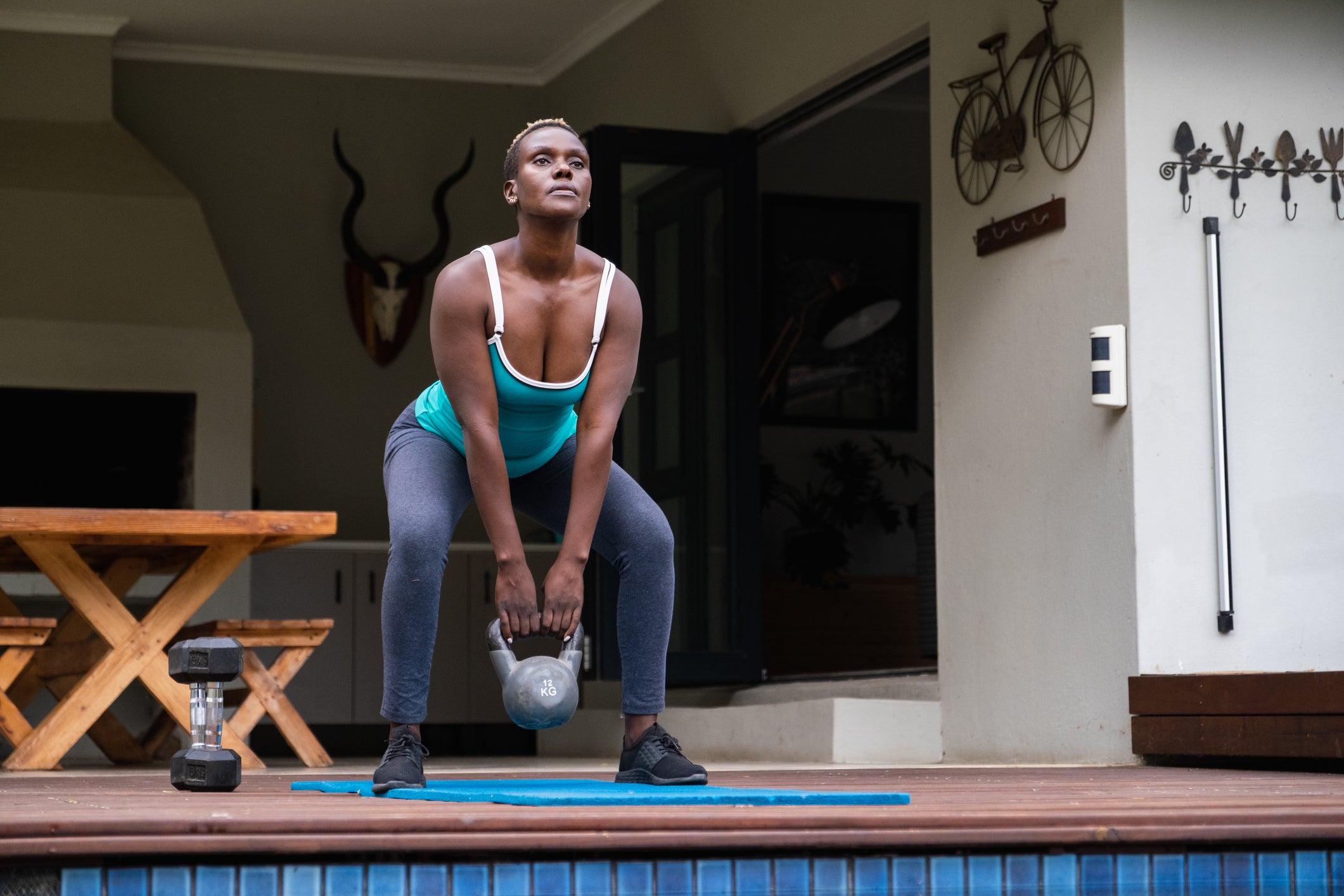
Strength training not only builds strength and muscle, but also mobility and robustness (Getty/iStock)
Step four: Move your body in a variety of ways
“For tightness, range of motion and flexibility in the body, it is a case of use it or lose it,” says human movement specialist and The Training Stimulus founder Ash Grossmann. “If a position is important to you, access it regularly.”
If you perform a movement most days, chances are your nervous system will recognise it as important and maintain the ability to do it. If you don’t do something for a while, your body may see it as surplus to requirements and slowly lose this ability.
As an example, how many times do you hear about people hurting themselves when dropping in for a one-off game of five-a-side after not playing football for years, or twisting sharply towards a supermarket shelf and twinging their back? These are movements they rarely do, so their tolerance to them has dropped over time, leaving them susceptible to injury.
This is why it is important to move your body in a wide variety of ways on a regular basis. Sitting at a desk all day, then sitting in a car to drive home before sitting on the sofa to unwind, is the antithesis of this – but it is a familiar routine for many.
“The body is always trying to help us and be more efficient in what we ask it to do,” Grossmann says. “If we are sitting behind a computer for eight, 10, 12 or 14 hours per day, in a flexed hip position [knees raised towards the chest], the body thinks that holding that hip flexed is saving us energy and therefore doing us a favour. Tight hip flexors are actually an adaptive change to the way the muscles sit.”
Regular movement, exposing our body and joints to a range of positions, is the natural antidote.
“When we’re dealing with an adaptation from stillness, movement is the answer, so any movement is better than just being still,” Grossmann continues. “In this case, we need to try and win the war by spending less time in that position and creating a business case for the body to say, ‘Actually, I don’t want you to hold tight hip flexors because I need to do things other than sit in a chair’.”
To do this, he recommends breaking up long periods of sitting still by standing up, changing position, going for a walk or performing a few unweighted movements such as side bends and torso twists through all three planes of motion – sagittal (up, down, forward and backwards), frontal (side-to-side) and transverse (rotational).
“Changing your habits and spending less time sitting down will start to shift the nervous system to appreciate that the hip has functions other than just being sat down,” Grossmann adds.
Prescription
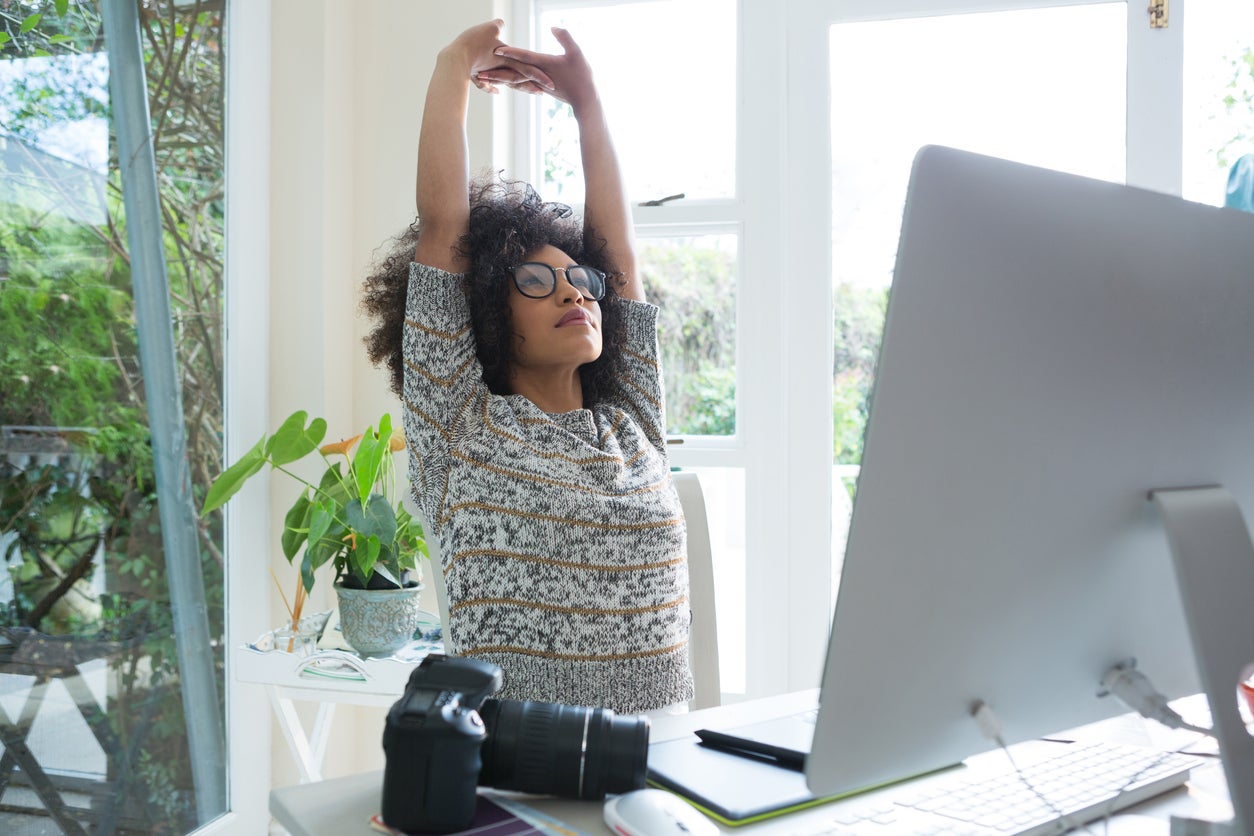
Break up longer sedentary periods with standing, walking or even some exercise snacks (more on this in the section below). Try to move your body through all three planes of motion most days, through movements such as side bends and rotations. Start gently.
open image in gallery
Moving your body in varied ways can help fight joint stiffness, particularly when used to break up long stints at your desk or sitting still (Getty/iStock)
Step five: Exercise snack
Exercise snacking turns up time and time again in interviews I do with top coaches and researchers. The phrase refers to bite-sized chunks of exercise you can slip into your day without impacting your wider routine – rather than having to carve out an hour for a trip to the gym or a run.
Committing to this consistently can improve cardiometabolic health, particularly in physically inactive people, according to a 2025 systematic review and meta-analysis published in the Scandinavian Journal of Medicine and Science in Sports.
It is a favourite technique of Sally Gunnell, who took gold in the 400m hurdles at the 1992 Olympics and now runs a health coaching company, Life’s Hurdle.
“Being consistent, even in small ways, is often more effective than sporadic intense sessions,” she says. “These small daily movements help keep muscles strong and joints moving freely. They improve posture and balance, boost circulation, improve your mood and build the confidence to move more.”
One of the best ways to use this technique is through habit stacking – taking something you do every day and attaching an activity to it. For example, every time you boil the kettle, perform 10 squats. This way, the action becomes almost autonomous, saving you the hassle of actively deciding to exercise and removing barriers to movement.
“It’s not about perfection, it’s about movement becoming part of your life,” says Gunnell. “Doing this regularly can add up to hundreds of extra strength-boosting movements each week.”
Prescription
Identify three to five things you do daily, such as getting out of bed, brushing your teeth or switching your work computer on and off. For each one, assign 30-60 seconds of a certain bodyweight exercise, stretch or activity like fast-paced walking. Whenever you do the daily behaviour, pair it with your selected exercise. You can use our full feature on exercise snacking if you need inspiration or ideas, or consult our list of five-minute workout options.
Read more: The science-backed exercise method that can help fight the effects of ageing
open image in gallery
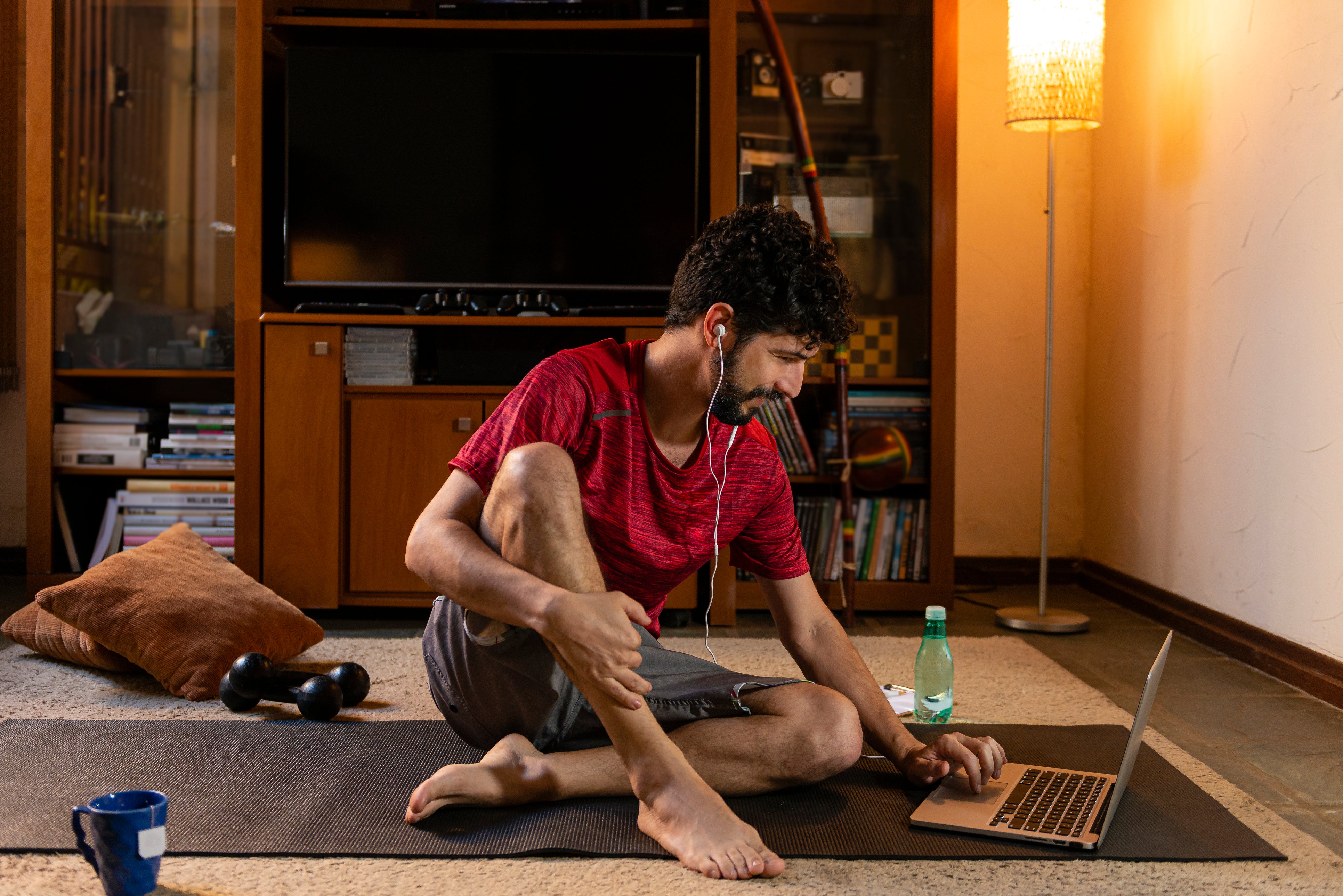
Exercise snacking is a time-efficient way to incorporate more movement into a busy schedule (Getty/iStock)
Step six: Formalise exercise
The scope of this final section is enormous and open-ended. If you have progressed through the steps above and reached this point, chances are you are a keen and consistent exerciser who knows what they are doing – this is where the fun really begins.
It is time to experiment with different types of exercise and sports to find which ones you enjoy the most. Make these central to your exercise plans, as you will likely be far more motivated to do a fun workout than a gruelling one, and a workout you do will be infinitely more effective than one you don’t.
However, if you are just getting started and still want to maximise your return on investment from exercise, exercise physiologist Paul Hough from the University of Westminster says high-intensity interval training (or HIIT) can be a good option.
“HIIT involves brief [anything from five seconds to four minutes] and intermittent bouts of high-intensity exercise separated by periods of rest or low-intensity exercise,” he explains. “It differs from vigorous-intensity activities because the intensity cannot be sustained. HIIT has been consistently demonstrated to improve cardiovascular fitness and glucose metabolism among healthy adults and type 2 diabetic patients.
“Recent evidence has confirmed that HIIT can be just as effective as, or even more effective than, moderate-intensity activity for improving key health measures. As a result, the UK physical activity guidelines now recognise HIIT as a suitable exercise option for the general population.”
Prescription
Hough says a “well-studied and popular protocol” for HIIT involves alternating between one minute of hard work and one minute of recovery for 10 rounds. Depending on your fitness level, this can be done with walking, running, swimming, cycling or using exercise machines such as exercise bikes and rowing machines. More advanced exercisers could also do it with resistance-based exercises such as burpees and squats. For the hard work, assume a pace that corresponds to approximately 90 per cent of your maximal heart rate, or an eight out of 10 effort, Hough says. The light work could be walking or cycling at an easy pace, or complete rest.