
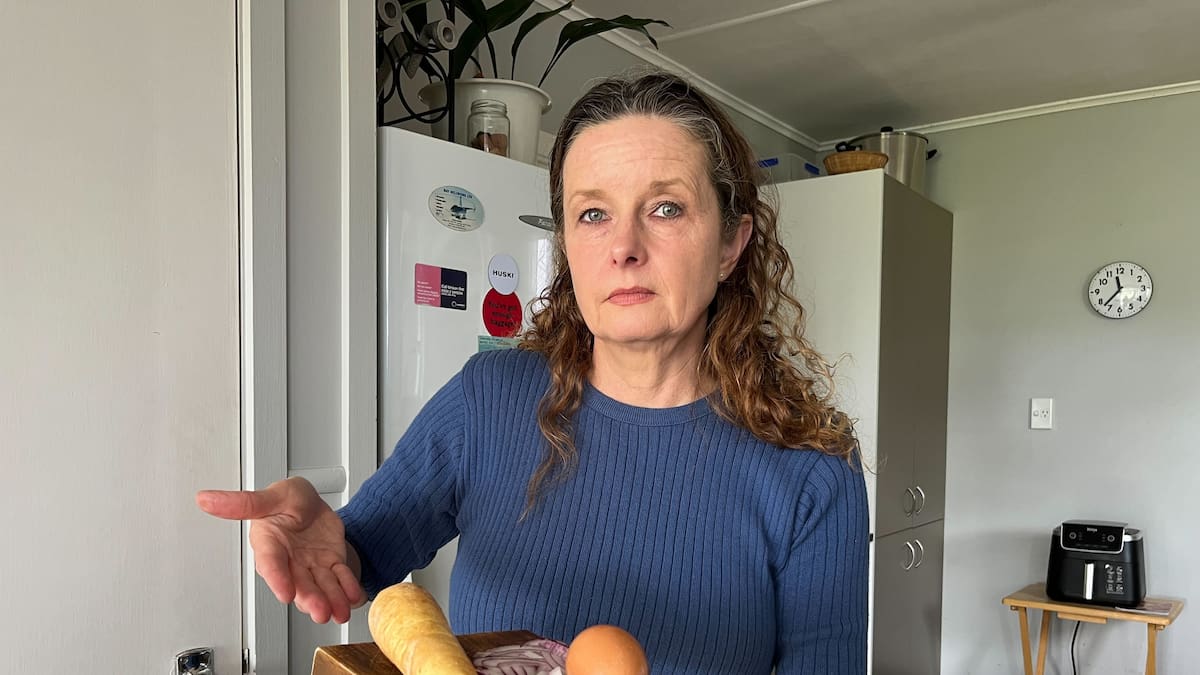
“Some meat packs are easily $25. Steak is totally out of the question. So I just live on vegetables, pasta, bread, eggs … or canned protein, like tuna or sardines.”
Tania Browne prepares a meal in her Raukawa kitchen. She says high meat prices have pushed her toward cheaper staples and a mostly vegetarian-style diet. Photo / Rafaella Melo
Browne stopped buying meat regularly a few years ago, when rising prices made it “just unaffordable”.
“The price has easily doubled … I’m sure plenty of other people are in the same boat.”
She now buys meat only for special occasions.
“I miss meat.
“I love red meat … but now, when I buy it, it’s just a tiny piece on the side, not the main part of the meal.”
In Waipukurau, mental health counsellor Jenni Tomlins has also watched her household change what they eat.
She lives with her partner, her son and his girlfriend and said chicken had replaced nearly all beef and lamb.
“Meals that have meat in them are mostly chicken now … because that’s the cheapest meat that you can buy,” Tomlins said.
“I’m sick of cooking chicken all the time.”
She said she sometimes goes vegetarian herself, sacrificing her portions so her 21-year-old son gets enough protein.
“If we can afford beef, then I’ll always put beans, lentils or vegetable mix in with it, so it lasts longer.”
Buying mince for lasagne or nachos was no longer a cheap option either.
“Mince used to be considered affordable but now, when you’re paying $18 a kilo, it’s not cheap at all,” she said.
“It just seems ridiculous that we are paying so much for meat from the place where we live.”
She recalled when her family would have steak twice a week.
“Now, we would be lucky to get red meat once a week,” Tomlins said.
“The idea of a traditional Sunday roast just doesn’t happen any more.”
A Napier chef solo mother of two, who asked not to be named as she feels embarrassed at not being able to afford red meat for her children, said she planned meals strictly around specials.
“Usually, only chicken or sausages,” she said.
“Red meat and lamb are now out of my budget … even the humble mince is not affordable without being on special.”
Her household now eats two vegetarian meals a week, stretches chicken across lunches, and she has begun skipping breakfast so groceries last longer.
Gourmeats Butchery owner David Thompson said he had noticed the change in consumers’ behaviour.
“Pork and chicken are stable, with a slight shift to people eating these cuts.
“Beef pricing has been relatively stable the last few months. Lamb is a different story altogether and I expect it will continue to rise as the demand is there.”
Thompson said local shops were feeling the squeeze too, trying to stay competitive without passing every cost increase on to customers.
“You simply can’t just keep putting the price up because your supplier does, you have to look at other ways to absorb the costs.”
Recent rain and high temperatures meant farmers were holding stock longer to fatten them up, likely pushing prices higher in the coming months, he said.
Gourmeats owner David Thompson (left) and retail manager Alex Tahau at the Havelock North butchery. Photo / Gourmeats
Hawke’s Bay Federated Farmers president Jim Galloway said farmgate prices for sheep and beef were about 30% higher than last year after several tough seasons, but that flow-on is contributing to higher supermarket prices.
“Many HB farmers were affected by Gabrielle and had to spend hundreds of thousands to fix the damage to their farms,” he said.
Despite the increases, Galloway said farmers received only 20-30% of what consumers paid once freight, processing and retail costs were added.
“There are many costs after an animal leaves the farm before it reaches the consumer.”
Woolworths NZ said strong overseas demand was driving red meat prices nationwide.
“This is excellent news for farmers who are seeing better returns, but it means higher prices for our customers,” the company said in a statement.
“We are also seeing reduced availability, at least in part from farm conversion to forestry, adding to price pressures.”
Woolworths said it hoped to see meat prices moderate this year.
“We have absorbed costs that we can.”