
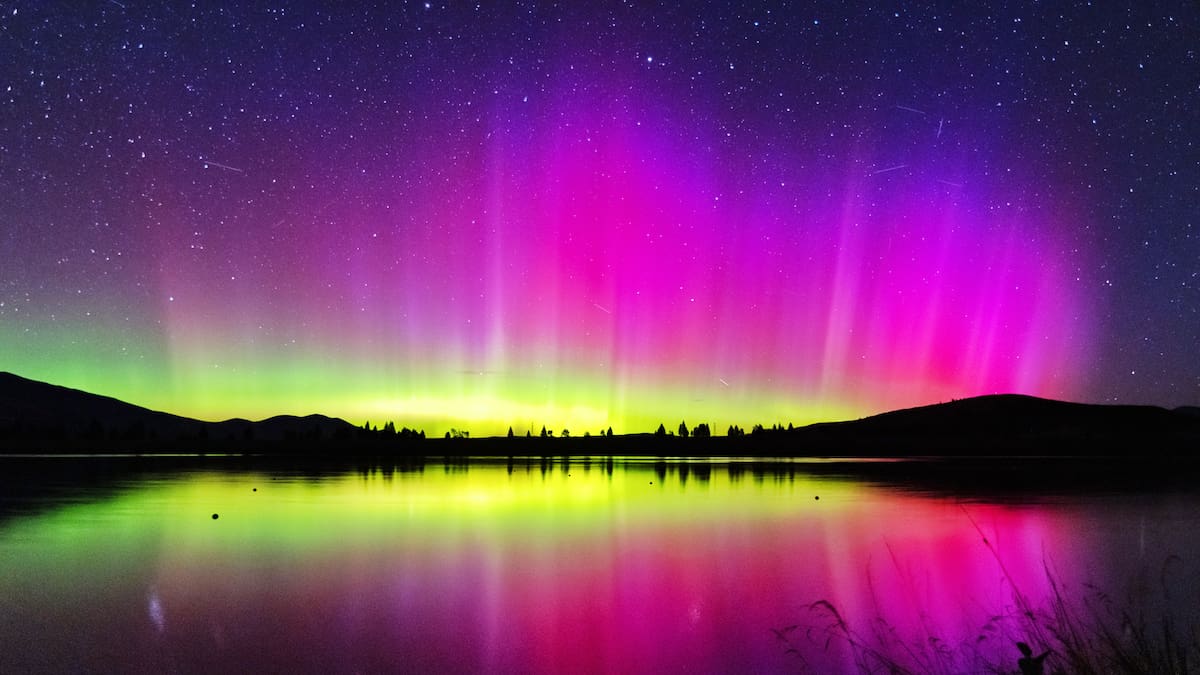
Ng has various apps on his phone that send him alerts roughly an hour before any aurora can be spotted near him.
The sun is currently in the maximum phase of its solar cycle, a roughly two-year period stretching from 2024 to 2026. This brings stronger auroras to Earth but can also cause damage to power grids and satellites.
His apps rank each aurora on a scale of yellow, orange or red – Saturday’s aurora was a red alert, he said.
He would go rushing outside with his camera every time his phone pinged, and while he experienced a fair share of disappointment, last night was a “wow” moment, he said.
“As a photographer, it’s like fishing. I can be waiting in the dark in the middle of the night in winter for a few hours, and nothing happens.
“You’re always chasing for better and stronger and bigger aurora.”
Ng told the Herald he had noticed a lot of alerts coming through in the last few months and recalled seeing particularly strong aurora during a large solar storm in January.
“I actually feel like there could be some tonight because I am still getting alerts this morning.”
Ng said New Zealanders have a better chance of spotting aurora if they go down south and look for them on clear nights with no clouds, when the moon is the least bright.
“Sometimes we have very strong aurora during daytime, it’s just that you cannot see anything until sunset.”
Janhavi Gosavi is a Wellington-based journalist for the New Zealand Herald who covers news in the capital.