
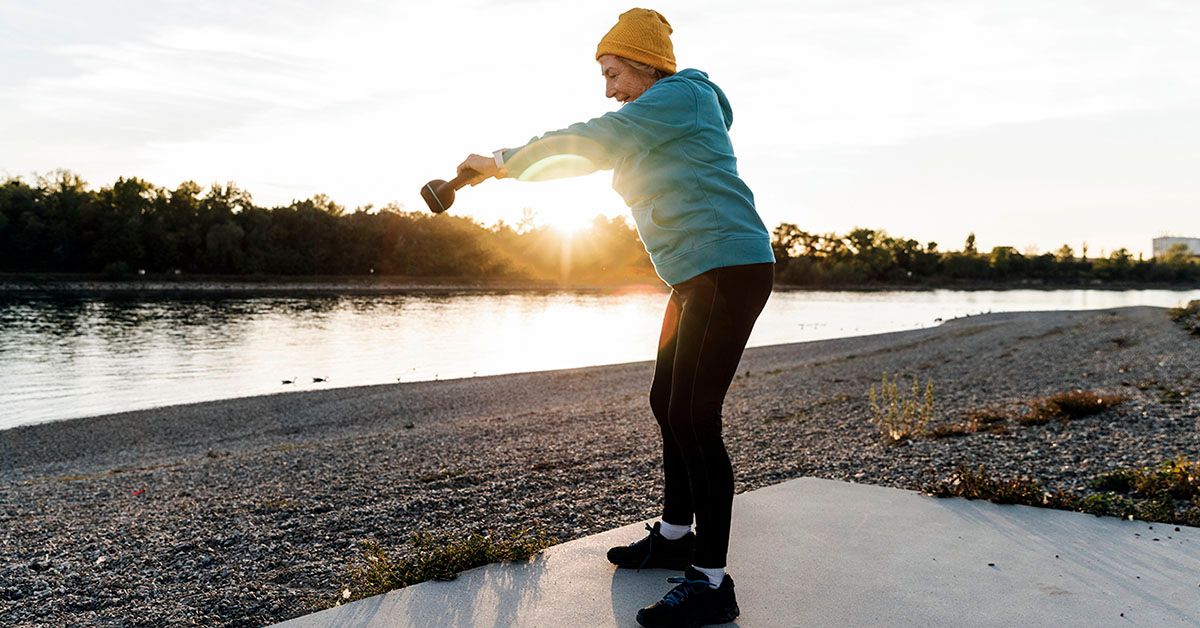
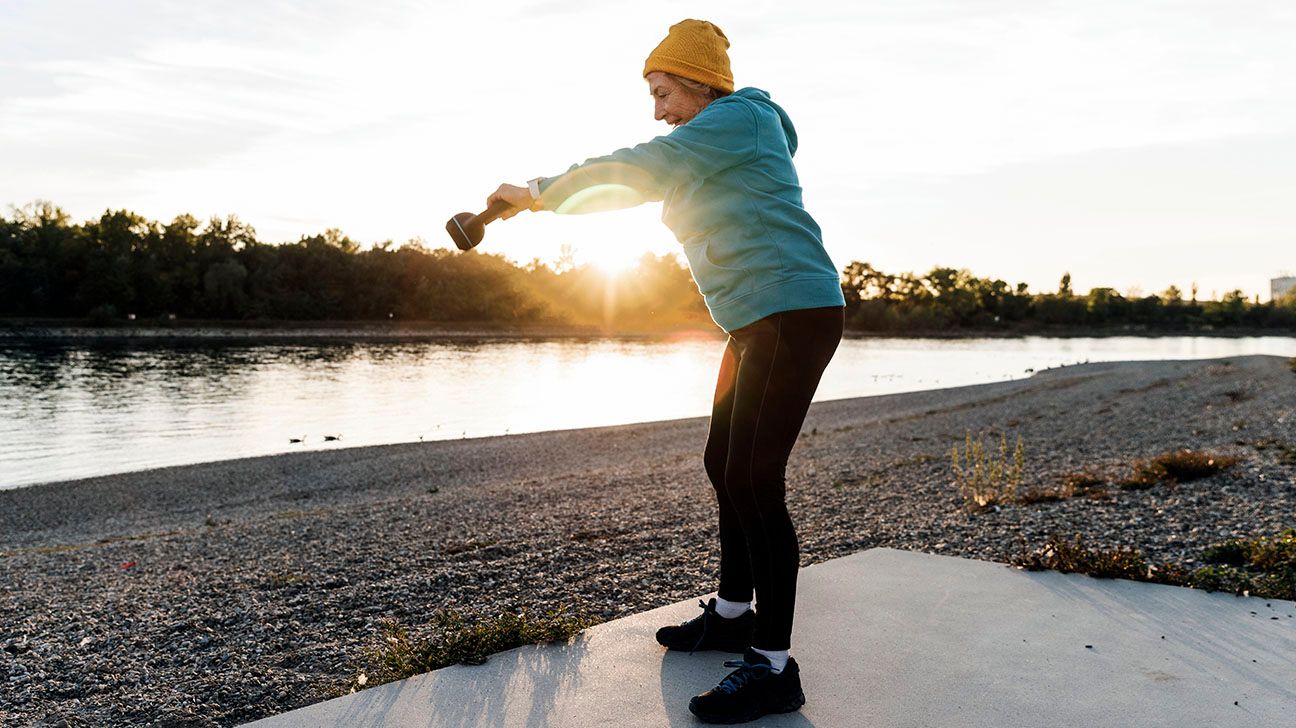
 Share on PinterestNew resistance training recommendations emphasize consistency over complexity. Image Credit: Westend61/Getty ImagesYou don’t need a perfect workout plan to benefit from strength training, according to new recommendations from the American College of Sports Medicine.A large new review finds that at-home workouts or body weight exercises can be just as effective as complex resistance training routines.Strength training can improve everyday function and long-term health when incorporated into a consistent fitness routine.
When it comes to resistance training, doing some is better than doing none, and consistency is key, according to new recommendations from the American College of Sports Medicine (ACSM).
Resistance training, also known as weight or strength training, is linked to numerous health benefits for people of all ages, including improved muscle strength, better metabolic health, and reduced risk of falls in older adults.
“Start now and start simply. You do not need a complicated or perfect programme to benefit. You just need to begin and do it consistently,” said senior author Stuart Phillips, PhD, Distinguished University Professor and Canada Research Chair of the Department of Kinesiology at McMaster University.
“Many forms of resistance training can work, which means people have options. That flexibility matters. If someone believes there is only one ‘right’ way to train, the barrier to starting, or continuing, becomes much higher,” he told Healthline.
The recommendations explicitly include home-based routines, body weight training, and the use of resistance bands as forms of resistance training that offer strength and fitness benefits. These approaches may also be more accessible and have a lower barrier to entry for some individuals.
Perhaps surprisingly, some of the key variables people typically associate with resistance training appear to matter far less. Things like training frequency, exercise selection, and equipment type were all found to be less important than overall consistency and effort.
The Position Stand is the first major update from the ACSM on resistance training since 2009.
It’s an “overview of reviews,” meaning researchers pulled together findings from many prior studies to identify the most well-supported evidence. Specifically, they analyzed 137 systematic reviews, including data from more than 30,000 adult participants.
“The message that this delivers is that you don’t need all these complex requirements for resistance training,” said Denice Ichinoe, DO, an assistant professor in the department of family and community medicine at the Kirk Kerkorian School of Medicine at the University of Nevada, Las Vegas. Ichinoe wasn’t involved in the research.
“This should be broadly applicable to a larger population and should make it more accessible for the general public,” Ichinoe told Healthline.
Participants were healthy adults ages 18 and older, most of whom were beginners or had limited resistance-training experience.
The included studies looked at people who followed a resistance training program for at least 6 weeks, with some programs lasting up to a year. These programs were compared with either no exercise or alternative training approaches.
The researchers also examined how specific training variables — like frequency, weight, and number of sets — affected outcomes such as strength, muscle growth (hypertrophy), and physical function, which refers to aspects of everyday movement such as walking and balance.
Across the board, resistance training delivered clear benefits. Compared with doing no exercise, strength training significantly improved:
muscle strengthmuscle sizepower endurancebalancewalking speedoverall physical function
In other words, strength training supports both fitness and everyday function, like climbing stairs or getting up from a chair.
The study also identified specific training patterns linked to better results.
For building strength, the strongest gains were seen with heavier weights (about 80% or more of a person’s maximum), 2 to 3 sets per exercise, and at least two sessions per week.
For muscle growth, total workload, known as volume, mattered most, while the exact weight used was less important.
When it came to power (the ability to move quickly and forcefully), the best results came from moderate weights (30% to 70% of maximum) lifted explosively, often with lower overall volume.
Notably, many commonly debated factors — such as training to failure, using machines versus free weights, or complex programming strategies — did not consistently change outcomes, suggesting that simple, consistent training can be just as effective as more complicated approaches.
It’s important to note that the findings represent general recommendations for novice and recreational lifters.
Elite athletes and more experienced lifters may still require more specialized or individualized training approaches.
“With any type of elite athlete, their training is going to look different. But the general consensus here is that for the average adult, the best type of resistance training is one that you’ll stay consistent with,” Ichinoe said.
Whether you are new to resistance training or an experienced weightlifter, the new recommendations offer important insight into your training routine.
The message should be clear: what’s more important than optimizing your workout is finding the consistency to get out there and do it week after week.
“Consistency usually starts with lowering friction. For most people, that means starting with a routine that is realistic, convenient, and not too ambitious: a couple of sessions a week, a few core movements, and a plan that fits their schedule and access to equipment,” Phillips said.
Even for older adults or people who’ve never really considered weightlifting before, starting resistance training is important for overall health.
“With any new activity, there’s always going to be a little bit of hesitance, maybe some fear and trepidation,” Ichinoe said. “I usually try to emphasize to older patients that with strength training, not only does it help build and maintain muscle mass and strength, it also helps with making your bones stronger.”
Ichinoe shared some actionable tips on how to get started:
Think about your health and fitness goals. Are you training for general strength, or do you just want to feel more confident playing a round of pickleball?Start slow: a consistent practice may start with just 10 minutes a day or one weightlifting session per week.Get friends and family involved. It may be easier to find motivation when you have people to work out with.Remember that anything is better than nothing.