
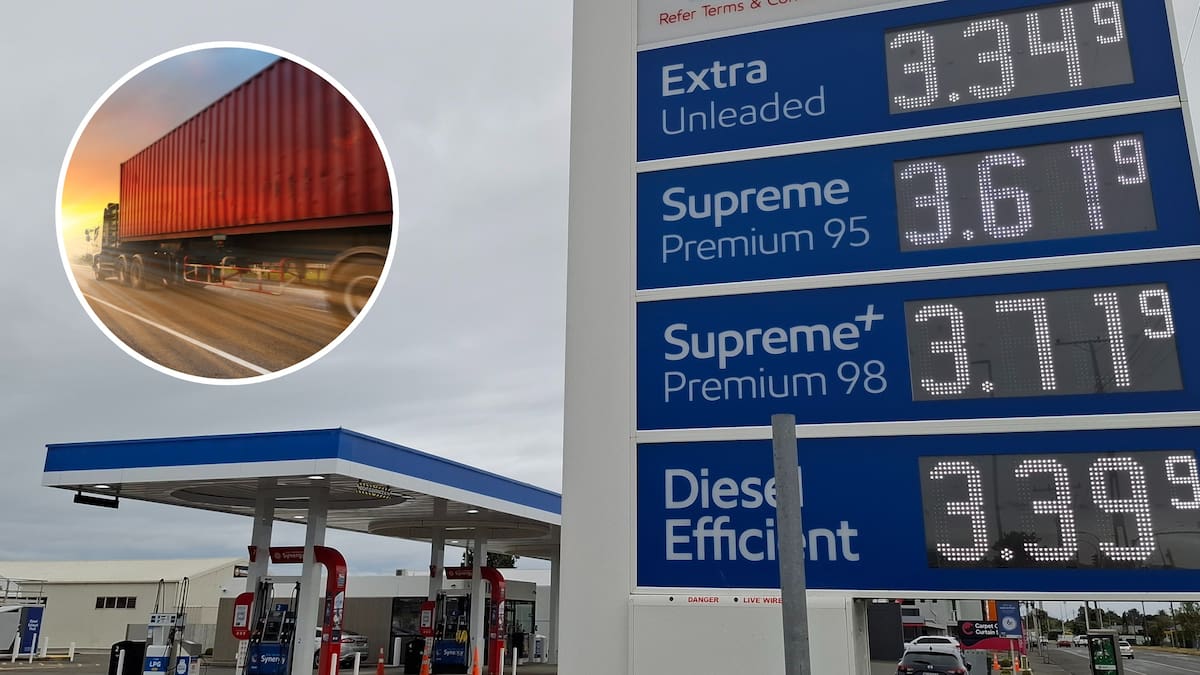
Diesel was more expensive than 91 unleaded petrol at five stations, cheaper at three, and the same price at two.
The diesel cost varied from $3.24 to $3.45 a litre.
Comparatively, at the end of February, the average cost of diesel was about $1.87 a litre, meaning the cost has risen about 80%.
Unleaded 91 petrol has risen about 35% during the same period.
None of the stations Hawke’s Bay Today visited had run out of fuel.
Finance Minister Nicola Willis unveiled a nationwide fuel plan yesterday.
The Government will move the country between four levels, or phases, using a list of criteria such as the amount of fuel in the country or on its way here.
We are currently at Level 1, which means the Government is monitoring global developments and sharing information about ways to reduce fuel use.
At Level 2, the Government would promote voluntary reductions in fuel use, such as “we might suggest that taking discretionary road trips wasn’t the best idea”.
At Levels 3 and 4, there would be restrictions on fuel, to make sure there was enough for essential services, such as hospitals and for food supply.
Willis said, “we wish to avoid” reaching Level 3 and 4.
“[Currently] there is enough fuel in the country, and will be for some weeks,” she said, encouraging people not to stockpile.
“You don’t need to worry there won’t be enough fuel to fill up.”
Truckies on diesel prices
Mark Stockdale, policy and advocacy adviser at Transporting NZ, which advocates for about 1100 truck companies, said diesel prices were increasing globally much more quickly than petrol prices.
“That’s probably because diesel is the fuel of the economy, not just in New Zealand but the world over.
“We are dependent on diesel to move goods.”
Transporting NZ’s Mark Stockdale.
The high demand was “presumably because of stockpiling” amid concerns about global shortages, and because countries “know they need diesel to run their economy”.
“[Diesel has] never been higher than petrol,” he said, in New Zealand.
Truck companies could not absorb that cost.
“It is just impossible for any company to wear that.
“So they need to be talking to their customers about reviewing their contract rates.”
Many truck companies had a fuel adjustment factor (FAF) in their contracts, he said, allowing them to adjust their fees according to diesel costs.
“Customers [of transport companies] are likely to then pass that on in terms of the price of the goods that they are selling, which might be the supermarkets and the big-box retailer and all that sort of stuff.
“So, this isn’t only impacting trucking companies; this is impacting the economy and ultimately New Zealand consumers.”
There were simple ways for individuals to cut back on petrol use, such as leaving a car at home more often or using public transport, but it was harder to reduce diesel use when it came to moving goods and keeping an economy going.
Barker Trucking owner Michael Barker, from Central Hawke’s Bay, said he was paying about $150 a day more to operate his diesel truck.
He had a fixed-term, fixed-price contract, which meant he had to absorb that cost. Fortunately, he said, that contract would end soon.
The added costs would eventually flow through to consumers.
“It will be a delayed reaction, but it will happen.”
The owner of a small Napier trucking company, who did not want to be named, said its diesel costs had doubled in a month.
“You can’t [carry that]; you have to pass that on somewhere.”
Truck companies would have to apply higher FAF rates for customers.
“That’s going to come on everything.
“So, that means your food goes up, everything goes up.
“That is going to hit everyone in the pocket.”
The main reason petrol costs more than diesel, usually, is that it has a built-in 77c tax per litre.
Diesel vehicles do not pay that tax, but instead pay road-user charges (RUCs).
The trucking company owner wanted to see the Government ease RUC costs until the diesel price came down.
Another problem the firm faced, during trips to Auckland from Napier, was that some towns had run out of diesel in the past week.
“So [the drivers] are very concerned about not getting to the next town, let alone getting home.”
According to the latest update from MBIE, there were 48.7 days of petrol stock either in-country or on the water, 46.4 days of diesel and 53.4 days of jet fuel.