
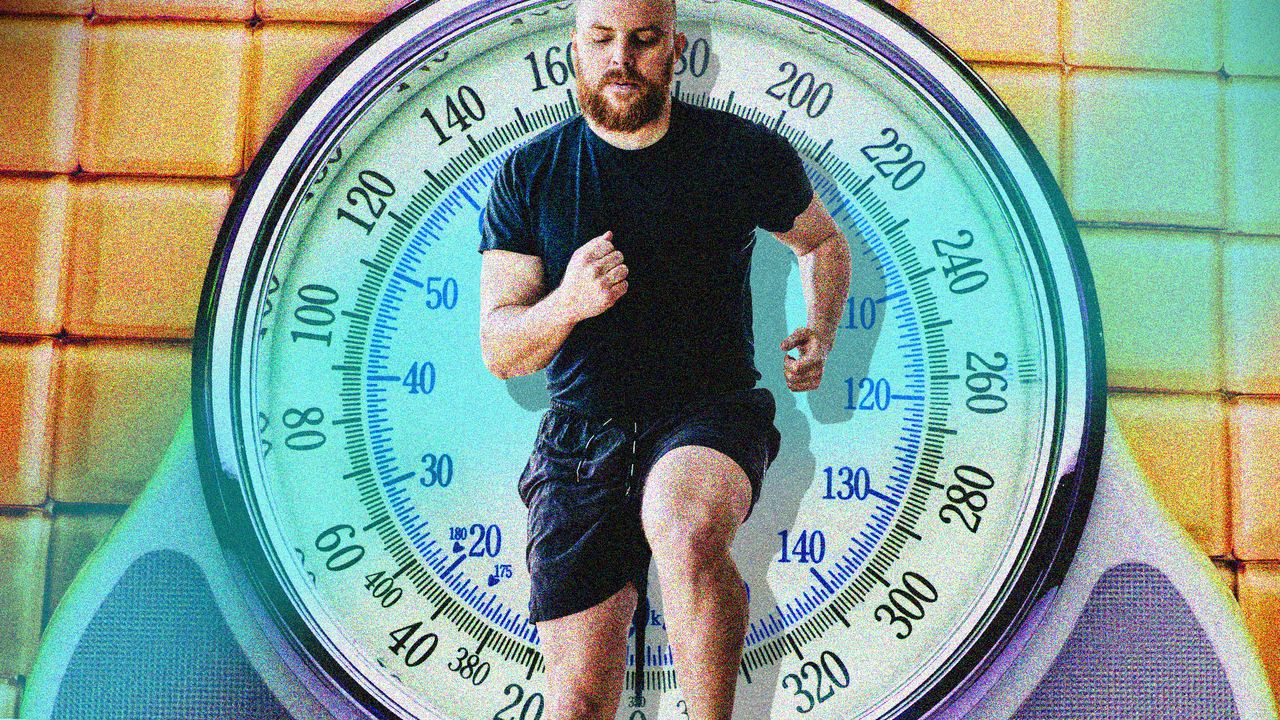
We’ve all tried to lose weight, right? You know the drill, lots of exercise, very little food, constant checks in the mirror and on the scales. And while the old calories in versus calories out method certainly works, restrictive dieting and brutal, sweat-soaked workouts can drain our resolve after a while. There’s no wonder that only 10 to 20 percent of dieters manage to keep the weight off, with some regaining up to 35 percent of lost weight within 12 months.
We’d like to talk you through a better way to shift body fat. The science remains the same, but by treating fat as fuel instead of extra weight to be shifted, you’ll hopefully have a happier, more fulfilling journey that helps tip the scales in your favour, for good.
‘Fat’ tends to be a bad word. Should it be?
Wanting to slim down and lose some fat is fine if that’s your goal. But we have to be careful that we aren’t treating any and all fat as ‘bad’, or something to be shedded. “Fat gets a bad rep in today’s society – and that’s not really fair,” says Alina Cox, co-owner of Fitzrovia’s ClubQ health club. “While excess body fat is linked to a range of serious health issues,” she says, “some fat is essential.”
In fact, fat helps with everything from insulation to fertility, regulation of the immune system and, yes, metabolism. It’s so vital that Veronika Larisova, dietitian and co-founder of Chief Nutrition, calls it “one of the most essential molecules in the human body” adding that “stored body fat acts as a long-term energy reservoir while fat tissue is also involved in hormone production, releasing signalling molecules that help regulate appetite, insulin sensitivity, and inflammation.” It also helps cushion our internal organs and forms an important component of cell membranes and the nervous system.
In other words: fat is your friend. Now that’s cleared up, let’s get down to business.
How to lose and burn body fat for fuel?
The body relies on carbohydrates and fat for energy, with fat the preferred fuel at lower intensity. “The reason is energy yield,” explains Cox. “Fat takes longer to break down than carbohydrates, but delivers significantly more energy per gram – 9 kcal compared to just 4kcal from carbs. On top of that, fat reserves are abundant within the body.” It’s true, even a lean individual carries around 100,000 calories worth of stored fat at any one time.
When our bodies burn fat for fuel, they undergo a process called lipolysis, followed by fatty-acid oxidation. Stored triglycerides in fat tissue are broken down into fatty acids, which then enter the bloodstream and are transported to cells throughout the body where they’re converted into energy.
According to Adam Enaz, founder of Enaz Fitness, the average sedentary person burns roughly 60–80g of fat per day through basic body functions and low-level activities like putting the kettle on. Put yourself into a calorie deficit (the keto diet suggests lowering carb intake to 50g per day to encourage fat burn) and up the exercise, though, and you can significantly increase your burn.
Whichever approach you take, Cox is clear that you’ll probably have more fun if you remember that fat is fuel. Don’t just spend an hour walking on the treadmill, staring at the gym wall. Use those calories to work on your 10k PB, smash that V6 at your climbing gym, or practice your cricket overs instead, and you’re much more likely to enjoy yourself, and stick to your fat loss goals.
How much fat do I need to burn to lose 1kg?
…and, crucially, how can I speed up the process?
“For 50 years,” Cox says, “the clinical nutrition field has operated around ‘Wishnofsky’s Rule’ that a deficit of 7,700kcal is required to lose 1kg of body fat. However, over the past decade that rule has largely been debunked as far too simplistic for real world fat loss.”
The issue with assigning a generic calorie number to every person and body type, Cox says, is that how much fat we actually lose is impacted by a whole range of factors from body composition to initial reductions in glycogen, fluids, and even proteins which may move the scales, but don’t actually amount to fat lost. “Weight loss is never purely fat,” Cox warns. “It also comes at the cost of lean mass, connective tissue and a small amount of bone density.”