
Last August, the council revealed plans to pass management of the portfolio to the community housing provider, citing a $1 million ratepayer burden and the inability of residents to access government housing assistance as key reasons.
The council had insisted tenants would not be financially worse off, with the possibility raised of top-ups to utility bills.
But those plans were not shared with the Ministry of Social Development, which has since said it would not back such a plan, as any top-ups would be classed as income, making the support ineffective.
Residents have rallied against the plans, with examples of rents rising by, and in some cases more than, 150%.
Many of the housing blocks are in disrepair. Photo / Mathew Nash
Smith’s rent was due to rise by 143%, but the tribunal ruled the proposed rent exceeded market rates by “a substantial amount”.
Adjudicator M Steens reviewed evidence, including comparable rents and property condition issues, before setting the new weekly rent.
He also criticised the council and the housing provider over their handling of the case.
The council did not attend the March 26 hearing. According to court documents, two attempts were made to contact the council on the day before staff advised Emerge was responsible for managing the properties.
Emerge took over management of the portfolio on March 23, while the council remains the landlord.
Attempts to contact Emerge were initially unsuccessful, with its phone system stating it was outside business hours, despite it being about 10am.
When contact was made, the person was described as “rude” and “obstructive” while refusing to provide contact details, the documents showed.
The tribunal also found the council’s non-attendance was due to its “own mismanagement”, not procedural error.
“If this is how tenants are treated in the premises, they should be mindful to inform tenancy services of their concerns,” the tribunal said.
The ruling is in effect for one year, and any rent paid above $200 per week since March 1, 2026, must be refunded or credited to the tenant’s account.
Mary Smith has not been able to stop smiling since the tribunal win. Photo / NZME
Smith said she applied to the tribunal in January after growing frustrated with the council.
She scheduled time to attend the hearing despite ongoing hospital treatment and could not believe nobody from the organisation was present.
In her view: “It’s just so Mickey Mouse … The left hand doesn’t know what the right hand’s doing.”
Smith said she had not stopped smiling since the ruling and other residents were now considering similar action.
“We’re standing up for our rights, and if I can have a win, so can the others,” she said.
“That’s why I did it, so other pensioners around New Zealand can see they can too.”
Stavros Michael, the council’s general manager of infrastructure and assets, said on behalf of both the council and Emerge Aotearoa that they disagreed with the decision and had lodged an appeal seeking a rehearing.
“As we are now in a formal process, it would not be appropriate to comment further on this matter at this time,” Michael said.
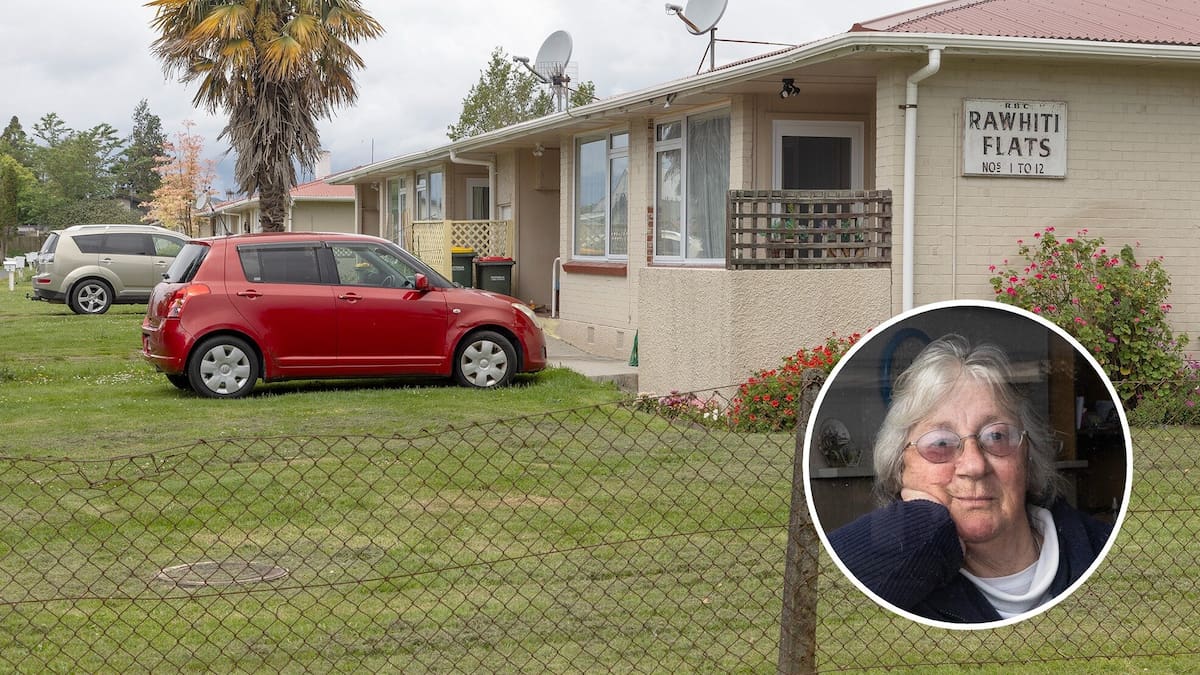
Rawhiti Flats on Miller St are just some of the council’s 152 pensioner housing units in Rotorua. Photo / Stephen Parker
He said a “breakdown” in internal processes left the council unaware the hearing was taking place.
“We acknowledge this was not acceptable and process improvements have been implemented,” he said.
On allegations that Emerge staff were rude to the adjudicator, Michael said the issue arose because the wrong number was dialled.
He said the number provided to Tenancy Services differed from the housing team’s contact details given to tenants.
“Had the housing team been contacted, an appropriate response could have been provided,” he said, adding that the council was “satisfied” with Emerge’s support and information services throughout the transition.
Stavros Michael, the council’s general manager of infrastructure and assets. Photo / Laura Smith
It is the latest setback in the council’s beleaguered attempt to offload management of its 152-unit pensioner housing portfolio, initially scheduled for October, with rents originally due to increase from February.
Rents are now due to rise on June 1, following Emerge’s late-March takeover of management.
But not all pensioners will be moved to market rates, regardless of future tribunal action.
Residents received a letter on April 2 stating that those reliant on superannuation, without any other sources of income, will now have their rent set at a “subsidised amount”.
The council will advise tenants of their individual rent levels once eligibility can be confirmed.
“We are working individually with our tenants,” Michael said. “They are our first priority and will be notified of outcomes first.”
The council provided no further details on who would fund the subsidy, how many tenants would qualify or whether it would be in place before June 1.
Mathew Nash is a Local Democracy Reporting journalist based at the Rotorua Daily Post. He has previously written for SunLive, been a regular contributor to RNZ and was a football reporter in the UK for eight years.
– LDR is local body journalism co-funded by RNZ and NZ On Air.