
What’s easy to overlook, though, is that most commercially produced bread in New Zealand is already fortified. Iodine has long been added via iodised salt and, since 2023, non-organic wheat flour used in bread-making must contain folic acid, a change introduced to address low population intakes of both nutrients.
So before you even pick up a loaf with a bold claim on the front, the baseline is already reasonably solid.
High-protein breads: useful, but not essential
High-protein breads have multiplied on supermarket shelves, and they tend to command a premium price. To carry a “good source of protein” claim, a bread must contain at least 10g of protein per serve, a threshold set by the Food Standards Code.
The catch? Many standard seeded and wholegrain loaves without any protein marketing already contain about 8-9g per serve, because wholegrain bread naturally retains the nutrient-rich bran and germ of the grain.
“Bread is rarely the main source of protein in the diet,” says Henderson. “Whole foods like eggs, dairy, legumes, fish and lean meat contribute much more.”
There are much higher natural sources of protein readily available than that found in protein-enriched bread. Photo / DepositPhotos
If toast and sandwiches are a cornerstone of your day, a higher-protein loaf might offer a small but genuine boost. But Sekula is pragmatic: adding eggs, beans or yoghurt to your meal will do far more than swapping your loaf. Some of the keto-style options, she notes, are simply expensive for what they deliver.
High-fibre breads: here the claims earn their keep
Fibre is the one area where the marketing tends to reflect a real nutritional gap. Most New Zealanders don’t get enough of it, and it matters – for digestive health, heart health and how satisfied you feel after eating. The Food Standards Code requires a bread to contain at least 4g of fibre per serve to be a “good source” and at least 7g to be called “high fibre”.
That said, plenty of standard wholegrain and seed loaves are already good sources of fibre without making a song and dance about it.
“It’s less about the claim on the front of the pack and more about choosing breads made from whole grains and minimally refined ingredients,” says Sekula. Flip the loaf over and check the nutrition panel – that’s where the real story is.
Low-carb breads: probably not for most people
Lower-carb loaves are increasingly visible, but Henderson is straightforward about who actually needs them: not most of us. New Zealand’s eating guidelines recommend including grain foods, particularly wholegrains, as part of a healthy diet. Some lower-carb breads are made with seeds, soy and added fibre, which can make them genuinely filling, but they can also contain extra additives and sweeteners, and some cost more than $10 a loaf.
“It’s better to focus on the quality of the bread instead of trying to reduce carbs,” says Henderson.
The case for a good old seed loaf
Here’s what’s easy to miss in all this: a well-made seed or wholegrain loaf is often already doing everything you need. Linseeds, sunflower seeds, pumpkin seeds and the like deliver fibre, healthy fats and a broad spread of nutrients in one go – exactly the kind of whole-food approach that both dietitians advocate. Wholegrain intake is associated with better heart health and a reduced risk of chronic disease, and bread can be an easy, everyday way to get more of it.
“Rather than trying to find a perfect loaf,” says Sekula, “think about how bread fits into the bigger picture. What matters most is variety: whole foods, fibre-rich choices, and a mix of protein sources across the day.”
Our picks: breads worth buying
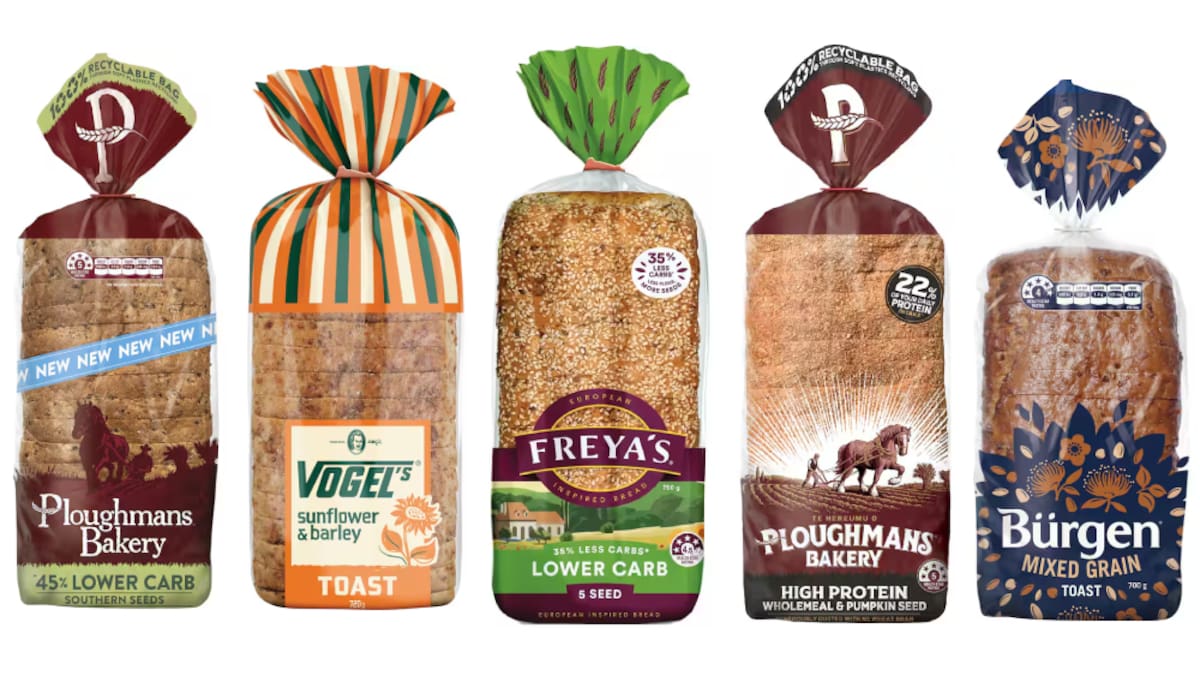
Based on the nutrition panels – not the front-of-pack claims – these are some of the strongest performers currently on New Zealand supermarket shelves.
If you’re looking for higher fibre loaves, these two supermarket brands are worth considering.
High in fibre
7g or more per serve
Ploughmans 45% Lower Carb (7.9g fibre)
Freya’s Lower Carb 5 Seed (7.4g fibre, also 11.8g protein)
These supermarket loaves are good sources of fibre.
Good sources of fibre
4–6.9g per serve
Freya’s Swiss Soya Linseed (4.2g fibre, 13.3g protein – one of the few doing both well)
Ploughmans High Protein Wholemeal & Pumpkin Seed (6.7g fibre, 11.1g protein)
Freya’s Dutch Wholemeal Grain (6.6g)
Ploughmans Farmhouse Wholemeal (6.2g)
Vogel’s Sunflower & Barley (5.5g)
Ploughmans Soy & Canterbury Linseed (5.1g, 11.0g protein)
Vogel’s Sprouted Whole Grains (4.8g)
Vogel’s Dark Rye (4.1g)
Burgen Mixed Grain (4.2g)
The most important things to look for
The bottom line is simple: aim for at least 4g of fibre per serve, go lower in sodium where you can, and don’t overlook a classic grain loaf just because it isn’t loudly marketing itself. Chances are, it’s already working hard for you.
Herald contributor Nikki Birrell has worked in food and travel publishing for nearly 20 years.
Tags:
- actually
- added
- aisle
- and
- are
- asked
- avoid
- before
- best
- bread
- breads
- breakfast
- Business
- carbs
- claims
- days
- dietitians
- everything
- extra
- fibre
- figure
- find
- for
- from
- functional
- grains
- help
- henderson
- its
- Julia
- lily
- loaves
- lower
- navigate
- New Zealand
- NewZealand
- Nutrition
- NZ
- paying
- promising
- protein
- registered
- sekula
- supermarket
- the
- these
- through
- to
- walk
- what
- whats
- worth
- youll