
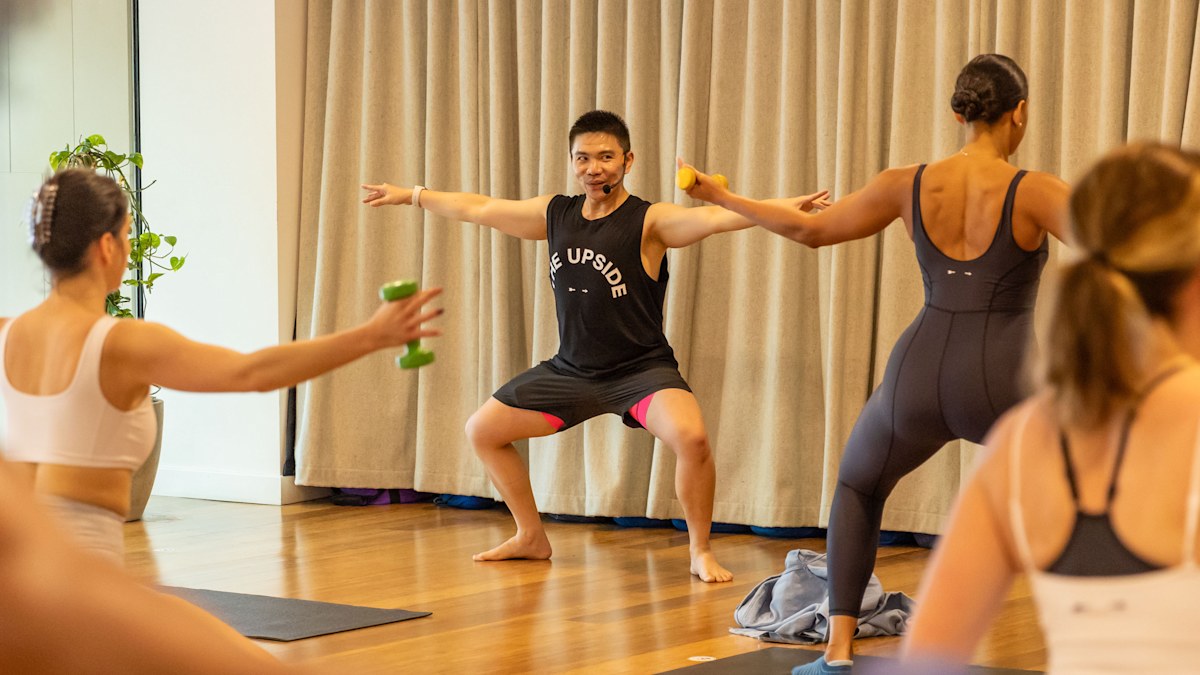
A forgotten art, yoga has long been thought of as the “soft option” in the fitness world.
Originating in ancient India as a spiritual practice, it was used to connect the mind and body to attain liberation. When it was brought over to the West, people used it as an easy yet effective exercise and an escape from their stressful lives.
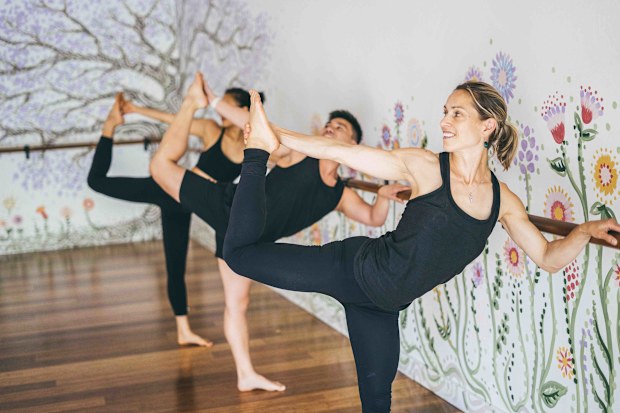
Many assume yoga is a “soft” workout option, but that’s a misconception. Supplied
Over the years, its popularity has fallen away, but not because it is too soft. In fact, the reason is quite the opposite, according to Simon Ngo, director of Pilates and Yoga at Flow Athletic.
“You need a little bit more grit to do yoga and Pilates,” he tells nine.com.au.
Ngo says most people who get into yoga “almost always take back what they have said” about it being “a soft option”.
Oftentimes, instructors will push the barriers of students, making them hold poses, pulse or hold their breath longer than they are comfortable with.
This really “tests out our physical and mental endurance, and how hard we are, inside and out,” Ngo explains.
It may “just” be static, isometric contraction, he adds, “but man oh man, it does get muscles to turn on.” This often makes people break a sweat as they eventually increase their range of motion and become more flexible.
“There’s always room for more variations that are usually unexpected,” he says.
Alongside the physical health benefits are, of course, the mental and emotional ones, which is what attracts many to the practice.
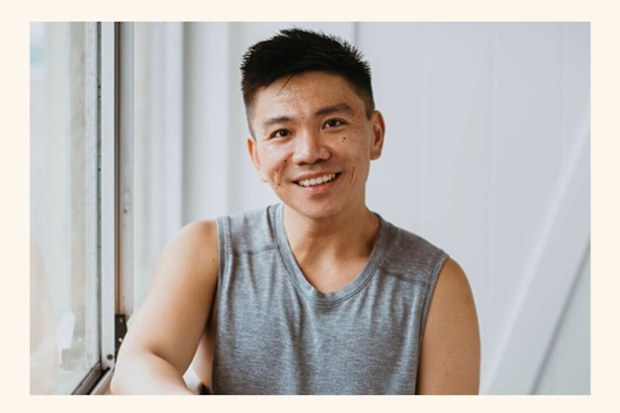
Simon Ngo says people who get into yoga “almost always take back” their dismissals of it as a tough workout. Supplied
But what was originally an appealing part of the practice has turned many away, especially after the COVID-19 pandemic and lockdown, Ngo says.
During the lockdown, many businesses had to go back to the basic modalities of the practice as they relied on livestreams to reach customers.
“That’s when people started to realise … ‘if I just take away all the fluffs, all the fancy Lululemon outfits, all the handstands, all the kombucha and whatnot [and] go back to basics’ … the very principles of yoga itself are very simplistic, and it’s calling for a little bit of confrontation and honesty,” Ngo says.
“I think yoga has the ability to make people wake up to that phrase, ‘The way we do one thing is the way we do everything’.”
Ngo takes the example of feeling good when holding a particular pose.
“The shape itself has zero meaning. Whether you do it, whether you don’t do it, whether the shape exists tomorrow or no longer exists, it has zero meaning. It’s just there,” he says.
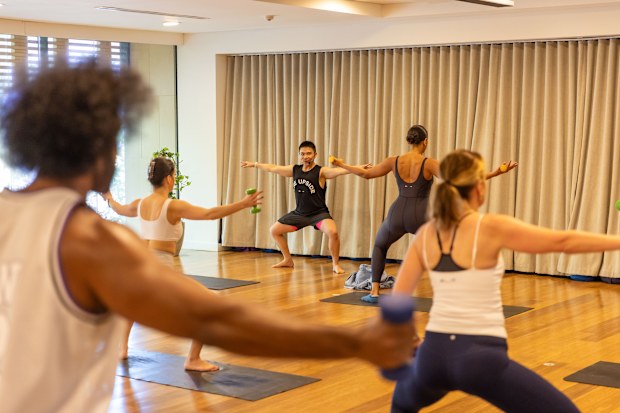
Lockdown changed attitudes to yoga. Supplied
“We are the ones who apply particular meaning or effects of the poses because we like it, because we hate it, and all these narratives that we attach to it.
“I think yoga has the ability to make us wake up to [the fact that] if you just show up and have zero attachments [and] zero expectations, then maybe life could be a little bit more unbothered.
“We can be more peaceful with ourselves and life.”
Once people realise this brand of yoga, despite being “easier” physically, is not for the faint of heart, they start to turn to more physically demanding and high-intensity exercises – not that there’s anything wrong with that, says Ngo.
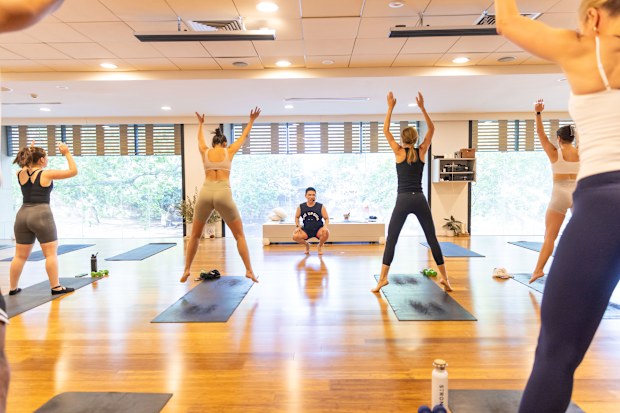
Regardless of what you do, try everything and make sure it’s right for you. Supplied
Regardless of what form of yoga you take on, Ngo says you should “be ready to figure out what actually sparked joy for [you] to move [your body], and to have consistency.”
“Because at the end of the day, no matter what you do, whether it’s running, whether it’s yoga, Pilates, without consistency, there are no results.”