
Your support helps us to tell the story
From reproductive rights to climate change to Big Tech, The Independent is on the ground when the story is developing. Whether it’s investigating the financials of Elon Musk’s pro-Trump PAC or producing our latest documentary, ‘The A Word’, which shines a light on the American women fighting for reproductive rights, we know how important it is to parse out the facts from the messaging.
At such a critical moment in US history, we need reporters on the ground. Your donation allows us to keep sending journalists to speak to both sides of the story.
The Independent is trusted by Americans across the entire political spectrum. And unlike many other quality news outlets, we choose not to lock Americans out of our reporting and analysis with paywalls. We believe quality journalism should be available to everyone, paid for by those who can afford it.
Your support makes all the difference.Read more
A new study challenges the conception that “every move counts” for brain health after researchers found that the context of physical activity makes a difference in lowering the risk of dementia.
The new USC research suggests that it’s not just the amount of physical activity but also whether it’s for work or leisure.
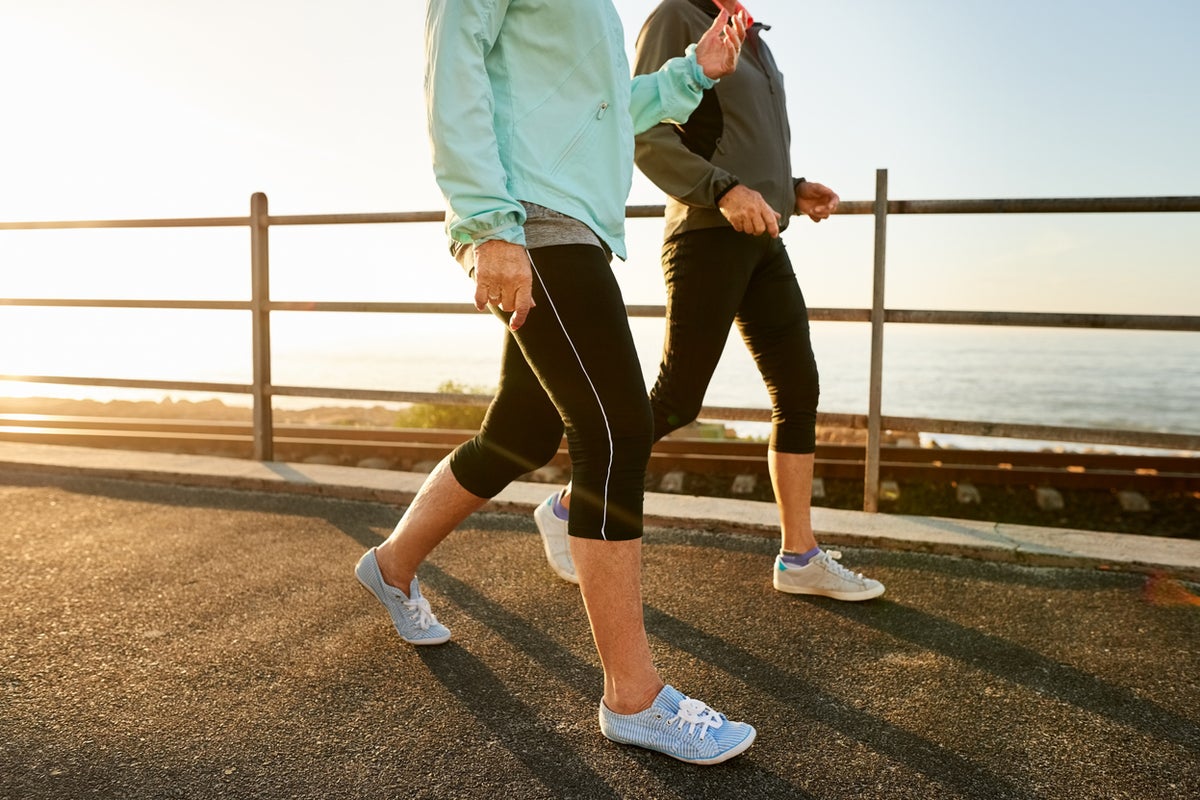
A meta-analysis of more than 4.2 million people revealed that recreational exercise—such as walking, cycling, running, swimming, or playing sports—is linked to a substantially lower risk of dementia. Physical activity performed as part of employment appears to be associated with a higher risk of developing the condition.
Published in The Lancet Public Health, the findings are the first to systematically investigate whether the so-called “physical activity paradox” applies to dementia. The paradox, previously documented in cardiovascular research, describes the unexpected observation that physically demanding jobs fail to deliver the same health benefits as voluntary exercise and may even heighten disease risk.
“The findings challenge the long-held assumption that ‘every move counts’ for brain health,” said Natan Feter, the study’s first author, postdoctoral fellow in Raichlen’s Evolutionary Biology of Physical Activity Lab at USC and researcher in the Graduate Program of Epidemiology at Universidade Federal do Rio Grande do Sul in Brazil.
 Occupational physical activity was associated with a 20% higher dementia risk, while active commuting showed a modest increase in risk, though those findings were based on just two studies (Getty Images)
The research team was led by David Raichlen, professor of biological sciences and anthropology at the USC Dornsife College of Letters, Arts and Sciences. Investigators analyzed data from 74 cohort and case-control studies involving more than 4.2 million participants aged 45 to 93 years across 30 countries. Participants were monitored for a median of 10 years, during which researchers tracked diagnoses of all-cause dementia, Alzheimer’s disease and vascular dementia.
Overall, individuals engaging in higher levels of leisure-time physical activity had a 24% lower risk of dementia compared with the least active participants. Household physical activity also showed potential benefits, though evidence was limited to a single study. In contrast, occupational physical activity was linked to a 20% higher dementia risk, while active commuting was associated with a modest increase in risk based on two studies.
Researchers explained that leisure exercise is typically self-directed, set at an enjoyable intensity, and often paired with social interaction or stress reduction. In contrast, physically demanding jobs frequently involve repetitive tasks, prolonged standing, heavy lifting, restricted recovery time, and exposure to workplace hazards.
The authors suggest that the negative health impacts tied to occupational activity are unlikely to stem from physical movement itself. Instead, they may stem from the broader social and environmental conditions that often accompany manual labor.
“Improving access to safe parks, walking trails and recreational facilities, ensuring people have adequate leisure time for exercise, and reducing harmful workplace exposures may ultimately prove as important as promoting physical activity itself,” Raichlen said.
With reporting by City News Service