
This story originally appeared in About Time, Esquire’s free weekly newsletter dedicated to the world of luxury watches. To get it free into your inbox every Sunday at 8am, sign up here
Modern watchmaking is obsessed with its own past.
Everywhere you look, brands are digging through the archives: reviving old references, shrinking cases, bringing back forgotten dial colours and case shapes, and generally making new watches that look quite a lot like old ones.
Which raises an obvious question for buyers: if vintage is the look you’re after, why not go straight to the source?
Plenty of people are. Sales of pre-owned watches – from nearly new models to genuinely vintage pieces – reached $16.7 billion [£12.8bn] in 2025, up 36 per cent in a year. And when it comes to genuinely old watches, there’s something a reissue can’t quite reproduce. An original 1960s or ’70s watch has age, proportion, patina and the simple fact that it has already lived a life.
Vintage shopping also opens up whole corners of watchmaking that no longer exist. Rolex once made rectangular watches. Omega made watches for the RAF. Audemars Piguet made all sorts of beautiful things that weren’t Royal Oaks. There are smaller watches, odder watches, watches from defunct brands, as well as completely unfamiliar versions of names you thought you knew.
And with vintage, every watch is slightly different. As collector-dealer Eric Wind puts it: “I love the history and unique elements of a vintage watch: the patina, the aesthetics, the story, and the survival of the watch over decades.”
Then there is the hunt. Walk into a modern watch shop and you probably know roughly what will be there. Vintage doesn’t work like that. You might go looking for a 1960s Rolex and come out wanting a 1980s Piaget you’d never heard of. The more you look, the more you learn!
Of course, vintage comes with a few things to watch out for. Parts get changed, cases get polished, dials get messed around with and paperwork doesn’t always prove what people think it proves. Which is why who you buy from matters almost as much as what you buy.
With that in mind, this week About Time spoke to nine of the UK’s best vintage-watch dealers about what sets them apart, what they wish more buyers knew, and the watches in their current stock they’re most excited about.
Some have been doing this for decades; others belong to a much newer generation. Some specialise in one brand or period, while others will sell you something really, really off the beaten track.
Between them, they show that vintage is less about looking backwards than finding watches you simply don’t come across anywhere else.
 The Vintage Watch Company
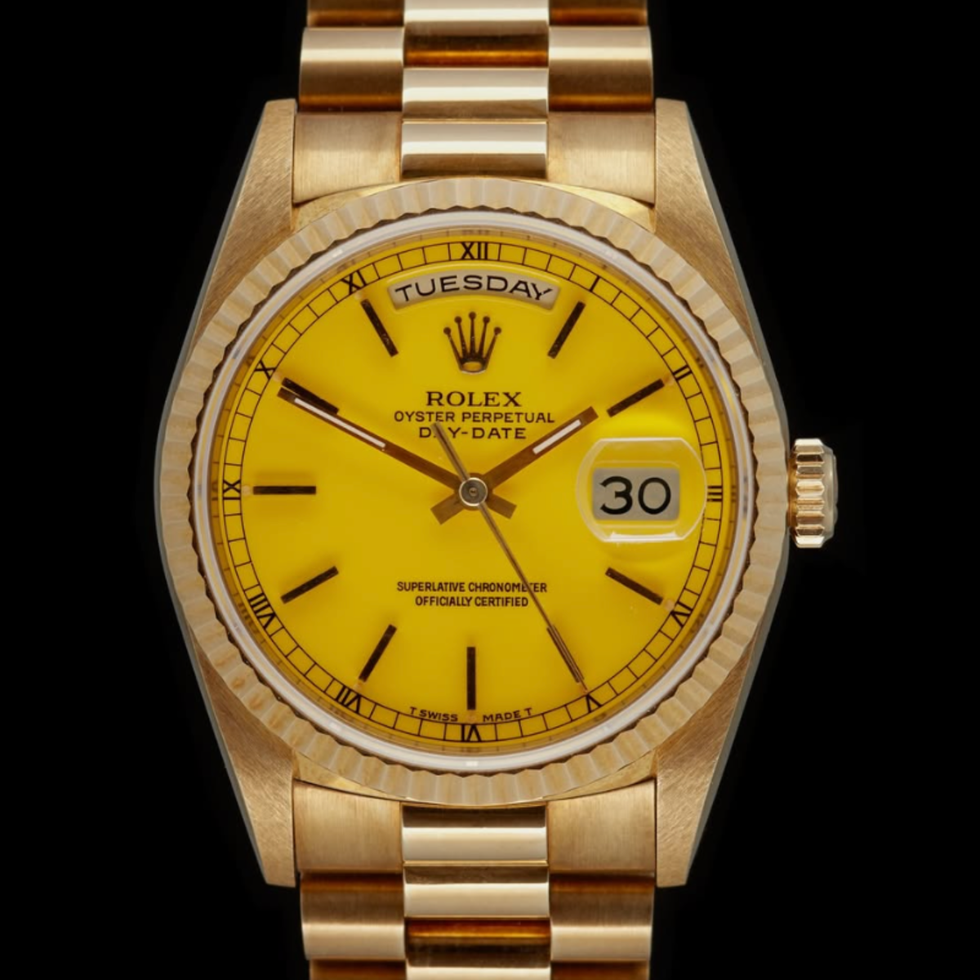
A c.1989 Rolex Day-Date ref. 18038 in 18ct yellow gold with yellow lacquer ‘Stella’ dial, from The Vintage Watch Company
The Vintage Watch Company
The Rolex dons
There are vintage Rolex dealers, and then there is The Vintage Watch Company. Asked what sets the family-run Burlington Arcade institution apart, co-owner David Silver points to more than 30 years concentrating on a single brand.
“I suppose our standout feature is our dedication and commitment to one brand and one collection,” he says. The result is what Silver says is the largest collection of vintage Rolex on display anywhere in the world – enough to make customers “jump on a plane and come visit”. “One collection in one place housed in the Burlington Arcade in London,” he says, “a landmark within a landmark, as it were.”
It didn’t start that way. When his father John established the business, vintage watches barely constituted a market. The shop bought on design rather than dial name: rectangular watches, round watches, officer’s watches, from Hamilton, Omega, Patek Philippe, Rolex and Longines.
The customers, in effect, made the decision for them.
“Rolex would always outsell everything else because it was so mind-blowing,” Silver remembers. Customers couldn’t believe The Crown had once made rectangular watches that looked like Cartier Tanks. “So the eureka moment was: ‘Well, what if I focus on the one brand, Rolex, and then create the largest collection we can?’”
Today that collection runs to more than 2,000 watches. The depth is enough to make your head spin: the Submariner selection alone runs to tens of examples, spanning everything from 1950s “James Bond” models to later tropical-dial and Tiffany-signed pieces. Three decades of photographing the watches passing through the shop has also created an extraordinary visual archive and the basis for Silver’s Vintage Rolex books.
His advice to collectors is pleasingly straightforward. “Buy what you love and not what you believe to be rare,” he says. One of the biggest mistakes buyers make is choosing something because they’ve read that it’s valuable: “It almost always remains in the drawer and never gets worn.” Silver applies the same test to his own stock. “If I don’t love it neither will you!”
Their pick: Early-1950s Rolexes. “Currently I love the classic pieces from the c.1950s,” says Silver, who characterises the period by slim cases, elegant lugs and a wide variety of dial designs.
Tortoise Watches
The tool-watch nerd
Arwind Jhand was a collector for a decade before turning the obsession into a business. Tortoise, based in London’s Grays Antique Market, specialises in vintage tool watches from the 1960s and ’70s – before drilling down into an even narrower speciality.
“We even go further and would say we are the best place on the planet for vintage Zenith El Primero watches from the 1969–1974 era of the first calibre 3019PHC,” Jhand explains.
“Being a collector for a decade before opening a shop, a lot of others in the scene know me as a nerd that loves these watches,” he says. “I feel this mindset of collector first has translated into the way our customers experience shopping with us. We spend much more time researching and discussing watches than actually selling them.”
Jhand is blunt about the premium attached to vintage “full sets”. “The box and papers being valuable is a myth. Please just buy the watch you see and like, the condition of that is much more important.”
Or, to put it another way: “You can’t wear the box on your head like a hat. Nor are the papers a substitute for a shirt.”
Their pick: 1980s Zenith Port Royal Moonphase ref. 95.0102.418. “This is without a doubt my all-time favourite piece,” Jhand says, having even begged Zenith to revive it. The titanium case keeps it light, the bracelet “feels like satin”, and although it measures 40mm, the stepped case wears more like 37mm. He loves the way the matte dial “sucks in light” while the applied markers catch it, as well as the flashes of red, full calendar and moonphase. “So much packed into so little a space! Wonderful.”
 Subdial.
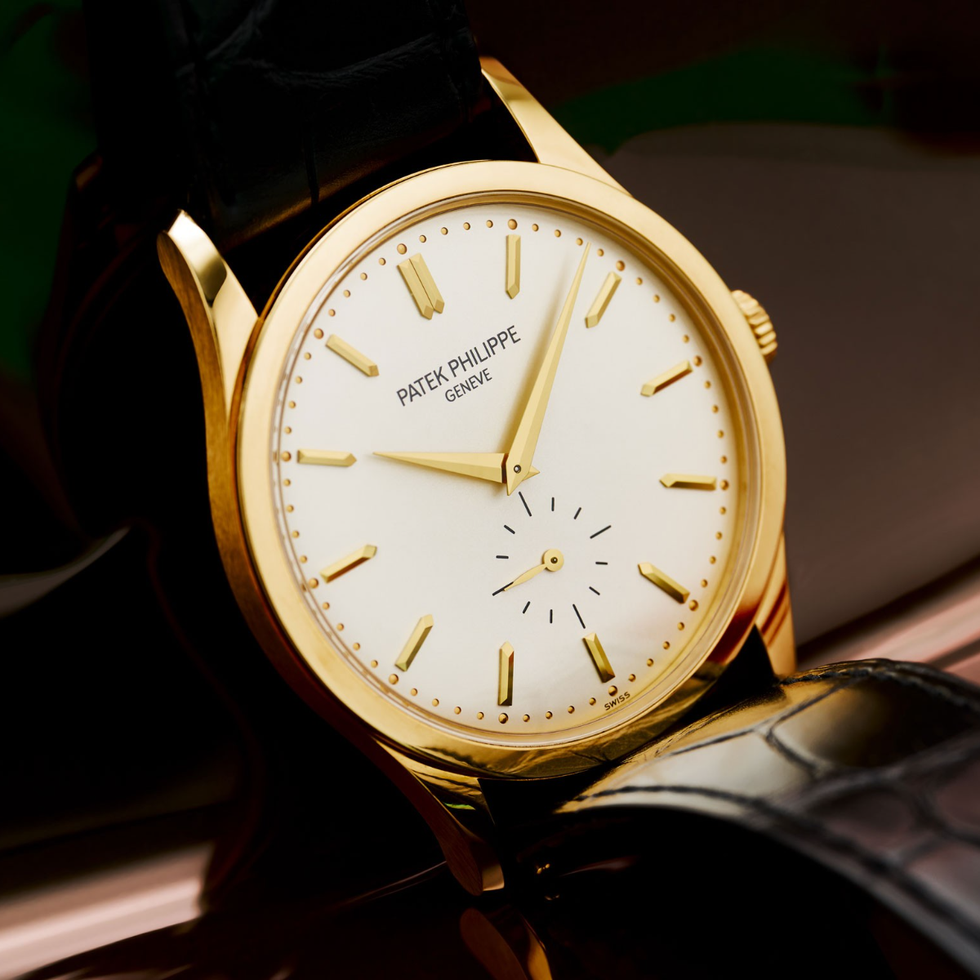
Patek Philippe Calatrava ref. 5196J-001 in 18ct yellow gold with silver dial and small seconds, at Subdial
Somlo London
The Omega authority
Somlo London has been around for 57 years and three generations, but its unique calling card arrived in 2008, when it became the first – and remains the only – official Omega Vintage Store. That means, Daniel Somlo tells us, it is “the only place in the world where you can buy a vintage Omega watch that has been verified by the Omega archives”, with its date of manufacture and original country of delivery supplied.
The relationship came about after Swatch Group founder Nicolas Hayek noticed something odd: Burlington Arcade was already full of vintage-watch dealers, but hardly anyone was selling vintage Omega. He approached George Somlo and a partnership followed.
The current stock gives a sense of the range. There’s a 1959 Railmaster, first-generation Seamaster 300s, an early-1960s Speedmaster, a 1975 Flightmaster and, at the more eccentric end, a yellow-gold 1952 Carré bumper automatic.
Somlo’s interests extend much further – its wider collection spans centuries of horology – but the business deliberately tends not to trade in Rolex sports models or many watches newer than the 1970s. “We pride ourselves in being collectors as well as dealers,” Somlo says, “so we enjoy guiding customers through every purchase to find them the perfect watch.”
Somlo is also sceptical of treating watches as investments. “We always advise people should buy with their heart rather than thinking what they will be worth next year,” he says. If it appreciates, great; if it doesn’t, “you still have something that you love and can enjoy.”
Their pick: 1960s Omega Constellation. Somlo calls these “criminally undervalued”, particularly the pie-pan dial models with dog-leg lugs. Just avoid over-polished examples: round off those angular, faceted lugs and “it loses much of its appeal”.
Subdial
The collectors’ clubhouse
Subdial is what happens when the vintage-watch dealer is reimagined as a tech platform, service centre and members’ club.
Founded by Christy Davis and Ross Crane in 2018, its physical heart today is the 4,500 sq ft Clubhouse in London’s Farringdon.
Asked what people come to Subdial for, Davis has a simple answer: “The emotion of watches.” Collecting, he says, is “a mad thing that people do purely out of passion”, so the aim is to make discovering watches exciting – highlighting “under-appreciated pockets of collectability”, telling the stories behind them and bringing collectors together.
“Our Clubhouse has become the centre of the watch community in London,” Davis says, “where you can go beyond the watches to meeting collectors and building friendships.” It’s a very different proposition from peering through a Mayfair shop window – and evidence of how much the vintage-watch business has changed.
His most useful buying advice is considerably more mundane. Check the bracelet fits. “A bit embarrassing,” Davis admits, but he was so excited about his first few vintage purchases that he panic-bought them, then endured “six months of sifting through eBay listings looking for extra links before I could actually wear the thing”.
Their pick: Cartier Tank Normale in platinum. “It’s completely timeless, feeling both modern/futuristic and also classic at the same time,” Davis says. “The bracelet transforms it into a completely different watch.” He wants one for his own collection, too: “Working in watches can be painful!”
 Finest Hour Timepieces
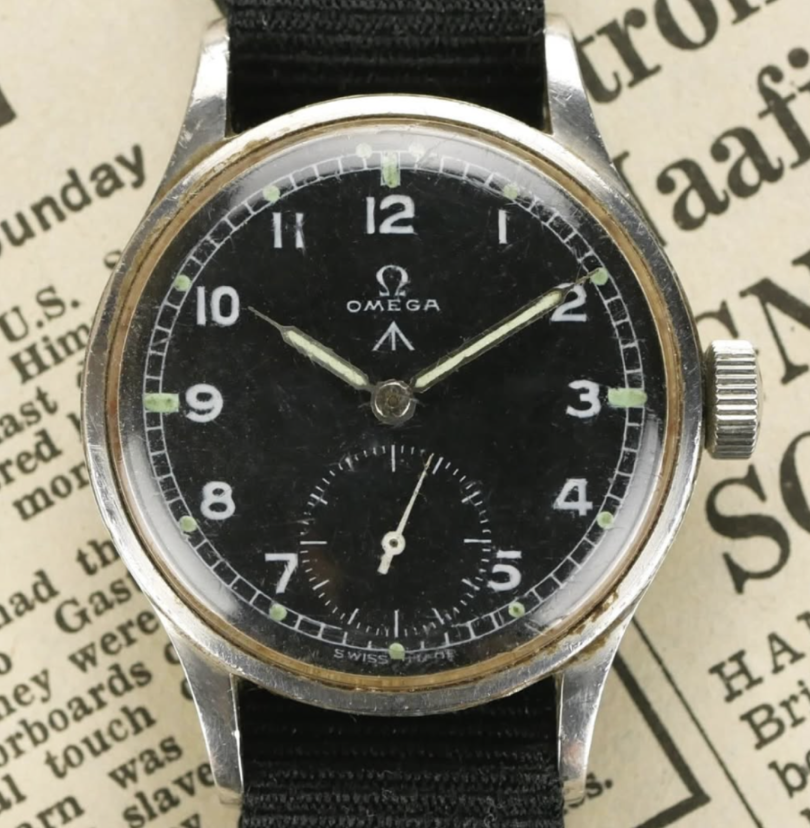
Omega WWW “Dirty Dozen” British Army wristwatch, c.1945, with MoD replacement dial and cal. 30T2 movement, from Finest Hour Timepieces
Finest Hour Timepieces
The military specialist
If you want a vintage military watch, go to someone who is obsessed with vintage military watches. Chris Herbert founded Finest Hour around a decade ago and today deals exclusively in British and German military wristwatches and clocks from the Second World War onwards. A glance through the stock tells the story: RAF-issued Longines and Omega Weems watches sit alongside the likes of 1970s Hamilton military chronographs.
What sets it apart? “I would like to think it’s a combination of passion and professionalism,” Herbert says. “Finest Hour evolved 10 years ago from my deep-rooted love and obsession with vintage military timepieces. They are my life’s passion and work.”
“We sell nothing else,” he continues. “We are collectors first, dealers second, and we genuinely appreciate the extraordinary history behind the watches we sell.”
Herbert also wanted to create the kind of dealer he’d wished existed when he was a novice collector himself. “From the outset, I wanted to offer the best and rarest pieces I could find,” he says, while providing the level of professional service he felt had often been lacking.
That’s particularly important with military watches, where tiny details can be the difference between something historically significant and something that merely looks the part. Herbert’s advice is to research heavily and “buy the seller, not the watch”. He compares it to buying a Porsche: why go to a generic car dealer when you could go to a Porsche specialist? “Patience is most definitely a virtue, and cheap can often prove very dear.”
Their pick: Omega “Weems” Mk VIIA. Herbert calls it “the ultimate pilot’s watch of the Second World War”. Only 2,000 were issued to the RAF in 1940. “It evokes a powerful surge of emotion in me when I think of who may have worn it, and what they might have witnessed during the dark days of the Battle of Britain.”
Watch Brothers London
The neo-vintage specialist
Watch Brothers London grew out of Ben Dunn doing what good watch obsessives tend to do: disappearing down increasingly obscure rabbit holes. Before becoming a full-time dealer, he wrote detailed reference guides to watches he couldn’t find enough information about, including Audemars Piguet’s ref. 14790 and Patek Philippe’s 3940.
Research eventually turned into a business where a platinum Patek Philippe 3970 perpetual-calendar chronograph can sit alongside an early-’90s Audemars Piguet perpetual calendar and a 1940s Vacheron Constantin made in aluminium. In other words, slightly more interesting territory than another row of steel sports Rolexes.
So what does Dunn think people specifically come to Watch Brothers for? “Hopefully there are a few things!” he says.
First is the personal approach. These days the “Brothers” bit is finally literal: Ben’s brother Rob has joined him. “My brother and I are at the end of every WhatsApp, FaceTime or in-person meeting,” Dunn says. “We genuinely enjoy getting to know collectors and keeping things relaxed and friendly, rather than operating as a faceless buy/sell business.”
Then there’s the curation. “We’re completely obsessed with neo-vintage, particularly perpetual calendars and complications from that era. It’s a very specific corner of the market, but one we genuinely love and spend a huge amount of time researching.”
Unlike many dealers operating largely on consignment, Watch Brothers also owns the vast majority of its stock. “We actually put our money where our mouth is,” Dunn says, which gives the business more flexibility when buying and selling.
His advice is to remember the bit between acquiring and selling. “Enjoy not just the hunt or the sale, but the ownership too. Make memories with the watch, maybe add a little mark or two along the way – unintentionally, of course – and just relax and enjoy the journey.”
Their pick: Patek Philippe ref. 765 pocket watch. “I’m slightly obsessed with it!” Dunn says. With guilloché across both dial and caseback, a multi-step bezel and gold dial, it makes his wider point nicely: “You can get a serious amount of watch for your money when you start looking at pocket watches. It’s a really fun corner of collecting.”
 Maunder Watch Company
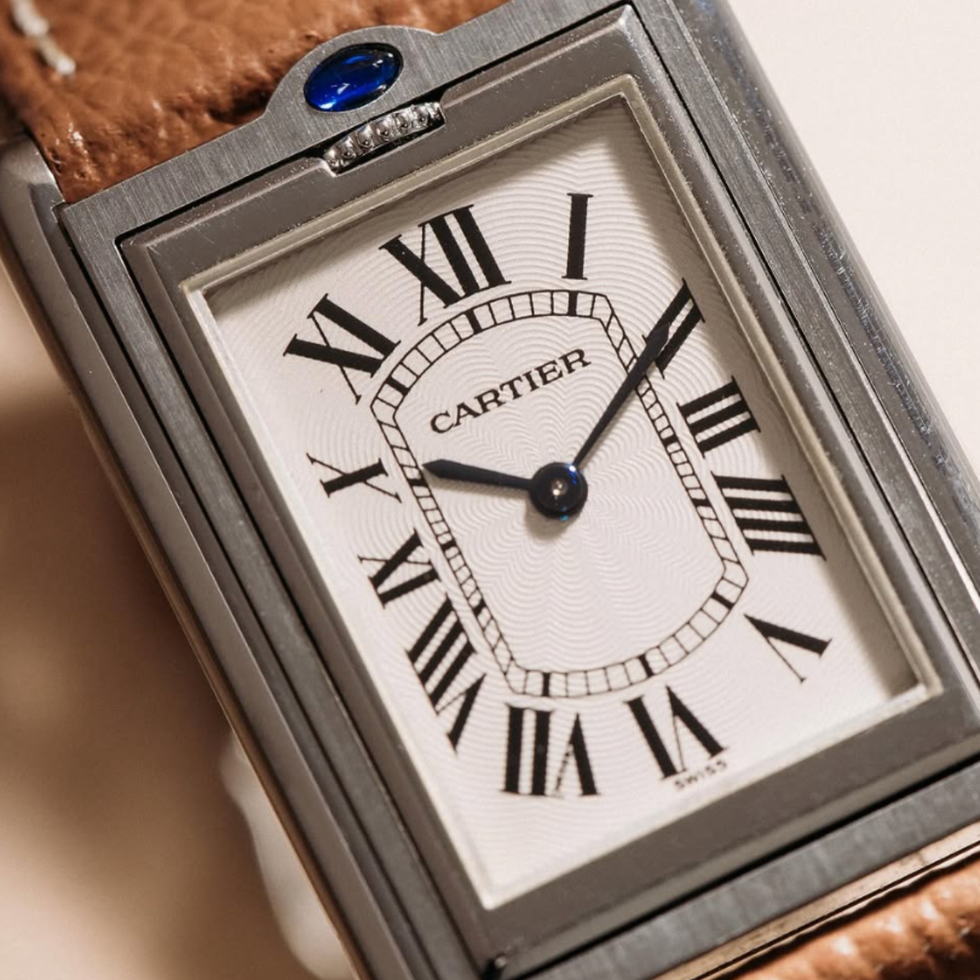
Cartier Tank Basculante ref. 2390, a mechanical stainless-steel model with silver guilloché dial, from Maunder Watch Company
David Duggan Watches
The old-school connoisseur
David Duggan comes from an era of the vintage-watch trade when finding stock meant provincial markets, Portobello Road and the Bond Street Antiques Centre rather than Instagram and WhatsApp. He remembers “Paul Newman” Daytonas sitting unwanted at £350 apiece, and an Italian dealer friend eventually persuading him to broaden his focus from Rolex into Patek Philippe.
That wider taste still shapes the stock. You’re as likely to encounter the familiar Rolex territory – Submariners, Explorers and Datejusts – as something more patrician from Patek or Vacheron Constantin. Ask Duggan what gives his business its USP and the answer is straightforward: “Our experience, expertise and integrity.”
He began dealing in the 1970s, while Tony, Richard and Ian, who make up the rest of the team, have each worked with high-end watches for at least 35 years. “Combined, that adds up to over 160 years of buying, selling, repairing and restoring watches,” Duggan says.
That experience has also left him with a contrarian streak. Duggan has long advocated looking at what other collectors are ignoring: rectangular Pateks, time-only Vacherons and Audemars Piguets from the 1950s and ’60s, and vintage Longines chronographs. He also has a weakness for alarm watches, particularly the Vulcain Cricket. “With many modern alarm complications, you need the ears of an owl to hear them,” he says, “whereas a Cricket will have you up and out of bed in a flash.”
Their pick: Patek Philippe ref. 5970R, 2006. “My favourite watch currently in stock must be the 5970R,” Duggan says. “Not the most expensive, but a gorgeous rose-gold perpetual-calendar chronograph, perfectly proportioned, with a magnificent movement.” His conclusion: “Probably the best piece from Patek Philippe so far this century.”
Maunder Watch Company
The quality-control freaks
Maunder is another family-run Burlington Arcade business, but rather than specialising in one brand or era it deals across vintage and modern watches. That can mean anything from a double-red Rolex Sea-Dweller ref. 1665 to a diminutive yellow-gold Audemars Piguet Royal Oak.
“I think people come to us for a combination of knowledge, attention to detail and, most importantly, trust,” Maunder Watches tells us. “We’ve spent many years building a strong reputation for offering some of the very best examples of important vintage watch references.”
That experience, the company says, means being “very particular about what we buy and sell”.
“Condition and originality are everything,” they say. Too many buyers overlook exceptional vintage watches simply because they don’t have the paperwork, when a genuinely original and well-preserved example is ultimately more important. “With vintage watches, you’re buying the watch first and the accessories second.”
Their pick: Rolex Military Submariner ref. 5513. “At the moment, it has to be the full-spec 5513 Military Submariner, or ‘Milsub’,” the company tells us. This example retains the key details: original 60-track bezel insert, sword hands, engraved caseback and fixed spring bars. “Finding a Milsub with this level of specification, originality and overall quality is increasingly difficult.”
 Watches of Knightsbridge.
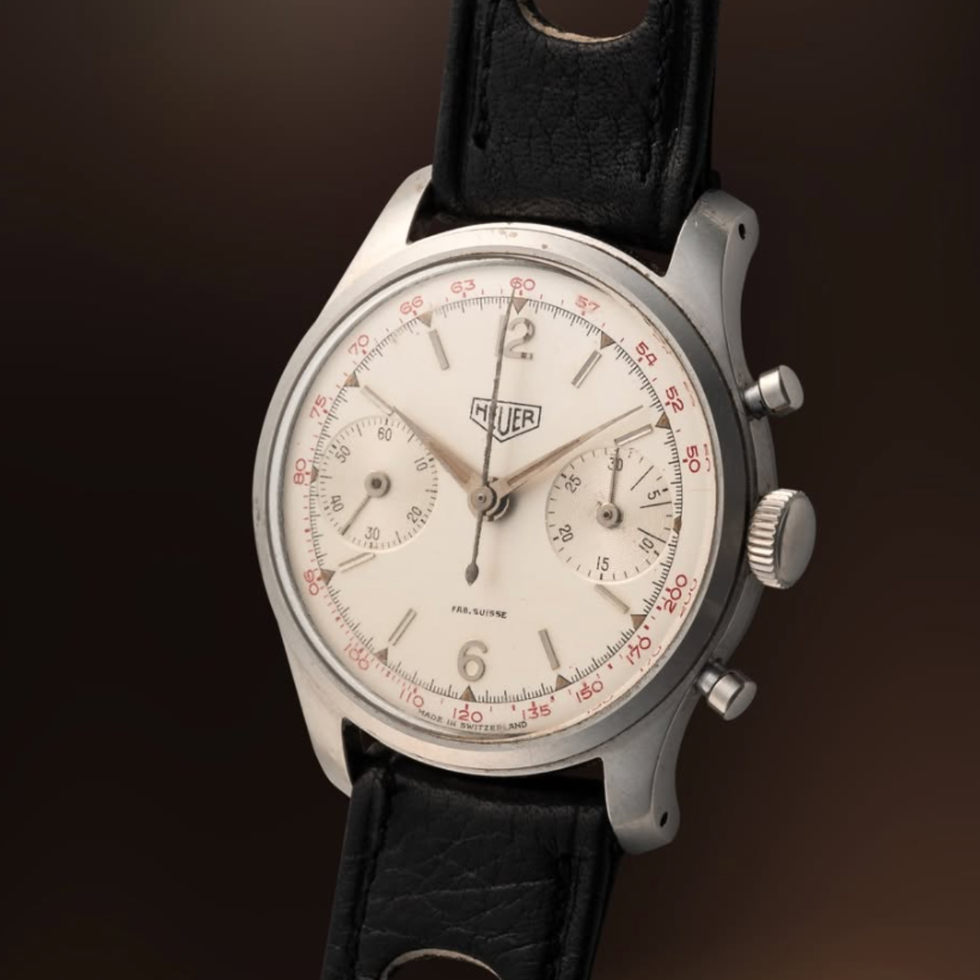
1950s Heuer “Pre-Carrera” chronograph ref. 404T in stainless steel, with Fab Suisse dial and red tachymeter scale, at Watches of Knightsbridge
Watches of Knightsbridge
The trend spotters
The Sutton family’s roots in trading go back more than 50 years to Morris Sutton’s antiques shop at 91 Portobello Road. His son Simon – who initially pursued a career as a professional downhill skier – followed him into antiques before his passion for watches took over. Simon and his son Toby founded Watches of Knightsbridge in 2011, and today the business combines direct and private sales with its specialist auction operation.
The breadth is half the attraction. A military IWC Mark 11 can share space with an elegant Breguet Classique, a vintage Cartier Baignoire or a sculptural 1970s Piaget.
When we ask what separates one vintage dealer from another, Toby Sutton’s answer is “curation, quality and knowledge”. Between him and his father there are more than 50 years’ experience, which allows them to range across the obvious collector staples – “Day-Dates/GMTs/Tanks/Genta designs” – while keeping an eye on what’s coming next.
That currently means things such as “stone dial Piaget/vintage Calatrava/Rolex Bubble Backs”. As Sutton puts it: “We have found being early and moving with collector trends helps keep our inventory up to date and more interesting.”
Their pick: 1980s Piaget Polo in solid gold with onyx dial. Sutton calls it “the ultimate Piaget model and so much better than the new version!” Also on his radar is a DeLaneau Octagonal with a malachite-and-diamond dial designed by Jean-Claude Gueit soon after he left Piaget: “very similar design aesthetic and quality but still fly under the radar in terms of current market value.”