
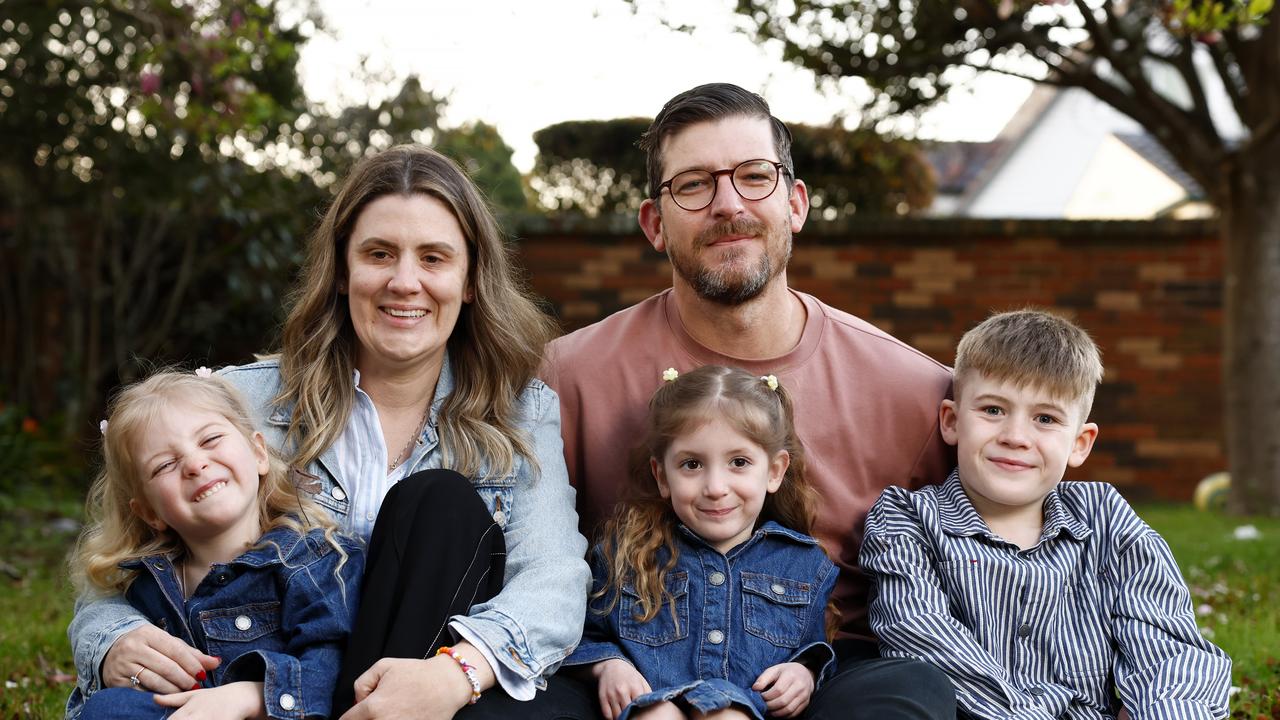
A passenger’s stinging remark towards Craig Anderson and his crying child on a Sydney ferry was the “straw that broke the camel’s back”.
The new dad was commuting to work in 2017 with his six-month-old son, Clarke, who was crying on-board a packed peak hour service.
“I’ve never felt really comfortable in public places with Clarke, I had this thing in my head about how he impacted others in public,” Anderson says.
“So I took him outside on the ferry deck, but by the time I went back in, the ferry had gotten really packed, and I just wanted to get the pram.
“There was this older couple sitting where the pram was. Clarke was still losing his mind, and so I asked (the passengers) if they could move.”
“They didn’t want to get up, so I asked again; ‘Sorry guys, I really need to get to the pram’.
“I heard her say to him, ‘Why would he park the pram there?’ and he just said, ‘Because he’s a dickhead’.”
What the passenger had no way of knowing was that Anderson and his wife Rebecca were first-time parents; that Rebecca was struggling with postnatal depression, and had returned to work, meaning for two days a week their son travelled into the city with Anderson to be dropped off at daycare; and that Anderson himself was struggling too.
“Logically and realistically, that’s just two muppets being muppets, but having Clarke screaming on a packed ferry, where I think everyone’s looking at me, I’m already on 9/10 (for anxiety), and that comment just fed into everything that I was feeling at the time,” he says.
“That I was failing, I had a wife who had postnatal depression and I couldn’t support her, I had a son that I didn’t like being in public with, and that I’m the worst father in the world.
“And at that moment, 99 per cent of what I could think about was stomping on this guy’s head. That was all I could think about.”
A kind bystander helped retrieve the pram, but for Anderson, the damage was done.
“The thought of leaving the house with Clarke was an absolute nightmare to me. I would get physically sick at the thought of it,” he says.
“I started making all these ridiculous excuses to Bec about why we couldn’t leave the house.”
Postnatal depression and anxiety affects about one in 10 new and expectant dads.
Professor Richard Fletcher founded the University of Newcastle’s SMS4Dads support network for new fathers, and said the symptoms of postnatal depression or anxiety could be harder to spot in men for several reasons.
“Often the symptoms are different for men and women,” Fletcher says.
“For both, there’s changes in your appetite, changes in your sleep … but what we notice is that, in men, it’s irritability, grumpiness, and maybe then saying, ‘I just gotta go … for a run, I’ve got to go and play this sport’ or dads who will stay at work because being at home is really stressful with a new baby
“For men, they can feel like they personally are failing or can’t manage to enjoy what’s supposed to be a wonderful thing; a new baby is supposed to be a blessing and supposed to be something that would just make you happy, yet here they are stressed out.”
Fletcher says a lack of consideration in the medical field, and stigma, also make it harder for dads to admit they are struggling.
“For mothers we have a national approach, where a midwife will quiz them with 10 questions for their antenatal and postnatal assessment about how they’re going mentally, there’s a system for picking up mothers who are not doing well, but we don’t have a system for fathers,” he says.
“It’s something that dads talk about all the time. When they’ve had a baby and they’re out in the community, people don’t say ‘How are you’, they say ‘how’s your wife, how’s the baby’. So fathers, both formally and informally, aren’t being asked how they’re going.
“And there’s still a lot of stigma in saying you’re struggling mentally.”
Luckily for Anderson, wife Rebecca quickly cottoned on when her husband began refusing to leave the house with their young son.
“After a few weeks she put two and two together and said, ‘What’s going on, you’ve got to level with me, something’s not right’,” Anderson says.
“So I told her about the incident on the ferry.”
Rebecca had been receiving mental health support from Gidget Foundation Australia, which supports new and expectant parents’ wellbeing through free services such as support groups and counselling, and encouraged Anderson to make an appointment.
“I almost cancelled it about 100 times, like ‘what am I doing going to a postnatal depression specialist, I’m a man, this is ridiculous’,” he says.
“I ended up going ‘OK, well, worst case scenario I can just ask questions about how I can help Bec’. But I walked in and within five minutes, the psychologist said, ‘This is postnatal anxiety disorder’.
“I was flabbergasted, but what I felt was relief more than anything. I’m not just a shit father, I’m not failing. I’ve got a treatable condition that I can work on.”
Rebecca says the diagnosis was a turning point for their family.
“We just stopped trying to hide the fact that we were struggling, and we just accepted help,” she says.
“I think that was 70 per cent of what got us through that time was, you know, being honest about what we were going through.”
The couple faced even greater hurdles come 2021 when Rebecca fell pregnant again – with twins Georgia and Eloise. She struggled with preterm labour complications and her mental health, before the girls, who were born premature, spent eight weeks in neonatal intensive care.
“You can’t explain the stress to people, the girls needed this special, script-only formula, it was desperate, we couldn’t find it anywhere,” Anderson says.
“I put on my shoes and went for a walk up to the headland, sat down on this rock, and then suddenly just had this overwhelming urge to jump off.
“Everything just hit me … I just couldn’t see a way through.”
Anderson made it home and immediately rang to book an appointment with a Gidget Foundation psychologist.
Five years on, the Andersons are making it work by prioritising the habits that help them both stay mentally strong, thanks to the Gidget Foundation, which is marking 25 years of supporting families adjusting to parenthood.
“The girls got a bit older, things got a bit easier. If we’re not really strong on our disciplines of what’s worked for us, like time to ourselves, being active, it’s really easy to slip back into that state of mind,” Anderson says.
“I get emotional about it, the Gidget Foundation, we would not be here, one of us or both of us, without them.”
The Gidget Foundation’s Mathew Aquilina says more support is needed for new dads in the healthcare space.
“Dads are still often overlooked in screening, in research, in policy and service delivery … we ideally need routine mental health screening and referral pathways that include fathers, not just mothers,” Aquilina says.
“And (dads) don’t have to struggle alone, it can be a really challenging time in a perinatal period and it’s really important to reach out to someone if you’re not feeling like yourself in that time.
“The only way you can provide for your family and be there for your family is to also kind of ensure that you’re doing OK as well.”