
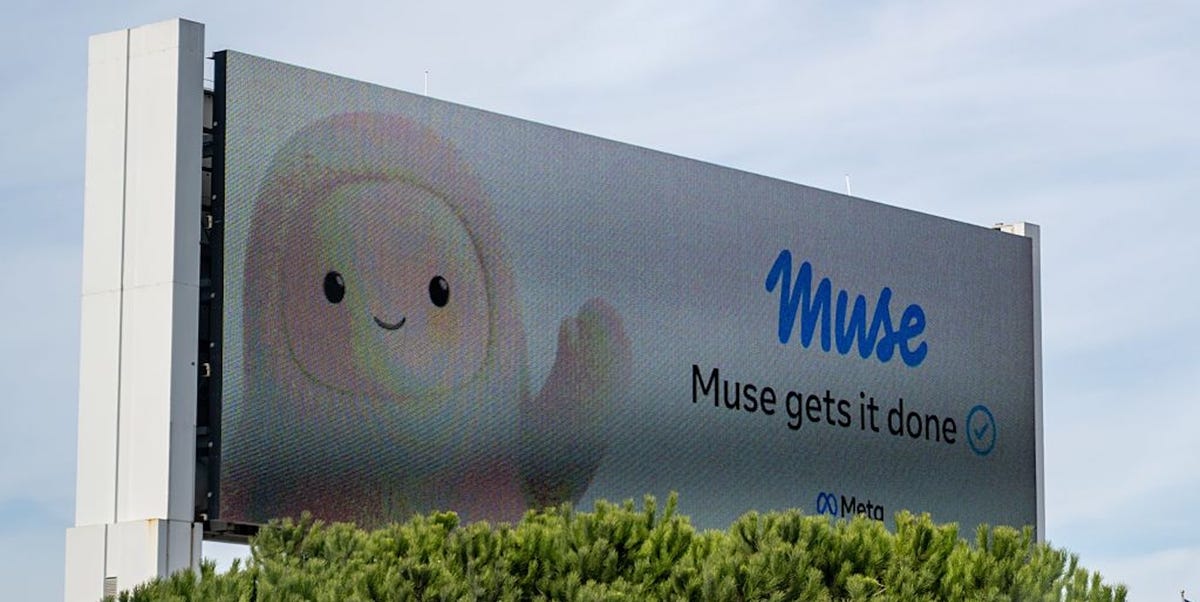
Since Mark Zuckerberg announced Meta’s new cutesy AI assistant, Muse, last month, I’ve been having a bit of a ponder over why, exactly, he chose to call it that. Beyond being the name of a Noughties rock band (who recently gifted their Instagram handle over to Zuck’s gadget), “muse” comes from the ancient Greek word “Moūsa”, referring to the classical goddesses believed to offer divine inspiration in art, poetry and deep thinking.
Ironic, then, that Meta would choose this name for a small robotic creature designed specifically to relieve you of the burdensome task of thought.
Instead, the Muse agent – and the upcoming Charm, set for release in December in the US – will “go shopping for you”, “book meetings” and “draft replies”. It is an AI that describes itself as “always working for you”, dealing with the mundanities of everyday life so that you can get down to the important stuff.
Like, presumably, doom scrolling on Meta-owned Instagram.
The personal AI assistant is hardly a new concept. Unless you’ve been living under a screenless rock (which, frankly, sounds quite appealing), you’re probably familiar with ChatGPT and Claude, which launched in 2022 and 2023 respectively. But Muse is a slightly different proposition. This time, AI has a body. More importantly, it has a face.
Di Fu, an assistant professor and lecturer in the UK who researches human-robot interaction, says the physical form of the Muse Charm could change how we relate to the technology. “What is interesting about the Muse Charm is not simply that Meta has put AI into a physical device, but that it gives an increasingly capable AI agent a persistent social presence,” she says.
“Compared with an app that we deliberately open and close, a small portable object with a voice, face and character can feel much more continuously present in everyday life.”
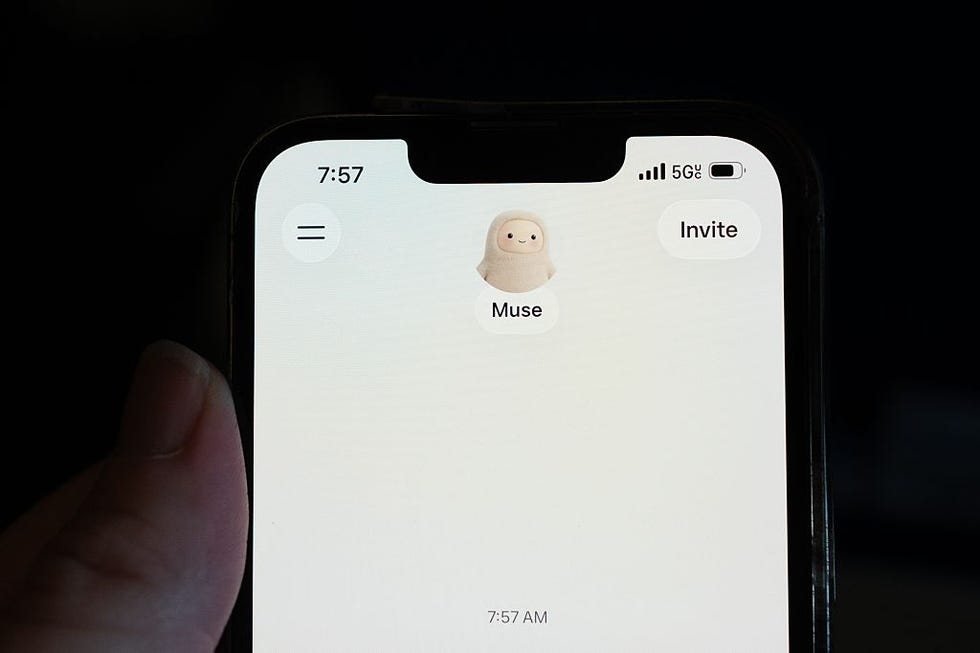
Users seem keen to hand that busywork over. At the time of writing, Muse has passed 6.6 million downloads and boasts over 1.8 million daily users, according to Reuters. Right now the app is only available in the US and Canada, where is has reached No 1 on the US App Store, putting it ahead of established AI names including ChatGPT.
There is, unsurprisingly, a lot to like about Muse. On Reddit, users have expressed their enthusiasm for the new chatbot, mostly praising its ability to take over mundane tasks and simplify complex issues. One user writes: “Muse is awesome. I named mine Rory. It’s done 4 or 5 things for me where I was like hell yea this is what I been hoping AI would be like lol.”
Smith Collection/Gado
Another describes using Muse to run a large website almost entirely through the agent: “I don’t even need to hire people to create content any more. All I have to do is supervise my ai agent and help them when they did something wrong.”
Meta is pushing that idea much further. At Meta’s Connect confrence, Zuckerberg described Muse as the “centrepiece” of the company’s AI ambitions, predicting that it will eventually become the “personal superintelligence” that billions of people use “to accomplish their goals and improve their lives”.
It is an unusually grand vision for something that currently lives on your phone and, soon, in a 5cm charm you can carry around with you. But the trajectory is clear. Meta wants Muse to move beyond answering questions and into the machinery of everyday life: shopping, booking appointments, managing emails, navigating websites and, eventually, handling increasingly consequential tasks on your behalf.
The thing is, this requires more access. The more things Muse can do, the more accounts, information and permissions it needs to complete them. Meta says users can choose which services to connect and control what Muse is permitted to access, while an audit trail allows them to review what the agent has done.
Not everyone is enthusiastic about handing over the keys, with some Reddit users citing privacy concerns – and it is difficult to separate that suspicion from Meta’s history with personal data. In 2004, when Facebook was still a fledgling Harvard project, Zuckerberg privately joked about the information users had handed over to the site. “People just submitted it,” he wrote. “I don’t know why. They ‘trust me’. Dumb fucks.” The messages, which also referenced his access to users’ emails, pictures and addresses, were leaked and published years later. Zuckerberg subsequently said he regretted the comments.
Then there is the matter of the Muse Charm itself. It comes on a keychain, anthropomorphised as a cute, Moshi Monsters-esque creature. That presents its own problem. Humans have long been willing to give personalities and consciousness to inanimate objects and technology.
I have a friend, 26, who carries a multitude of cute keychain creatures on her bag at all times. “You have to have a companion with you,” she tells me. They’re “just, like, my little guys”. The psychologist Neil Frude described this tendency through his theory of the “Intimate Machine”, arguing that computer technology can stimulate our innate tendency to attribute life and consciousness to inanimate objects. He calls this tendency “animism”.
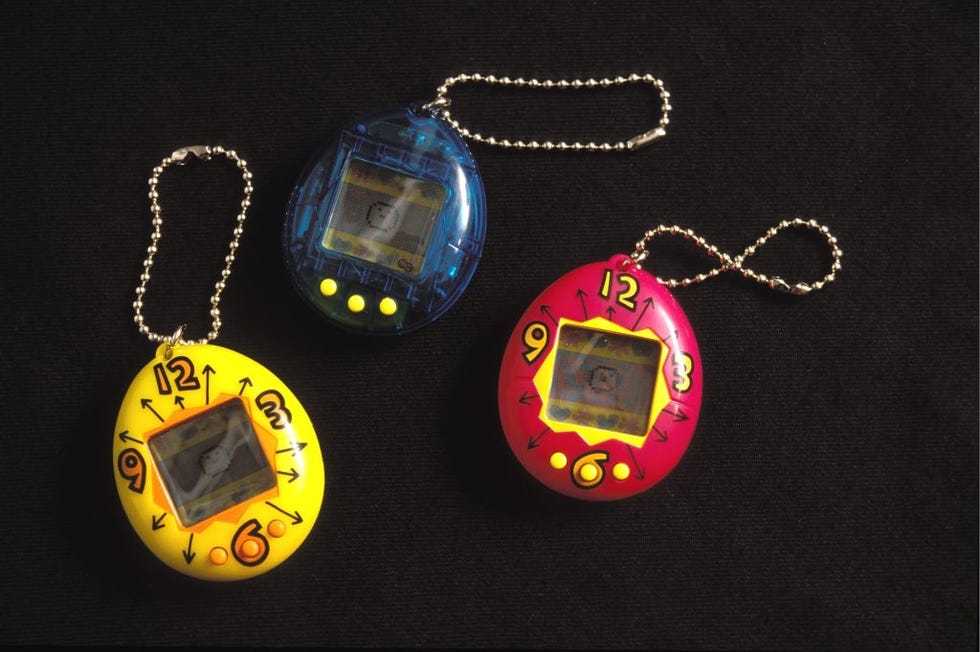
You only have to think back to the Tamagotchi frenzy to grasp the idea. The “Tamagotchi effect” began as a sociological phenomenon in 1996 and has evolved into an enduring case study of techno-animism and consumer culture. A tiny plastic egg with a screen, some pixels and a handful of beeps somehow became a creature we felt responsible for. We fed it, cleaned it, worried about its wellbeing and, for many of us, experienced genuine guilt when it died because we had been too busy at school.
Xavier ROSSI
Technology journalist Chris Haslam describes Muse as “essentially a large language Labubu”.
“Being cute doesn’t mean the AI becomes less powerful or intrusive,” he continues. “But it does become considerably less intimidating.”
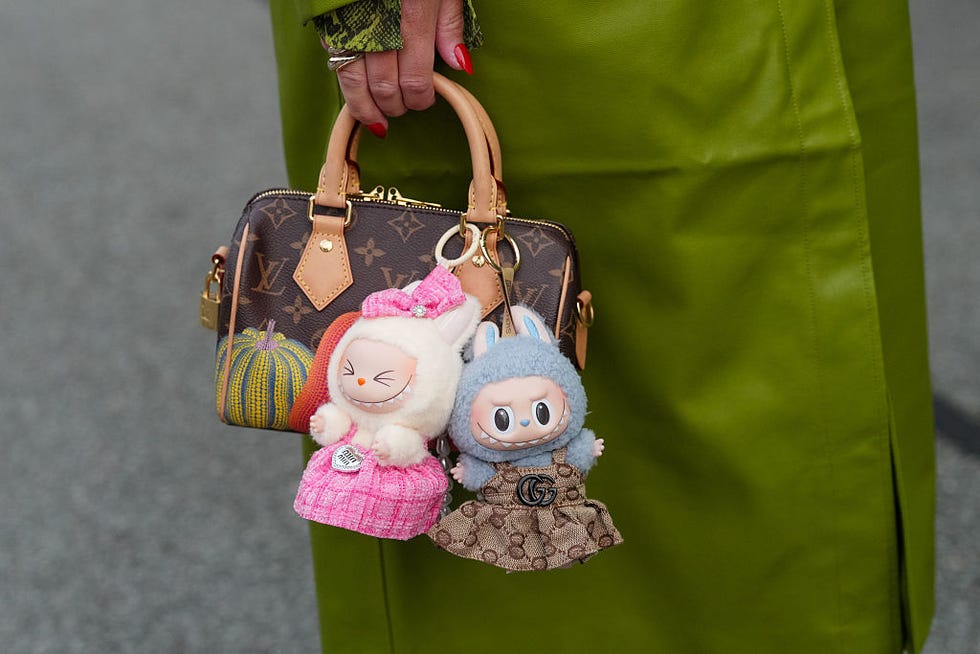
We have a mass fascination with cute, commercial objects. In 2025, plush Labubu keychain toys became almost impossible to escape, hanging from handbags, appearing in unboxing videos and becoming a constant presence on the high street and among celebrities. Pop Mart, the company behind them, reported a sharp increase in profit in the first half of 2025, while the dolls became objects of celebrity fascination and internet obsession.
There is another useful parallel in the way both Labubu and Muse Charm are designed to encourage attachment to an otherwise inanimate object. That instinct has not disappeared simply because our machines have become more sophisticated. If anything, AI gives us far more material with which to anthropomorphise them. A chatbot has a voice. It remembers things. It responds to us. It can appear funny, sympathetic or reassuring. And now Meta has given its AI a little body.
Edward Berthelot
As Haslam puts it: “Anthropomorphising tech isn’t new, but in the past with things like Tamagotchi, the emphasis was on you keeping it alive. Now the tables are turned as the Muse is here to make your life easier by taking tasks off your plate. It will no doubt be disarmingly good at getting you hooked on its particular skill set.”
That distinction matters in the context of Meta. The Tamagotchi demanded our attention because it needed us to keep it alive. Muse is designed to earn our attention by making itself useful. It is still asking us to form a relationship with a machine, but this time the machine is doing something for us in return.
Meta recently agreed to a settlement worth up to $17.1bn resolving claims that it designed Instagram and Facebook with addictive features that exploited children’s vulnerabilities. Meta denies the allegations, but launching an over-18 AI product presented as an exceptionally cute companion puts Muse in particularly interesting territory.
Last month, Dario Amodei, CEO of Anthropic, called for the AI industry to “slow down”, arguing that development could otherwise outrun our ability to understand and control increasingly capable systems. He proposed greater third-party evaluation and oversight of frontier AI systems.
There is an obvious tension here. On one side, the industry is racing to make AI more capable, more autonomous and more deeply integrated into ordinary life. On the other, some of its own leading figures are asking whether we are moving quickly enough to understand the consequences.
For all the caveats, there is something undeniably appealing about the promise. We have spent years being told that we need to optimise everything: our sleep, our calendars, our finances, our productivity. Now we can apparently outsource the optimisation itself.
Haslam puts it neatly: “Put an autonomous agent inside an adorable little creature and you’re no longer being asked to trust software, you’re being asked to trust the little guy.”
“Meta, of course, is not the little guy,” he adds. “And heaven knows what happens when you get it wet, or keep it up after midnight.”