
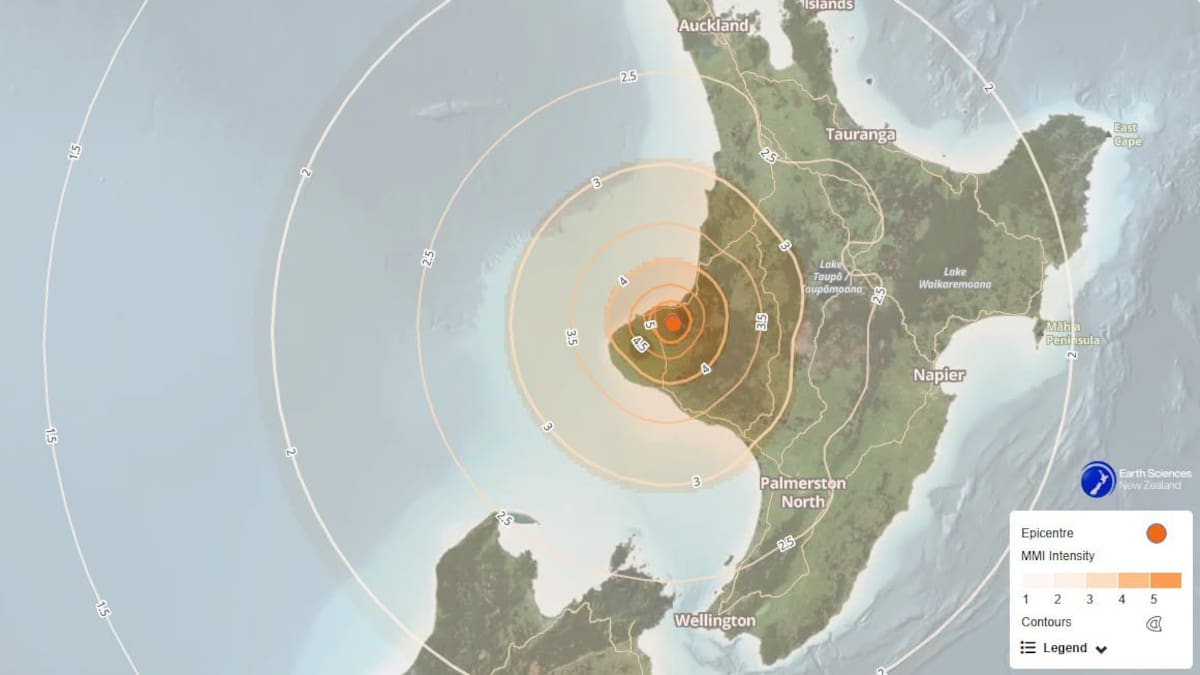
GeoNet’s Data Science and Geohazards Monitoring operations manager Bruce Girdwood said in a statement Earth Sciences New Zealand’s geohazard monitoring and response capability remained available 24/7, but not the “eyes-on service” the centre typically provided, which could lead to “occasional inaccuracies”.
“During this period, automatically generated earthquake information will continue to appear on the GeoNet website,” he said.
“Because some events will not be immediately reviewed by an analyst, occasional inaccuracies may occur, including the appearance of ‘ghost quakes’, which are incorrectly auto-located earthquakes that can appear in the latest earthquakes list.
“Any significant geohazard events will continue to be assessed and communicated by our on-call duty teams.”
The Herald initially approached Emergency Management Minister Mark Mitchell but was told the responsibility to respond to the development lay with Penny Simmonds, likely in her role as Science, Innovation and Technology Minister.
Simmonds’ office has been approached for comment.
In December 2024, the Herald revealed National Emergency Management Agency leaders expressed concerns that a proposed GNS Science restructure disestablishing 96 positions posed a “significant risk” to GeoNet’s ability to manage its functions and provide the “necessary leadership capability and capacity”.
In a statement today, Labour public service spokeswoman Camilla Belich called on Mitchell to address the issue.
“We can’t pick and choose when earthquakes strike. If it happens tonight, NZ won’t have the support of accurate GeoNet data.
“If [the Government] can cut this essential service who knows what they will cut next.”
Adam Pearse is the Deputy Political Editor and part of the NZ Herald’s Press Gallery team based at Parliament in Wellington. He has worked for NZME since 2018, reporting for the Northern Advocate in Whangārei and the Herald in Auckland.