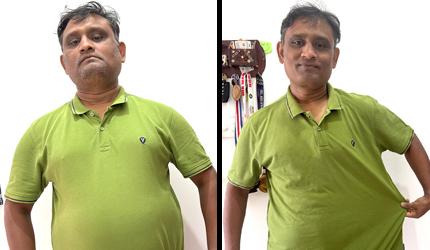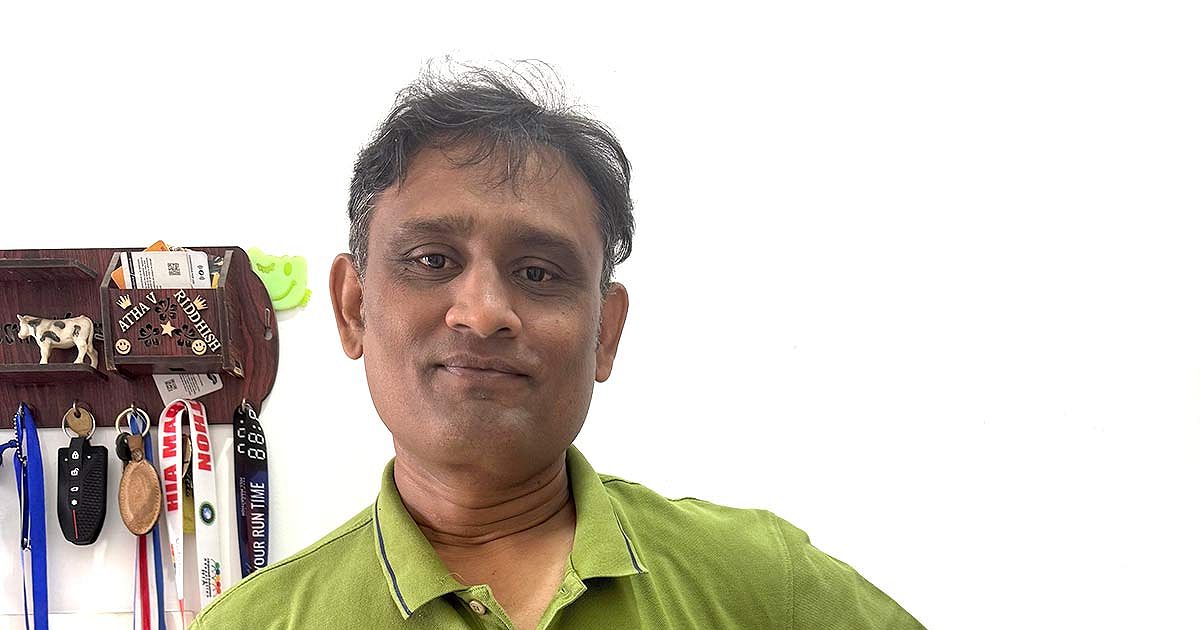
Pandurang Kumbhar, 41, from Pune, changed his eating habits, made walking and running part of his routine, and used a smart watch and AI to track his progress.
Here, he shares how his weight dropped by 16.45 kg and several of his health and fitness markers improved.
All photographs: Kind courtesy Pandurang Kumbhar
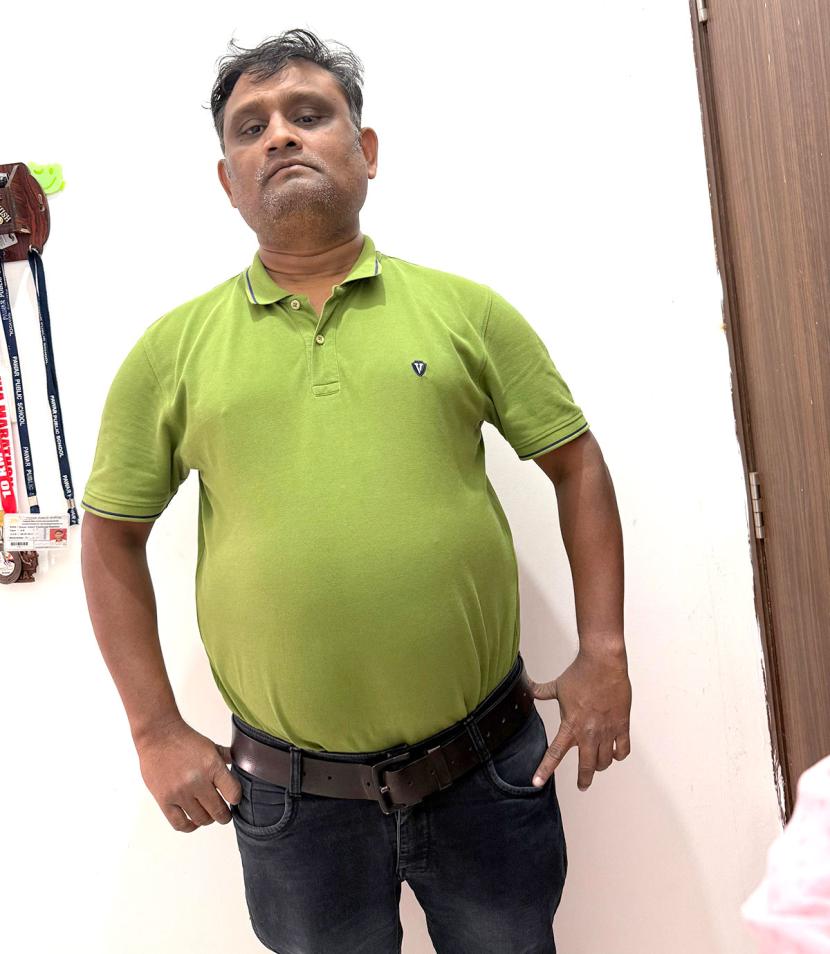
For years, prolonged sitting and a sedentary lifestyle had taken a toll on my health.
I was dealing with excess weight, abdominal fat, diabetes and hypertension. I was taking medication for both conditions and my health readings made me realise I needed to change my lifestyle.
On February 5, 2026, I weighed 80.95 kg. My abdominal girth measured 114 cm and my HbA1c, which reflects average blood sugar levels over the preceding few months, stood at 10.9 per cent.
I decided to focus on changing my daily habits rather than following a crash diet. I eliminated added sugar and processed snacks, brought more structure to my meals and made walking, running and exercise regular parts of my routine.
I also began tracking my health indicators so I could understand how my efforts were translating into measurable changes.
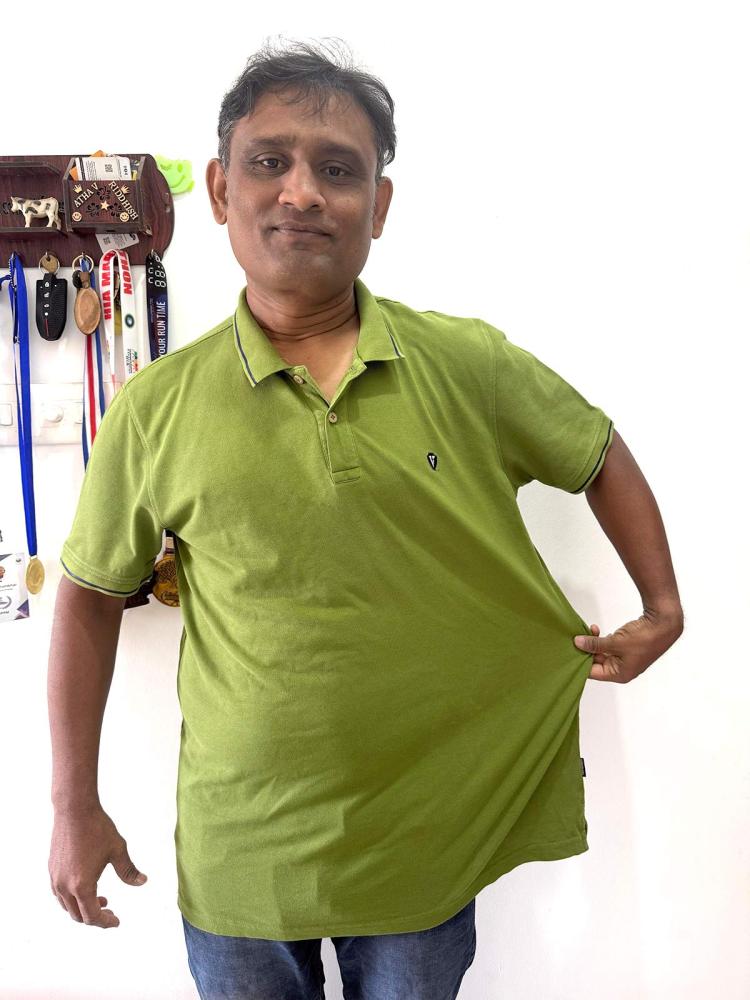
By October 5, I weighed 64.5 kg, having lost 16.45 kg. My abdominal girth has reduced by 20 cm and my cardiovascular fitness markers have improved.
Two meals, better nutrition
One of the major changes I made was shifting to two meals a day, with an emphasis on high-fibre and protein-rich vegetarian and non-vegetarian food.
My meals included vegetables, salads, sprouts and oats. I also focused on portion control and eliminated added sugar and processed snacks.
Between meals, I drank two cups of unsweetened black coffee and one green tea instead of frequently reaching for snacks. This helped me follow a more structured eating pattern.
These changes became part of my broader effort to improve my eating habits and work towards better health.
Walking 5 km almost every day
I made movement a regular part of my daily routine.
I began walking or running a minimum of five kilometres a day, at least six days a week, while aiming for 15,000 steps daily.
I also incorporated lower-body exercises three times a week and kept one day aside for rest and recovery.
I intermittently took up trekking to gauge my fitness levels.
My routine combined regular walking and running with strength exercises, daily movement and time to recover.
Using a smart watch and AI to track my progress
I did not want to rely on the weighing scale alone to measure my progress.
Every week, I recorded my weight, waist measurement, BMI, fasting and post-meal glucose readings and other health indicators.
My Apple Watch helped me monitor my resting heart rate, cardio recovery, sleep patterns and estimated VO₂ max, a measure of my body’s ability to use oxygen during exercise.
I also used ChatGPT to analyse my numbers, identify trends and maintain accountability.
My approach followed a simple cycle — measure, record, analyse, adjust and repeat.
Recording my readings regularly allowed me to compare my progress over the eight months and see how my weight, blood sugar measurements and fitness indicators had changed.
The numbers behind my transformation
The figures I recorded between February 5 and October 5, 2026, show the changes in my health and fitness measurements.
Weight: Fell from 80.95 kg to 64.5 kg, a reduction of 16.45 kg
BMI: Dropped from 29.7 to 23.7
Abdominal girth: Reduced from 114 cm to 94 cm, a drop of 20 cm
HbA1c: Fell from 10.9 per cent to 6 per cent
Average glucose: Dropped from 244 mg/dL to 114 mg/dL
HDL cholesterol: Increased from 33 mg/dL to 47 mg/dL
Resting heart rate: Fell from 87 to 62 beats per minute
Cardio recovery: Improved from 21 to 35 beats per minute
VO₂ max: Rose from 26.9 to 49.7, an increase of approximately 85 per cent
My HbA1c fell by 4.9 percentage points, from 10.9 per cent to 6 per cent. My BMI also moved from 29.7 to 23.7, placing it within the standard healthy range for adults.
These figures gave me a way to look beyond weight loss and track changes across several health and fitness indicators.
My focus now is on maintaining my progress
My blood sugar and blood pressure have been normal without medication for the past three months.
My focus has now shifted from aggressive weight loss to maintaining my weight, reducing abdominal fat, building muscle and continuing to improve my metabolic and cardiovascular health.
Looking back at these eight months, I can see how much my measurements have changed alongside my daily habits. Tracking my progress has been an important part of understanding those changes and staying accountable.
I didn’t change my health in one day. I changed what I did every day and used the data to make sure I was moving in the right direction.
For me, the transformation has been about more than losing 16.45 kg. It has also been about building a routine around food, movement, exercise and tracking my health, with the aim of maintaining these changes in the long term.
Have you recently lost weight?
We want you to share your story with us. Tell us how you did it.
Please share your diet plan, exercise tips, challenges, learnings and advice with our readers.
Kindly mail getahead@rediff.co.in (subjectline: My Fitness Story) with your name, age and location and before-and-after photographs of your fitness journey. We’ll feature the best responses right here on Rediff.