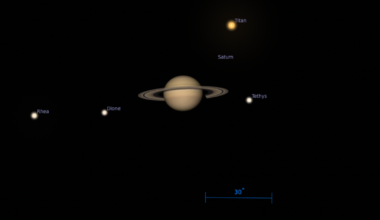
SScience Read More The Sky Today on Tuesday, July 21: Catch Titan near SaturnJuly 21, 2026 Back to Article List There’s a great chance this morning to view Saturn’s largest and brightest moon, Titan,…
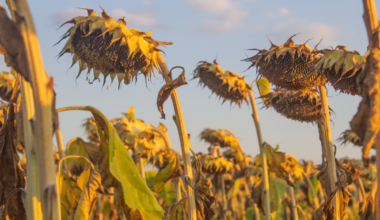
EEnvironment Read More Plants are heating up faster than the air around them – and climate models are missing itJuly 21, 2026 For decades, climate scientists have warned that rising global temperatures pose a significant risk to human health. Climate…
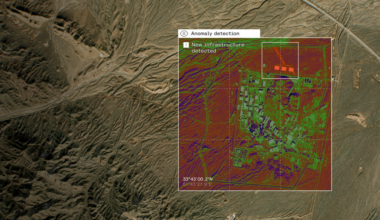
SSpace Read More IHI explores Kuva hyperspectral satellites for Japan’s multi-sensor constellationJuly 21, 2026 TAMPA, Fla. — Japan’s IHI is considering adding next-generation hyperspectral satellites from Finnish startup Kuva Space to its…
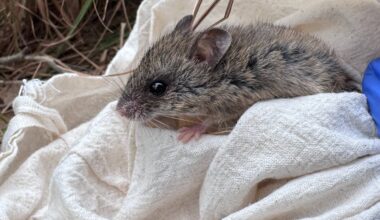
WWildlife Read More We set 10,000 traps in search of a rare native mouse. Here’s what we foundJuly 21, 2026 It’s 5am when we crawl out of our tents. The catbirds are calling and the night sky is…
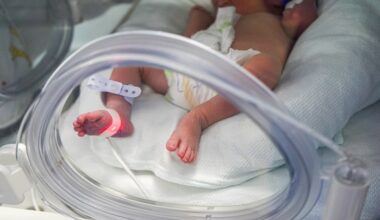
SScience Read More Earlier Bronchopulmonary Dysplasia Prediction – AMJJuly 21, 2026 MACHINE learning improved bronchopulmonary dysplasia prediction within seven days of birth by analyzing respiratory and oxygenation patterns. Using…
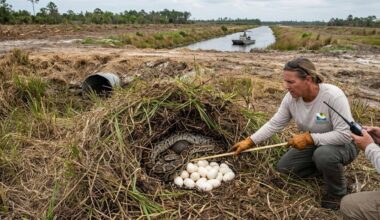
EEnvironment Read More Florida confirms Burmese python breeding hotspot outside the Everglades, and wildlife experts fear it could be the start of a bigger spread | World NewsJuly 21, 2026 For years, efforts to track invasive Burmese pythons in Florida have centred on the Everglades, where the giant…
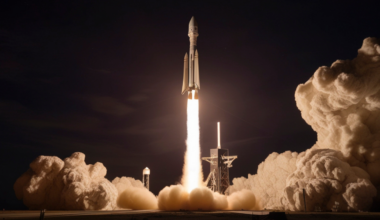
SSpace Read More In 1977, NASA launched two probes designed to last five years. Voyager 1 and 2 are now the only human-made objects in interstellar space, still operating, still transmitting, funded by a team of engineers some of whom have worked on the mission for nearly 50 yearsJuly 21, 2026 NASA launched Voyager 2 on 20 August 1977 and Voyager 1 on 5 September. The spacecraft were built…
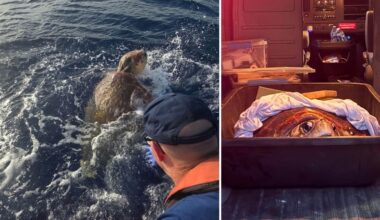
WWildlife Read More Found 7 miles south of Florida Keys, massive 450-pound turtle carried ashore to rehabJuly 21, 2026 SUGARLOAF KEY, Fla. (CBS12) — A 450-pound sea turtle is recovering after being rescued off the Lower Florida…
SScience Read More The James Webb Space Telescope spent nearly eight hours staring into NGC 4696, a galaxy 145 million light-years away, and watched a river of cool gas pour into an 800-light-year disk spinning at 600 kilometers per second, feeding the supermassive black hole on a self-renewing loopJuly 21, 2026 Deep inside a galaxy 145 million light-years away, the James Webb Space Telescope has watched cool gas pour…
SSpace Read More Earth’s magnetic shield slows the solar wind hitting the MoonJuly 21, 2026 The Moon has been getting pelted by solar wind for billions of years, but here’s what nobody could…
PPhysics Read More New quantum gravity theory links entropy, dark energy, and lifeJuly 21, 2026 A new theoretical study offers a possible way to address one of modern physics’ most difficult puzzles: how…
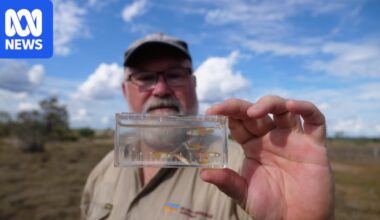
WWildlife Read More Tiny red-fin blue-eye fish found only in Australia survives predator onslaughtJuly 21, 2026 Using scoops made from milk bottles, Sarah Butler has been working tirelessly to save a tiny fish found…