New Zealand News Beep | NewsBeep.com
  • News Beep
  • New Zealand
  • Headlines
  • Business
  • Entertainment
  • Health
  • Science
  • Sports
  • Technology
New Zealand News Beep | NewsBeep.com
  • News Beep
  • New Zealand
  • Headlines
  • Business
  • Entertainment
  • Health
  • Science
  • Sports
  • Technology

Browsing Tag

NSF

10 posts
SScience
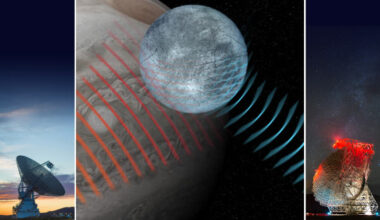
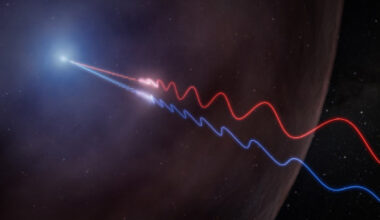
This illustration depicts Faraday rotation in the afterglow of a gamma-ray burst. A powerful jet (upper left) sends polarized radio waves outward through the thin wall of a surrounding bubble of magnetized gas called an HII region. As the light passes through this material, its polarization angle is twisted by the magnetic field. Because the effect is stronger at longer wavelengths, the red and blue waves, which represent different radio wavelengths, exit the bubble oscillating in different directions. By measuring this difference, astronomers were able to map the magnetic environment surrounding GRB 260310A for the first time. Image credit: NSF / AUI / NRAO / M. Weiss
Read More

Astronomers Detect Gamma-Ray Burst’s Magnetic Fingerprint

  • July 15, 2026
Using NSF’s Very Large Array (VLA), astronomers made the first radio detection of polarized light and Faraday rotation…
SScience
This artist’s impression shows radar waves from NASA’s Goldstone Solar System Radar pinging Europa; the radar waves penetrate Europa’s icy surface before bouncing back to be collected by NSF’s Green Bank Telescope on Earth. Image credit: NSF / AUI / NSF’s NRAO / P.Vosteen.
Read More

Radar Observations Reveal New Clues about Europa’s Hidden Interior

  • June 17, 2026
Using NASA’s Goldstone Solar System Radar and NSF’s Green Bank Telescope, astronomers from the University of California, Los…
PPhysics
Abstract long-exposure light trails in swirling patterns of red, blue, green, and white against a black background.
Read More

AI and Physics Have More in Common Than You Might Think

  • June 10, 2026
There’s a reason that the boom of artificial intelligence is being referred to as a “brave new world”…
SScience
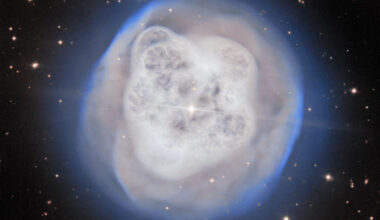
This image of the Crystal Ball Nebula was captured by the 8.1-m Gemini North telescope at the International Gemini Observatory. Image credit: J. Miller & M. Rodriguez, International Gemini Observatory & NSF’s NOIRLab / T.A. Rector, University of Alaska Anchorage & NSF’s NOIRLab / D. de Martin & M. Zamani, NSF’s NOIRLab.
Read More

Gemini North Telescope Peers into Crystal Ball Nebula

  • May 22, 2026
A stunning new image from the 8.1-m Gemini North telescope, located on the summit of Maunakea in Hawai’i,…
SScience
Radio signal from the quasar TXS 2005+403 travels roughly 10 billion light-years to reach Earth, traversing the Cygnus region, one of the most turbulent and scattering environments in the Milky Way Galaxy. On the left, this artist’s conception shows the quasar as it truly appears, with a bright accretion disk and jets blasting into the Galaxy like a beacon through the darkness. On the right, we see how turbulent gas distorts scientists’ view of the quasar in much the same way heat haze from a fire warps our view of the objects behind it. Image credit: Melissa Weiss / CfA.
Read More

Astronomers Catch Interstellar Turbulence Warping Light across Milky Way

  • May 15, 2026
For the first time, astronomers have directly detected how turbulent clouds of ionized gas between the stars bend…
SScience
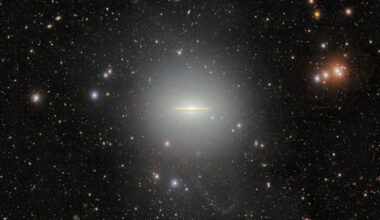
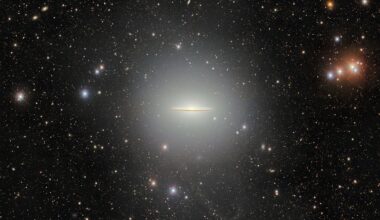
This DECam image shows the Sombrero Galaxy, a popular target for amateur observing and astronomical research. Image credit: CTIO / NOIRLab / DOE / NSF / AURA / T.A. Rector, University of Alaska Anchorage & NSF’s NOIRLab / D. de Martin & M. Zamani, NSF’s NOIRLab.
Read More

Sombrero Galaxy Shines in Stunning New Image from Dark Energy Camera

  • April 27, 2026
The Dark Energy Camera, a powerful 570-megapixel camera mounted on NSF’s Víctor M. Blanco 4-m telescope at Cerro…
SSpace
570-Megapixel Dark Energy Camera Captures the Sombrero Galaxy
Read More

570-Megapixel Dark Energy Camera Captures the Sombrero Galaxy

  • April 24, 2026
Messier 104, also known as the Sombrero Galaxy, as captured by the NSF’s Dark Energy Camera. Click here…
SScience
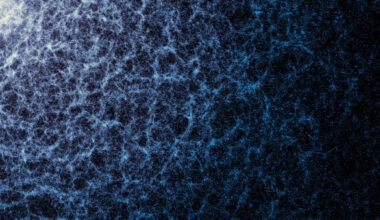
A small portion of DESI’s year-five map in which the large-scale structure of the Universe, created by gravity, is visible; each dot represents a galaxy; the denser areas indicate regions where galaxies and galaxy clusters have clumped together to form the strands of the cosmic web; also seen are large voids between the filaments. Image credit: DESI Collaboration / DESI Member Institutions / DOE / KPNO / NOIRLab / NSF / AURA / R. Proctor / M. Zamani, NSF’s NOIRLab.
Read More

Record-Breaking Map Charts Universe in 3D Like Never Before

  • April 17, 2026
Astronomers using the Dark Energy Spectroscopic Instrument (DESI) on NSF’s Nicholas U. Mayall 4-m telescope have produced the…
NNutrition
How to find trusted, high-quality vitamins without overpaying
Read More

How to find trusted, high-quality vitamins without overpaying

  • January 24, 2026
Thinking about taking supplements to jump-start your health goals? Because supplements aren’t tightly regulated before hitting the market,…
NNutrition
How to find trusted, high-quality vitamins without overpaying
Read More

How to find trusted, high-quality vitamins without overpaying

  • January 22, 2026
Thinking about taking supplements to jump-start your health goals? Because supplements aren’t tightly regulated before hitting the market,…

New Zealand News Beep | NewsBeep.com
www.newsbeep.com