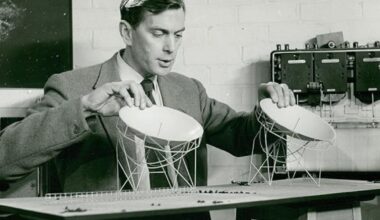
SScience Read More Sept. 27, 1918: The birth of Martin RyleSeptember 27, 2026 Back to Article List Today in the history of astronomy, a pioneer of radio astronomy is born. Britain’s…
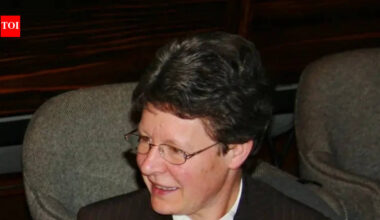
SSpace Read More In 1967, Jocelyn Bell Burnell found pulsars but watched her supervisor receive the Nobel: The discovery that still raises questions about scientific credit |August 28, 2026 In 1967, Jocelyn Bell Burnell found pulsars but watched her supervisor receive the Nobel. Back in 1967, a…
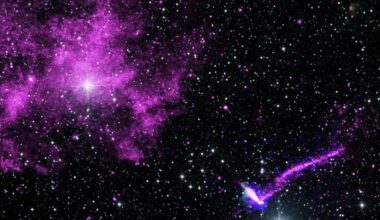
SSpace Read More NASA Space Telescope Maps Magnetic Fields of ‘Lighthouse’ PulsarJuly 10, 2026 For the first time, scientists have used NASA’s IXPE (Imaging X-ray Polarimetry Explorer) to directly measure the magnetic…
SScience Read More In 1967, a Cambridge student spotted a ‘scruffy’ printout blip that revealed the universe’s mysterious ticking starsMay 15, 2026 In 1967, Jocelyn Bell Burnell discovered an unusual, regularly pulsing radio signal. This led to the identification of…
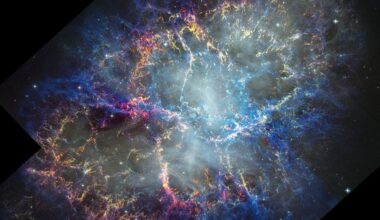
SSpace Read More NASA’s Hubble Revisits Crab Nebula to Track 25 Years of ExpansionMarch 24, 2026 A quarter-century after its first observations of the full Crab Nebula, NASA’s Hubble Space Telescope has taken a…
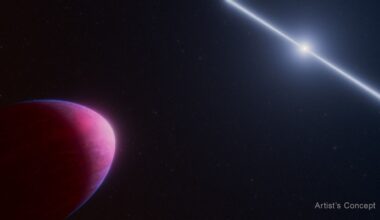
SSpace Read More NASA’s Webb Observes Exoplanet Whose Composition Defies ExplanationDecember 16, 2025 Scientists using NASA’s James Webb Space Telescope have observed a rare type of exoplanet, or planet outside our…
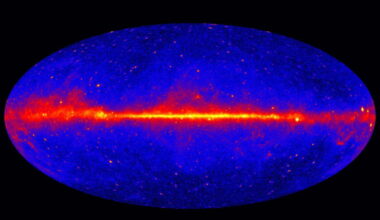
SSpace Read More Scientists think the mysterious glow in our galaxy could be from dark matter. What that meansOctober 21, 2025 At the center of our galaxy, there’s a mysterious, diffuse glow given off by gamma rays — powerful…
PPhysics Read More Mysterious Glow at the Center of the Milky Way Galaxy That Has Stumped Scientists for Decades May Have a Dark ExplanationOctober 19, 2025 Researchers from Johns Hopkins using powerful supercomputer simulations have determined that the most likely explanation for a mysterious…
SScience Read More Astrophysicists Zero In on Source of Strange Gamma-Ray SignalsSeptember 12, 2025 Artist’s impression of a MSP binary system. Credit: ESA & Francesco Ferraro (Bologna Astronomical Observatory) Millisecond pulsar binaries…