
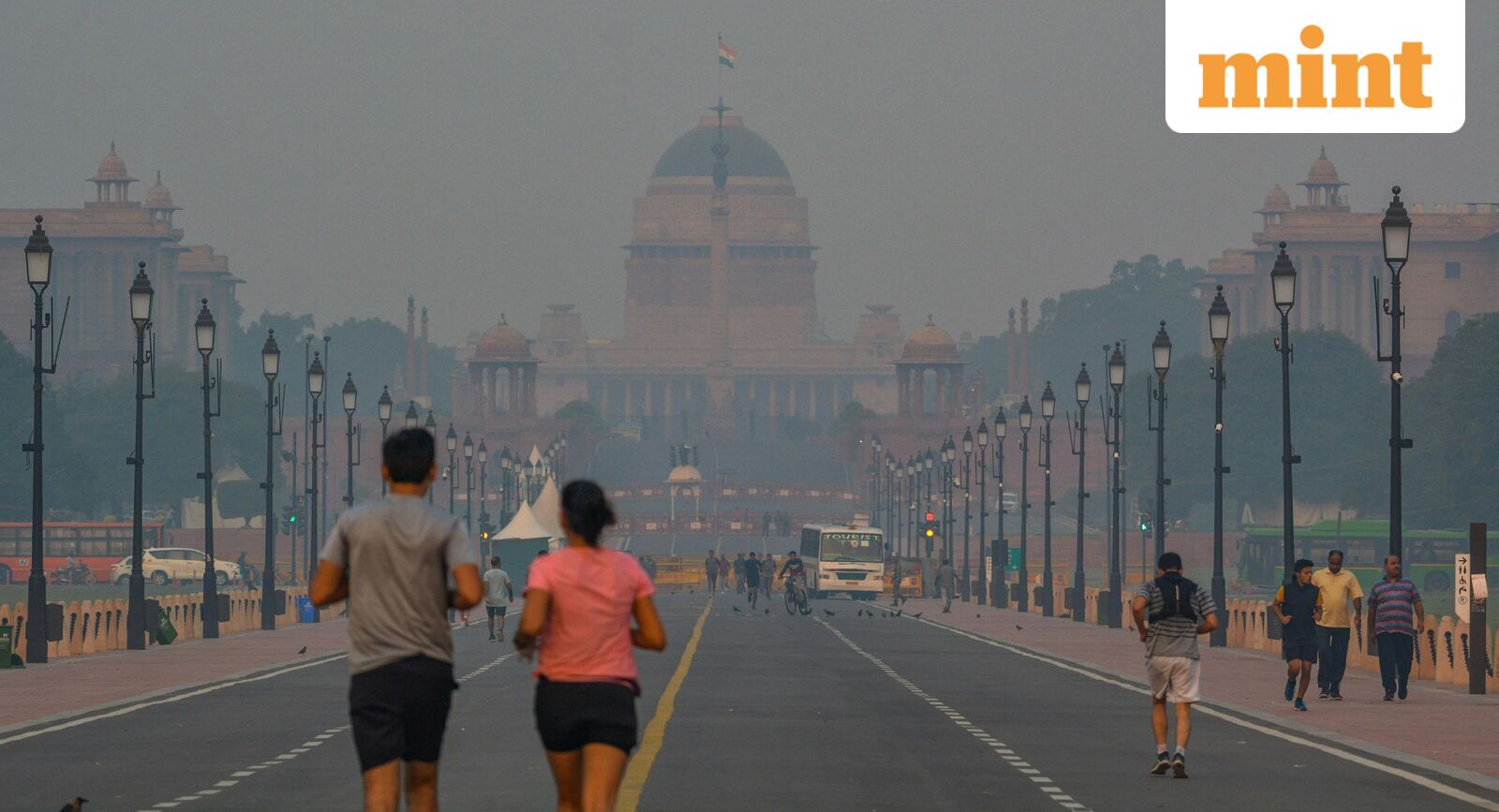
Early this month, New Delhi breached the 700-mark in AQI (air quality index), setting a new record for pollution this year. And yet, people of the National Capital Region (NCR) are being offered plenty of outdoor sports events to test their fitness, strength and endurance levels. Former Chief Justice of India BR Gavai completed a middle distance run in New Delhi recently despite the high levels of pollution. Things aren’t looking that good in most other metros either. Almost every Indian city and town reports an AQI above 100, which means that the air quality is poor at best. AQI levels above 150 are considered unhealthy, beyond 300 is hazardous and anything above 400 is considered severely hazardous.
At a time when many are forced to use two air purifiers in a single room in their homes just to be able to breathe non-toxic air, exercising, playing sports and running outdoors is a health risk, warn doctors and fitness experts. “Outdoor sports and activities should be discouraged when the AQI is more than 200 because it is not medically safe. During physical activity, we tend to breathe faster and more deeply, often through the mouth, which means a larger amount of unfiltered air enters the lungs within a short time. This can increase our exposure to pollutants and put additional strain on the respiratory system,” advises Dr Rahul Sharma, additional director of pulmonology, Fortis Hospital, Noida.
HOW AIR POLLUTION AFFECTS YOUR HEALTH
Air pollution directly affects the lungs and has a bearing on overall health, both in the long and short term. Short-term heavy exposure to air pollution include cough, tightness in the chest, throat irritation, headache, sneezing, difficulty in breathing and fatigue. Long-term exposure, which millions of Indians are subjected to, increases the risk of serious conditions like heart disease and stroke while those living in heavily polluted areas have an increased risk of death.
Pollution also affects your eyes and skin and reduces exercise tolerance. Research also shows that people living right next to busy streets or highways have a higher risk of death compared to those living just 100 metres away. Continuous exposure to polluted air increases the likelihood of developing heart, brain and lung conditions, which ultimately raises the risk of mortality, explains Dr Sumeet Singhania, pulmonary medicine consultant, Kokilaben Dhirubhai Ambani Hospital, Mumbai. When this goes on every year, it damages your lungs, leads to diseases such as chronic obstructive pulmonary disease and asthma, warns Sharma.
The situation is so grim that cases of lung cancer among non-smokers are increasing because of air pollution. “Pollution can cause death and there is data from across the world to show that pollution is directly and indirectly linked to premature death through heart attack, strokes, asthma and chronic obstructive pulmonary disease and respiratory failures. Even non-smokers are developing lung cancer, which is also contributing to deaths due to air pollution,” says Sharma.
DON’T GIVE UP ON EXERCISE COMPLETELY
While public health and fitness has taken a huge leap in India after covid-19, the pollution problem is taking its toll. But completely giving up exercising is not the solution. “A sedentary lifestyle causes more harm than controlled exposure to pollution. The key is balance,” says Singhania before listing out suggestions. “Shift your workouts indoors or use a gym. Using air purifiers at home while exercising can also help reduce exposure. If you exercise outdoors, choose open areas with trees rather than spaces surrounded by tall buildings, and time your activity when vehicle movement and pollution levels are lowest.”
For Gagan Arora, Delhi-based trainer and founder of Kosmic Fitness, working out in this polluted environment depends on an individual’s health status.
“If you are a fairly healthy individual with no medical concerns, running or cycling when AQI levels range between 100-200 is okay. However, avoid high intensity and long workouts outdoors or even indoors,” says Arora. The timing of your workouts plays a huge role too. “It’s best to workout when the sun is up between 11am and 12 noon as the heavy smog dissipates around that time.” But since most of us aren’t free at this time of day, the best solution is “to reduce the frequency, intensity and duration of your training if AQI is above 300,” suggests Arora, adding that during this time of the year it is best to workout indoors in a controlled environment. He also recommends using a N95 mask while doing anything outdoors but Sharma warns that “masks don’t help much because they do not purify all the air that you breathe.”
Several people have called for government regulation to conduct events during periods of high pollution but Sharma says the solution lies in regulations to control high pollution. “They are urgently needed as pollution has become a public health nuisance. There must be regulatory bodies that can look into how to curb pollution. This will actually improve the overall quality, wellbeing and productivity of the country,” says Sharma.
Shrenik Avlani is a writer and editor and the co-author of The Shivfit Way, a book on functional fitness.