

Fresh ginger root often costs as little as 55p at the supermarket, and yet, despite the humble price tag, it packs a punch.
As well as being a key ingredient in Asian and African cooking, the warming spice has long been used in traditional medicine when treating colds, infections and nausea.
Here, we take a look at the potential health benefits of ginger, and how to incorporate more of it into your diet.
The health benefits of ginger1. Helps with nausea
The NHS recommends drinking ginger tea and consuming foods containing the spice to ease the symptoms of nausea.
It also states that ginger consumption can help alleviate morning sickness. However, it is recommended you check with your GP or pharmacist before taking stronger ginger supplements while pregnant.
2. Improves digestion
While more evidence is needed, some studies have indicated that ginger helps empty the stomach’s contents quicker, through the gastronomical tract. In turn, this reduces the potential risk of indigestion.
What’s more, other medical reviews have suggested that consumption of the root can not only help alleviate symptoms of functional dyspepsia (FD), but it can also improve the quality of life for those who suffer from this form of chronic indigestion.
3. Packed with antioxidants
Thanks to its anti-oxidant agents, ginger can help boost the body’s immune system and protect cells from free radical damage.
4. May help reduce inflammation
Ginger also possesses anti-inflammatory properties, which may help alleviate the symptoms of chronic diseases such as rheumatoid arthritis, psoriasis, and ulcerative colitis.
Though more evidence is needed, the Arthritis Foundation states that experts recommend around 250mg of ginger, three to four times a day, and that it’s best to start with smaller doses and work your way up gradually. It also outlines that ginger capsules are more beneficial in this instance.
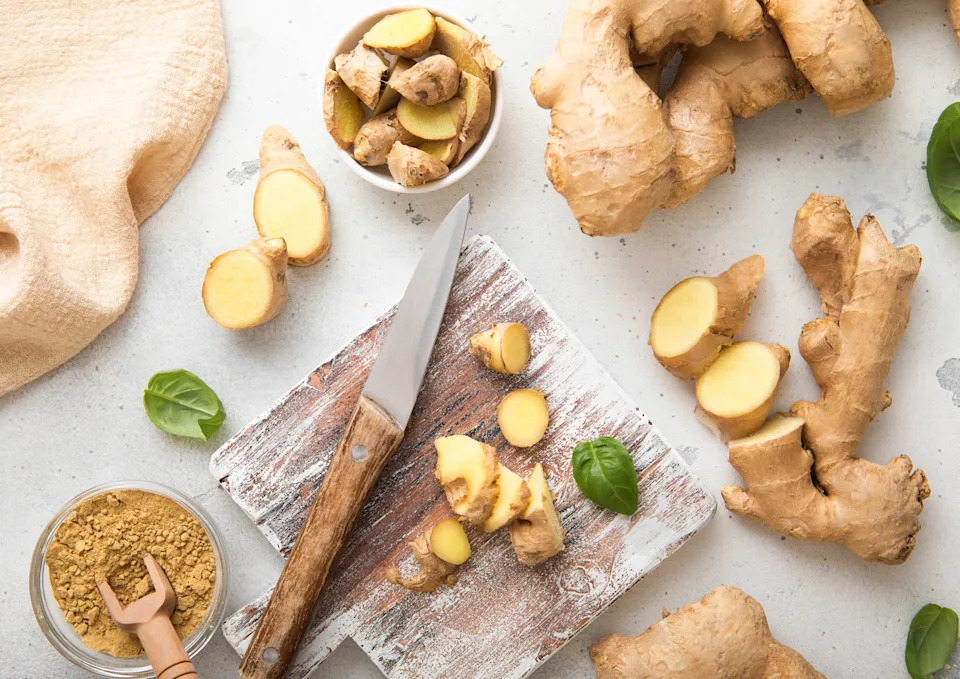
Ginger has been shown to reduce inflammation and boost immunity. (Getty Images)
5. Keeps you warm
Dr Hana Patel, GP and health specialist at Superdrug Online Doctor, previously told Yahoo UK that ginger is particularly effective in warming the body during the winter months.
“Its active compounds, like gingerol and shogaol, stimulate blood flow and improve circulation, creating a natural internal heat,” she said.
“Ginger also helps dilate blood vessels, making you feel warmer quicker. Beyond its warmth-inducing properties, ginger is a natural anti-inflammatory and can soothe digestion, especially during colder months when our diets may become heavier.”
6. May be used to treat colds and fevers
Traditionally, ginger has been used to treat common colds and reduce fevers. This is due to gingerol, the primary compound found in fresh ginger, which helps reduce the risk of viral and bacterial infections.
Typically, consuming ginger in tea form also helps to soothe a sore throat and ease congestion.
7. Can be used as a topical pain relief
Some studies have linked topical ginger treatments with pain relief, reducing soreness and fatigue in patients with chronic osteoarthritis by as much as 49% in some instances.
8. May lower blood sugar and pressure
While further research is needed, there is some evidence suggesting that ginger has a positive impact on lowering blood pressure and blood sugar levels in patients with type 2 diabetes.
9. Helps with weight management
As part of a healthy, balanced diet, ginger may also help with weight management. One review found a dose of 2g per day over a period of eight weeks or more effectively helped to reduce body mass.
10. Reduces period pain
A 2009 study also found that ginger reduced period pain when given to women in the first three days of their menstrual cycle, and was just as effective as a nonsteroidal anti-inflammatory drug (NSAID).
How to incorporate more ginger into your diet
Top nutritionist Rob Hobson shares his tips on how to use more ginger. (Getty Images)
Rob Hobson, a nutritionist and author of Unprocess Your Life, tells Yahoo UK that there are various ways to incorporate it into your diet.
“You can obviously infuse it in hot water – ginger tea is super spicy and helps if you’re feeling run down or you’ve got a cold,” he says. “You could also make homemade breakfast bars with ginger, fruit and nuts, and it works well in stir fries and as a marinade for meat and fish.”
Of course, ginger is also a key ingredient in Indian, Chinese, Japanese and Nigerian cooking, among others, working well as a base for curries, stews, soups and pickles.
Hobson also recommends using the aromatic spice in salad dressings. “Mix a bit of olive oil, lemon and grated ginger,” he advises.
The expert also points out that, while ginger is often used in seasonal baked goods, the other ingredients in biscuits and cakes, etc, will likely counteract the benefits of the ginger.
Finally, if you’re going to have ginger shots – which have grown in popularity in recent years – Hobson suggests making your own at home. “Shop-bought shots often contain sweet, sugary apple juice and likely have less ginger in them than you think,” he adds.
Read more about health and nutrition: