
You might be dropping the drink this month to boost your health or cut your waistline – but it can also benefit your bedtime. Here’s what the experts say
Are you doing Dry January? If so, you’ll be one of 17.5 million people, or one in three adults, having a month off the booze.
The idea of giving up alcohol for the first four weeks of the year has been around for over a decade, and these days is also encouraged by some NHS bodies as well as the charity Alcohol Change UK.
Those who attempt the sobriety challenge do so for a variety of reasons – they might be hoping for better health, benefits to their waistline or kick-starting a long-term change in their drinking habits.
New FeatureIn ShortQuick Stories. Same trusted journalism.
But one of the more surprising impacts of giving up booze involves our sleep. Alcohol has several effects on our sleeping patterns.
Here’s how a month without alcohol will change your shut-eye, and also affect your daytime alertness.
No alcohol for one day
Alcohol is a sedative, and so it generally makes people fall asleep more quickly. That happens because it raises levels of a compound in the brain called adenosine, which governs our urge to sleep.
Adenosine levels normally rise slowly during the day until the feeling becomes hard to resist by bedtime. “The higher the adenosine, the higher the sleep pressure,” said Dr James Gill, an associate professor at Warwick Medical School.
This helps explain why we feel so ready for bed after a night on the tiles.
And why, after an evening without alcohol, you may take a little longer to get to sleep once your head hits the pillow.
On the other hand, boozing also worsens the quality of your sleep, according to studies that have monitored people’s sleep patterns after they consumed various amounts of alcohol. In fact, the more alcohol that was drunk, the worse their sleep quality, according to a recent review of the research in the journal, Sleep Medicine Reviews.
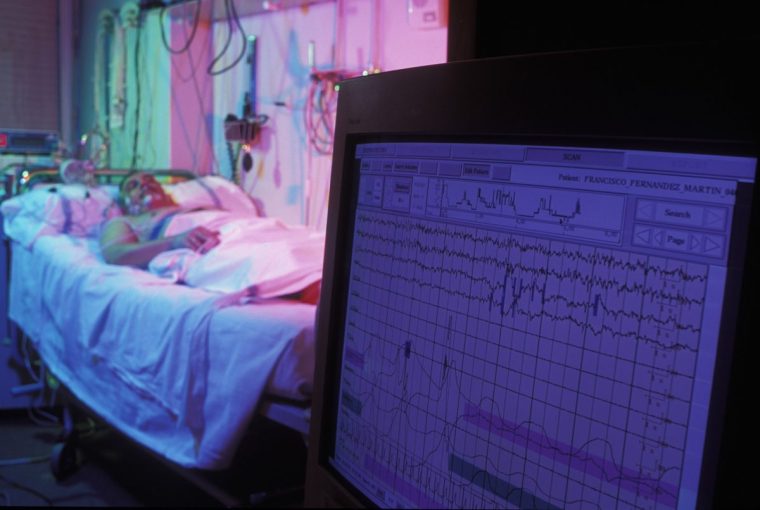 Sleep units are used by researchers to examine the effects of alcohol (Photo: Luis Davilla/Cover/Getty)
There are several different stages of sleep, from the deepest to the lightest, and we are supposed to cycle through them all several times a night. After drinking, that normal pattern is disrupted, with people experiencing more deep sleep in the first half of the night, and more light sleep, including brief awakenings, in the second half of the night.
Alcohol also relaxes muscles around the throat, which can worsen snoring and a condition called sleep apnoea, where the airways narrow or close during the night. Not to mention that drinking may cause us to wake up for the loo.
“Ultimately, sleep is poorly restorative with alcohol,” said Gill. Conversely, after an evening without booze, you are likely to wake up feeling more alert and ready to face the day.
No alcohol for one week
Improving sleep is rarely anyone’s chief motivation for doing Dry January – but according to Dr Richard Piper, chief executive of Alcohol Change UK, people tend to be surprised by how much of an effect on sleep it has.
In the first week, though, people may find it more difficult to get to sleep, he said. “People will find themselves not able to fall asleep, because they’re not using alcohol… so they may have worse sleep at the beginning.”
Gill said: “People do use alcohol to send them to sleep, because it does work. The sting in the tail is that the sleep that you get is of poor quality, so you end up with a vicious circle.”
A dry month
As the month of sobriety goes on, however, people start finding that their shut-eye is improving – which can be seen in posts on the charity’s Dry January chat forum, said Piper. “You need to get through [the first two weeks] in order to get the high-quality sleep. It’s a cumulative effect.”
Your next read

People often report having more dreams, or at least, being able to remember their dreams better – which may be because they have more REM (or rapid eye movement) sleep, a stage of sleep when dreams are more vivid, in the second half of the night.
In a survey of people who completed the Dry January challenge in 2019, seven out of ten said that their slumber had improved. Participants also rated it as one of the most important benefits of the exercise.
Piper advised people wanting to do Dry January to download his organisation’s Try Dry app to track their progress and get support and tips.