
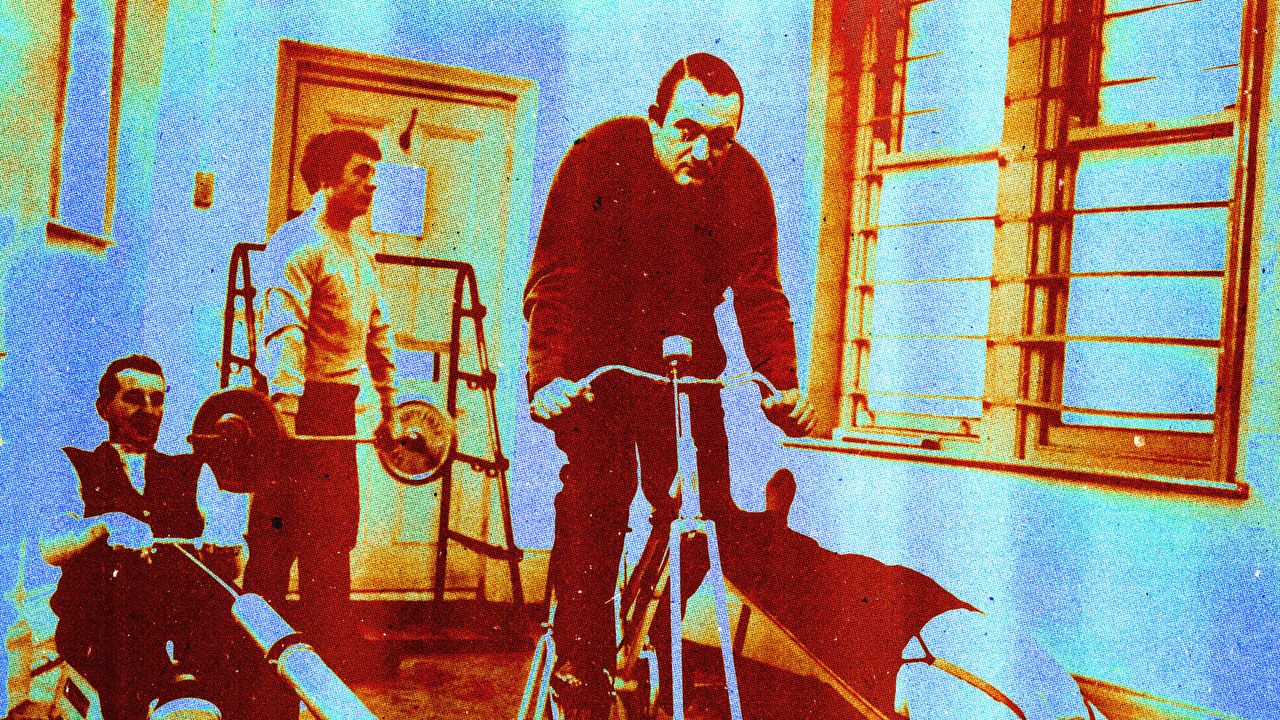
There’s no way around it: working out regularly can be a drag—and knowing how to stick to a workout routine is an entirely different barbell to wrestle with. No matter how strong your resolve, or how many tricks you pull to keep things interesting, hitting the snooze button or watching football on the sofa always seem far more inviting than time spent on the treadmill.
The only remedy for this issue is to catch the fitness bug for life. And the good news is there are many infectious ways to make this happen if you ease off the pressure to get ripped immediately.
Now that resolution season is pretty much behind us, we hit up an expert duo to share their best self-serving hacks that will keep you showing up, come rain, shine, or the lure of prime time TV.
Why most workout routines fail
More often than not, people bail because expectations are misaligned with reality. Eloise Skinner, Third Space personal trainer and psychotherapist says that time pressures are a common culprit: “Since it can take a considerable amount of time to engage in a regular workout routine, and people might choose workout routines that don’t necessarily fit around their current lifestyles.” Say you work a 50 hour week, have seven kids and want to start training for an ultra-marathon. Whie not technically impossible, the margin for burnout is obvious.
Many people also anchor to tangible, visible goals, and when these are not immediately achieved, commitment quickly wanes. “There is no point [in fitness] where you’re ‘done’ and get to stop. Once people realize working out isn’t temporary, a lot of them mentally check out,” says Raphael Akobundu, nurse practitioner at Huddle Men’s Health.
Unrealistic aesthetic goals further complicate things. Skinner says: “One of the biggest mistakes is to expect big changes quickly, or base one’s progress on external, aesthetic goals,” she says. “Often an aesthetic goal is difficult to obtain in the idealized form that someone might imagine. This also becomes quite an unfulfilling pursuit over time. Fitness routines take considerable time to build and changes aren’t always evident in the first few months.”
Akobundu explains that it takes at least 6 weeks to see immediate changes, but most give up by week four, negating the plethora of other benefits which improve your quality of life, listed by Skinner: “Better posture, improved heart health, reduced injuries, and improved stamina.”
The bottomline? People quit too soon. Once that momentum is lost, getting back on track feels twice as hard, leading your brain to associate fitness with sucking. With that in mind, here are a few ways to ensure you don’t give up before things start to click.
1. Make your routine fit your life
It might seem obvious but only you know what workout is actually going to work. And if you don’t, it’s time to get brutally real with your schedule.
How? Akobundu suggests a two-stage plan which involves looking at what a real, unfiltered week looks like for you. Ask yourself: “When do you wake up? When do you get home? What days of the week are already packed? At what time do your children require your presence?” Then, we fill in the blanks. “Maybe you have 30 minutes available each day during lunch, three times a week. Or, maybe you have 60 minutes available on Sundays prior to the family waking up.”
The final piece of the puzzle is to accommodate your energy levels. If you genuinely require three pre-9 a.m. coffees before facing social interaction, sunrise workouts probably aren’t for you. Or if your evenings are packed with genuine fixed plans (note: binge-watching is not a permissible excuse), block that time out, too. “A good plan is one you can accomplish. A perfect plan you cannot complete, is pointless,” says Akobundu. “View exercise routine as part of who you are and understand that this will look differently depending on the season of life you are currently in.”
2. Find something you enjoy
This is fitness advicec 101. Enjoying something, Skinner explains “is associated with the endorphin and dopamine boost we get from physical movement and exercise.” Your brain remembers pleasure, so the more pleasure you afford it, the more of it you’ll crave. Doing something you love therefore “creates a kind of self-reinforcing loop, where we enjoy an activity, get a dopamine boost from it, continue doing it and eventually (over the long term) associate it with our own sense of identity,” she adds.
3. Prepare the night before
Get your head in the game with visual aids such as “seeing your running shoes laid out, preparing your protein intake and logging workouts in advance,” says Skinner. “This kind of preparation can help us remove the friction of starting an activity, allowing us to build momentum in an easy, straightforward way. Seeing evidence of our previous commitment to the activity can also remind us of who we want to be, or promises we previously made to ourselves.”
4. Track progress without obsessing
“Record what you did. That’s it,” says Akobundu. “Simply record the basics: date, exercises, weight, reps. That will take no more than 30 seconds to do after your workout.” This will act as a reminder of how hard you worked when you look back after 6 weeks and realize what you have accomplished.” It’s all about building the bigger picture. And on that note, Akobundu strongly advises against tracking daily weight. “Your weight will fluctuate daily due to water retention, your diet and timing of your meals. If you choose to track your weight at all, do not track it daily and instead focus on tracking performance.”