
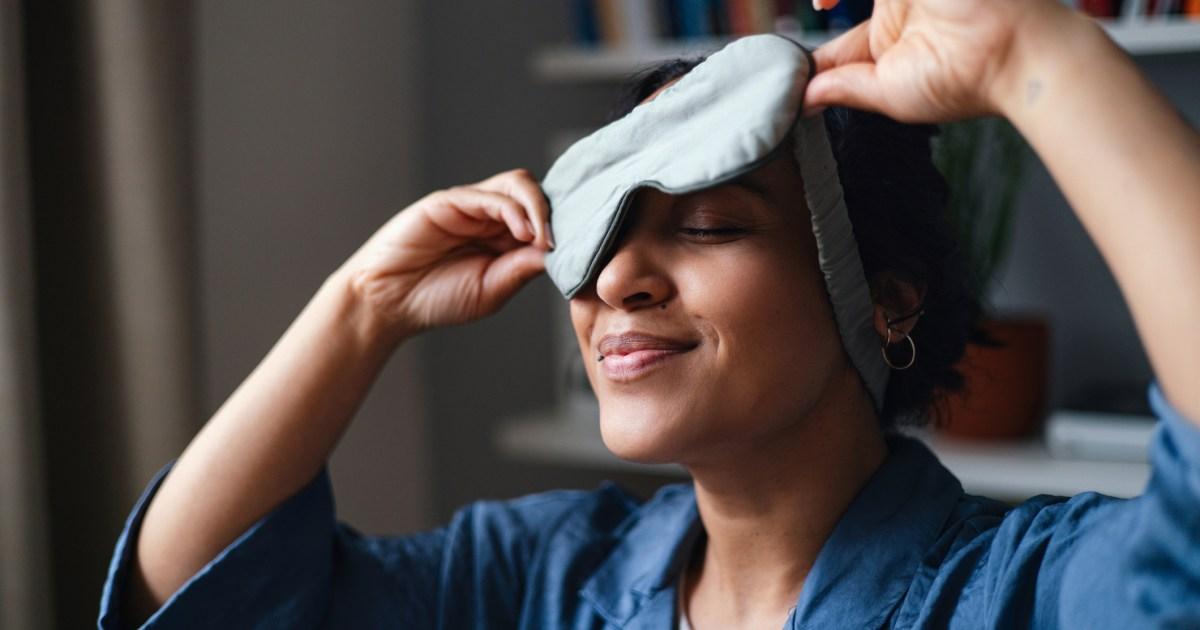
Following a routine will help prepare you for a good night’s sleep (Picture: Getty Images)
The older we get, the more we begin to cherish a proper night’s sleep and revel in being tucked up in bed nice and early with a gripping book.
But achieving a good night’s sleep isn’t as easy as it may sound, and there are numerous factors that can prevent us from getting a decent amount of shut-eye.
Thankfully, there are a number of things you can do to improve the quality of your sleep — 11 of them in fact, according to a wellbeing expert.
As the founder and creative director of NEOM Organics, Nicola Elliott has been working in the wellbeing industry for nearly two decades, and during that time has learned an awful lot about four things in particular — sleep, stress, energy and mood.
Among the knowledge compiled in her book, The Four Ways To Wellbeing, she shares 11 golden rules for optimum sleep, devised with the help of researcher and specialist, Nick Witton.
It’s all useful stuff, but one of the most interesting tidbits is something called the 3-2-1 rule, which Nicola describes as a ‘useful technique’ to prepare you for restorative slumber.
Here’s a closer look at what it entails and why it’s worth giving a go…
What is the 3-2-1 rule?
Despite being a simple and straightforward routine, it might take a little getting used to at first.
Essentially, it starts three hours before you go to bed, stipulating a different thing to avoid beyond each time frame.
First off, three hours before bed, you discontinue all food and drink consumption for the day. Alcohol is included in this rule, but water or non-stimulating herbal teas are allowed.
Then, two hours before bed is when you stop doing any work or strenuous exercise.
Finally, an hour before you go to bed, you switch off the screens (yes, that means putting your phone away) and also dim the lights in the room.
Why should you give it a go?
According to Nicola’s book, a regular routine such as this allows us to feel ‘more in control of our lives’ and can also ‘lower stress’.
‘You might feel like you haven’t got time to put a routine into place or that it’s one more thing to “do” but that’s probably a sign you need one,’ she explains.
Breaking down the benefits for each of the steps involved, Nicola notes that eating late at night (especially sugary or high-carb foods) can disrupt sleep and keep you up for longer, as it ‘stimulates our digestive system and inhibits the release of melatonin’ .
Nutritional therapist Alice Mackintosh adds: ‘Eating earlier gives the body time to stabilise blood sugar before bed, meaning we don’t get peaks and troughs that keep us up later, or disturb sleep cycles.’
How much sleep should we get each night?
According to NEOM’s golden rules, it’s a major misconception that we all need eight hours of sleep each night.
Nicola explains in The Four Ways to Wellbeing that we should all be sleeping in 90-minute cycles and aiming for either seven-and-a-half hours, nine hours, or 10-and-a-half hours.
However, she stresses that there is ‘no one size fits all’ model for sleep.
When it comes to stopping work and exercise two hours before bed, it’s all about limiting their impacts on your body.
As we all know thanks to Legally Blonde’s Elle Woods, ‘exercise gives you endorphins’ — and these endorphins fire up your brain activity, which obviously isn’t ideal before you lay down to rest. They also increase your core body temperature, which signals to your body clock that you need to be awake.
Strenuous exercise in the evening, such as running or a HIIT class could also disrupt your hormone balance, stopping the production of the sleep hormone melatonin.
‘Some form of movement is still important to help our bodies and brain unwind from the day though,’ Nicola adds. ‘Especially if you’ve been sitting in one position at a desk for long periods.’
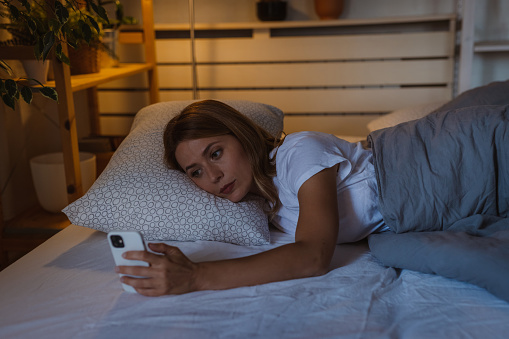
Looking at screens before bed can majorly disrupt your sleep (Picture: Getty Images)
And finally, ditching screens and dimming the lights. Unsurprisingly, this one is to do with the blue light that’s emitted by smartphones, laptops, tablets, e-readers, and TV screens.
Nicola writes that the light receptors in our eyes ‘communicate daytime signals to our brains to stay awake’ and these receptors are particularly sensitive to blue light.
She adds: ‘Natural blue light is what helps us wake up in the morning, but studies show that too much artificial blue light in the evening suppresses the production of melatonin, the all-important ingredient for facilitating the onset of sleep.’
LED bulbs also emit this disruptive blue light, which is why turning off the big light and switching to lamps and candles is recommended in this step.
The 11 Golden Rules for sleep
Go to bed the same time every night and get up the same time every night — even at weekends.
Sleep in 90-minute cycles so you either aim for seven-and-a-half, nine, or ten-and-a-half hours of sleep.
Don’t snooze your alarm.
Give yourself 30 minutes to wake up each morning
Get at least one hour of direct sunlight before midday, ideally 15 minutes of those within the first hour of waking.
Do at least 30 minutes of movement a day.
Create an evening routine, use the 3-2-1 rule every night before bed.
Set aside 15 minutes for relaxation at any point in your day.
Make your bedroom a tech-free zone that’s as dark as possible and between 16 and 19C.
Eat three regular meals evenly spread out throughout the day.
Have your last coffee (or caffeinated drink) by midday.
And while the routine calls for dimming the lights and hour before bed, Nicola does state that ‘ideally’ it’s better to start doing this two hours before bed if you can.
It’s not just your bedroom light you need to be wary of either; LEDs are often also used in fridges, bathroom mirrors and other appliances, so you could ‘unintentionally be getting little bursts of blue light’ just by moving around your house.
As previously mentioned, there are 10 other ‘golden rules’ for sleep, which you’re meant to follow consistently over a 28-day period in order to turn the habit into an automatic behaviour.
However, Nicola adds: ‘We’re aiming for progress, not perfection. They might take a bit of time getting used to, but stick with it.
‘Personally, I found not drinking alcohol three hours before bed a bit hard at first, but I really have noticed a massive difference in my sleep and energy levels from just doing it.’
This article was first published on January 21, 2024.
Do you have a story to share?
Get in touch by emailing MetroLifestyleTeam@Metro.co.uk.
Arrow
MORE: This ‘sublime’ UK spa is hidden in a warehouse and costs just £30 to enter
Arrow
MORE: I nearly died after taking fake Ozempic weight loss jabs bought on Facebook
Arrow
MORE: This is how many times you should pee in a day, according to your age
Comments
Add Metro as a Preferred Source on Google
Add as preferred source
The Slice
Your free newsletter guide to the best London has on offer, from drinks deals to restaurant reviews.