
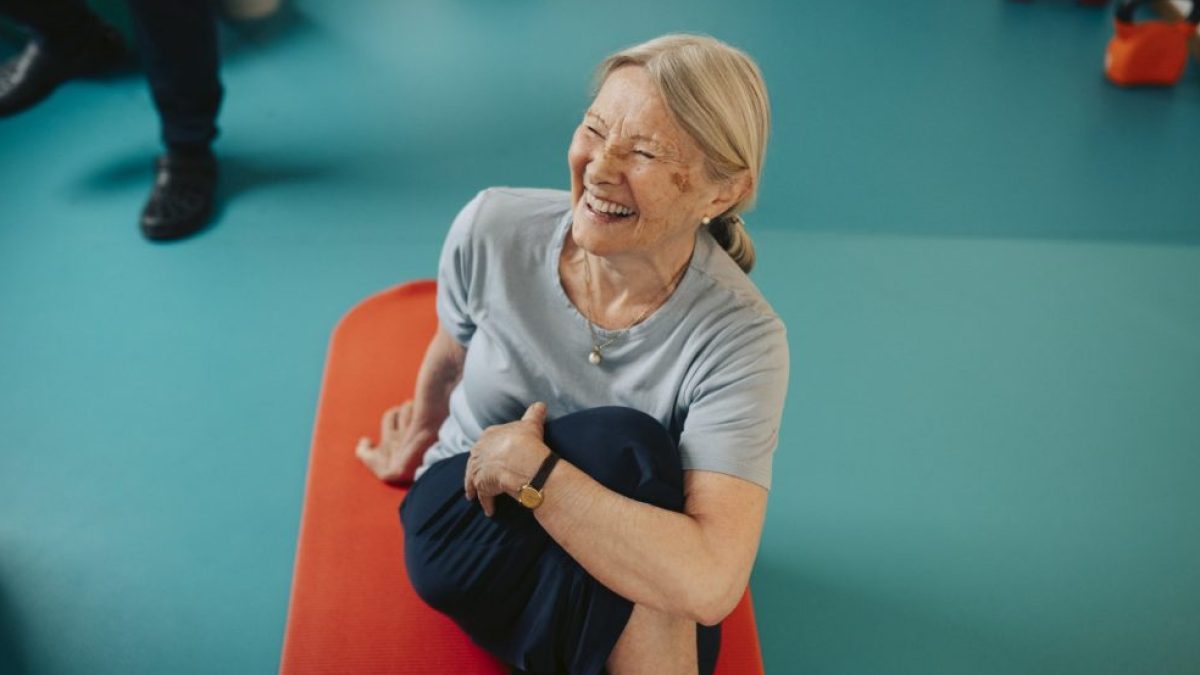
Rather than relying on external and ‘often meaningless’ features, such as greying hair or chronological age, biological age tries to predict how fast or slow you are ageing
Are you thriving as you age? Do you feel younger than your years? The new fascination with longevity has led to a flurry of tests that promise to tell you your biological age, though the evidence for them is mixed.
Biological age is being increasingly looked at by scientists and with research funded by longevity philanthropists. “It’s something we need to better understand,” says Professor Richard Siow, director of ageing research at King’s College London. “People often think about how ‘old’ you are, but what about how ‘young’ you are? We can’t turn back time, but we can learn more about our biology so we age more healthily.”
Rather than relying on external and “often meaningless” features, such as greying hair or chronological age, biological age tries to predict how fast or slow you are ageing by looking at the rate at which your organs and tissues are ageing, explains Professor Filipe Cabreiro, who specialises in microbiota in aging at the University of Cologne. Though, he adds, not all organs/tissues age at the same rate. “This can be measured through different methods often collectively referred to as clocks, with the most famous being epigenetic clocks.”
New FeatureIn ShortQuick Stories. Same trusted journalism.
Unlike chronological age, “which is based on how many birthdays you’ve had, biological age is based on how young your biology is,” adds Leslie Kenny, founder of nutraceutical company Oxford Healthspan and co-founder of the Oxford Longevity Project. “There isn’t one perfect biological ageing test since different methods look at different systems. Some focus on epigenetic clocks, based on how many good genes are turned on and how many bad genes are silenced; others look at immune ageing clocks based on glycans; then there are functional measures like fitness and strength. The first two are blood markers, but the latter don’t require an expensive blood test,” Kenny explains.
“My GlycanAge biological test says I’m 21, and my chronological age is 60. While this is personally flattering, I take the result with a grain of salt. I am, however, very interested that my immune markers look young, as an autoimmune patient who has stayed in remission from lupus and rheumatoid arthritis for 20 years.”
These methods offer “snapshots in time” – indications of how we’re doing, rather than pinpointing an exact biological age, Kenny says, “because there can be significant variance, even within the same day”.
We asked experts for some potential signs and clues that may suggest you’re ageing well. Of course, you don’t need to check every box to feel reassured you’re doing OK, but this list could give some hints at areas to focus on your health.
You can easily get out of a chair
Maintaining muscle tone, strength and balance into mid-life and beyond is one of the clearest markers of slower ageing, says Dr Harpal Bains, longevity expert and founder of the Harpal Clinic. “Muscle loss is not inevitable. It signals metabolic decline and accelerated biological ageing. Strong muscles support blood sugar control, hormone signalling and overall resilience.”
One of the best tests to measure overall muscle strength is grip strength, according to Marco Arkesteijn, senior lecturer in sport and exercise biomechanics at Aberystwyth University. A grip strength test involves squeezing a little device called a dynamometer as hard as possible. “For example, if you’re in your forties, it can offer good insight about how things might go in the future – whether or not you might struggle to open a can later in life, for example.” If you have good grip strength to begin with, you’re less likely to have mobility issues later in life, he adds, and it is also linked to better long-term health outcomes.
You can test this at home with an inexpensive hand dynamometer, Kenny suggests. “Track the number you get now and see if there are any changes. A low number now can easily be improved with training over time.”
Another good measure of strength and functional fitness is the sit-to-stand test. “This is an excellent ‘real life’ ageing test because it reflects strength in our largest muscle groups in our legs, along with power, and balance,” says Kenny. “Try this at home by sitting in a chair, crossing your arms and standing up and sitting down repeatedly. If that feels harder than it used to, it’s often due to muscle loss in the legs which is very reversible. My colleague at the Oxford Longevity Project, Muir Gray, says: ‘The fastest path to the nursing home is losing the ability to sit down and get up from the toilet.’ So that’s extra motivation to practise!”
You have a brisk walking pace
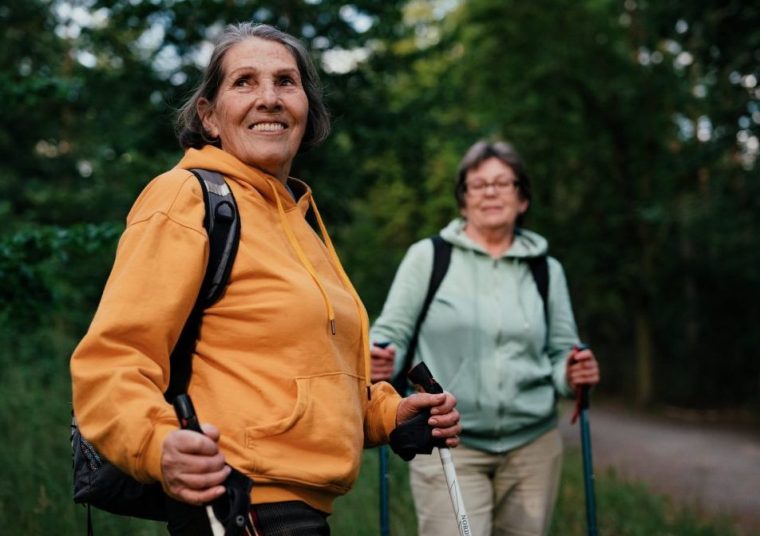 Can you walk briskly with a friend and still carry on a conversation without running out of breath? (Photo: Alina Rudya/Getty)
“Ask yourself, can you walk briskly with a friend and still carry on a conversation without running out of breath?” Kenny recommends. Then have a go at timing your normal walking route. “If your pace creeps slower year by year, that’s a sign you should be working on your fitness and strength, perhaps doing exercises to strengthen your leg muscles.”
Arkesteijn points out, however, that while walking pace can be a good indicator of healthy ageing, “most people in their thirties and forties (or younger) are probably able to walk quite fast and don’t see much change until later in life”.
You recover quickly from illness or exercise
“If you can bounce back fast, it is a strong sign of biological resilience,” says Bains. “Rapid recovery reflects a well-regulated stress response, healthy mitochondria (the engine of the cell) and lower background inflammation. These systems tend to decline early with ageing, long before disease shows up.”
Siow, who is a cardiovascular scientist, explains how something as simple as how quickly you recover from running up a flight of stairs or to catch a train can give a subtle indication about your health. “Are you really, really out of breath? You don’t need a blood test or DNA test to tell you that.” These kinds of everyday activity can give useful clues about your cardiovascular fitness, and daily habits like consistently taking the stairs are often associated with longevity.
Your key metabolic markers remain stable
“If your waistline, blood sugar, blood pressure and triglycerides remain steady over time, your biological age is likely younger,” Bains says. “Metabolic ‘creep’ is one of the earliest signs of ageing. This is driven by insulin resistance and chronic, silent inflammation, even in people who look healthy.”
You get consistently good sleep
For some, sleep becomes more challenging with age, but research links regular good quality sleep with healthy ageing. One large Chinese study published in BMC Public Health found sleeping between seven and eight hours a night was associated with healthy ageing in older adults (defined by the authors as being free of major chronic diseases, no physical impairment, high cognitive function, good mental health and active engagement with life).
Another study from the University of Cambridge found seven hours is the sweet spot for people in middle age and beyond – with too little or too much sleep associated with poorer cognitive performance and mental health.
“If you fall asleep easily, stay asleep and wake feeling restored, it’s a good sign,” says Bains. “Good sleep reflects a well-aligned body clock, balanced cortisol and healthy melatonin production. These systems drive night-time repair and are often disrupted early as ageing accelerates, natural melatonin production dips and cortisol rises.”
You have mental agility
“I never take off the L-plates, I’m always learning,” says Siow. “Lifelong learning is a mindset above anything else and there is good evidence that continuing to learn and remain curious into later years can help delay the onset of cognitive decline.”
“I’m always reminding my parents to challenge themselves,” says Dr Alexander Taylor, researcher and lecturer in biological psychology and neuroscience at Aberystwyth University. “The brain is a bit like a muscle, the more you use it, the stronger it stays. So anything that promotes or strengthens neural connections is key. It’s about being diverse with your approach, rather than sticking to one specific thing.”
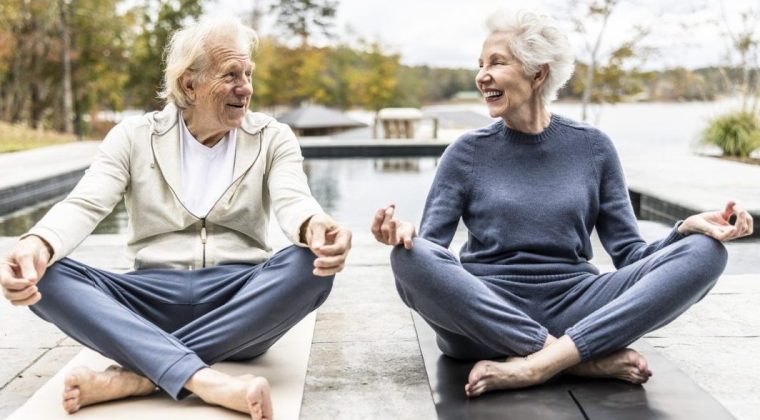 The brain is a muscle that needs to be used (Photo: Getty)
Lifelong learning stimulates neuroplasticity and enhances memory, explains cognitive rehabilitation therapist Natalie Mackenzie. “When coupled with socialisation and reducing time spent alone, the brain continues to learn, adapt and stay cognitively flexible into older age. If you can learn new skills or adapt to unexpected challenges, it’s an indication that your brain has built a robust reserve over time. Activities like learning a language, solving real world problems creatively, maintaining social contact and avoiding over-automation strengthens this reserve, helping you stay resilient and independent.”
You enjoy a range of hobbies
Hobbies are key. But Carol Brayne, professor of public health medicine at University of Cambridge and co-director of Cambridge Public Health, stresses the importance of finding things you genuinely enjoy.
Seek out activities that bring pleasure – “provided they’re not inherently harmful things such as smoking, drinking too much alcohol or watching TV all day, everyday,” she says. “Doing things you enjoy and quality of life are really important, and a sense of curiosity probably comes from that. Although people may feel they have to do Sudoku or whatever to keep their mental agility good, if you don’t enjoy doing it, there’s no point.”
You feel motivated
Maintaining good mental health and psychiatric well-being are important, yet often overlooked, factors for healthy ageing, according to Siow.
Bains echoes this. “Maintaining emotional stability, mental clarity and motivation over time is an under-recognised marker of biological age,” she says. “Accelerated ageing can show up first as brain fog, low drive or emotional volatility. Hormones are a key driver here, with sex hormones like testosterone driving motivation, emotional stability and a general sense of well-being.”
Efficient stress recovery is another key indicator of cognitive health, adds Mackenzie. “Chronic stress can impair memory and shrink the hippocampus, but if you can manage stress effectively, through mindfulness, prioritising sleep, or restorative activities, it shows your brain’s regulatory systems are functioning well. Practices like box breathing or taking focused breaks protect your brain and preserve emotional stability, ensuring long-term cognitive resilience.”
You have good flexibility
Do you feel supple and move without pain? Research published in the Scandinavian Journal of Medicine & Science in Sports suggests greater levels of flexibility may be associated with living longer. “Slower ageing of skin and joints often reflects internal health,” Bains says. “Good elasticity, wound healing and joint resilience suggest lower oxidative stress, less glycation and healthier collagen turnover. These tissues are highly sensitive to metabolic and inflammatory damage. My personal experience is that people who prioritise self-care also tend to prioritise other activities that help their general well-being.”
You have a strong sense of purpose
Research suggests it doesn’t matter what your purpose is – whether positive or negative – a strong drive, sense of belonging or reason to live, which is usually emotionally driven, can help drive longevity, Taylor says. He points to one study which found older adults with a higher sense of purpose showed healthier signs of ageing – including lower levels of functional disability, performing better on cognitive tests and reporting fewer depressive symptoms – and displayed greater longevity relative to those with a lower sense of purpose.
There is also a spiritual component to this, Siow notes. “There is research looking at how beliefs, faith, spirituality and a sense of purpose in later years can reduce stress and certain biomarkers, and even be considered anti-inflammatory, which is important as we consider ageing societies.” Scientists have previously linked emotions – such as the awe and wonder often found in experiences of nature, art and spirituality – with lower levels of pro-inflammatory cytokines.