
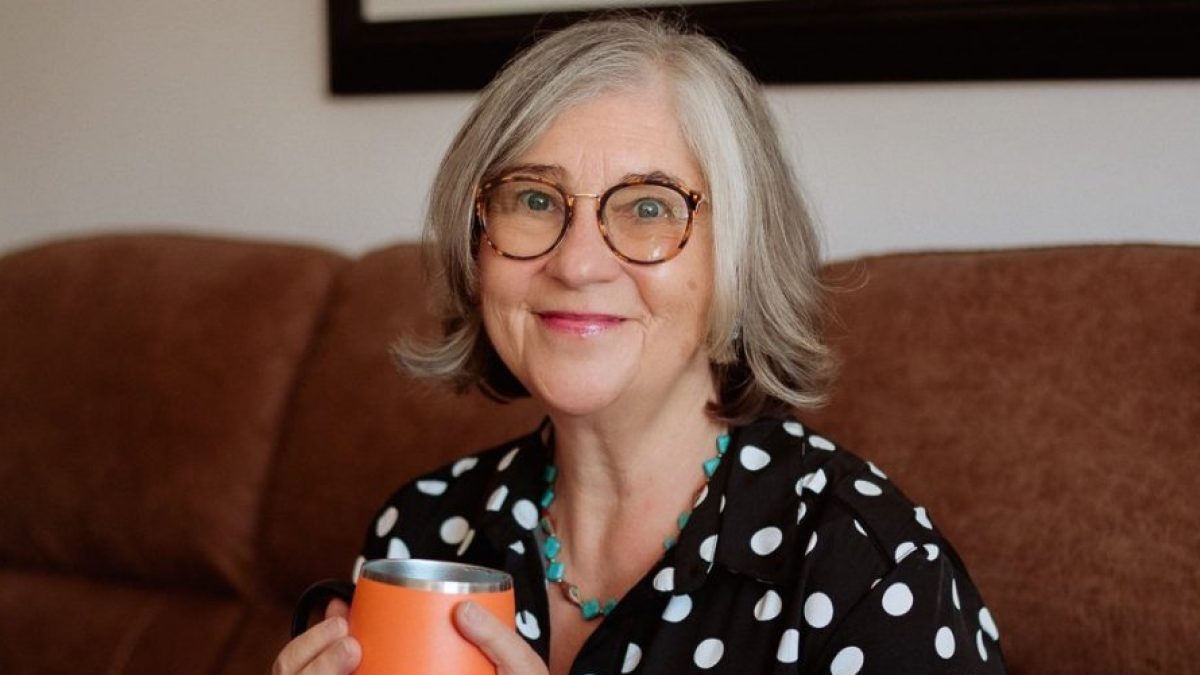
From fixing things with YouTube tutorials to calm thinking routines, this is everything I’ve learnt about staying mentally alive
When people talk about keeping the brain young, they jump straight to puzzles, supplements, or fitness routines. But after 40 years coaching people through later life, I’ve learned that cognitive health is shaped just as much by attitudes, agency, and engagement. Some aspects of ageing are inevitable. Cognitive decline as a cultural expectation is not.
What we expect shapes how we age. It influences behaviour, confidence, and even measurable cognitive performance. As a psychologist specialising in ageing, there are some specific things I do to stay sharp.
I ignore the voice that says ‘you’re too old’
Ageism doesn’t just come from outside. It seeps into your own head: “You’re too old to learn that. Should you really be doing this at your age?” This kind of internalised ageism isn’t natural. It’s learned, and it has real cognitive consequences.
New FeatureIn ShortQuick Stories. Same trusted journalism.
Research by Yale psychologist Becca Levy shows that when people internalise these beliefs, they become less likely to try new things. That narrowing of behaviour narrows the brain. When I joined a comedy improv group in my sixties, people questioned it. My answer was simple: I enjoy learning, and there’s no expiry date on that.
One colleague gave me a useful trick: imagine that doubting voice as a duck on your shoulder and tell it to shut up. It works. It’s a way of saying shut the f**k up.
I put myself in situations where I feel incompetent
Cognitive health depends on stretch, not strain. That mild sense of incompetence is often a sign your brain is adapting. Feeling less fluent is easily mistaken for decline, when it’s learning in progress.
At the gym, I never believed I could leg press over 100kg until I did. It took a few months rather than years, and it’s now one of my favourite exercises. Strong legs matter; our glutes and quads are useful for everyday life.
Joining improv felt like learning a foreign language, but once I grasped techniques like “yes, and…” I not only expanded my skills but enjoyed it more.
Buying four acres of woodland in 2019 was similar. After a nature retreat deepened my connection to the outdoors, I found land 15 miles (24 kilometres) from home, close enough for weekly winter visits and longer stays in warmer weather. I felt helpless at first, but with a calm mentor showing the basics, I’m now confident using a chainsaw for cutting logs. Felling trees may remain a step too far.
People who actively seek learning, rather than waiting to be told what to do, tend to stay more mentally engaged. There’s no failure here, just feedback. Neuroscience indicates the ageing brain retains lifelong plasticity, and that older adults build new neural pathways through challenge and novelty.
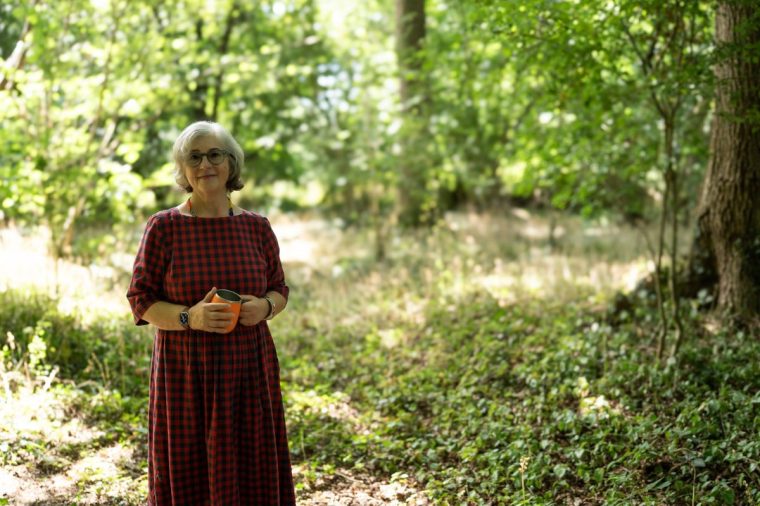 Dr Denise Taylor felt helpless when she first bought four acres of woodland. Now, she’s confident using a chainsaw for cutting logs (Photo: Ir Gierach)
I use YouTube to fix things instead of handing them over
Self-efficacy, the belief that you can influence outcomes, is one of the strongest psychological predictors of wellbeing in later life. Research links higher self-efficacy with better health perceptions, sustained physical activity and stronger cognitive performance. When that sense of control shrinks, confidence and cognition often decline together.
I protect this in ordinary ways. When my coffee machine stopped working, instead of assuming I couldn’t fix it, I found a YouTube video. Voilà, machine fixed. Psychologists call this a virtuous circle: small acts of mastery increase self-belief, making the next challenge more likely.
I also had a mental block about lighting fires. My partner had always done it, but after we divorced, going to the woodland alone meant I needed to learn. I stayed calm, followed YouTube instructions step by step, and now feel quietly confident.
I’ve seen the reverse with clients who ceded everyday tasks to someone else. One man always let his wife navigate when they went anywhere new. After she developed dementia, he stopped going out, convinced he’d get lost. We practised using his phone’s maps app together once. Within a month, he was visiting his grandchildren independently. Nothing about his capacity had changed. His belief in himself had.
I stay curious, not busy
Busyness can look impressive, but curiosity is far more nourishing for the brain. In my research, people who adjusted well to later life weren’t necessarily the busiest. They were the most curious, about ideas, causes, people, and parts of themselves that had been dormant during working life. Many assume cognitive narrowing is inevitable with age, when what often narrows first is permission: permission to speak, to learn, to take up space.
One client gave up a high-powered job and became fascinated by local history. Another took up campaigning. Another became curious about her responses to conflict and began unpicking long-held beliefs.
My own curiosity led me to join a theatre group to learn acting for stage and screen. Now I watch film and TV differently, noticing how thought, action, and feeling are conveyed.
After coaching hundreds through retirement, I’ve noticed something unexpected: the sharpest 80-year-olds aren’t the ones who planned everything perfectly. They’re the ones who stayed comfortable with not knowing. The ones who decline fastest have often stopped being surprised by anything. Certainty can look like confidence, but it often marks the point where learning has stopped.
I revisit my values rather than live on autopilot
Our values shift as we age. What mattered in a career-driven phase may no longer fit. In mid-life, many of us organise life around advancement, status or financial security. Later, values often move towards autonomy, contribution, creativity, or simply having time to notice the world, sometimes a return to earlier parts of ourselves, before we adapted to fit the workplace.
For me, autonomy, stillness and beauty now drive decisions. Living against your values creates constant friction. Living with them frees mental energy. Research on meaning and purpose suggests that activities aligned with core values help sustain cognitive engagement by strengthening what psychologists call “cognitive reserve”.
I see this in clients. One former finance director realised the values that powered his career – competition and speed – were exhausting him in his 70s. He began volunteering at a community repair café, where patience and generosity mattered more than efficiency. Within months his low mood lifted and he described feeling “mentally awake again”.
I spend time with younger people
Age-segregated lives are cognitively impoverishing. Some of my most energising experiences come from intergenerational spaces like improv and theatre groups.
A systematic review of 44 studies found that intergenerational engagement produced significant cognitive, social and health benefits for older adults, with one reading intervention showing improved cognition six years later. Around 77 per cent of intergenerational programmes improved mental health, social inclusion and community cohesion for both generations while reducing ageism.
It’s less about age than mindset. I’m intentional about spending time in spaces that feel forward-facing, and engaged with life as it is now.
I present myself as ‘involved in’ rather than ‘retired from’
Purpose doesn’t have to mean a grand mission. It’s simply having reasons to engage. When people describe themselves as “retired” as a complete identity, conversations often close down. When they say “I’m involved in…” or “I’m learning…”, something opens. People lean in with questions. One label suggests a closed chapter, the other an unfolding story.
That sense of ongoing contribution matters. Research shows that having purpose is closely linked to life satisfaction and continued cognitive engagement. At a neighbour’s party, one man began telling me about his allotment within minutes, something he later said he “never talks about”.
Your next read
I create calm before I think
Cognitive health is supported by emotional steadiness. Studies show that older adults who regulate negative emotions perform better on tasks like verbal fluency and working memory. Interestingly, regulating emotion carries a lower cognitive cost in later life than in youth.
I start my day with small, reliable routines: making the bed, tidying the kitchen, creating a calm physical space before I write or think. These reduce background mental noise. Even a short skincare routine after a shower signals care and presence. The younger version of me pushed through chaos. The older version knows that calm isn’t indulgent, it’s supportive.
Ageing is inevitable. Cognitive withdrawal is not. The brain remains adaptable far longer than we’ve been led to believe, if we stay present, curious and involved in our own lives. Staying mentally alive in later life isn’t about fighting ageing. It’s about refusing to disappear from your own life.