
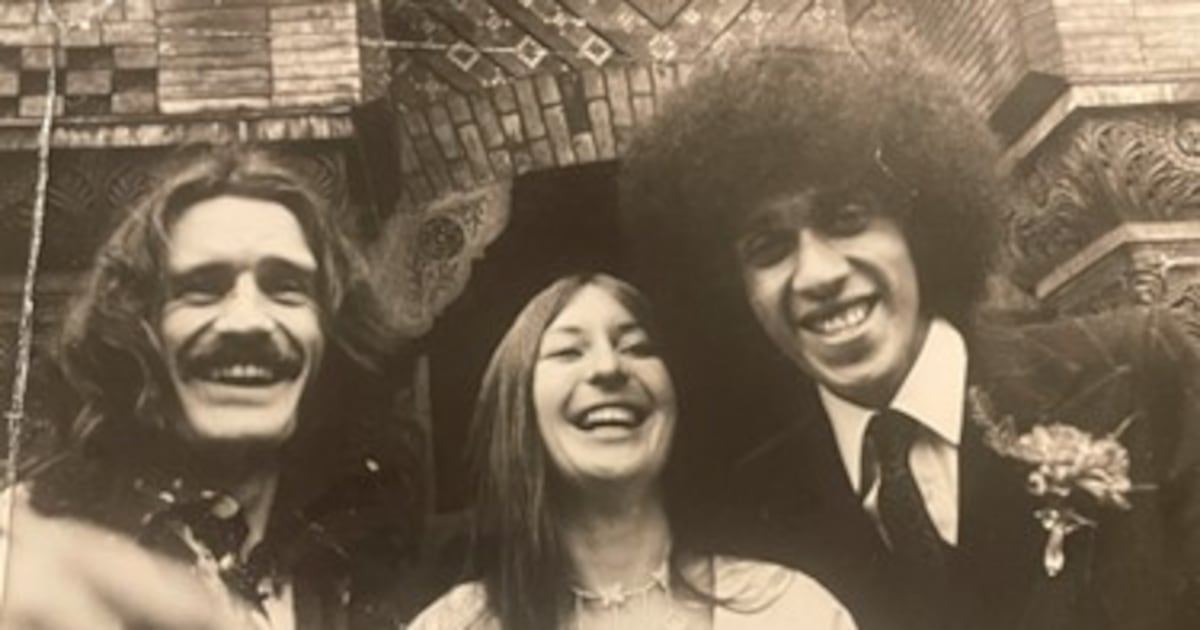
“It is Alzheimer’s.” In a tiny windowless office in the bowels of the hospital the air was sucked out of the room. I’d known something was up for a year or two but the doctors kept disagreeing. It was only after a week of intensive testing that they confirmed my worst fears.
My mum, Ferga, exhaled and said, “Oh God”, as I sat there feeling my world disintegrate – she was the epicentre of my heart.
The appointment was brief; there’s no intensive treatment regime to follow, no chance of a cure. We sat in the car hugging.
“Just place me somewhere that you like, where you know they’ll take good care of me. I’m so sorry … It will be worse for all of you than for me, I probably won’t know what’s going on.”
This was in early 2013 and she was 59. She finally died at the end of 2023, aged 70.
But my grieving started on that first day.
My mum grew up in Dolphin’s Barn, on the southside of Dublin’s inner city, the youngest of five. She loved riding her pony Cilla and going to local dances, which is where she met my dad Frank Murray. On leaving school she followed her mother in attending the Grafton Academy to study dressmaking. She was a strong woman, whipsmart, quick with a quip, full of fun and, much like her mother, she was a one-woman atelier.
My nana, Nora McGrattan, owned The Apple Boutique on Capel Street. They were both gifted seamstresses and my cousin Veda shares that same talent, creating flamboyant and spectacular costumes and performing at The George.
My parents worked in the music business. Dad managed rock bands – Thin Lizzy, The Pogues, The Frames – and my mum made stage clothes. They moved to London where my brothers and I were raised, with frequent trips back home to see relatives. Mine was an occasionally unconventional childhood.
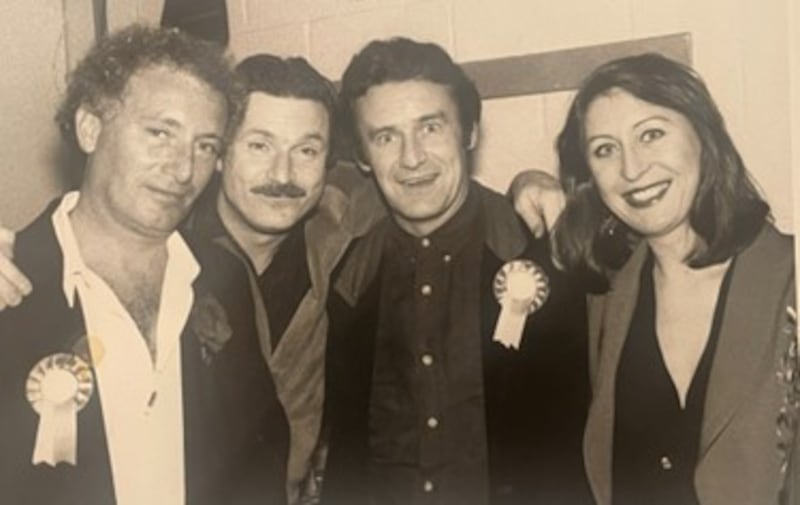 Ferga Murray with musician Terry Woods, actor Patrick Bergin, and her husband Frank
We approached Alzheimer’s as she had my spinal injury 23 years earlier. (I was paralysed following a diving accident.) We knew the essentials and proceeded with life the way it suited us best, preserving her independence for as long as possible.
We renamed it Ally-Zee – Alzheimer’s is such a loaded word; it’s heavy, sad and scary, and we wanted to disempower it. All the books and pamphlets were so bleak and primarily focused on much older people. There was much less information for dealing with young onset dementia. It’s more complex with an otherwise fit and healthy person. Strangers judge their uncharacteristic behaviour more harshly, which can be difficult to navigate when you’re feeling very protective towards them.
We were very fortunate in that Mum was diagnosed in the very early stages of the disease. I immediately arranged trips and outings for us, a day trip to Paris to see the Dior exhibition, a family holiday in Lanzarote for her 60th. I was intent on creating new memories while we had time.
Trying to live in the present while competing with the ticking clock of the disease.
The progression was slow and we didn’t share the news beyond immediate family for years. Her dignity was paramount and we only told people once the changes in her personality became more pronounced; she had been so vivacious, but as the disease progressed she was quieter in large social gatherings and increasingly self-conscious about her memory recall in conversation.
She could feel that slow erosion of her self.
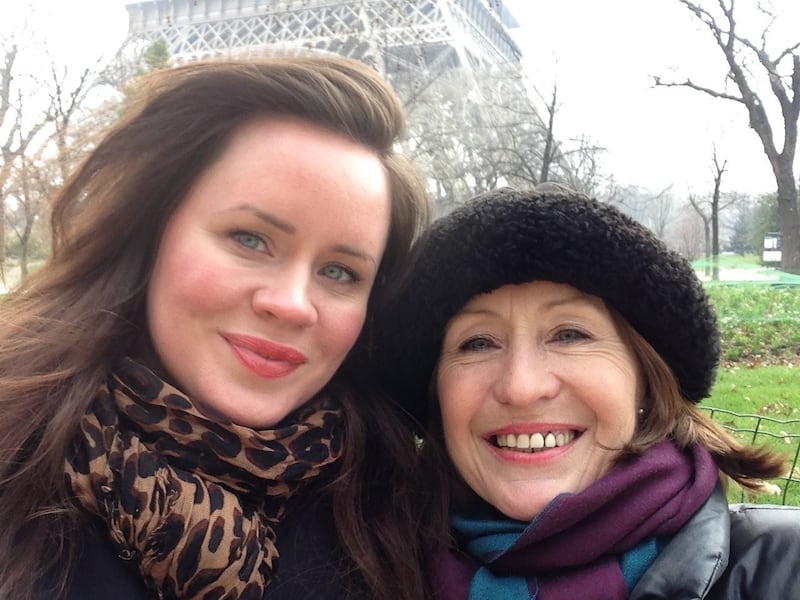 Shannon and Ferga Murry on a day-trip to Paris
“I think I might be pregnant.” We were Christmas shopping. I joked that it would be a miracle and we laughed it off, but inside I was frozen. Terrified. I knew this was an indication of decline.
She didn’t say it again until a year later. This time, she was insistent and repeated it daily. Sometimes we could placate her with reassurance or go for a drive until she was sufficiently distracted. It helped to step into her world rather than try to drag her into our reality, to meet her wherever she was in that moment. It’s quite common for women with dementia to believe they’re pregnant, and sometimes doll therapy works to soothe their anxiety. I smiled with pride when a nurse offered mum a baby doll and she snapped, “I’m not stupid – that’s a doll.” It was a comforting flicker of her old spark.
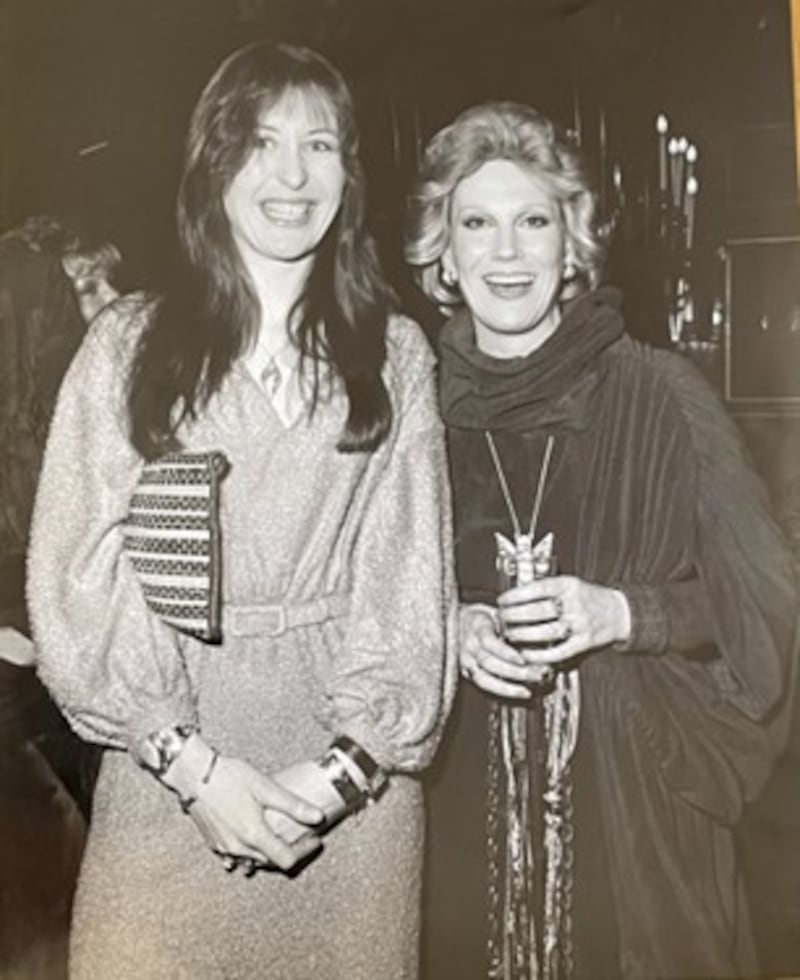 Ferga with singer Dusty Springfield in the early 1980s. Ferga made some of Dusty’s stage clothes
 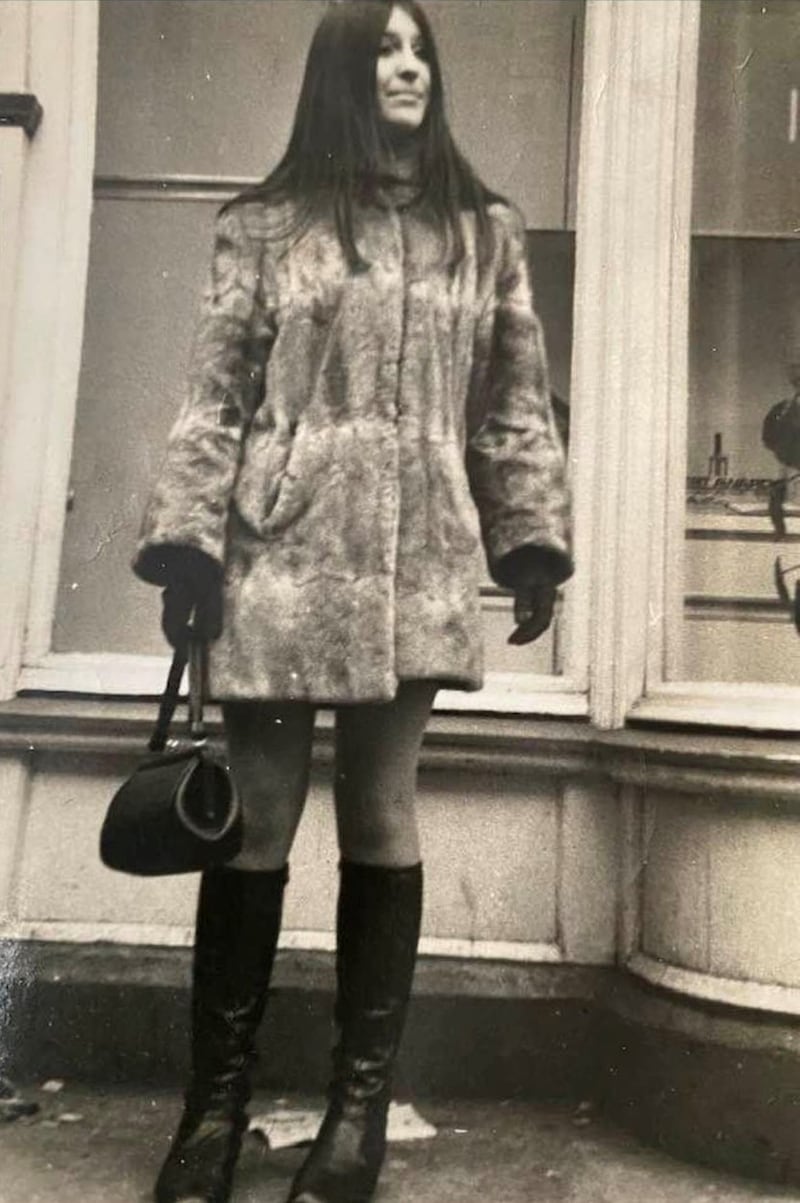 Ferga modelling in Dublin in the 1960s
I was long fearful of the advanced stages of Alzheimer’s when confusion and wandering increases. Ultimately, this period was very brief for us, brought on rapidly by infection-induced delirium. Over the course of 12 weeks she deteriorated drastically and had to be admitted to hospital. The acceleration was a huge shock, but it meant she skipped over some of the toughest phases for a family to face – agitated and repetitive behaviour.
When she returned home she was so ravaged by the disease she was completely dependent on us and barely verbal. I likened it to her body being possessed by an alien who didn’t understand how to function on Earth.
Perversely, my paraplegia meant that our home was future proofed for her physical deterioration, the most valuable accommodation being a ground-floor bathroom with a seated shower.
A motion-detecting baby monitor was a game-changer; we could be downstairs while mum slept upstairs and know when she was getting up.
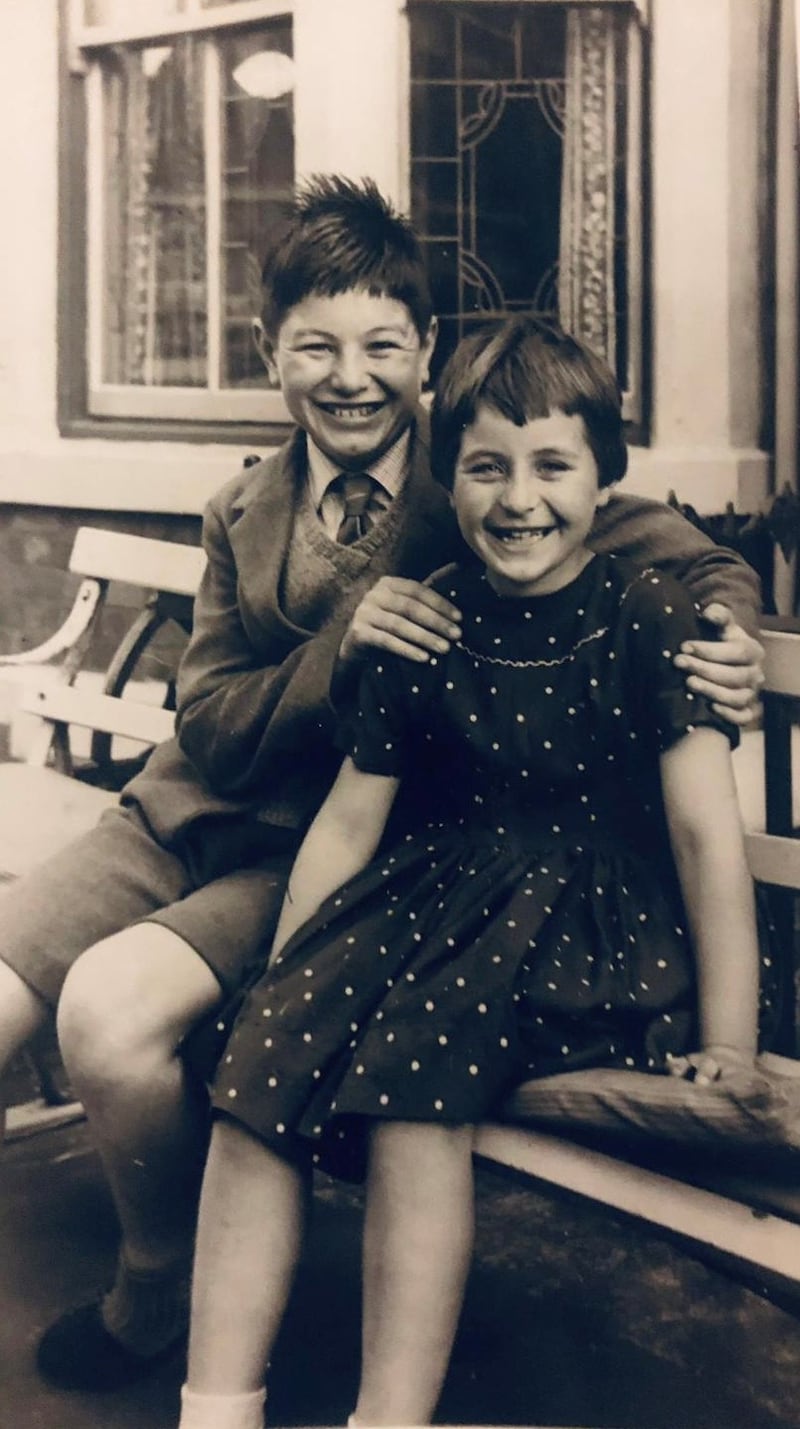 Ferga with her brother Dan McGrattan (of McGrattan’s Pub) in Fitzwilliam Lane, Dublin
Hand-held blenders and pill crushers were essential resources to get her medication into smoothies.
Taking her out for drives when she was agitated soothed her, with the help of her medication sprinkled into a hot chocolate.
We fulfilled her wish to move back home to Ireland. In lockdown we packed up the cars and piled on to the ferry, quarantined in a hotel in Dublin, adjoining rooms, me, my mum, two of my brothers and her beloved dog. We were able to give her what she had dreamt of, a house in the country with her dog and a couple of horses to watch in an adjoining field.
It was bittersweet; I wish she’d been in better health to enjoy it.
Eventually, we reached burnout. Lack of sleep, living on adrenaline, we could no longer cope and it was time to transfer her to a nursing home for professional care.
We had to label all her clothes, I found myself crying while ironing name tags from the school supply shop. I bought only shower gels and creams with scents I knew she liked. I resisted further infantilising her, refusing to dress her in pyjamas with cartoons. I felt the fabrics for softness the way I know she would have done for herself.
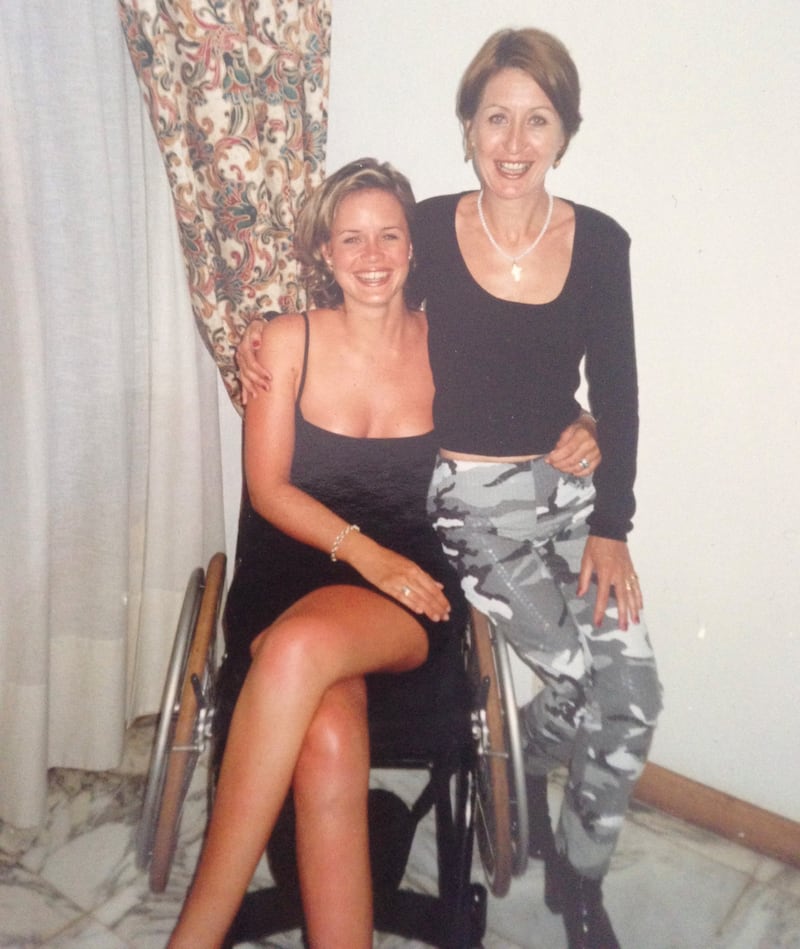 Shannon and Ferga in Lanzarote in 1998.
Unbelievably, she continued for another two years. She rarely spoke, she paced relentlessly and unsteadily, but with total determination, through the corridors of her nursing home, leaning on my wheelchair and pushing me around the courtyard. When she could no longer walk, she oscillated between sitting and standing; she couldn’t find peace in being still.
I used to get angered by people asking, “Does she know who you are”? It was quite literally the last thing I cared about. All that mattered was that she was content and safe. I was also furious with people who spoke about her as if she was unable to hear them or understand. When I felt she was scared, I had to swallow my own fears and soothe her as if she were my child. I knew that as I sat with her stroking her hair she knew she was loved and that she loved me.
She was still there, but just out of reach.
On my last visit, I brought a jar of lemon yoghurt. She could no longer swallow solids but I knew she could still experience taste. She was on oxygen and drowsy, but the moment she savoured the tart lemon curd her entire face lit up. She devoured it. It felt good to give her the tiniest sense of pleasure. I bought more in advance of my next visit but it was never opened, as she died a week later – released from the grip of the disease.
By the end of her life, she was a shell, young onset Alzheimer’s had taken everything except her spirit. She fought to the very last breath.
Initially, I felt relief when she died.
She was free. We were free.
I’d been grieving her since that day she was diagnosed in 2013, missing her while living with her. Feeling her slip away was like trying to catch water with my hands.
And now it was over. I miss her every day.
Memories are priceless. Record your older relatives, ask about their childhood, keep favourite recipes of theirs so you can find comfort in the taste of their cooking, take trips to dementia-friendly cinemas, art galleries or museums. It provides inspiration for free-flowing chats more than question-based conversation. Make time to feel your feelings.
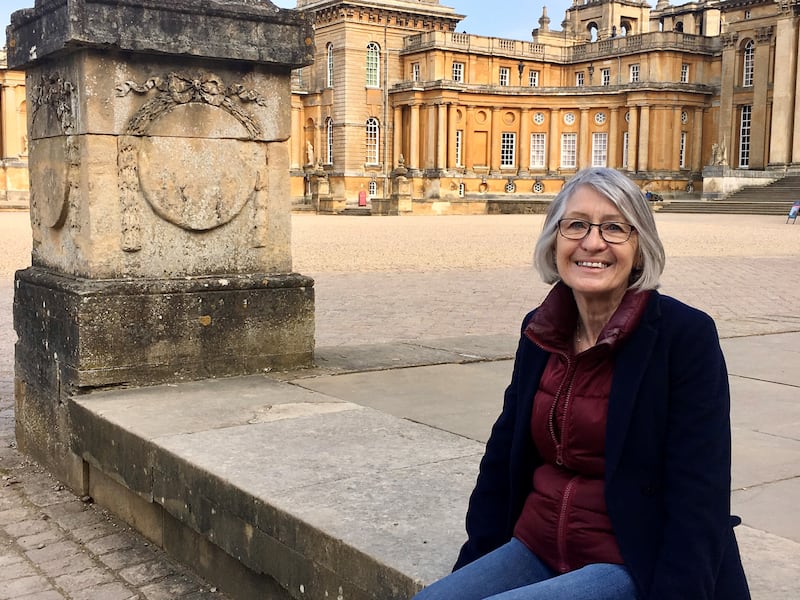 Ferga Murray, just before lockdown in 2020
Some days, I would need to take a few minutes to just sit in my car and sob, hot, angry, heartbroken tears. Some days, I’d howl with laughter at the despair. Bottling things up will come at cost to your own health.
I’ve chosen to share my experience so it might be of comfort to others who are struggling. It can be chaos; you have to deal with it as best you can, adapting with every behavioural change, supporting your loved one and your family.
I know quotes seem pithy when you’re climbing the walls, but as my mum used to remind me, “This too shall pass”.
Enough time has passed now that the more upsetting moments are fading to grey and happier memories of her are coming back into colour – bright and vibrant just as she was in life.