
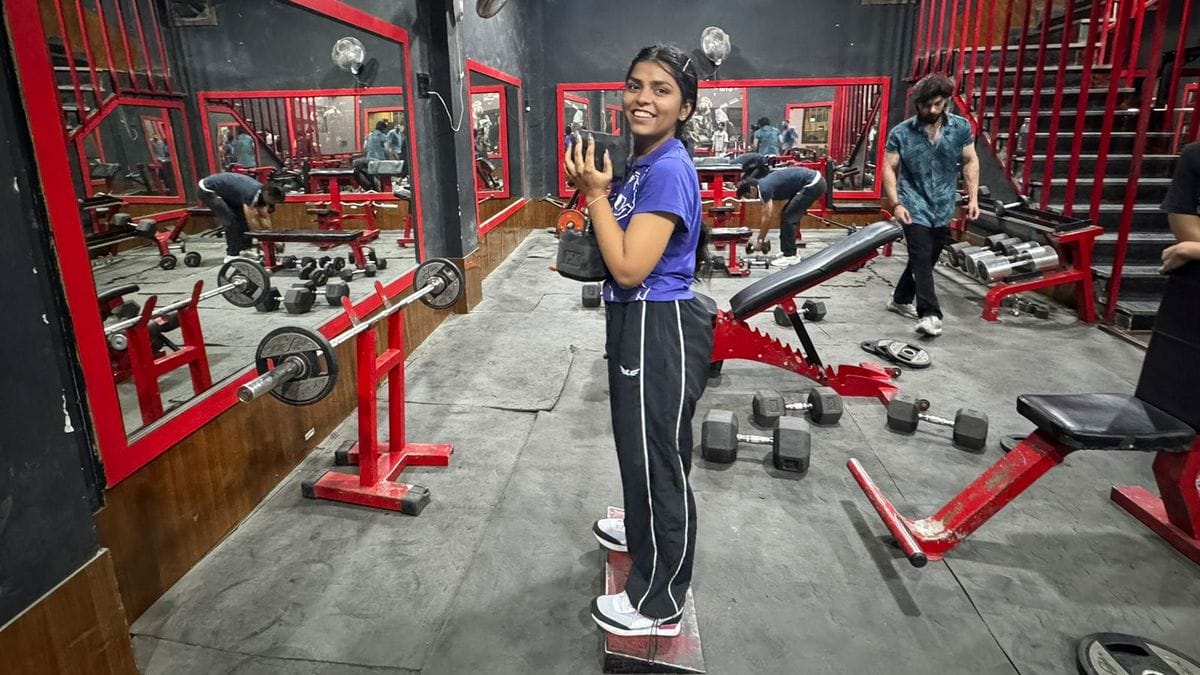
Gyms are mushrooming across rural and small-town India, spawning a quiet subculture of friendships, freedom, flirtation, and flexing away from the family gaze. For young women, they offer a rare, socially acceptable reason to step away from their restricted daily routines and have a few hours that belong only to them, side by side with men. For men, they are places where ideas of masculinity are nurtured, recorded, and displayed unapologetically, not just on the gym floor but on Instagram and Snapchat.
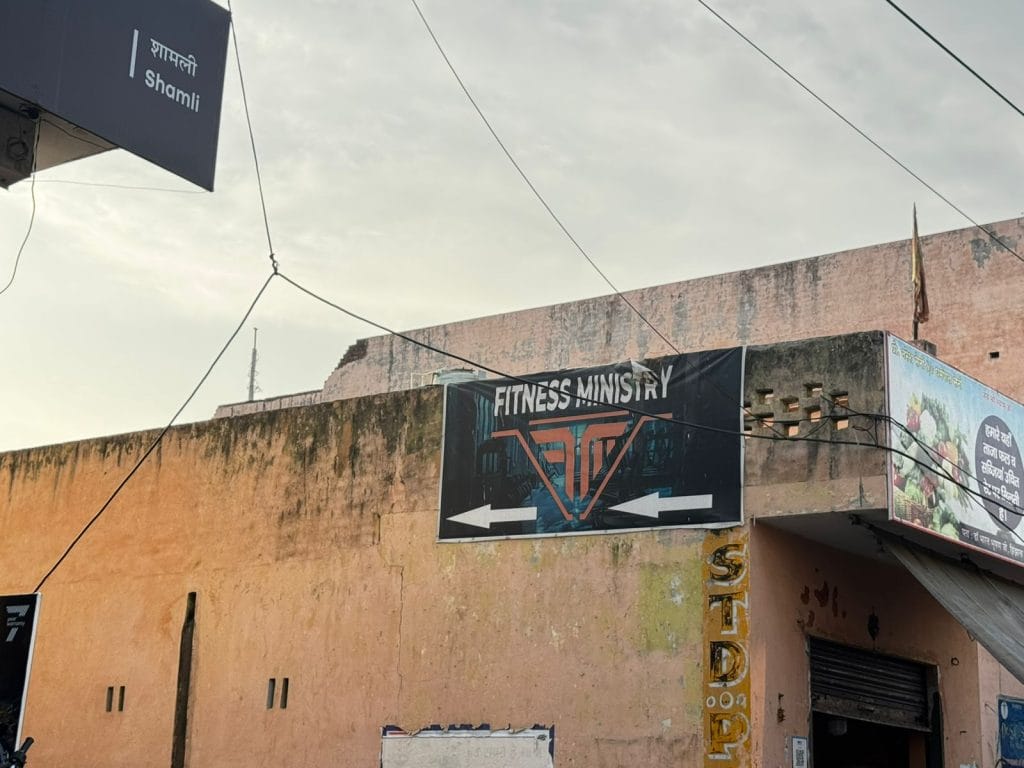 A sign points to Fitness Ministry gym in Shamli. ‘These gyms are like clubs for rural India,’ said owner Ajay Chauhan | Photo: Sagrika Kissu | ThePrint
Gyms are also the new hangout spots, where young men and women can mingle without social stigma. And they are cropping up everywhere — near farms, inside low-income neighbourhoods, the ground floors of houses, in rented halls. It’s an easy business model, with relatively low investment and steady returns.
Earlier it used to be temple where people would go without the oversight of elders. Now it’s gyms. Gyms are now the new temples of rural India. In temples, they worshipped the deity, here they worship the body
-Santosh Desai, author of Memes For Mummyji: Making Sense of Post-Smartphone India
Most gym owners belong to dominant agrarian communities such as Jats and Gujjars, or families that own substantial farmland. Often, the muscled owners guide their clients themselves rather than hiring professionals. In other places, YouTube videos double up as trainers for young men and women.
The boom has been most visible in the last two to three years, say gym owners in Uttar Pradesh and Rajasthan. Farming, once seen as a natural workout and source of strength, is giving way to bench presses and a more performative sweat that mirrors the city’s high-gloss aspirations.
“These gyms are like clubs for rural India. Here young men and women come to socialise, enjoy, and also stay fit,” said Ajay Chauhan, owner of Fitness Ministry gym in Shamli. “The difference is that urban India dances to beat-waale gaane (thumping songs) at the club. Here, they exercise to it.”
But the rise of this new gym subculture is beginning to trigger a backlash.
Also Read: A day with the Dehradun women who sprayed anti-Muslim graffiti. They are also Meerut stars
‘Gym jihad’
Now, the secret lives in gyms are beginning to come under the government’s watch.
In January, Uttar Pradesh Police claimed to have busted a religious conversion racket that was operating from five gyms in Mirzapur. They arrested several Muslim gym owners and trainers for allegedly targeting Hindu women for religious conversion and blackmail.
The case came close on the heels of protests led by Hindu groups such as Bajrang Dal after a Dehradun gym trainer, Nadeem Ansari, was accused by women of inappropriate touching and lewd remarks. News outlets have even coined a term for it: “gym jihad”.
Gyms can be suspect territories now. The Uttar Pradesh government has swung into action. Earlier this month, it issued a directive to officials to inspect all gyms and ensure these establishments have female trainers.
सभी जिम की जांच की जाए और यह सुनिश्चित हो कि वहां महिलाओं के लिए महिला ट्रेनर की व्यवस्था हो।
— मुख्यमंत्री @myogiadityanath जी pic.twitter.com/x8VF8GuJDH
— Government of UP (@UPGovt) March 2, 2026
The new scrutiny isn’t easy for a sector that went largely unmonitored until now.
With a shortage of trained women in the profession, many gym owners say they will struggle to comply. Some have asked their wives or female family members to pose as trainers during inspections.
“Where are the female trainers? Women rarely make it to gyms because of the conservative setup of our society,” said Gaurav Raghuvanshi, a gym owner and trainer at Brothers Gym in Shamli.
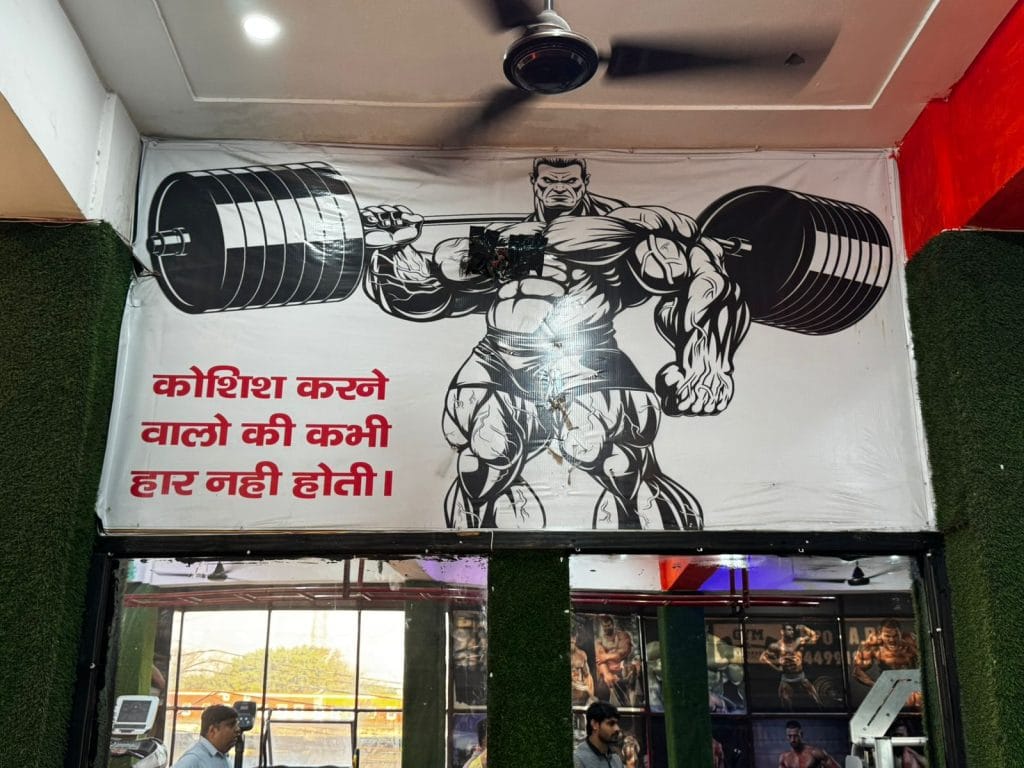 Hypermasculine imagery still dominates gyms, such as Powerhouse in Baghpat | Photo: Sagrika Kissu | ThePrint
The few women who do manage to enrol at these gyms have to contend with the usual problems — being ogled at, harassed, or judged by neighbours. Small towns are rife with unverified stories of women who went to gyms, met new men and married outside their caste or religion, often Muslim. Every viral incident, like a vicious brawl last December in MP’s Shahdol that broke out when women objected to “obscene” songs, makes parents even more cautious about sending their daughters.
Yet the business is booming. India currently has about 46,500 commercial fitness facilities, according to the India Fitness Market Report 2025 by Deloitte, based on web-scraped listings and surveys from across the country. The number is expected to grow at a compound annual growth rate of around 6 per cent until 2030, with 65,500 fitness facilities expected by then. This growth, the report added, is “driven by increasing demand in urban and rural areas.” Alongside, a parallel economy of supplement shakes and protein powders has taken root as young men look to transform their bodies quickly.
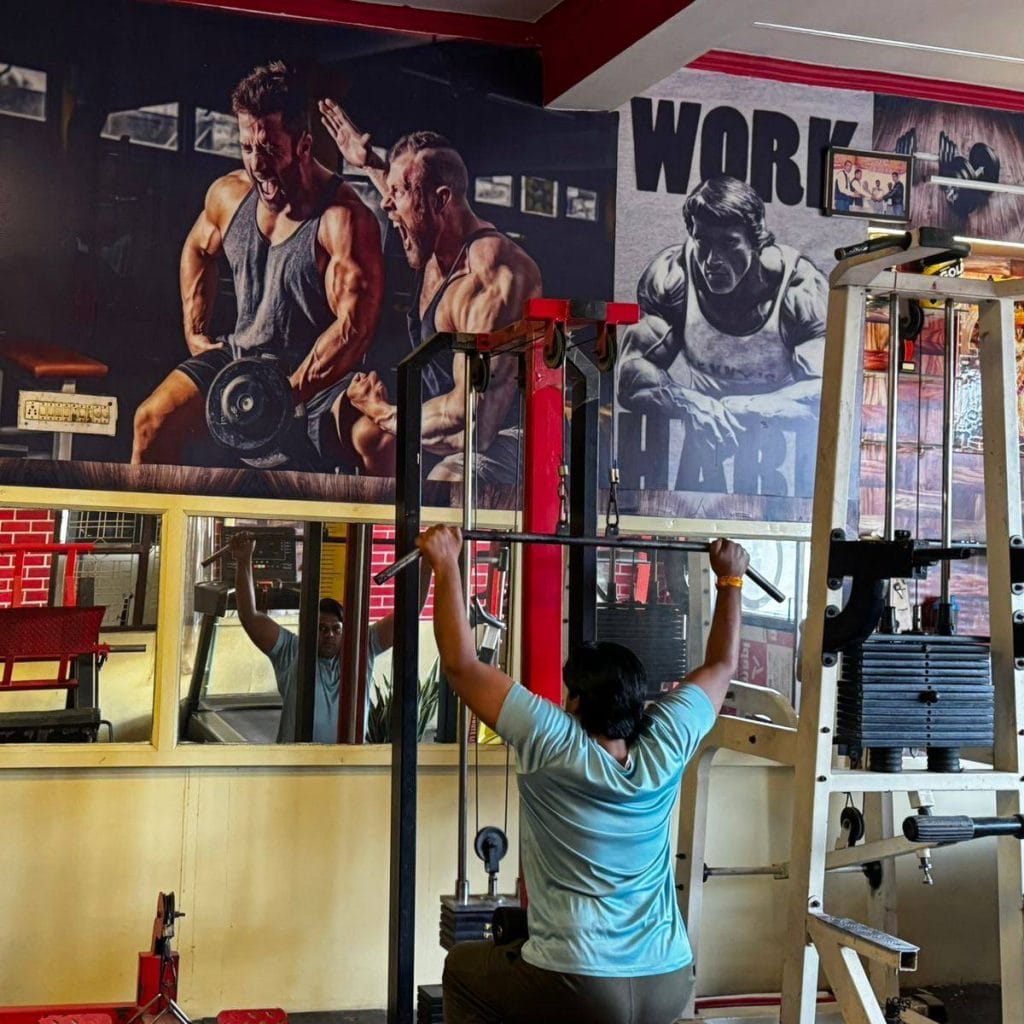 A workout session at Bajrang Gym on the outskirts of Alwar. Gyms are popping up everywhere, from village lanes to crowded residential pockets in small towns | Photo: Sagrika Kissu | ThePrint
The potential returns are attracting new entrepreneurs, and gyms are popping up fast even in villages. In one Reddit post on the r/IndiaBusiness forum, a user noted his friend’s optimism about opening a gym in a village market complex.
“He is planning to invest Rs. 10 Lacs for the equipment and another Rs 2 Lacs for the initial investment like rent, receptionist, woodwork etc,” the post said, adding that the entrepreneur planned to charge Rs 600 a month and expected to sign up 30 members within the first eight weeks.
“Earlier it used to be temple where people would go without the oversight of elders. Now it’s gyms. Gyms are now the new temples of rural India. In temples, they worshipped the deity, here they worship the body,” said Santosh Desai, noted social commentator and author of the recent book Memes For Mummyji: Making Sense of Post-Smartphone India.
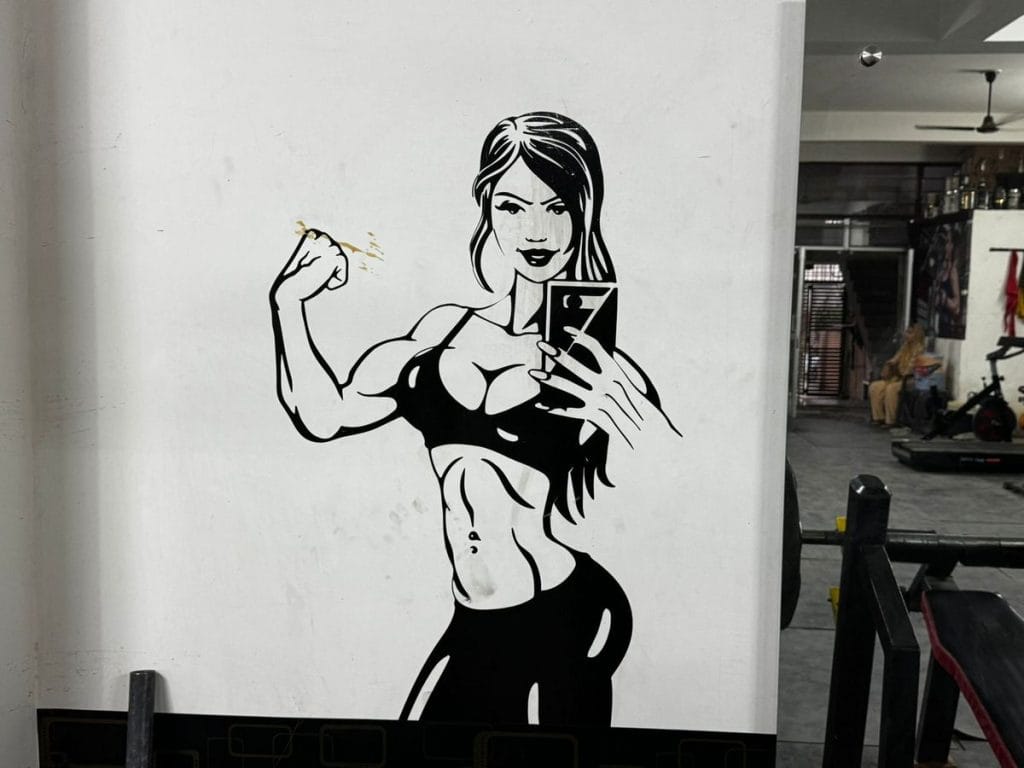 Some gym walls are finally beginning to make more space for women, like this one in Alwar | Photo: Sagrika Kissu | ThePrint
When gym trumped ‘ghar ki izzat’
For some women, marriage pressure is what finally got them through the gym door, even if tightly chaperoned.
At Powerhouse, a newly opened gym in Baghpat, the walls scream of aggressive masculinity. Posters of bulky men lifting heavy weights are pasted across the room alongside cheeky Hindi slogans. One reads: “Healthy khaana khaata hu, isliye mere dost fit nazar aata hu.” Another proclaims: “Darr ke aage dumbbell hai.”
At one corner, in front of a large mirror, 22-year-old Parul moves her arms back and forth on the butterfly machine. Her hair is tied in a bun, sweat trickles down her cheek and her face is flushed red. There is no trainer in the vicinity to guide her.
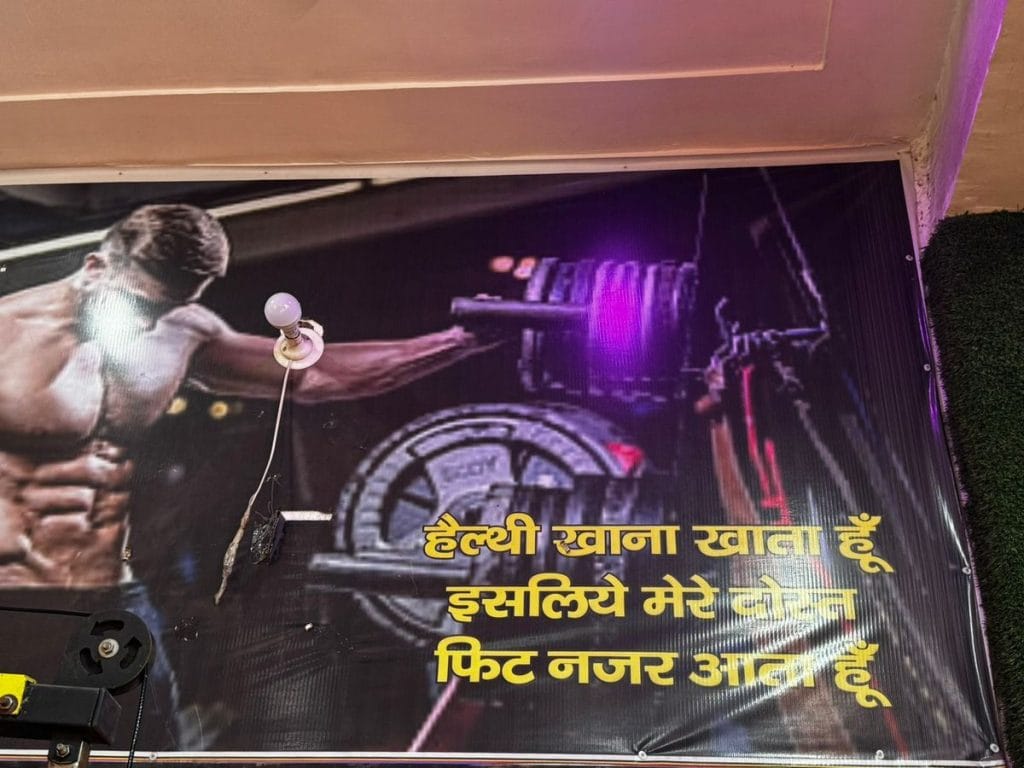 The messaging at the Baghput gym Parul attends is overwhelmingly masculine, but she says she still finds it freeing to work out there | Photo: Sagrika Kissu | ThePrint
Every now and then, she blows air out of her mouth as she pushes through the exercise while the latest Punjabi hits blast through the speakers. She wears a baggy cream-coloured T-shirt, maroon trousers and running shoes. There is no concept of trendy gym wear here.
Parul’s presence in this gym is a hard-won victory. A BA student at the all-women Janta Vedic College, she lives under a lid so tight she isn’t even allowed a mobile phone and has to use her mother’s device to make calls. She says she has no social media account either. Her father initially said a firm no to the gym idea, pronouncing that men would stare at her, trap her and then the “ghar ki izzat” would be destroyed.
“My father is very strict. I am the youngest of all with two older brothers. My mother understands but even she can’t speak much before papa,” said Parul, wiping her forehead with a handkerchief.
She is so beautiful, but families are rejecting her because of her weight. So I told her father it was high time she started going to a gym, otherwise we won’t get a match. Now I come with her. Because see, there are men here and she is a woman. What can we do?
Saroj, mother of Baghpat gymmer Parul
The gym ban only lifted after Parul was rejected by three prospective grooms for being a little overweight. Suddenly, the gym was less a threat and more a necessity. But it came with a condition: she would go with her mother and only to a gym close to their house. So when a new gym opened just 100 metres away on 12 March, Parul was the first to sign up.
Now, her mother, Saroj, sits on a nearby bench with a water bottle, playing a watchful, permanent sentry.
“She is so beautiful, but families are rejecting her because of her weight. So I told her father it was high time she started going to a gym, otherwise we won’t get a match. Now I come with her. Because see, there are men here and she is a woman. What can we do? Society is such,” said Saroj.
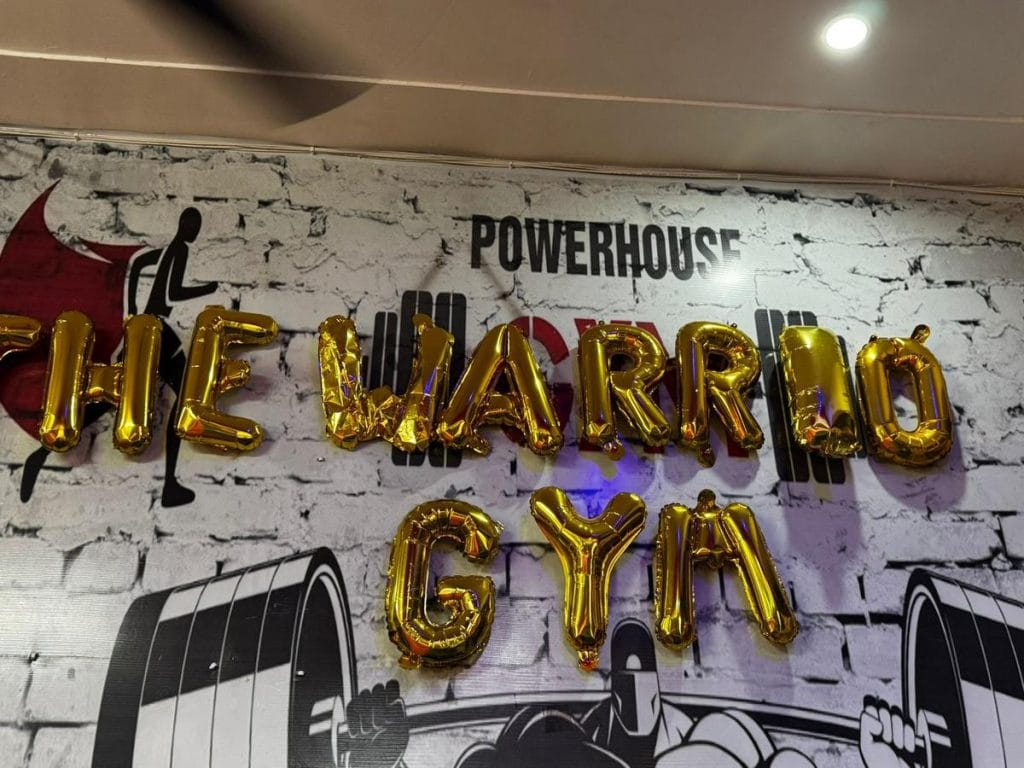 Opening balloons still hang at Powerhouse, where Parul signed up on day one | Photo: Sagrika Kissu | ThePrint
While Parul finds it a “dream come true” to be allowed here at all, chaperone or not, some men in the gym are less enthused about the maternal surveillance. They say they have to be more careful about how they talk and behave.
“It’s good that her mother is here, but we feel awkward around them. So I changed my gym timing,” said a 25-year-old who had joined the gym on the same day as Parul.
Freedom, flex, flirtation
Losing weight or even just fitness isn’t the only reason women are joining gyms in rural and small-town India. It’s also about smashing social barriers and being seen.
For 27-year-old Kirti Tanwar in Alwar’s Ambedkar Nagar, the gym has become a form of self-defence. She joined initially for fitness and to de-stress. Over time, she noticed a change in how men behaved around her. They no longer stared at her the way they once did.
“Men had an inkling that this woman goes to the gym and won’t shy away from hitting them back,” she said with a loud laugh. Now, she wants to build muscles like her elder brother.
It was as if I found an expression. I wanted to express myself. The fear had waned. These three hours at the gym were cathartic. No one poked at me. I could do what I wanted. This was my time. I felt free
-Ishika, gymgoer in Shamli
But it can still be intimidating for women to join gyms in small-town India. They are outnumbered even on the walls where most posters show grim-faced men flaunting bulky muscles. At most, a few images show women with tight abs and sensible dumbbells. Yet, some women are discovering their fierce side.
At Brothers Gym, tucked inside a narrow bylane in Shamli, Ishika was known as the quiet girl. But two months into joining the gym, something changed.
“It was as if I found an expression. I wanted to express myself. The fear had waned. These three hours at the gym were cathartic. No one poked at me. I could do what I wanted. This was my time. I felt free,” said the 24-year-old.
Ishika and Vanshika are neighbours and are the only two women at the gym, where they became members 6-7 months ago. Both their parents are supportive of their gymming, saying “beti kasrat karegi” (our daughter will exercise).
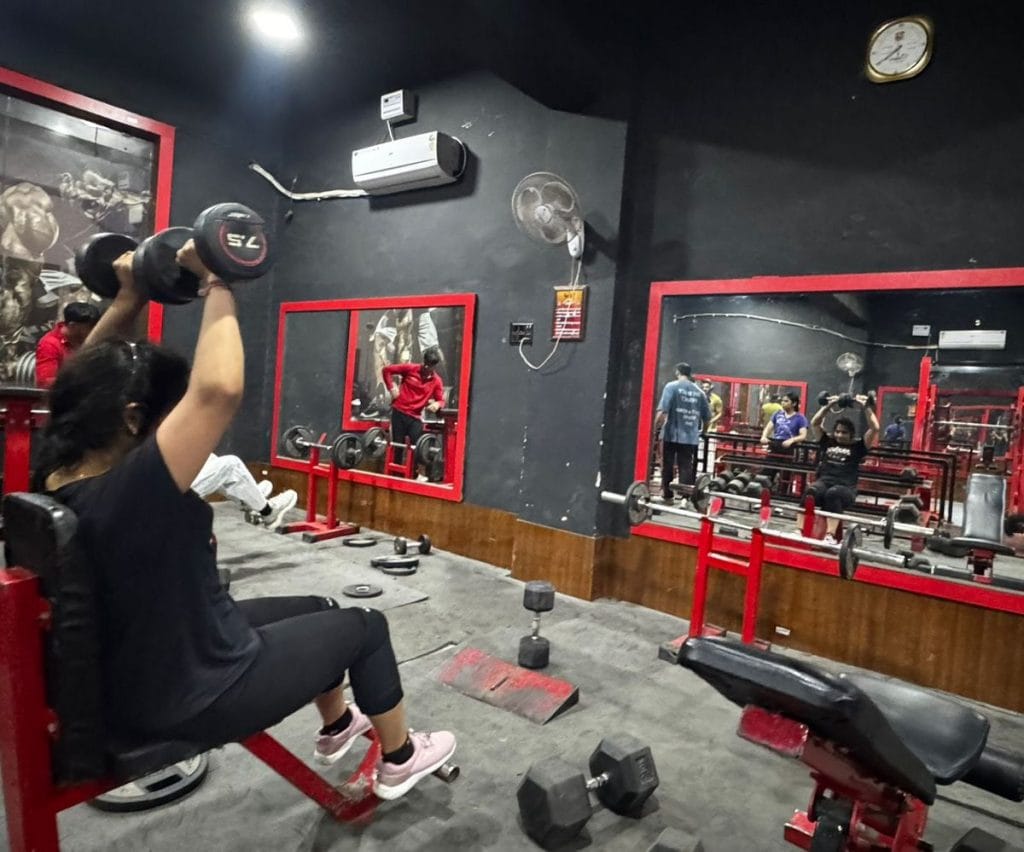 Ishika works out at Brothers Gym in Shamli, where flirtation can be a game of smoke and mirrors | Photo: Sagrika Kissu | ThePrint
Inside the gym, bright red benches and weight machines are packed into a dark room lined with mirrors. At 6 pm on a weekday, around 40 young men move between sets while Vanshika and Ishika take turns with dumbbells and the treadmill.
Glances are swiftly exchanged through the red-framed mirrors. Between lifts, the boys talk loudly among themselves about protein powders and reps, but when someone cracks a joke, the women chuckle as well. A young man drops to the floor for another round of push-ups, shooting a quick look at the women. Another flexes his arms in front of the mirror, a half-smile on his face.
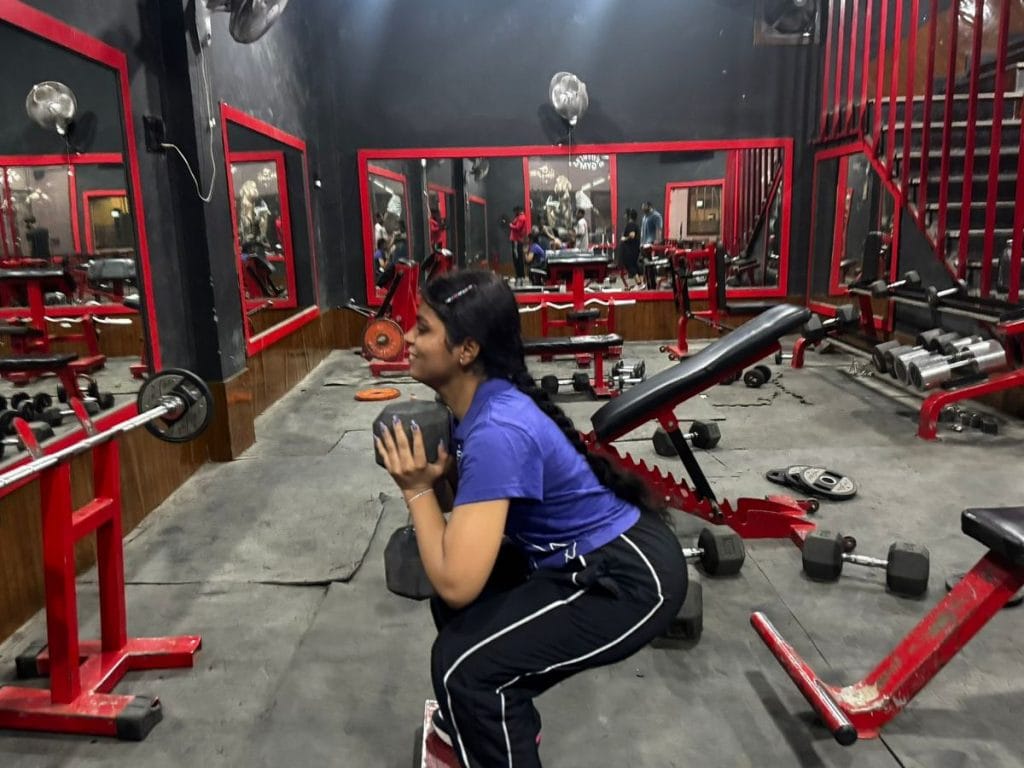 Vanshika works out at Brothers Gym in Shamli. ‘It’s a place where I socialise, enjoy my time and feel free’ | Photo: Sagrika Kissu | ThePrint
“I like the attention I get,” Vanshika grinned. But there is no overt flirting between the men and women on the floor here. Gym owner Gaurav Raghuvanshi has instructed the men not to bother the women and to make them feel safe. He said the two women are “my responsibility”. He takes regular rounds of the floor, keeping a hawk’s eye on the goings-on.
The introductions happen later, the old-fashioned way — numbers and social media handles passed on by friends of friends. It is a small town and the degrees of separation are few, a boon and a bane for making contact. Ishika says both women keep getting friend requests on Facebook.
“There is a lot to choose from. We check them out and see whose request we should accept,” laughed Ishika.
But it’s the emotional and psychological transformation that has really changed things. A month ago, at a wedding, Ishika was trying to discreetly smoke a hookah in a room when a 15-year-old boy walked in and told her that it wasn’t something women should do.
Ishika recounted that she stood up and snapped back: “Tu balak hai. Tameez mein reh. Main badi hoon. Dhole dekhe hain mere?” (You’re just a kid. Behave yourself. I’m older. Have you seen my biceps?) The boy ran away, she added, breaking into laughter.
Desai noted that gyms are particularly important for girls and women in small towns.
“It is a place where they can exercise their body, feel their body. It is a little escape hatch in their lives with a degree of social legitimacy involved,” he said.
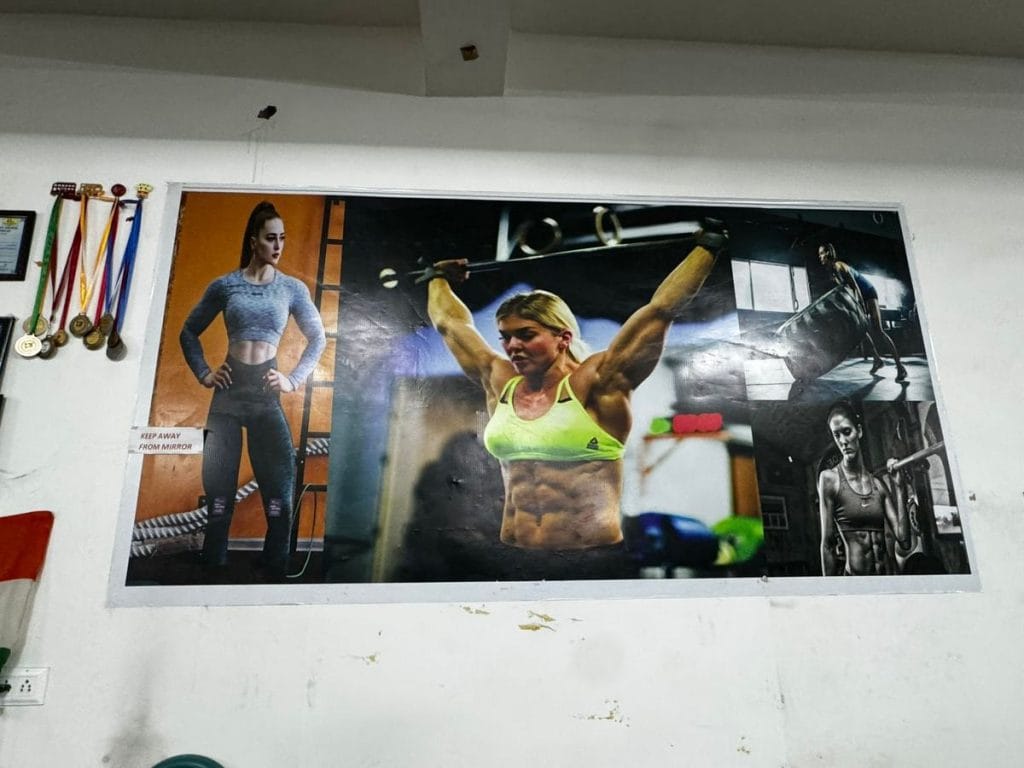 Images of muscular women are still uncommon in small-town gyms, but some are bucking the trend | Photo: Sagrika Kissu | ThePrint
‘Educated men’ vs taus
Many gyms offer separate women’s-only timings, but 24-year-old Baghpat resident Malika Chaudhary doesn’t buy into the format. Even a brush with a stalker at her previous gym hasn’t convinced her that segregation is the answer.
A few months ago, she quit Sky Gym after a boy followed her home. Already, she was unhappy with the constant stares she got there. The solution was a new gym with a “better crowd”— the Fitness Ministry, where the owner was a friend of her father.
My parents were cool. But society wasn’t. Every day they would say something. [One tau] asked me to look at our mothers and grandmothers who stayed fit by working in the house
-Malika Chaudhary, Baghpat gymgoer
The new gym offers a female-only slot from 9 am to 11 am, mostly attended by a dozen married women from nearby villages. But Malika, who has a BSc degree, chooses the mixed evening crowd instead. She has more in common with them and finds the men “well-educated”.
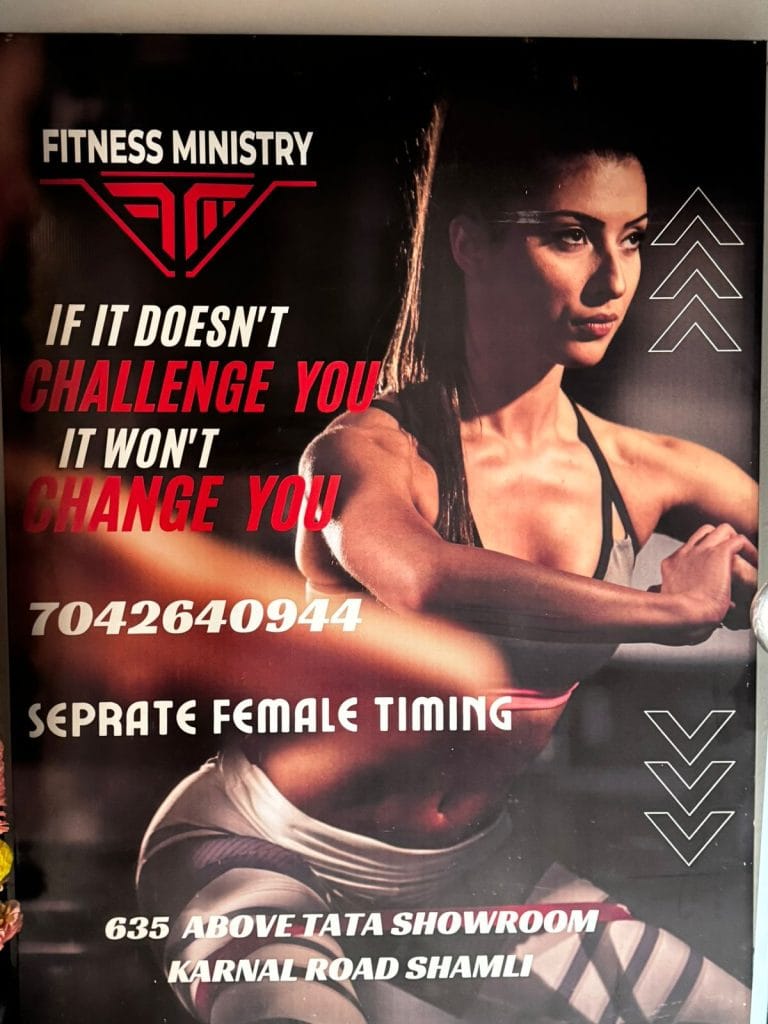 A poster at Fitness Ministry advertises a separate slot for women, used mostly by married women from nearby villages | Photo: Sagrika Kissu | ThePrint
The gym is an escape from the taujis and aunties who ruined her morning and evening walks with their judgmental comments.
“My parents were cool. But society wasn’t. Every day they would say something,” said Chaudhary. One tau told her women don’t need gyms or walks. If they do all the household chores and work in the kitchen, they will naturally become thin.
“He asked me to look at our mothers and grandmothers who stayed fit by working in the house,” she scoffed.
‘DNA’ of gym ownership
Twenty-two-year-old Yash Tomar wants to become a famous bodybuilder. He’s bulking up at Abhi Fitness in Baghpat, but his role model is Brazilian physique athlete Adriel Eduardo Machado.
Ever since he joined the gym in February, on the day it opened, he’s been documenting his daily workout routine in an Instagram account he created just for this purpose.
His videos show him lifting weights, doing push-ups and working on his triceps, set to Punjabi and Haryanvi hits such as Total by Rawnee Hooda and Born to Shine by Diljit Dosanjh.
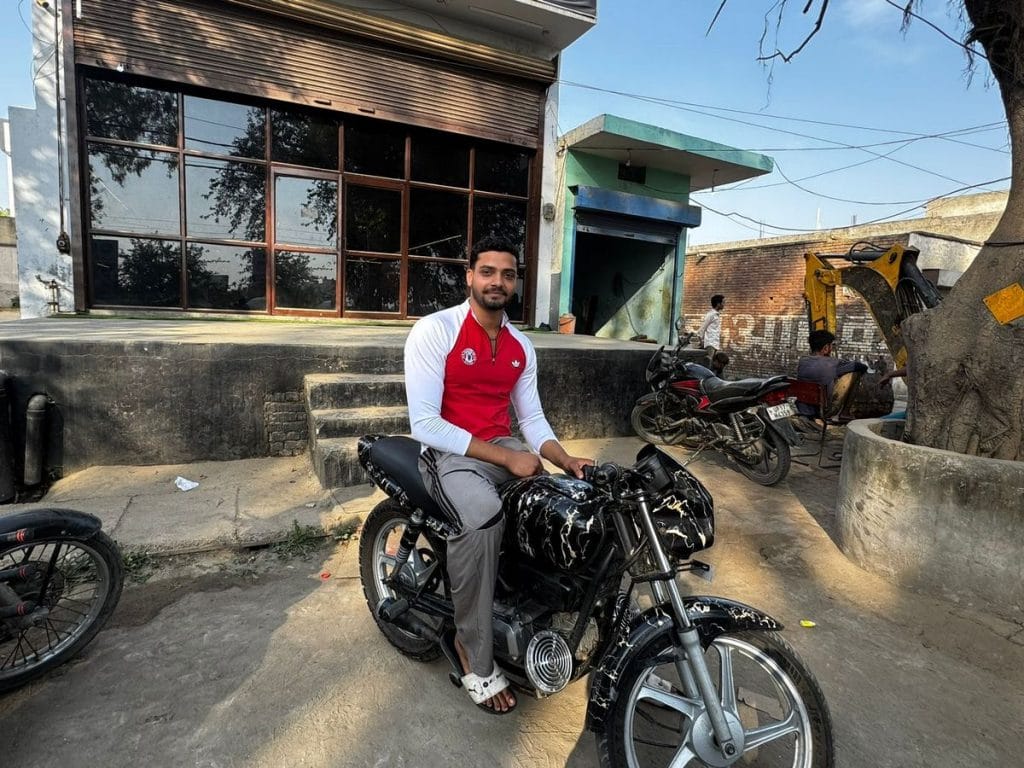 Yash Tomar outside a gym in Baghpat. He dreams of becoming famous and has created an Instagram account to display his gym routine | Photo: Sagrika Kissu | ThePrint
The gym on the main road, leading to a village, is owned by 26-year-old Arjun Tomar, who also works there as a trainer. A plaque reading “Abhi Fitness” hangs from iron rods at the entrance, adjoining a few small kirana stores. Behind it, a red tractor is parked. The soundtrack is a high-decibel blur of DJ beats and the clang of iron as men do the rounds of the benches and machines, with little space to move between them. “No Pain, No Gain,” says one of the several posters of veiny bodybuilders.
[Jats and Gujjars] have the same qualities. We are hardworking. We work on farms and grew up on doodh and ghee. That’s why we are in the fitness industry
-Arjun Tomar, Baghpat gym owner
Like many other rural professions, gym ownership is associated with particular communities. In Baghpat, most gyms are owned by Jats and Muslims. In the adjoining district of Shamli, Jats and Gujjars dominate. In Rajasthan’s Alwar, many gym owners are farmers and landlords, with a mix of Brahmins, Rajputs, Punjabis.
Arjun claims that Jats and Gujjars have an edge, and that it comes down to their “DNA”.
“We both have the same qualities. We are hardworking. We work on farms and grew up on doodh and ghee. That’s why we are in the fitness industry,” said the buff trainer in his deep voice.
By 5 pm, young men begin trickling in and a line of Splendor, Bullet and Honda bikes forms outside the gym. Many harbour dreams of becoming bodybuilders, winning titles like Mr Uttar Pradesh or one day opening gyms of their own.
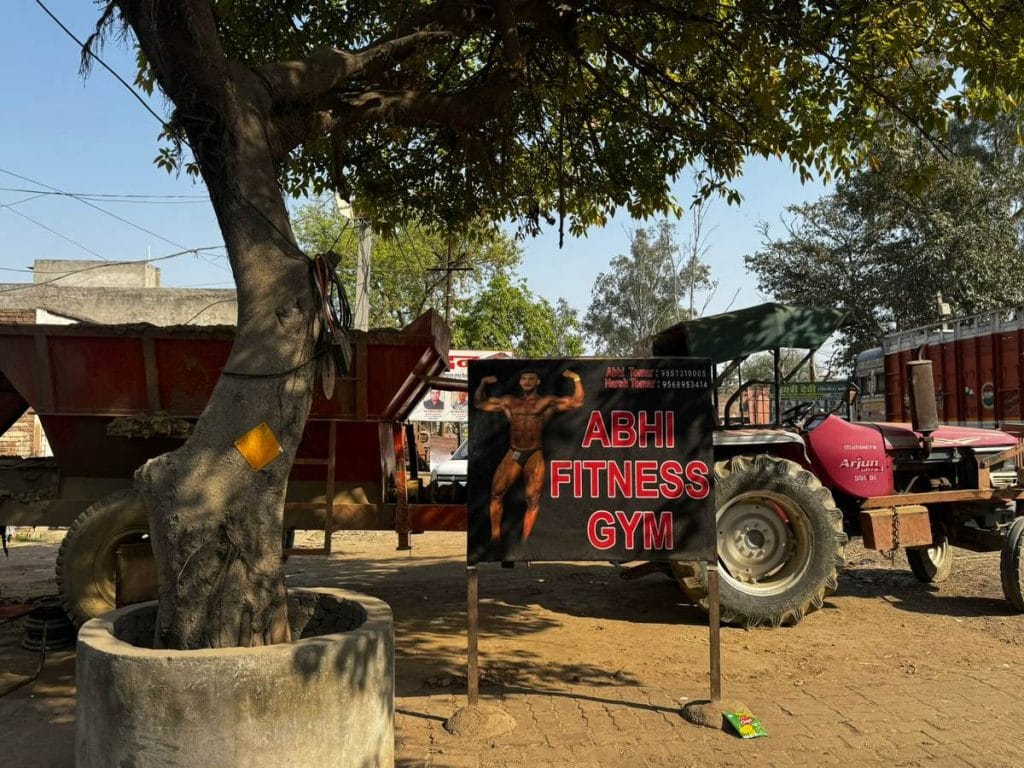 Tractor and triceps outside Abhi Fitness gym in Baghpat | Photo: Sagrika Kissu | ThePrint
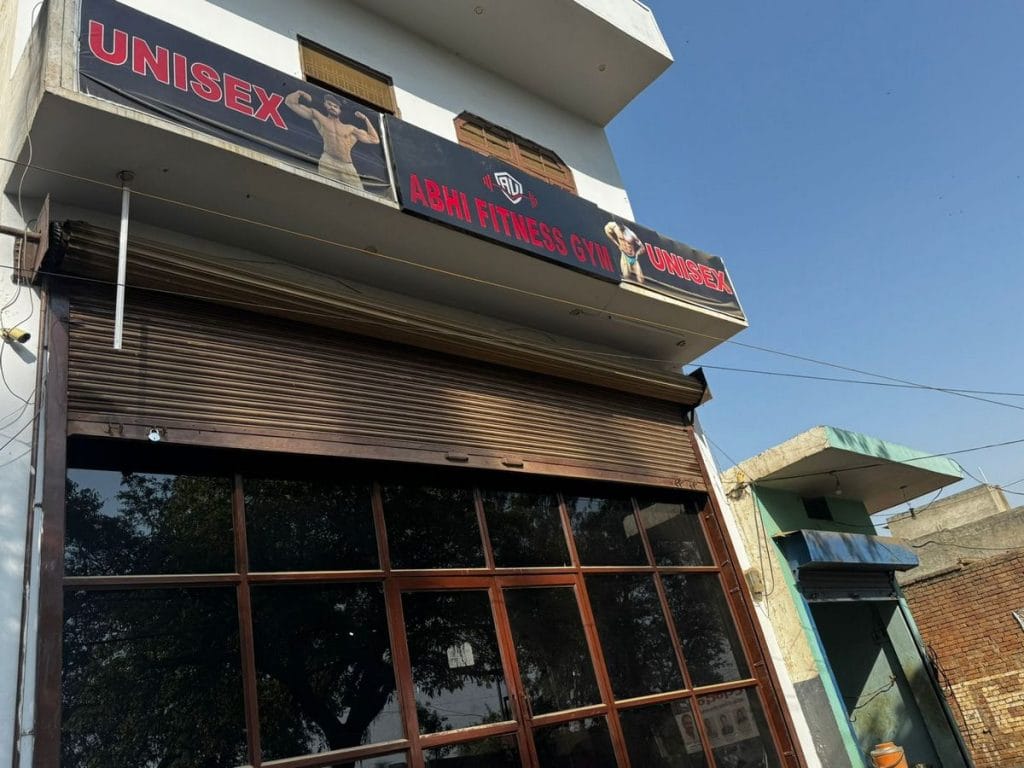 Abhi Fitness touts itself as a unisex gym, though it has yet to sign up any women in the month since it opened | Photo: Sagrika Kissu | ThePrint
Educated until class 12, Arjun zeroed in on opening a gym because building his body was something he knew he excelled at. With an initial investment of Rs 6-7 lakh, he rented a space, bought machines, and threw open the doors. The monthly rent is Rs 15,000, and the 30 boys who train here cover the overhead and then some. Each member pays Rs 800 a month.
“The gym fees pay for the rent and I end up saving some money too,” said Tomar, who also has 8-10 kilas of farmland in his village.
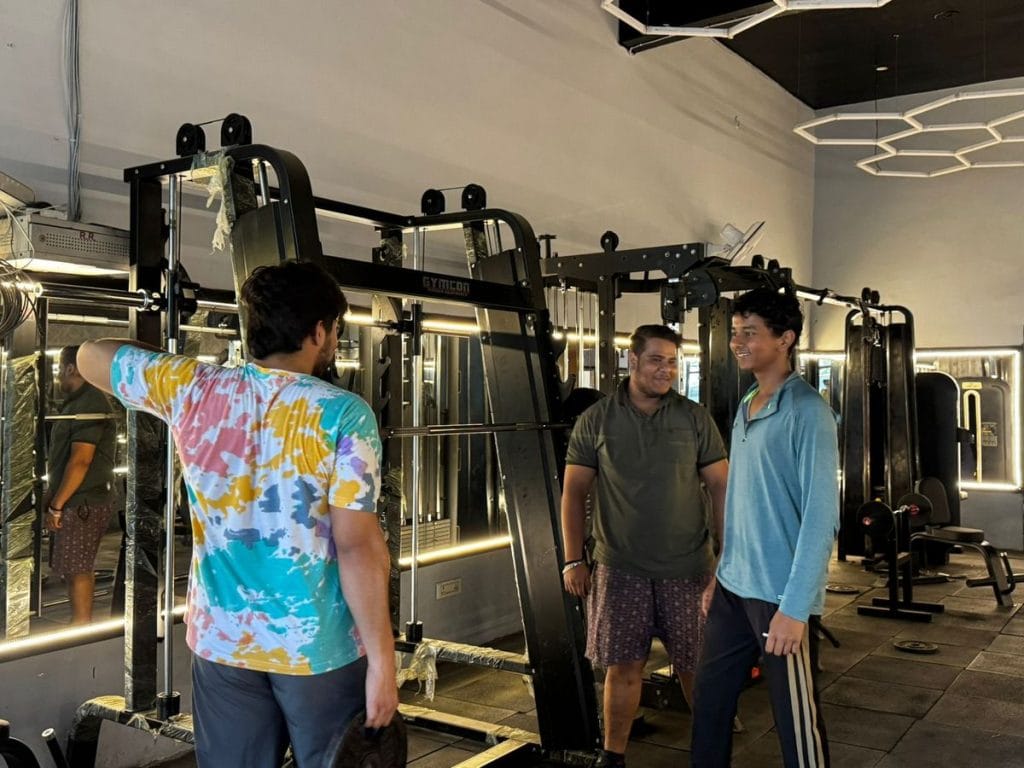 Behind its unassuming facade, Abhi Fitness has surprisingly slick interiors | Photo: Sagrika Kissu | ThePrint
About 75 km away in Shamli, another small town in western Uttar Pradesh’s sugarcane belt, neighbourhood gyms are seeing a similar surge.
In a narrow lane riddled with potholes stands Downtown Fitness. The gym’s owner, 25-year-old Sawan Chauhan, who belongs to the Gujjar community, built it on land his family owns. Three years ago, Chauhan returned to Shamli after eight months of training at Gold’s Gym in Delhi’s Karkardooma. Ganga Vihar was a workout wasteland then.
“When I came home for two to three months in 2023, there was no gym in my neighbourhood. The nearest one, Oxygen, was a few kilometres away,” said Chauhan, a box of boiled eggs lying open on his table. “That’s when I decided to start a gym of my own. A friend who runs a supplement store suggested the name.”
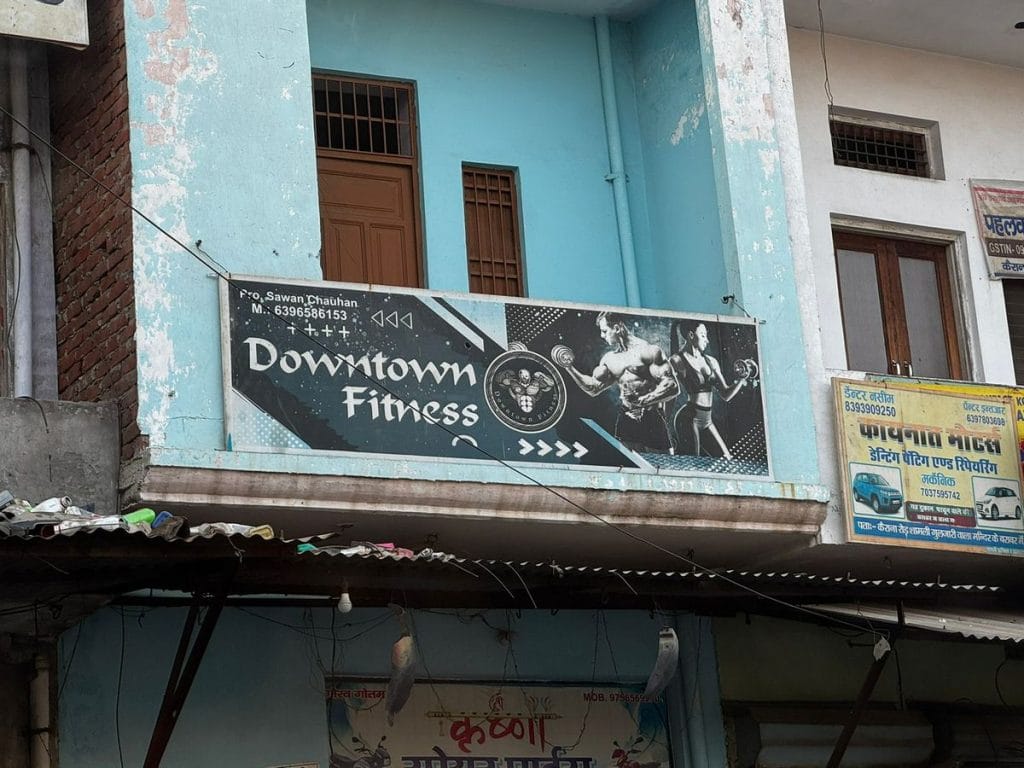 Downtown Fitness in a narrow bylane in Ganga Vihar, Shamli. Owner Sawan Chauhan says he earns about Rs 12 lakh a year from the gym | Photo: Sagrika Kissu | ThePrint
Chauhan struggled initially. At first, only about six of his friends signed up, and he was concerned he might have to shut shop. But word of his Rs 20 lakh equipment investment got around and within a couple of months, membership grew to nearly 50.
His Instagram page has over 3,000 followers and is filled with reels of his workouts. The bio reads: “Certified fitness trainer (Gold Gym). DM for weight loss and weight gain.” Today about 120 people train at his gym, including roughly a dozen women. Membership costs Rs 1,200 per month.
But the competition has intensified quickly. Within two years, three more gyms have sprung up in the same neighbourhood, all run by Chauhans. Each has carved out its own selling point. Downtown Fitness prides itself on newer, heavier equipment and Chauhan’s Gold Gym pedigree. Body Lab, a lane away, offers a larger space and a gaming zone, while Fitness Ministry markets itself as a family gym.
Chauhan, though, is not worried. He said he has already recovered the money he invested.
“Now every year I make over Rs 12 lakh from the gym,” he added.
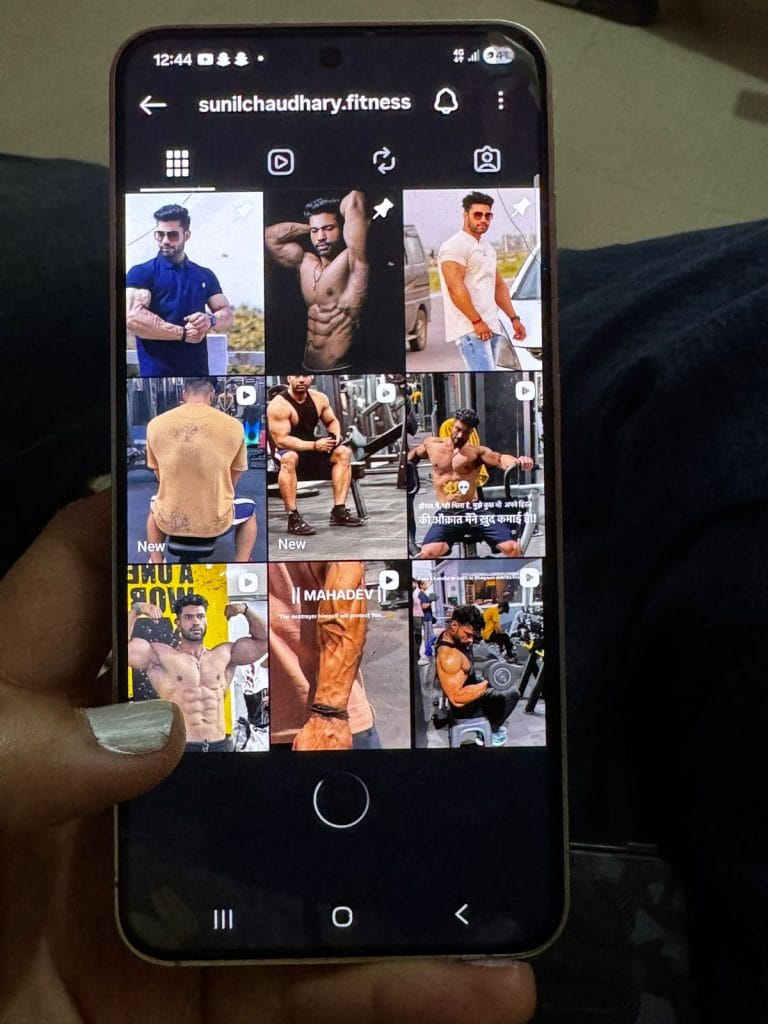 The Instagram page of a gym trainer from Shamli | Photo: Sagrika Kissu | ThePrint
Corn starch and protein powder
In Rajasthan’s Alwar, Ritansh Khanna has turned his local powerlifting fame into a supplements supply chain for gyms in the town and surrounding rural areas. Once a gym trainer, he now owns RK Nutrition Hub, where imported and Indian products are stacked neatly along shelves.
“Six years ago, there were barely 2-3 gyms. Now, the number has crossed 200. And I am talking about good gyms with proper infrastructure,” said Khanna. “Of these gyms, I supply supplements to over 100 gyms.”
From protein powders and muscle gainers to pre-workout drinks, many trainers now also sell supplements. But with it has come a shadow market of counterfeit products.
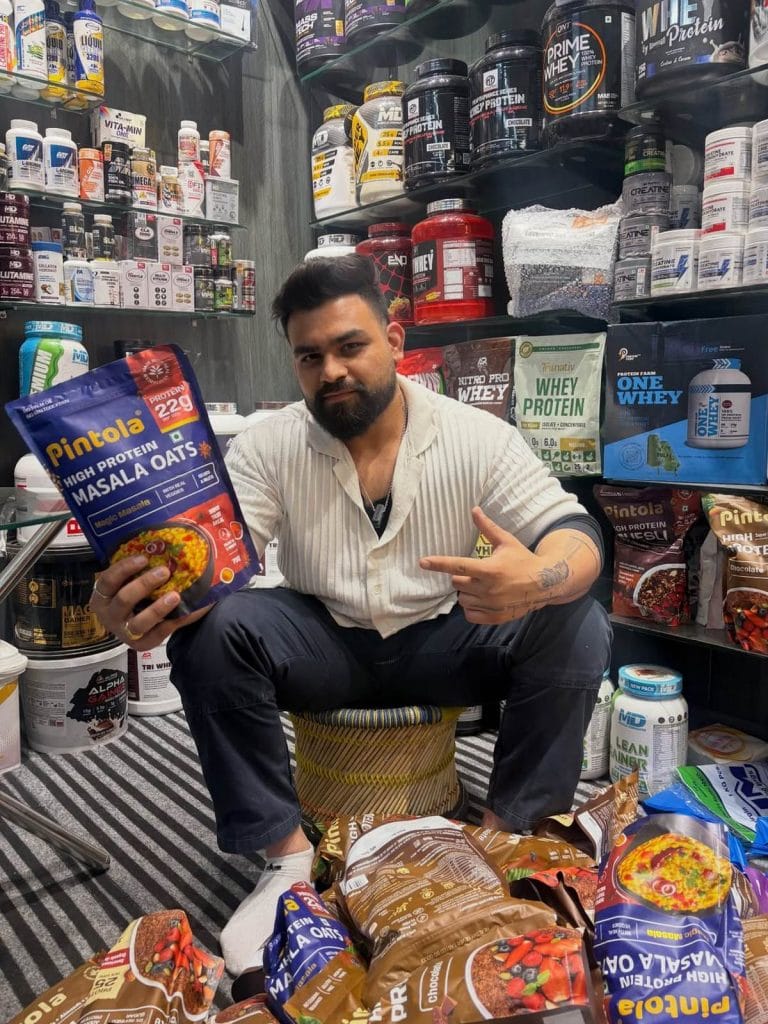 Powerlifter and RK Nutrition Hub owner Ritansh Khanna promotes everything from masala oats to creatine on his Instagram page
Khanna claimed that one or two consumers come to him every week after being duped by fake supplements.
Dubious ‘brands’ put out flashy ads on Instagram, targeting young men who can’t afford the real thing. A protein supplement that sells for Rs 10,000 in stores is offered online for as little as Rs 4,000.
“For young boys who already don’t have much money, such deals are tempting,” said Khanna.
In Baghpat, Yash Tomar bought supplements online from someone called Sanju — a person he has never met. It was a bargain he couldn’t resist. Within a week, he developed rashes and constant diarrhoea. A doctor later advised him to stop taking the product.
On 15 March, Delhi Police busted a fake protein powder racket. During the investigation, officers found that the two accused had sold over 7,000 kg of cheap ingredients such as corn starch, milk powder, and mixing agents as branded supplements.
“A physical store can’t do this. People know us here — we live in the same neighbourhood. Where would we go if we cheated them?” said Khanna.
Also Read: A Meerut wedding that got too risky. Dalit bride, Muslim groom, parents, venue ready
Love in the time of gymming
On the outskirts of Bhagwanpura village in Alwar, a small gym called Bajrang serves several nearby villages. Young men and boys stream in every morning and evening to train. The setup is rudimentary: a few pieces of equipment and a small temple inside with an orange idol of Lord Hanuman. There are no trainers. Most learn from one another or follow workout routines on YouTube. There are neither supplements nor women.
Twenty-four-year-old Mohit from Tulera village in Alwar attends Bajrang gym in secret. His father, a police officer, is convinced that gyms are fertile ground for gundagardi and other shady activities. So Mohit times his visits carefully. Between 5 pm and 6 pm, while his father is still at work, he slips out to train and makes sure he is home well in time.
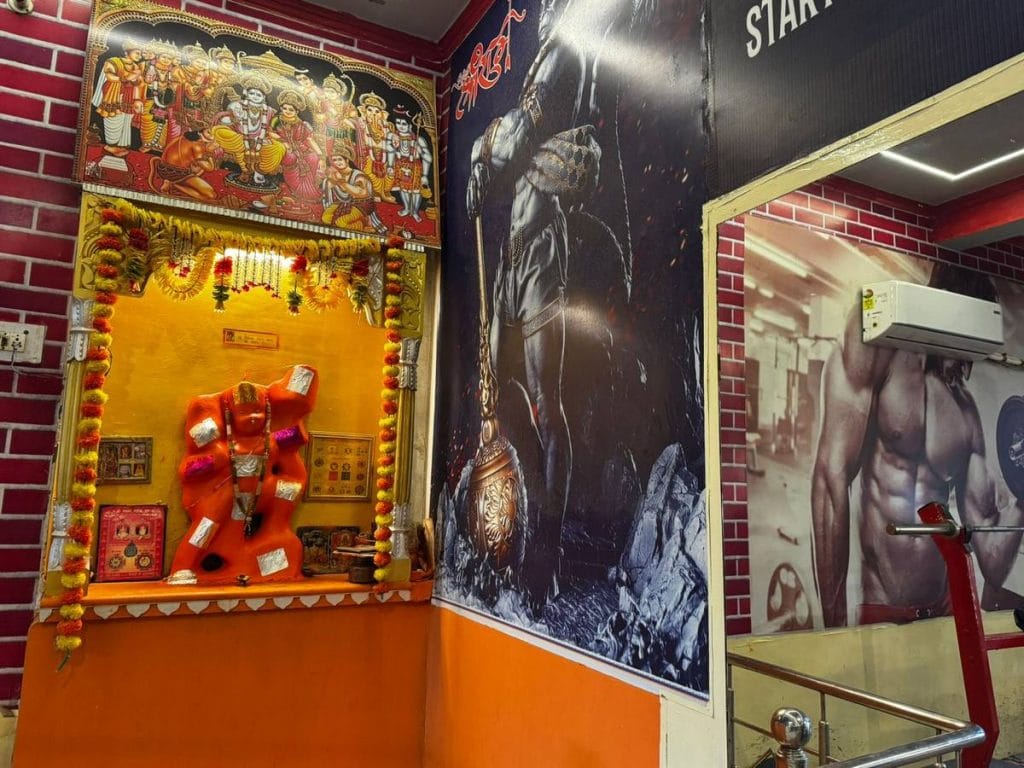 Mytho-muscularity inside Bajrang Gym in Alwar | Photo: Sagrika Kissu | ThePrint
He says his life has changed since he joined last year. He’s fitter, more confident, and, he adds with a smile, girls at his college now notice him more. Even without posting gym selfies, the DMs are coming thick and fast from women who’ve seen him around.
“My Instagram is filled with friend requests from girls. And that’s when I don’t even post pictures from my gym routine because of my father. You can ask my friend,” he said, gesturing toward his friend with his chin, blushing slightly.
It’s a new sense of masculinity that has given him a specific checklist for a future wife.
“She has to be beautiful but also fit — someone who likes exercising and staying healthy,” he said. It is somewhat ironic, given that Bajrang gym does not have a single female member.
Even for those who find love among the machines, old notions sometimes get in the way. At Downtown Fitness, Vijay says he first met his girlfriend at a gym in his village. They eventually fell in love, but she later stopped going to the gym. Vijay admits he is the reason. As a man, he says he knows exactly how other men look at women in these spaces.
“I don’t want them looking at my girlfriend in a certain way. The culture hasn’t evolved much,” he said. “This still happens in Delhi, so you can imagine what it’s like in Shamli.”
(Edited by Asavari Singh)