
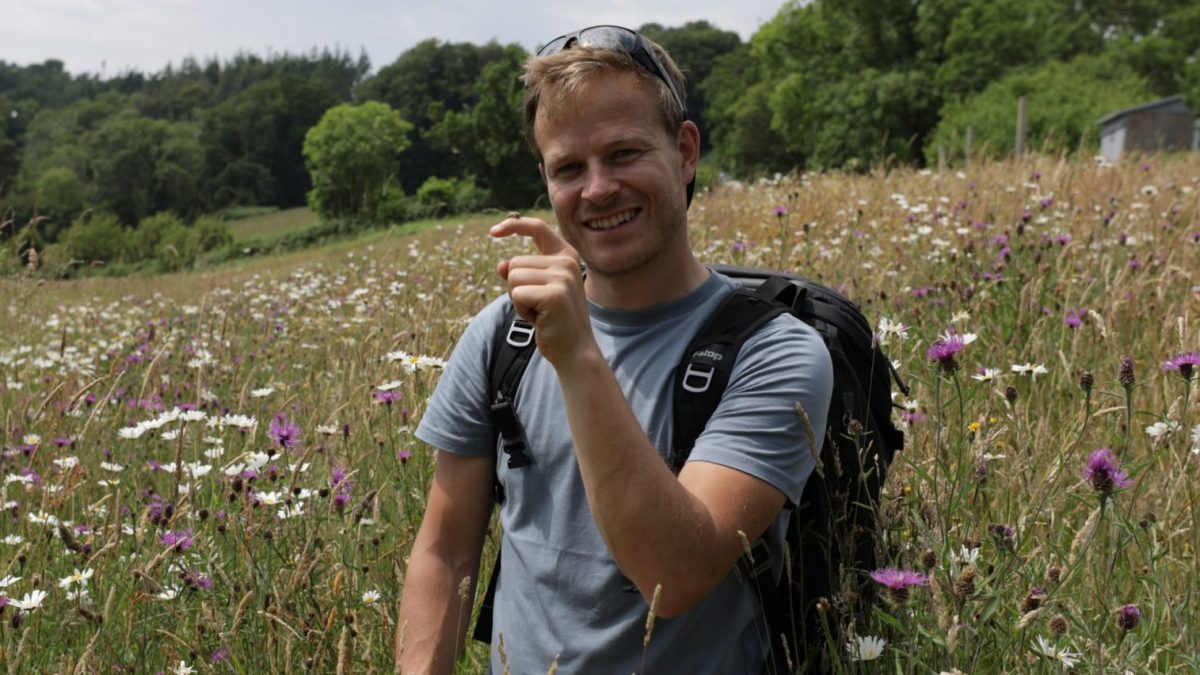
Polar bears, great white sharks, lions, tigers… and bees? Bafta and Emmy-winning National Geographic explorer Bertie Gregory had some initial reservations about the wow-factor of the subject of his newest documentary Secrets of the Bees.
“I thought we might struggle to bring out that same level of character or charisma – but I was wrong,” he says. “Bees are full of character – you just need to get on their level and see the world through their eyes. I’m proud to say we’ve done just that with this series.”
Jam-packed with groundbreaking filming technology and eyebrow-raising facts about these surprisingly intelligent insects, Secrets of the Bees is the latest instalment of National Geographic’s Emmy award-winning “secret lives” series, which has previously focused on elephants, octopus and penguins.
New FeatureIn ShortQuick Stories. Same trusted journalism.
With a focus on a honeybee hive in the UK in their active seasons of spring and summer, it’s an immersive and visually mesmerising watch that travels to verdant mountain forests in Japan, the Amazon jungle and wildflower-filled meadows. In short, it’s a comfort watch that doesn’t scrimp on education or insights.
And with more than 20,000 species of bee across the globe, many of whom face significant challenges, there’s never been a better time to focus on these tiny insects who pack a mighty punch when it comes to the future of humanity.
“Bees are incredible in their own right, but they’re also critical for our survival,” says Gregory, who also hosts and narrates the two-part series. “They’re responsible for about a third of the food we eat, so if bees are in trouble, we’re in trouble. In some parts of China, farmers have to manually pollinate crops, which is hugely labour-intensive, due to the widespread loss of bees from pesticide misuse and habitat destruction. This means that food prices soar. If bees disappear, we face a big, big problem.”
Not bad work for a creature with a brain the size of a pinhead. But despite their diminutive size, it quickly becomes clear that humans have dramatically underestimated bees. In one remarkable scene, an experiment at Queen Mary University of London reveals that bumblebees enjoy play, the first time that this activity has been demonstrated in insects. “Time and time again they show incredible intelligence,” enthuses Gregory.
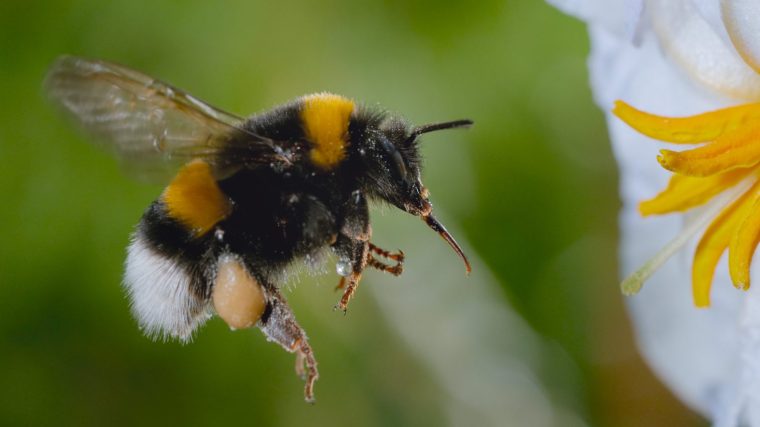 A bumble bee passes nectar from her fore legs to hind legs (Photo: National Geographic)
As well as having names worthy of a Tolkien novel – buff-tailed, fire, vulture, broomstick – hive bees also inhabit very defined roles. “Some are responsible for tending the brood, some feed the queen, some are undertakers that remove dead bees from the hive to stop the spread of disease, some are “bouncers” that stand guard to protect the entrance to the hive… it’s this perfectly oiled machine,” says Gregory.
“One of my other favourite things about honeybees is that they have democracies in their hives,” he continues, before outlining how bees find a new home, sending out scouts to scope out potential properties, before reaching a consensus. “I think politicians could learn a thing or two from honeybees,” he smiles.
High praise from a man who was named Bafta’s youngest cinematography winner in 2020 for his work alongside Sir David Attenborough on the BBC’s Seven Worlds, One Planet series. But he’s modest when asked how he handles being up close and personal with some of our planet’s most formidable predators.
“I think it’s a common misconception that my job is really dangerous,” he counters. “I would argue that walking down a street in the middle of a city is far more dangerous than any of the sharks or leopard seals or bees I’ve encountered.”
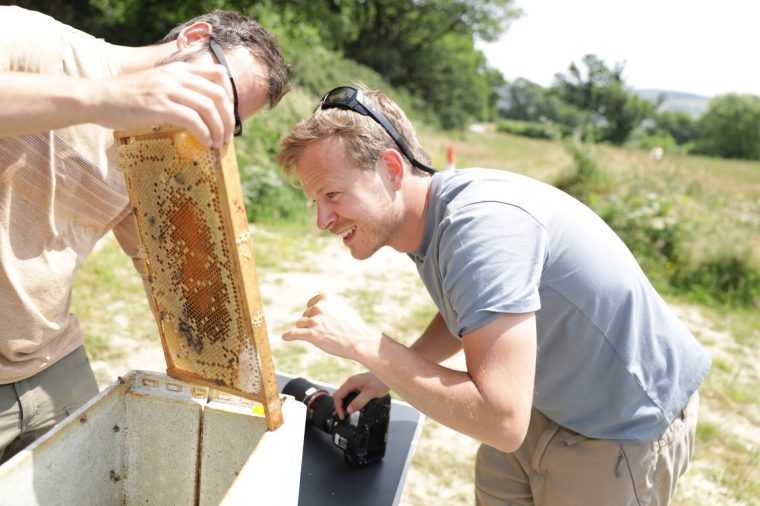 Gregory looking at a honey comb frame (Photo: National Geographic/Nadege Laici)
He continues: “I think we’re scared of what we don’t know. And I’m fortunate to know quite a bit about animals and to work with lots of experts that know even more than me. The idea that nature is a really dangerous place and that wild animals are just out to get you is just rubbish. If you give animals space and treat them with respect, they don’t want to mess with you. They just want to get on with their lives.”
In terms of the public’s attitude towards wildlife and conservation issues, Gregory is heartened by the younger generations’ approach to caretaking our planet.
“When I was growing up and sneaking off from lessons and birthday parties to take pictures of badgers and foxes, it was definitely seen as a strange thing to do,” he recalls. “But now there’s been this huge shift and being interested in the environment and wildlife and wanting to help is kind of cool among young people. I’m hopeful about the future because of young people.
Gregory acknowledges how unique and privileged his insight into the natural world is. “As well as getting to hang out with cool animals, I get to hang out with cool people, which I feel very lucky for. And what gives me hope is that I’ve met so many people around the world that are changing our relationship with the natural world – and they’re finding that nature is really good at bouncing back. If you give nature the chance, it’ll bounce back on an unbelievable scale.”
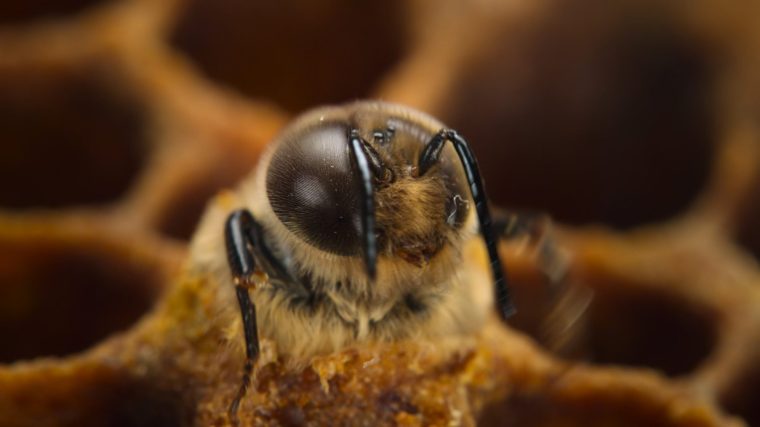 A male honeybee emerges from his cell (Photo: National Geographic)
Thankfully, the solution to the challenges facing UK bees is one that each of us can play a positive role in. “It’s very simple: you just need to plant wildflowers,” says Gregory. “That’s why I love this series, because our call to action is so straightforward. Who doesn’t love wildflowers? It’s a win-win.”
Are bee-friendly labelled plants always as helpful as they suggest? “Not necessarily,” says Gregory. “What’s really important for bees is planting wild, native species. And they don’t like complex flowers – bees appreciate simple flowers that are easy to get in and land on. If you look at a tulip, for example, there’s not really a landing pad for them.”
Gregory has more advice for wildlife-lovers keen to support the UK’s bee population. “If you’re going to plant a wildflower meadow, make sure that you’ve got a range of time periods in which those plants flower, but especially early in the spring and into autumn, so bees can access lots of food for as long a period as possible.
“Looking after nature isn’t just a nice thing to do that makes us feel fuzzy inside or that’s morally right,” he states. “We need nature – we’re part of it, not separate from it. And there are so many things that we take for granted. It’s time we do our bit – and saving the bees is a great place to start.”
All episodes of Secrets of the Bees will be available to stream on Disney+ from 1 April. The series will also air on National Geographic WILD on Wednesday at 7pm