
April 21, 2026 — 7:00pm
Save
You have reached your maximum number of saved items.
Remove items from your saved list to add more.
Save this article for later
Add articles to your saved list and come back to them anytime.
Got it
AAA
On the latest season of Love is Blind, contestant Chris Fusco tries to explain to his fiancee, Jessica Barrett, that he’s not attracted to her because her body type isn’t that of “somebody who f—ing does Pilates every day”.
Watching the scene unfold, I was gobsmacked, struck by the hyper-specificity of his sulk. Apparently being a slim, “hot doctor” – as fellow contestant Amber Morrisson put it – wasn’t enough. To be good enough for this guy, Jessica also needed to specifically do Pilates every day.
Not long after, I heard The Secret Lives of Mormon Wives star Jessi Draper reveal on the Call Her Daddy podcast that among demands she be more “feminine” and embrace more “traditional gender roles”, her ex-husband Jordan Ngatikaura often pressured her to “start doing Pilates every single day”.
Hearing this kind of demand once felt weird. Hearing it twice felt like something else was going on.
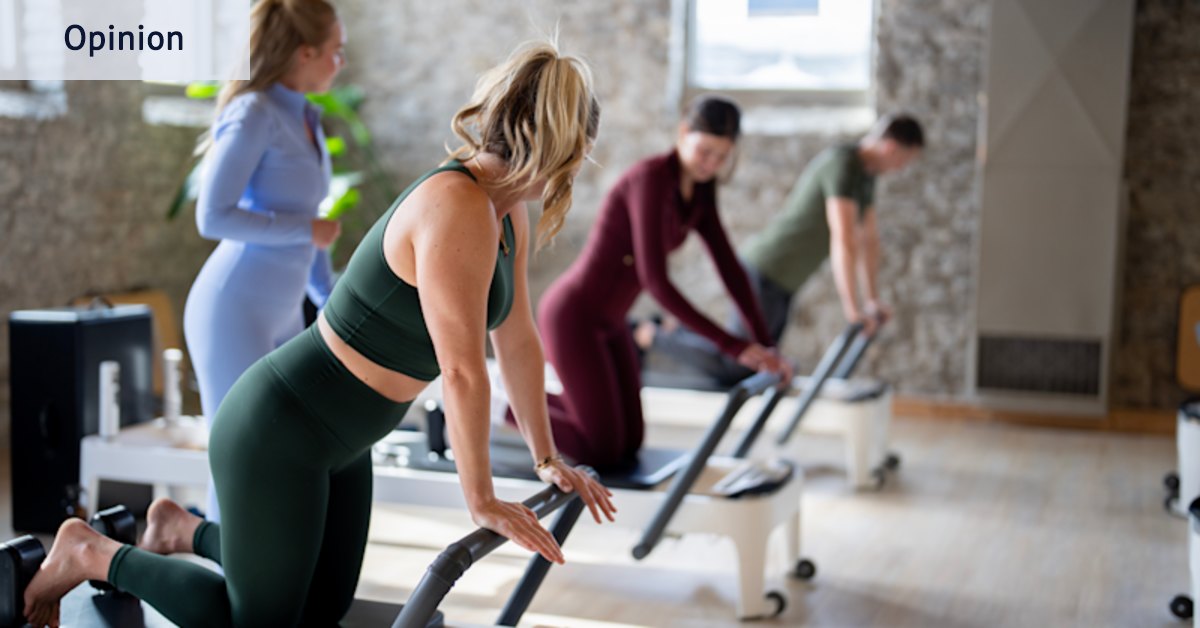
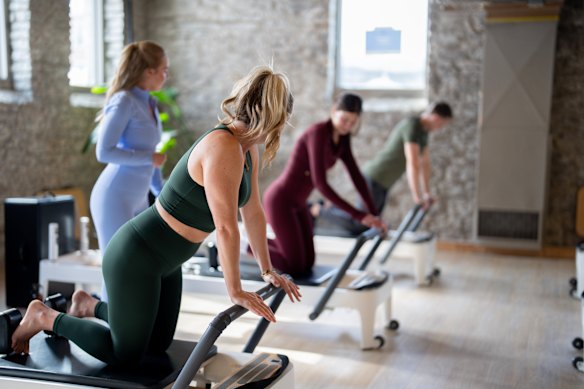 Pilates has captured the attention of the manosphere, and not just because it’s a good workout.Getty Images
I decided to do some digging and soon realised it is indeed no coincidence that both of these men fixated on the idea of daily Pilates. While the “Pilates girl” is just one of many social media-driven wellness trends in recent years, it turns out it’s been seized upon particularly by the manosphere – and the men who are influenced by it – as an ideal that comes with a bunch of regressive, coded baggage.
Editor’s pick
Professor Steven Roberts, a sociologist at Monash University with a focus on masculinity and the manosphere, says the “Pilates every day” requests from men like Fusco and Ngatikaura say less about Pilates itself and more about what it has come to represent.
“It signals a particular kind of body that is lean, controlled, and conventionally attractive,” Roberts says. “But also a certain lifestyle: disciplined, self-managing and aligned with a very specific ideal of femininity.”
In the world of the manosphere, a woman who does Pilates every day is a woman who doesn’t have time for much else, including her own career. She’s fit, of course, but in a lean way, with muscles that are non-threatening.
And much like the adjacent “clean girl” aesthetic, a Pilates girl works hard on her appearance without ever seeming to break a sweat, and she stays in predominantly feminine spaces where she “belongs”.
“Do Pilates every day” has become the 2026 version of “get back in the kitchen”.
“These symbols are powerful because they package gender expectations in a way that feels aspirational rather than restrictive,” says Roberts.
Of course, it’s all a far cry from what Joseph Pilates had in mind as he developed what he called “Contrology” while in a British internment camp as a prisoner of war in World War I. Pilates, traditionally, is about mobility, strength, and a mind-body connection – not weight loss or a particular body type. The focus on the latter, says Pilates Association Australia president Robyn Rix, “misses the point entirely”.
She adds that the stereotype of Pilates being primarily for affluent women with “long and lean” physiques doesn’t reflect the reality of who actually does Pilates or the reasons why.
“Pilates builds strength and function – people tend to develop physically according to their own body type,” Rix says, adding that the narrow “Pilates girl” aesthetic creates unnecessary pressure and expectations.
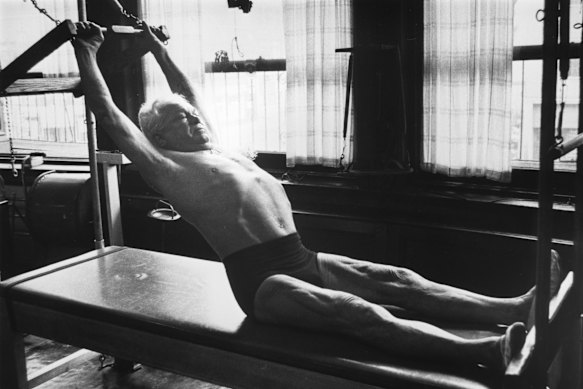 Joseph Pilates, inventor of Pilates, exercising in his New York City studio, circa 1960.Getty Images
“The clips from Love Is Blind and the discussion on Call Her Daddy are concerning because they frame women’s exercise choices in terms of control or desirability, rather than health,” Rix says.
This is exactly the point when it comes to the manosphere where, as Roberts explains, women are valued for appearance, youth and compliance, and positioned as subordinate to men’s authority rather than as equal partners.
Editor’s pick
“Relationships [in the manosphere] are framed less as mutual and more as something to be managed, with an emphasis on men’s dominance, control, status and meeting specific criteria,” Roberts says. “That reduces women to a set of traits rather than recognising them as full people.”
There’s nothing wrong with doing Pilates every day – or any day – if it’s something you choose to do, and especially if you enjoy it. The problem lies in the way the practice has been co-opted and twisted to become just the latest in a long line of fitness trends-turned-tools of patriarchal diet culture, which require women to make themselves smaller both literally and spiritually.
Only one thing seems certain: if you ever hear a man suggest that women should be doing Pilates every day, consider it a sign to try another form of exercise and run as far as you can in the opposite direction.
Make the most of your health, relationships, fitness and nutrition with our Live Well newsletter. Get it in your inbox every Monday.
Save
You have reached your maximum number of saved items.
Remove items from your saved list to add more.
 Jenna Guillaume is an entertainment and lifestyle journalist and author of What I Like About Me.From our partners