
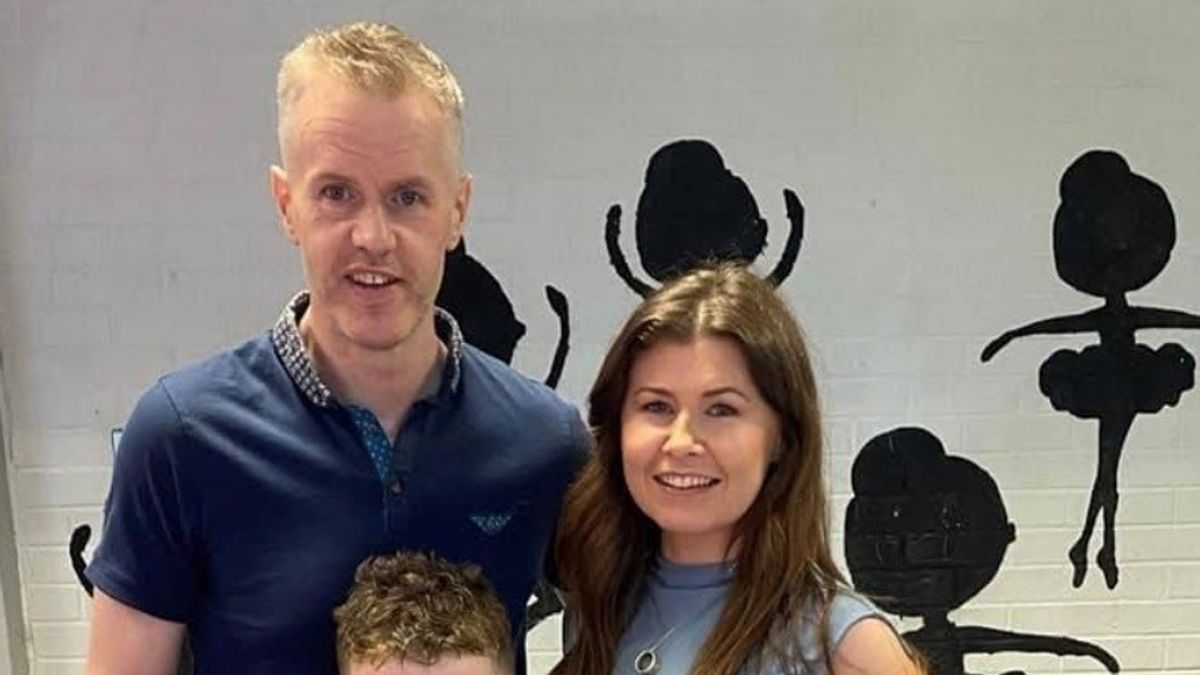
Working in a hospital and making an effort to eat well and go to the gym, the dad-of-three thought he was doing everything right.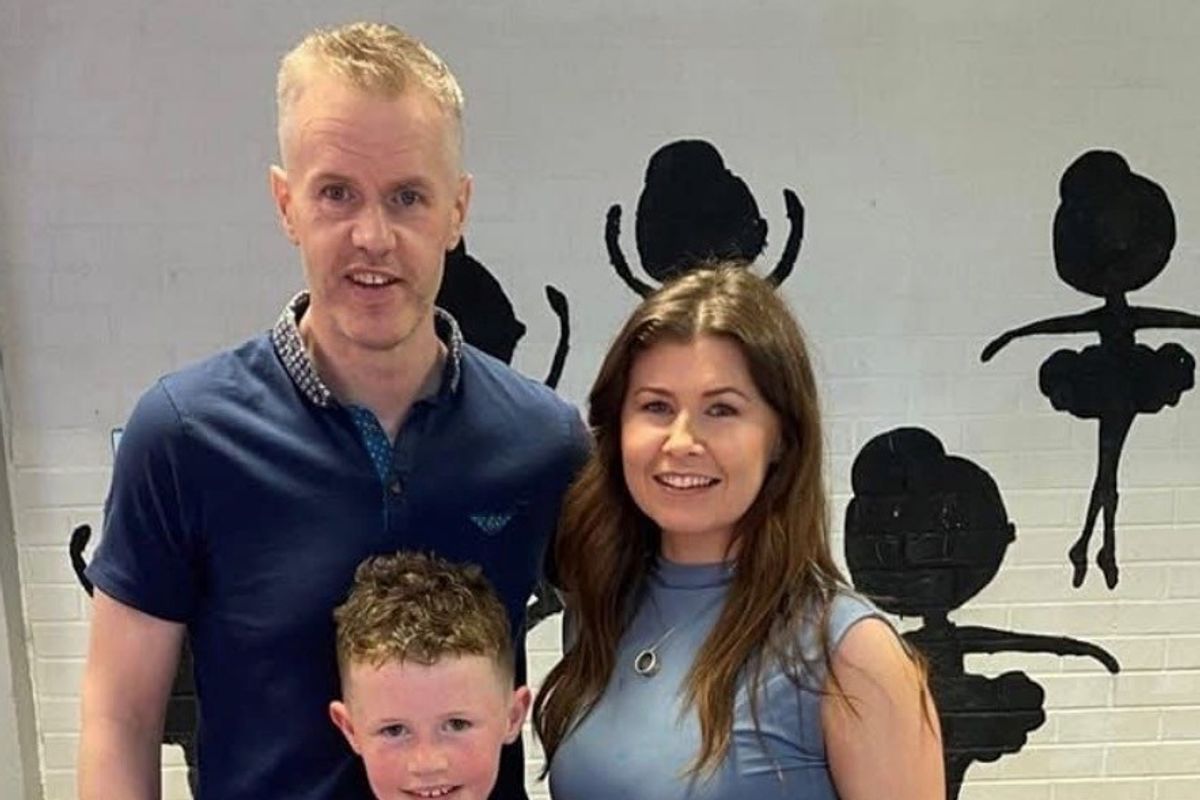
Malachy Nixon with his wife Dearbhla and their young family
For many people, turning 40 is an occasion to reflect on their health and habits as they get older. But when Malachy Nixon reached this milestone birthday, he was more aware than most of the importance of looking after his health.
Working in a hospital and making an effort to eat well and go to the gym, he thought he was doing everything right. However, what he didn’t know was that he was living with an undiagnosed congenital heart defect which had caused him to go into heart failure.
Dad-of-three Malachy, who lives in Crossmaglen, is sharing his story this Heart Failure Awareness Week to raise awareness of heart health and the importance of getting checked if you have any unusual symptoms.
Malachy says his heart problems came to light in March 2024 as he explains: “For a few days I was getting what felt like small little jags in my chest – tiny pains, but nothing that I was very worried about. They came and went for a few days, then one evening I went to bed and all of a sudden, I got a few pains in my chest again and I started to think I was having a panic attack.
READ MORE: ‘I wasn’t concerned about my health before my stroke at 50 . . . there were no signs or symptoms’READ MORE: ‘I was left anxious and worrying about the future after a life-changing heart diagnosis’
“I sat up in bed and got this overwhelming feeling of impending doom, as if something was going very badly wrong. I started to struggle to breathe and I began to panic. My wife Dearbhla was in bed beside me, and I hadn’t even the sense to wake her. I rolled myself onto the floor, got up and went into the kitchen, had a glass of water and the feeling eventually went away. I went back to bed thinking everything was ok, that it was probably just a panic attack.”
But Malachy’s symptoms continued: “I work in Our Lady of Lourdes Hospital in Drogheda. The next day at work, the same thing started to happen. I got a jag in my chest, again, not a big mad pain or one you would expect a heart pain to be like. Once again, I got get this feeling of anxiousness. My colleague looked at me and asked, ‘Are you ok?’. I said, ‘Don’t laugh at me, I think I’m having a panic attack’.
“He talked me through it and did some deep breathing exercises with me and that seemed to bring me back round to feeling ok again. When I finished work and was walking to my car, I got a jag in my chest again, so I headed for A&E, but I saw some nurses I know and didn’t want them to think I was panicking over nothing, so I decided to just go home.
“When I was having dinner with my family, one of the kids looked at me and asked, ‘Daddy, what’s wrong with you?’. I said, ‘Nothing, I’m fine’ but my wife saw there was something up too. I told her about the jagging pains I was getting in my chest. With her convincing, I finally decided to go to A&E at Daisy Hill Hospital in Newry to get checked out.”

Malachy Nixon with his wife Dearbhla
In A&E, Malachy had an ECG and blood tests: “A nurse listened to my chest, and a consultant asked if I had ever been told I have a heart murmur. This was the first I had heard of it. They asked me to stay overnight so the cardiology team could check me out in the morning. The next day, I had an echocardiogram, and from that they discovered I had a faulty aortic valve.
“I was born with a bicuspid valve – I’d never known anything about it, never had any problems until then, but it had nearly failed completely and there was massive regurgitation. That had also caused an aneurysm in my aorta and as a result of all this strain on my heart, I was in heart failure.”
Doctors discovered Malachy had a bicuspid aortic valve, which is a congenital heart defect. The aorta is the largest blood vessel in the body, which delivers blood into the left side of the heart through the aortic valve. The aortic valve normally has three ‘cusps’, or flaps, that open and close to let blood flow through. Around one in 50 people are born with a bicuspid valve, like Malachy.
This means the heart valve may not close properly, so blood will flow backward instead of forward through the heart, meaning the heart must work harder to compensate for this ‘leaky valve’. This can weaken the heart over time, leading the heart to become too weak or stiff to pump enough blood around the body in the way it should – this is known as heart failure.
Malachy was admitted to Daisy Hill for four weeks, before being moved to the Royal Victoria Hospital in Belfast where he underwent heart surgery to have his valve, part of his aorta and aortic root (the part that connects the heart to the aorta) replaced, and a mechanical valve put in. After his surgery, he also began treatment for heart failure.
Malachy says it was a massive shock because he thought he was doing everything right: “I had turned 40 that year and I was very conscious about it, so had started going to gym four or five mornings a week. I was lifting weights, I didn’t really drink, and I had a good diet. I came from a background of working in health, so I knew how to look after myself. It wasn’t even on my radar that something could be wrong.”
In hindsight however, Malachy realised he was experiencing signs that something was going on but didn’t realise these were a cause for concern at the time.
“The symptoms were building up over the six months beforehand. For example, I would usually be home from work before my wife and for a few months prior to all this happening, she would come home and find me sleeping on the sofa as I was just so tired. As well as that, in the past I would have lifted heavier weights in the gym and did a lot more cardio,” he added.
“I did sport all my life, and had always played Gaelic football, but had retired. Back when I was playing, I trained between three and five nights a week, which had stopped. I was getting very out of breath at work walking up the stairs, but I had just put that down to getting a bit older and not being as fit as I used to be.
“Thinking back, I was also having some heart palpitations but at the time I didn’t realise they were palpitations. They were happening when I was exercising, and again, I was putting it down to declining fitness because of my age, and because I wasn’t doing as much exercise as I used to.”
Malachy says his diagnosis turned things upside down overnight for himself and his family: “It was a massive shock for my wife Dearbhla and three young kids. I left after dinner that day and wasn’t home for six or seven weeks. It was very tough for Dearbhla as she is self-employed and when I was gone she had to manage everything for the kids, plus visiting me in hospital and supporting me when I was recovering as I couldn’t do much for myself.
“At that age, kids think their daddy is invincible, and then all of a sudden, you have to go into hospital, have surgery and you are away for so long. It was scary and tough for them too. After the surgery, the recovery was hard. I lost around 15 kilos straight after the surgery and it took a considerable amount of time for me to get back up on my feet and be fit to go out and watch the kids playing football. I would have coached them for football in the past so that was a huge change, and it was difficult for them.”
Thankfully, Malachy made a very good recovery from his surgery: “The surgeon at the Royal said it was textbook. Thankfully, my surgery and recovery went really well and six weeks after my surgery I was getting out and walking five miles, so I was very lucky.”
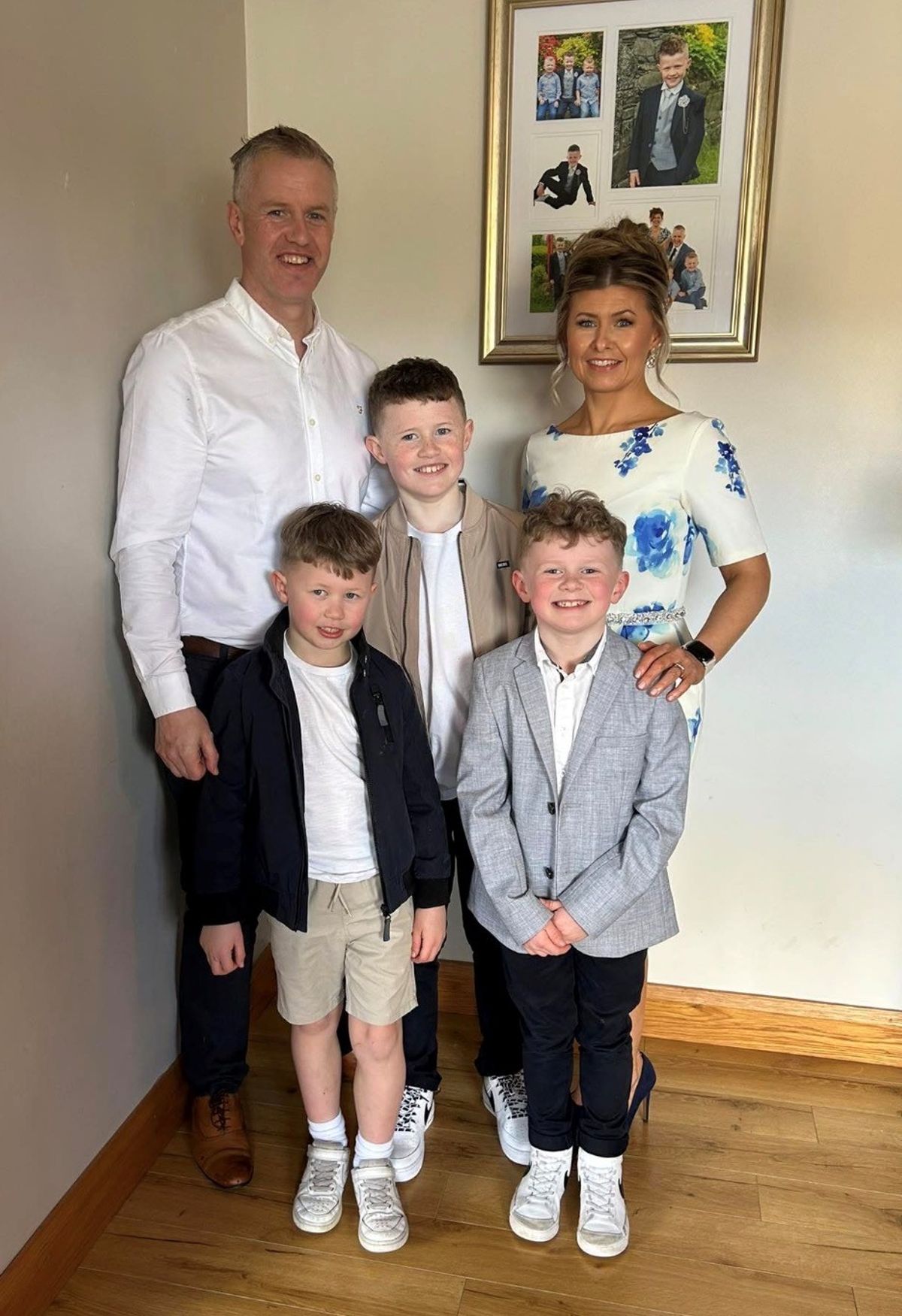
Malachy Nixon with his wife Dearbhla and their young family
Malachy then faced a new and ongoing challenge as he began treatment for heart failure. Heart failure can have more serious outcomes than many cancers, and over 20,000 people across Northern Ireland are thought to be living with the condition.
He added: “After the surgery, I went to cardiac rehab and was then referred to the heart failure team at Daisy Hill who were great. They titrated me quite quickly up to the higher levels of heart failure medication as my ejection fraction (the measurement of how well your heart is pumping blood) was quite low. At the time of my surgery my ejection fraction was 34. A normal ejection fraction is 50 to 55%. After surgery and with the medication, the last check I had showed it has increased to 48, so they were happy to discharge me.”
“Living with heart failure means taking a lot of medication. It’s not something that is curable, but it is manageable. You have to manage your day to day, whether it’s having a nap, and limiting how hard you work or the exercise you do. You also have to manage your fluid intake, the amount of salt you have in your diet, and of course try to eat as healthily as possible. Those things are a massive help. It’s always going to be there, and it does affect you. It’s about taking it one day at a time.
“Some days are great and I don’t feel anything at all, then there are other days I am dog tired from the minute I open my eyes until the minute I go to bed that night. Exercise really helps. Years ago, the thinking around heart failure was that you had to sit in the house and rest up, whereas now the message is that being out and active will help, so I try to do as much as I can. There are restrictions arounds exercising but it’s about trying to focus more on what you can do instead of what you can’t.”
Now, Malachy is sharing his story to raise awareness and encourage others to be conscious of their heart health and get checked if they have any unusual symptoms. He is also supporting leading local health charity Northern Ireland Chest Heart & Stroke, which works to support people affected by cardiac conditions through care, prevention, research and campaigning work.
“My advice to others would be to always listen to your body. Beforehand, those small things I was experiencing like being out of breath and having missed heartbeats, I just put down to being unfit but those were signals that something was more seriously wrong. I should have got it checked out. I worked in cancer prevention in the past and it’s all about spotting early signals and getting checked.
“Being a typical man, I didn’t. I brushed it off and thought it wasn’t serious; it’s not going to be me. My advice is, if you are experiencing any breathlessness or exhaustion get it checked out as these could be signs of heart failure and detecting it as soon as possible is crucial. If I had my heart defect diagnosed earlier, there’s a good chance I wouldn’t have heart failure. You go every year to get your car serviced, but we don’t always do that for ourselves and our health.”
If you have been affected by a heart condition and need support visit nichs.org.uk/care-and-support for further information about Northern Ireland Chest Heart & Stroke’s support services.
Want to see more of the stories you love from Belfast Live? Making us your preferred source on Google means you’ll get more of our exclusives, top stories and must-read content straight away. To add Belfast Live as a preferred source, simply click here.