

Published June 25, 2026 06:00AM
It’s no secret that the traits that make a great endurance athlete – relentless drive, high pain tolerance, and the ability to push through suffering – are a double-edged sword. While these characteristics can propel you toward PRs, finish lines, and social media status, they can easily push into dangerous territory when “dedication” drifts into something far more complex.
So, where is the line? When does a healthy passion for sport turn into a compulsion that feels impossible to quit?
Defining that boundary isn’t easy. While exercise addiction is estimated to affect 3–7% of regular exercisers – with even higher rates among elite athletes – it is not yet recognized as a standalone clinical disorder in the World Health Organization’s International Classification of Diseases (ICD-11). This remains true despite a growing body of research and countless athlete experiences suggesting that compulsive exercise can cause significant, real-world distress.
To explore this, we sat down with three experts who have spent years in the trenches, both as elite endurance athletes and as researchers in sports psychiatry and addiction, to uncover what it really means to train hard, stay healthy, and find your value outside of your race results.
Roundtable: Navigating the fine line between discipline and exercise addiction
Our expert panel:
Jill Colangelo (JC): Expert in the study of mental health and ultra endurance sport, focusing on helping athletes avoid and recover from overtraining, burnout, and more; triathlete and ultra-runner.
Flora Colledge (FC): Researcher specializing in exercise addiction; elite triathlete and ultra-runner.
Joanna Brown Fear (JF): Retired pro triathlete, 2021 Olympian, medical student, and self-admitted “exercise addict.”
Triathlete: Endurance athletes are praised for their discipline and ability to push through pain. But when does that relentless drive become problematic?
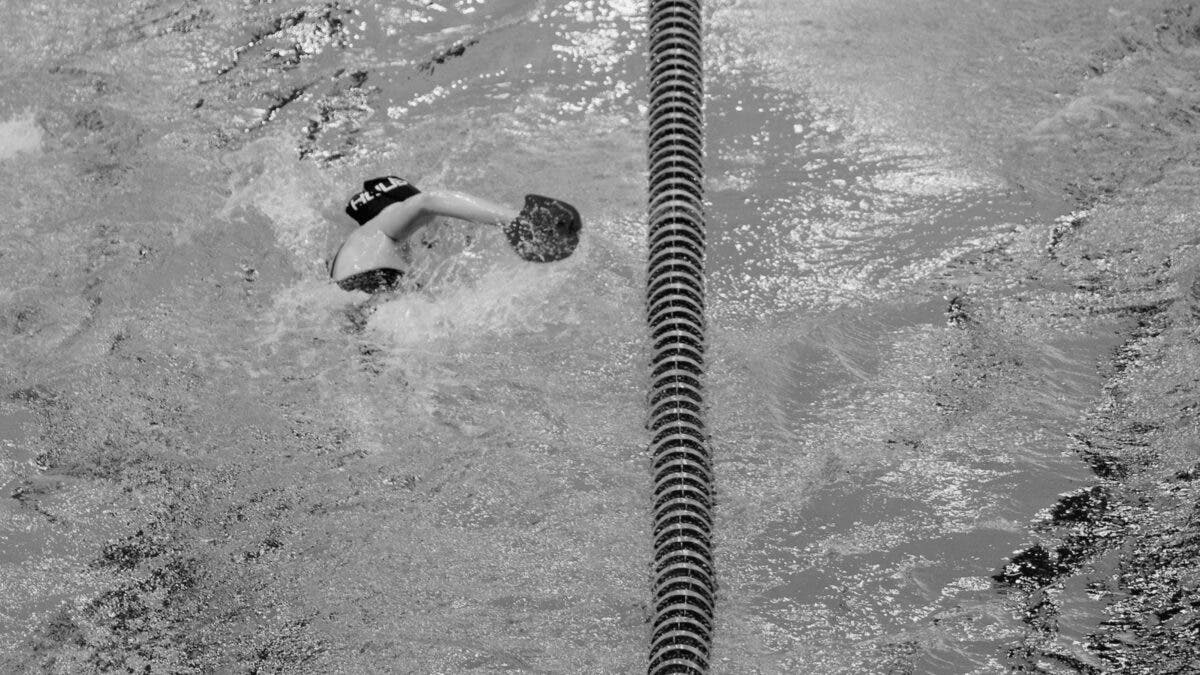 Exercise addiction, gone unnoticed, can lead to real-world distress and problems beyond training. (Photo: T100)
Joanna Fear (JF): It’s a fine line. When you’re in it, especially at an elite level, you are so driven that there really is no other option for you. You just do whatever training volume you think will make you better, or whatever the coaches recommend. Honestly, I haven’t seen an athlete reach that elite level without some degree of obsession. But it makes you vulnerable because it’s so easy to let things creep up. You tell yourself you’re just going to run five miles a day, and the next week it’s 10, and suddenly you’re running 100 kilometers a week because you need that stimulus just to feel okay.
Because exercise is inherently healthy, it’s a lot harder to convince an athlete that it can be maladaptive or actually harmful. When it gets to the point of causing distress, you’ve crossed over into addiction. But the typical reaction from the outside world is usually just, “Oh my gosh, it’s so awesome that you’re addicted to exercise. Good for you!”
Jill Colangelo (JC): Exactly. We’re praised for going above and beyond, and society tends to put people on a pedestal even if they aren’t healthy.
There is this whole idea that we have no limits. But the human body does have limits. Still this is a sport that invites us to ignore these parameters and keep going.
True discipline is being judicious: Being able to ask yourself, “Is today the right day for that 20-mile run? Maybe I should eat more or sleep more before I undertake this. Maybe today is better for a rest day, or maybe I need to modulate stress in other areas of my life.” But if you’re inconsolable, or you can’t handle it because they don’t feel like themselves on that day. And that’s a deeply discordant kind of feeling.
Flora Colledge (FC): That burden manifests both physically and mentally. A huge red flag is when your training causes multi-day suffering, yet you push through it anyway. While it’s common to lack intrinsic motivation on any given day or to feel a little soreness, that’s different from a constant psychiatric burden.
You might be feeling like you are constantly under stress, where every minor demand feels like too much. You become incredibly irritable: everything from sitting in traffic to someone cutting you off in a store sends you spiraling into a rage. That constant state of stress is a major warning sign.
Then there are the physical problems. There are athletes out there who take painkillers basically every day and think it’s normal. It’s not.
Is there a certain demographic you’ve seen in your research that seems particularly vulnerable to exercise addiction?
FC: The research is still very patchy, and pinpointing specific demographics remains a challenge. Anecdotally, I’ve seen it split pretty close to 50-50 across genders. And in our samples, the individuals weren’t necessarily young; they were typically in their mid-40s. It’s not just the young guys in the gym or young women with eating disorders – it’s adults well into middle age. Again, that’s anecdotal, not scientific, but the trend is clear.
JC: Right. The research on gender is still inconclusive, in my opinion. But from 10 years of working with athletes, I’ve noticed that men often have a much harder time navigating the later stages of exercise addiction. I think that’s mostly because they tend to recognize the problem much later than women do. Women often have those concrete physiological red flags – like losing a period – that act as an early warning system. Men don’t always have those markers, and they aren’t usually socialized to be as in touch with their somatic sensations or emotions. By the time they realize something is wrong, they’re often left feeling completely bereft, asking, “What has happened to my body and mind?”
Beyond gender, the people who struggle the most are usually the ones using sport as a compensation for something else; they need sport to demonstrate their worth. Maybe they’re moving away from a substance addiction, or they’re people who didn’t feel successful in other areas of life and are using sport to fill that void. That’s why I have to push back when people say, “Running is my therapy.” It really shouldn’t be. You see this vulnerability in people going through a divorce, a major life transition, or anyone who hinges their entire sense of purpose on their training.
Joanna, do you feel like this is a taboo topic among athletes? Nobody really ever wants to admit that they’re exercising too much. We all just want to do more and more.
JF: Among my retired friends, I’ve had a really easy time talking about it. I joke with friends that we’re members of ‘Exercise Addicts Anonymous.’ Retired athletes are probably willing to talk about their struggles and accept them, especially after a career where they were expected to train and exercise every single day.
However, if you broached the topic with somebody currently training 30-plus hours a week and said, “Hey, I think you might be addicted to exercise,” or “You might be relying on this for your identity and your energy,” I doubt they’d agree. If you had asked me when I was training full-time, I wouldn’t have even thought about it! I was just doing the training that was put in front of me.
That brings up the concept of “identity foreclosure” – the idea that “I am only a triathlete,” and if I’m not training, I am nothing. How does this fuel unhealthy habits?
FC: A sports psychologist once explained to me, and I find it quite convincing, that this is essentially a primal feeling: “I need to be of value to my tribe.” If I’m not of value to my tribe, they will essentially abandon me, and I will be left alone in the wild to starve. Humans rely on community; they rely on having a specific role within that community, and others assign value to that role. That’s how we work.
You latch onto that, and even if triathlon isn’t bringing anyone real-world value in that primal sense, you cling to the idea that “I must do a thing, and I must do it well.” When that isn’t happening, you experience this existential dread. It’s hard to say exactly how much that factor drives this, but it’s certainly significant.
JF: I definitely felt that. Retiring after the Tokyo Olympics, I had to untangle my identity from being a triathlete. I was actually fortunate because I had school lined up. I knew I needed somewhere else to put my energy. But for the first year, I still thought about coming back. There’s always this feeling of “unfinished business.” If you don’t have something else fulfilling you, it’s incredibly hard to step away.
JC: Triathlon communities are incredibly insular – very in-group/out-group based. That can encourage you to feel the need to be included, particularly if you’re already vulnerable to feeling insecure in other areas of life.
I’ve had fascinating conversations lately with folks who have been in these sports for years but are “coming out” as not wanting to race anymore. They struggle to tell their friends, because the standard greeting is always, “When’s your next race?” or “What are you signed up for?” If you’ve hinged your entire life’s purpose on participating, you are more likely to keep wanting to do it, even when you no longer know where the cutoff point is.
Okay, the million-dollar question: What are the signs that an athlete has crossed over from being “driven” to being “addicted”?
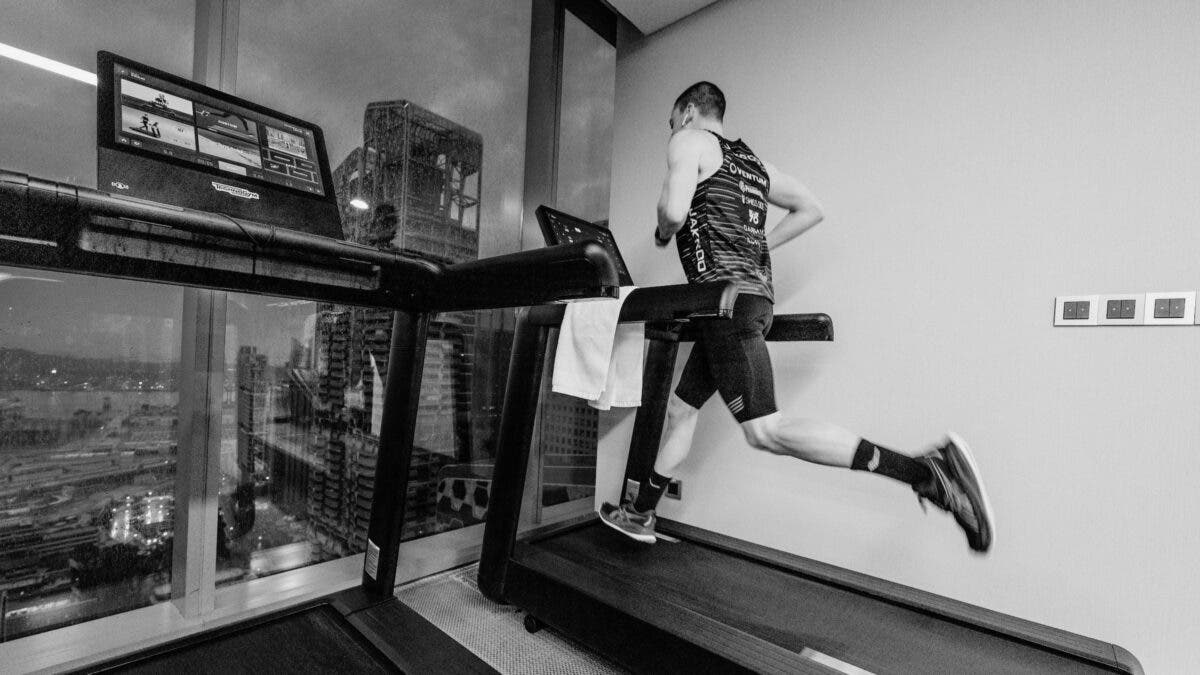 Exercise being a compensation for something going on in your life may rewire the entire purpose of your training. (Photo: T100)
FC: I would say if you’re driven, you have drive in certain phases of the year, but you’re willing to let it go in others. I’d argue that 50% to 70% of the time, you should have a sense of excitement and joy about your training or racing – not every single second, but at least some of the time.
Crucially, you are willing and capable of drastically reducing your planned training if life gets in the way, whether that’s an injury, a family commitment, or something else. And most importantly, doing that shouldn’t send you into a complete tailspin, because training shouldn’t be the only method you have for regulating your life.
JF: Withdrawal is the biggest indicator. After I retired, for the better part of two years, I had trouble adjusting from a lifestyle of training 35 hours a week. I couldn’t sleep. I was super anxious. I just didn’t feel right in my body. There’s this feeling of guilt, almost a sense of worthlessness – like you didn’t do anything productive that day, even if you had a crazy productive day at work. You literally experience physical and somatic symptoms from not working out.
JC: I think the difference is that a driven athlete isn’t willing to put their psychological needs ahead of their health. Often, when we’re training, we’re not actually training for our legs – we’re training for our brains. We’re using exercise for emotional regulation. That isn’t being “driven”; that’s being in need of care.
If you’re truly driven, you can operate in that gray area where you’re capable of stepping back from a program when necessary. You can make decisions that actually support your overall health. But when you’re addicted, you lose the ability to see that nuance. It becomes entirely black and white: you’re either training or you’re not, you’re either “good” or you’re “bad.” That is a very small, suffocating way to live.
Jill, what are the most problematic impacts of exercise addiction you’ve seen in your work? Obviously, burnout is a common result, but how much deeper does this go?
JC: It starts with a hidden mental health burden. Even if an athlete looks fine on the surface, they are often navigating an immense, internal struggle. You see this manifest in their rising stress levels and the uncomfortable trade-offs they’re forced to make, like skipping a child’s birthday or squeezing in a 50-mile ride before Christmas dinner. These choices inevitably create significant friction and stress within their personal lives and families.
When that compulsion escalates into high-volume addiction, the psychological burden is compounded by a total physiological breakdown. You’re no longer just dealing with anxiety or mood regulation; you’re facing the acute fallout of chronic overtraining: hormonal dysfunction, metabolic issues, GI distress, and clinical depression. At that point, the athlete is forced into a painful reckoning. They aren’t just struggling with the psychological withdrawal of losing their dependency; they are faced with the terrifying reality that their body is physically falling apart.
So, if an athlete recognizes they might have crossed that line, how do they move forward healthfully without having to abandon sport entirely?
FC: If you’re questioning your relationship with exercise, don’t fear it, lean into it. There is a lot of power and agency in that realization that maybe you are drifting into that unsafe area. If you’re asking yourself these questions, don’t shy away from them. Always be willing to consider the hard truth: Is this really what’s best for my health?
JF: I think it’s crucial to have education around how powerful exercise is as a mental and physical stimulus, and how heavily we rely on it. You need to learn how to take breaks during the season and actually give your body a rest when you’re supposed to. For me, acceptance has been key. Now that I’m in medical school, I’m sometimes in the OR at 7:30 a.m. for 12 to 14 hours. I don’t really have an option to exercise on those days unless I want to be completely gassed. Having a busy schedule has actually forced me to be a lot more chill with my rest days.
JC: The essential piece of moving forward is doing the work to decouple your worth from your athletic identity. You have to recognize your intrinsic value. I tell athletes this all the time, and they often look at me like I’m crazy, but it’s true: the people who love you do not care if you podiumed. They don’t care about your splits. They love you for you.
If you can realize that you are a beautiful, imperfect human being whose value doesn’t hinge on a race result, you can re-engage with your sport or transition to a different sport or level with so much more perspective. Hopefully, by doing this, you avoid falling back into that same rut, because you’ve created a new path, a new mindset, and a new way of looking at the world.
If you or someone you know feels that exercise has become compulsive (causing significant physical or emotional distress, or interfering with daily life, relationships, work, or overall well-being), please consider speaking with a qualified healthcare professional, sports psychologist, or mental health provider.