

Amandeep Kaur still has no idea what caused it
Howard Lloyd Regional content editor
11:44, 23 Jul 2026Updated 12:23, 23 Jul 2026

Amandeep Kaur has struggled with pain for years(Image: Cover Images)
Amandeep Kaur was out for a meal with her mum and sister when she was hit by a pain so intense she thought she had been poisoned. “My skin colour changed and I took myself to the bathroom because I started to feel faint and dizzy,” says Amandeep, now 43.
She left the meal and spent the night in agony. The following day, she passed out at home, only realising what had happened when she regained consciousness slumped over her laptop. When her sister saw her crying and sobbing in pain, she dialled 999. “I’ve had two children, but the pain was worse than childbirth. It was just horrible, twisting and turning,” says Amandeep, from Stoke-on-Trent, who works in safeguarding.
Doctors were unable to diagnose the cause of her symptoms, although they suspected colitis, and she was sent home after the 2017 incident. More than one in five Brits (22%) struggle with gut health or digestion, according to Holland & Barrett’s report on preventative health.
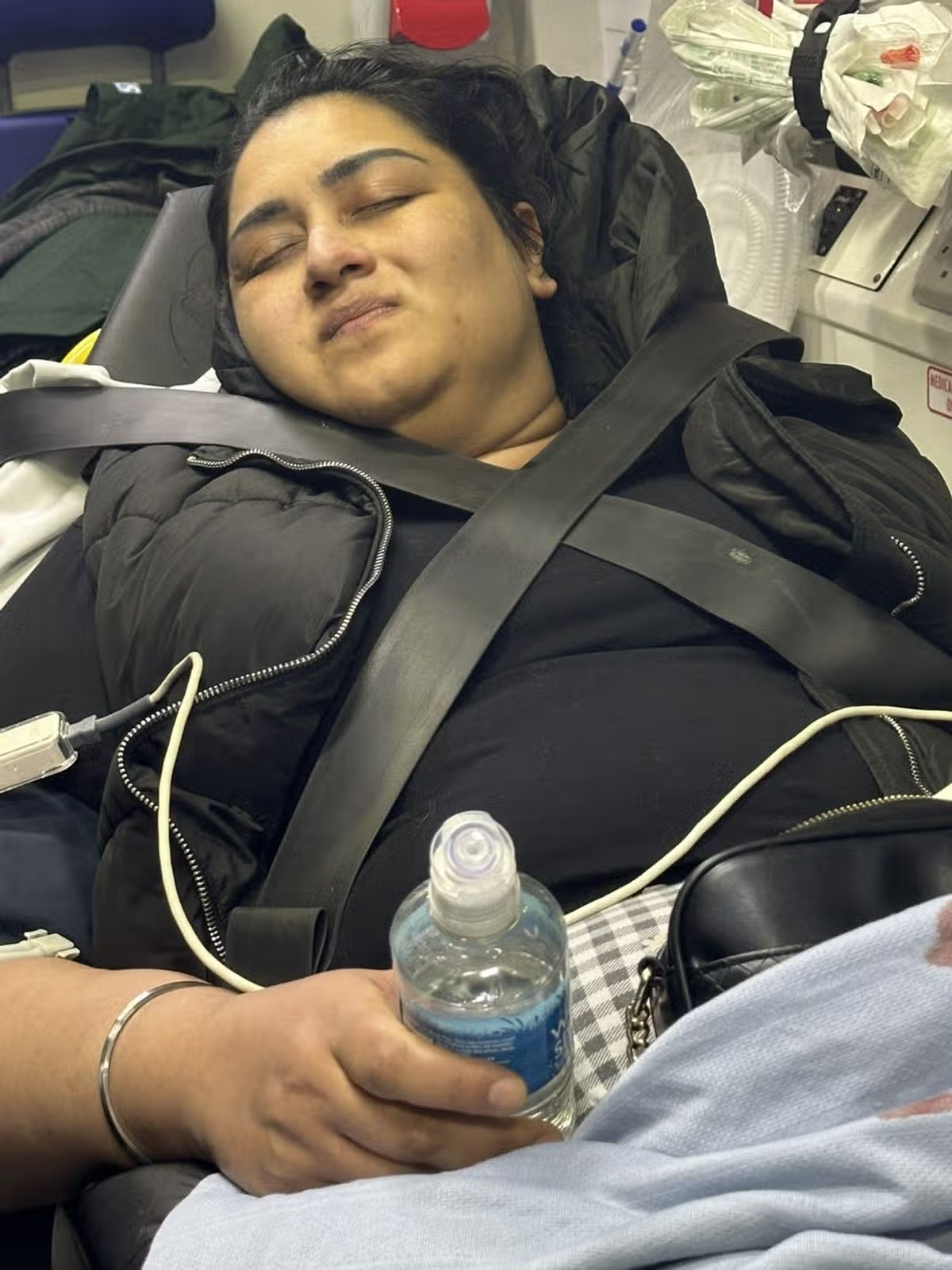
Amandeep Kaur suffering in an ambulance(Image: Cover Images)
Since then, Amandeep has been admitted to hospital every year, sometimes twice, but she still has no diagnosis. Every episode is ‘horrendous’, she says. She suffers from constant pain, rectal bleeding and episodes so severe they caused her to collapse.
“The pain can be so bad that sweat drops from me. Last year, my sons came home and found me collapsed in the living room and my eldest had to call an ambulance.”
Her most recent admission, in May, revealed inflammation in both her intestines and lymph nodes after she endured 10 days of diarrhoea and vomiting. It has been painful, but the biggest strain has been on her relationship. Amandeep met her partner in December 2019, but for the first year of their relationship, she hid the true extent of her illness.
In the days before seeing him, she would barely eat in an effort to prevent a flare-up. On dates, she would simply pick at her meals. “It was frustrating for him because he was taking me to these nice restaurants but I never ate what was on my plate. I just told him I was trying to eat clean, or that I had no appetite,” she says.
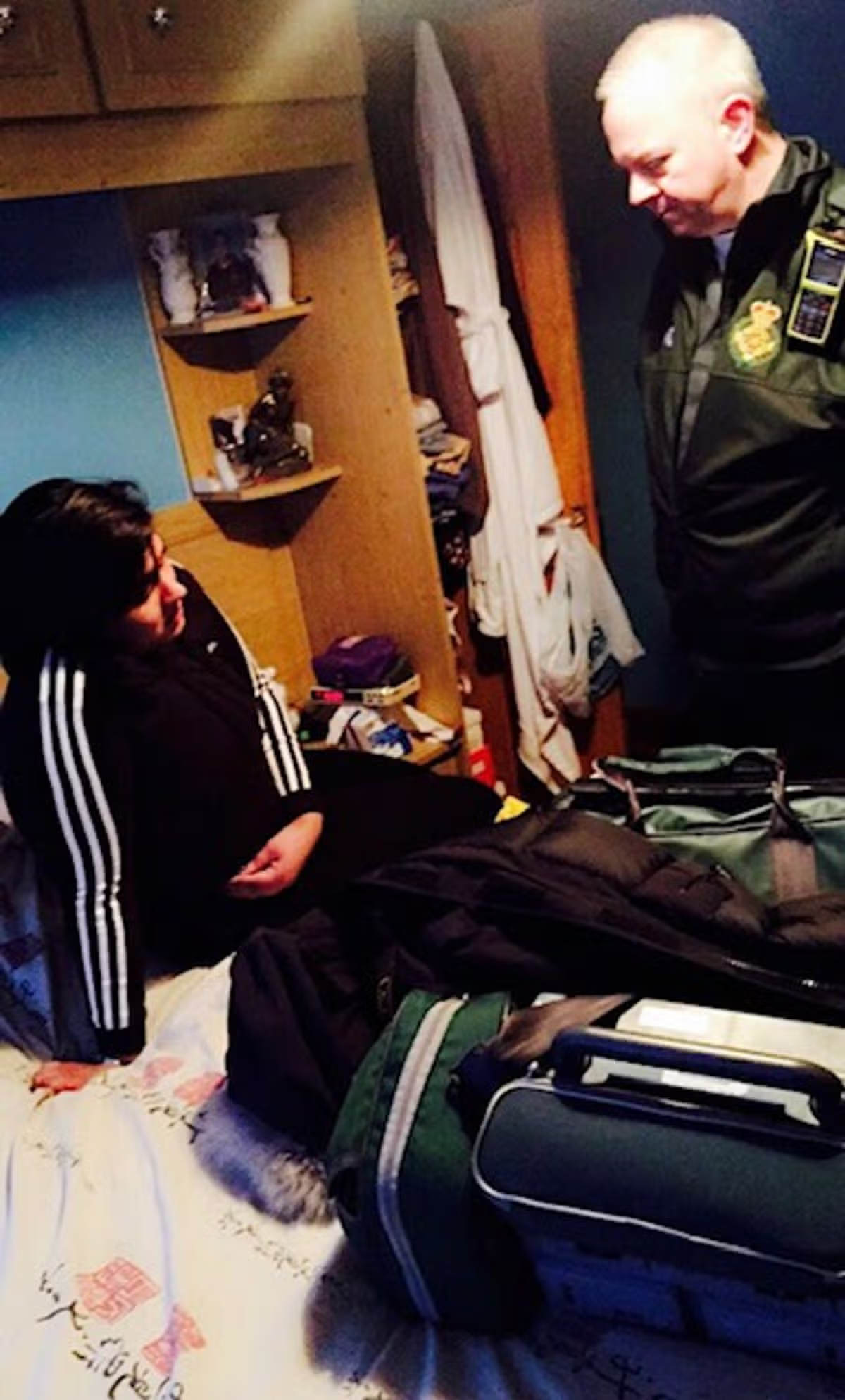
Amandeep being assessed by a paramedic(Image: Cover Images)
“I kept it from him because it is embarrassing. You’re in a new relationship and you really don’t want to disclose gut issues.” She avoided eating in front of her partner, worried it would trigger her symptoms, and often declined invitations to leave the house so she could stay close to a toilet.
“We ended up in arguments. He was asking me if I was depressed. Why I wouldn’t leave the house. We used to end up sleeping in separate rooms, but that was good because it made it easier for me to hide the symptoms,” she says.
“We weren’t living together, so it was easier to hide my symptoms. But when I moved in with him, it was hard because I was constantly in the loo. It wasn’t until I had an accident and he noticed that I had to tell him.”
New research by Holland & Barrett has found that 90% confess to hiding their digestive issues from a new partner, refusing to talk about the topic openly. For those suffering with digestive issues, a third (31%) will actively avoid eating anything on a first date to avoid digestive troubles, with 30% choosing date activities that don’t involve any tummy triggers.
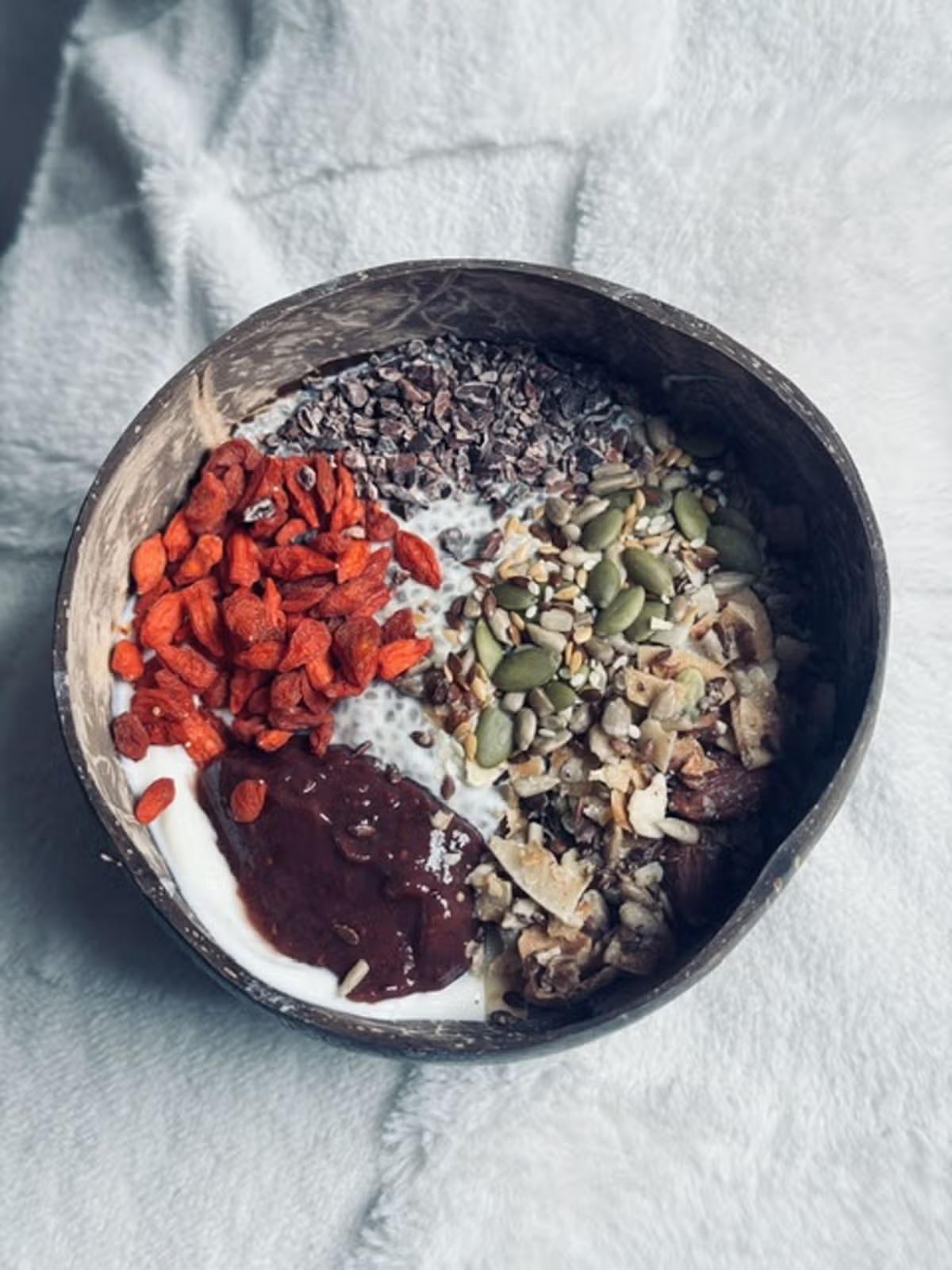
Amandeep has changed her diet in a bid to solve her health issues(Image: Cover Images)
Everything changed, however, when Amandeep was hospitalised. “In the beginning he would joke and ask if it was old age. But when I went into hospital, he realised how serious it was.”
Since then, he has become her biggest source of support, helping her through flare-ups and hospital admissions. Despite multiple scans, tests and medications, doctors are unable to explain what is making her so ill.
Her next step will be a colonoscopy. But that in itself is a challenge. She has an appointment for July but it needs to be when she has a flare-up, so they know what is causing it. The uncertainty has taken a heavy toll, affecting her career, social life and mental health. She turned to food for comfort and by 2020, she had gone from a size 10 to a size 20.
“I would sit there and binge on crisps, cakes, chocolates and toast. I used to eat a lot of mini cocktail sausages. Or I would order Uber Eats and get a ridiculous amount of food, more than I could eat. But I would never eat in front of my partner. I would wait until he’d gone to sleep or when he was at work.
“I’m such an emotional eater. And when I put the weight on, nothing fit anymore. I never wanted anyone to take pictures because it felt so uncomfortable looking at myself.”
She has since started losing weight, but says the illness has also cost her friendships. “In the past I have lied to people about why I can’t make events. I’ve definitely lost friends because of it. I don’t always get invited to things anymore, which is a bit sad. But I understand why.”
Amandeep often sleeps on the sofa so she can make repeated trips to the bathroom without disturbing her partner. Whenever she leaves the house, she packs spare clothes, towels and wipes in case of accidents. “I used to have to do this for the boys when they were little, now I have to do it for myself,” she said.
Living with the condition means coping with humiliating moments that few people ever see. “I’ve had accidents in my car, travelling home, or going to work. I have been outside work, parked up in my car, had an accident and had to call in sick. It’s horrible. It’s indescribable and you just have no control over it,” she said.
Now, Amandeep is determined not to let embarrassment define her life. She has changed her diet, eating kefir, Greek yoghurt and Holland & Barrett multi-seed toppings, and hopes the changes will ease her symptoms. She has also begun rebuilding her confidence, attending Pilates classes and going to events on her own.
She said: “I would never do that before. I distanced myself from everyone and shut myself away, but I am going to Pilates classes, which I really enjoy. I am hopeful that I will continue to make improvements.” She is sharing her story so others living with unexplained bowel conditions feel less isolated: ”I don’t hide it anymore because there shouldn’t be a stigma, and I am much more comfortable with myself. Now all my friends know I have issues with my gut. It is sad that people feel like they have to hide this, it’s like a hidden disability. It’s draining. It’s affected every area of my life. “But if you are going through it too, know that you are not alone and there is support out there.”