

You might want to cut down on this common ingredient
01:42, 31 Jul 2026Updated 10:18, 31 Jul 2026
This article contains affiliate links, we will receive a commission on any sales we generate from it. Learn more
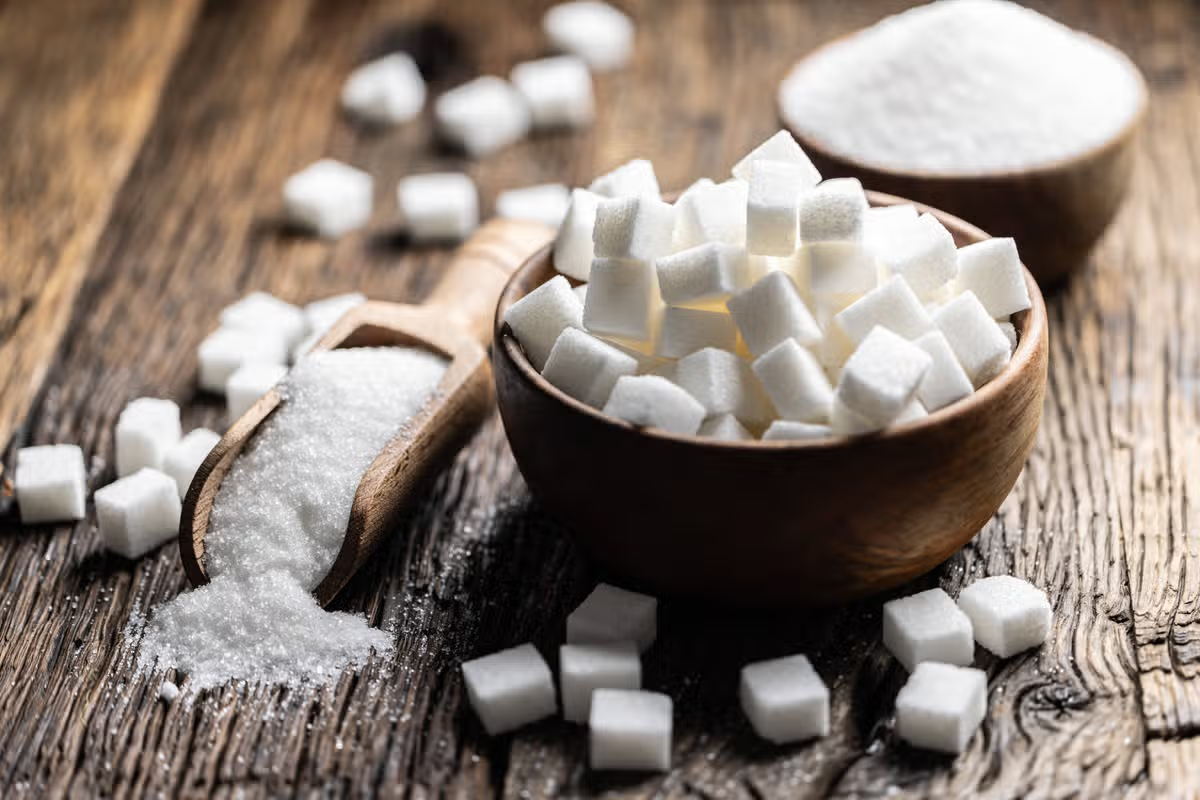
Many people believe heart issues are mainly caused by eating too much saturated fat(Image: dragana991 via Getty Images)
Many people believe heart issues are mainly caused by eating too much saturated fat. But cardiologist Dr Dmitry Yaranov warns there’s another ingredient that is “silently destroying your heart” — and it isn’t saturated fat.
Dr Yaranov, who has over 400,000 Instagram followers, calls sugar the “number one thing silently destroying your heart.” He wrote in a post on Instagram: “As a cardiologist, I see heart disease caused by more than just cholesterol.
“There’s a common additive – hiding in drinks, snacks, sauces, and ‘healthy’ foods – that’s hurting hearts and fueling diabetes.”
Dr Yaranov and a 2024 study from the Harvard T.H. Chan School of Public Health report that drinking sugar-sweetened beverages daily raises the risk of cardiovascular disease (CVD), even for people who are more physically active than average.
The study found that having just one sugary drink a day increased CVD risk by about 18%, no matter how much exercise someone did.
Those who drank two or more sugary beverages daily – and still met the CDC’s recommended 150 minutes of weekly exercise – had a 21% higher risk than people who rarely or never drank them.
A study found that having just one sugary drink a day increased CVD risk by about 18%(Image: SimpleImages via Getty Images)
Even participants with the highest physical activity levels who drank sugary beverages still faced a greater CVD risk.
Dr Yaranov also cited an article in Nature Medicine, noting that in 2020, sugar-sweetened beverages were linked to 2.2 million new cases of Type 2 Diabetes and more than 1 million new CVD cases globally.
He added: “A JAMA Internal Medicine study found people getting ≥25% of calories from it [added sugar] had over twice the risk of dying from cardiovascular disease vs those eating <10%.
“It fuels inflammation, raises blood pressure, worsens cholesterol, and disrupts glucose control – a double hit for heart and pancreas.”
The major JAMA Internal Medicine study published in 2014 followed people for 15 years and found that those who got 25% or more of their daily calories from added sugar were over twice as likely to die from heart disease compared to those who consumed less than 10%.
Content cannot be displayed without consent
Overall, the risk of dying from heart disease increased as the percentage of sugar in the diet rose. This trend held steady regardless of age, sex, physical activity, or body mass index (BMI).
It’s important to note that Dr Yaranov and these studies focus on ‘added sugar’ – not the naturally occurring sugars found in fruit, vegetables, and dairy products.
Major sources of added sugar include fizzy drinks, cakes, pastries, ice cream, sweets, cereals, and biscuits.

Fizzy drinks are a major source of added sugar(Image: Catherine Falls Commercial via Getty Images)
What is ‘added sugar’?
The British Heart Foundation (BHF) defines ‘added sugar’ (or ‘free sugars’) as sugars added to foods, as well as sugars in fruit juice, since juicing releases sugar from the fruit’s cells.
According to the BHF, free sugars are often called ’empty calories’ because they provide energy but little nutritional value.
The website reads: “A diet high in free sugars tends to be a high-calorie diet, and this can lead to weight gain, which can increase the risk of high blood pressure, heart and circulatory diseases and some cancers.”
Which foods contain the most added sugar in our diet?
The Government’s National Diet and Nutrition Survey lists these as the top sources of added sugar in our diets:

Diets high in sugar tend to also be high-calorie(Image: Milamai via Getty Images)
Cakes, biscuits, buns, and pastries (15%): These are also typically high in saturated fat.Jams, spreads, and added sugar (14%): Includes honey, syrups, and sugar often added to hot drinks like tea and coffee.Soft drinks (11%): Choosing sugar-free varieties or flavouring water with fruit can help you cut down on sugar.Chocolate (8%): Most chocolate is high in sugar – even 70% dark varieties, though these have slightly less sugar than milk or white chocolate. Chocolate is also high in saturated fat.Beer, lager, and cider (7%): These alcoholic drinks are among the top sources of sugar in UK diets.Fruit juice (6%): Juicing removes most of the fibre from fruit, so it’s usually healthier to eat whole fruit.Yoghurts (4%): Flavoured yoghurts are often high in sugar. Choosing natural or plain yoghurt with fruit is a healthier option.Pickles and condiments (4%): Ketchup, sweet chilli sauce, chutneys, and pickles often contain unexpected amounts of sugar. Opt for reduced salt and sugar versions when possible.How much added sugar should we be consuming?
The UK Government recommends that free sugars should not make up more than 5% of the calories you get from food and drink each day.
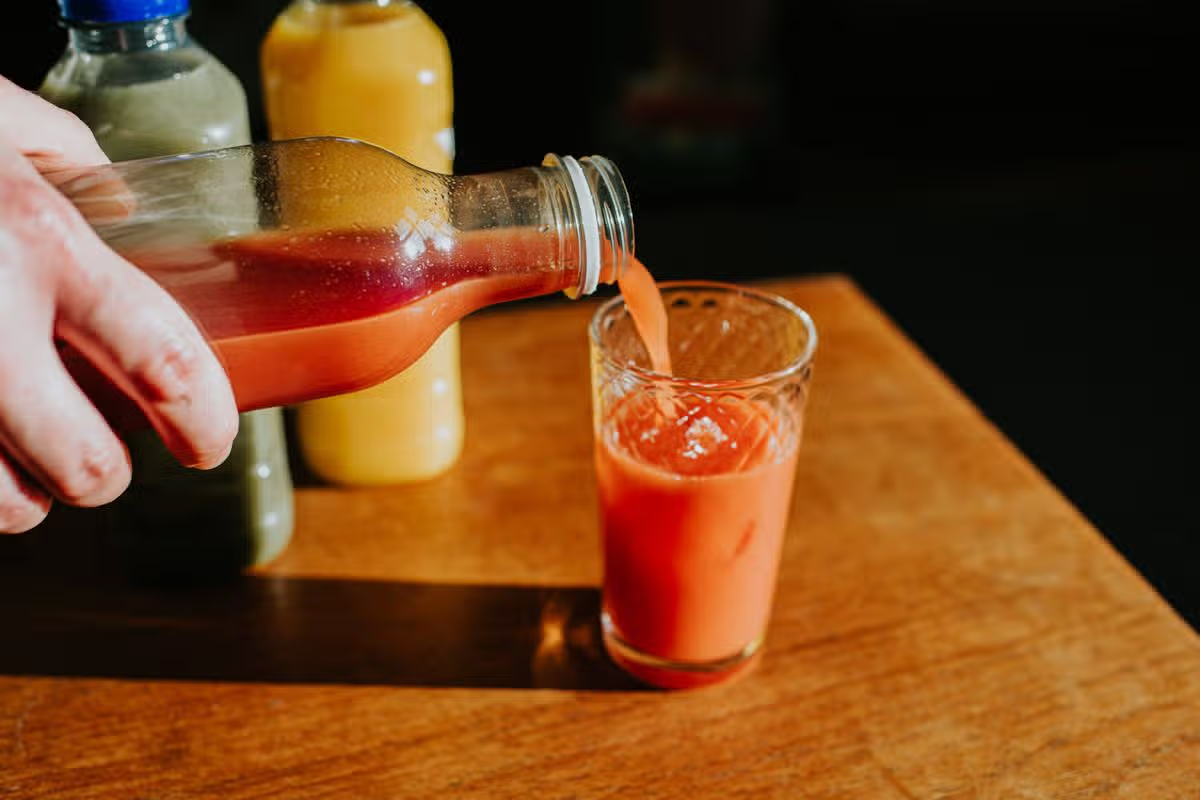
Fruit juice contains ‘free sugars’ as juicing releases sugar from the fruit’s cells(Image: Catherine Falls Commercial via Getty Images)
According to the NHS website, this is the amount of free sugars we should be eating each day:
Adults should have no more than 30g of free sugars a day (roughly equivalent to 7 sugar cubes).Children aged 7 to 10 should have no more than 24g of free sugars a day (6 sugar cubes).Children aged 4 to 6 should have no more than 19g of free sugars a day (5 sugar cubes).Children aged 2 to 3 should have no more than 14g of free sugars a day (3 and a half sugar cubes).Children aged 1 should have no more than 10g of free sugars a day (2 and a half sugar cubes).
There’s no guideline limit for babies under the age of 1, but sugars should not be added to food or drinks given to babies. The frequency and amount of sugary food and drinks should be as low as possible.