

‘The whole thing made me feel very uncomfortable,’ one NHS source said of Dr O’Connell’s intravenous ‘wellness’ drips in a Cardiff pub
03:46, 15 Aug 2026

Dr Paul O’Connell at one of his IV infusion events in a Cardiff bar
Experts have slammed a watchdog for not taking action against a Cardiff GP who was criticised for promoting health pills in “dangerous” adverts.
Last year WalesOnline revealed concerns over the social media activity of Dr Paul O’Connell and a company he co-founded, Physical Nutrition (also known as Nutritional Sciences Ltd), which in its latest accounts registered some £2.1m in annual profit.
The 54-year-old locum GP helped promote the firm in social media videos extolling its “blood sugar formula” and its supplements for “prostate health” and “joint health”. He and the company claimed these tablets produced extraordinary effects, but we interviewed experts who gave damning assessments. Prostate Cancer UK branded the claims “dangerously misleading”.
We can now also reveal concerns over intravenous “wellness” drips offered by Dr O’Connell in a cocktail bar in Cardiff city centre.
The General Medical Council (GMC) is facing criticism after deciding not to take action against the doctor, while the NHS has said he co-operated with its “recommendations” and is able to practise unrestricted.
Dr O’Connell said: “The GMC and NHS Wales have thoroughly investigated these matters under their own processes and closed their investigations with no further action. I would like to put this time behind me and move forward.”
‘Absolutely no evidence’ pills worked as claimed
Cardiff GP Dr Paul O’Connell(Image: WalesOnline)
In 2024 an advertising watchdog found Physical Nutrition had breached regulations by claiming its pills could “reverse years of arthritis” and by falsely characterising Dr O’Connell as the NHS’ leading joint expert. A year later we revealed the business had continued to make misleading claims about medical conditions – some of which had the potential to be catastrophic for people’s health, according to experts.
Our reporting led to an investigation by Cardiff and Vale university health board – where Dr O’Connell is registered as a GP – and the GMC also looked into the concerns.
But the GMC decided the concerns did not “meet the threshold” for a formal investigation – sparking condemnation from HealthSense, a charity that campaigns for evidence-based healthcare.
“My experience is that the GMC will typically only act if there has been a complaint from a patient,” said Les Rose, a retired clinical research scientist and a trustee of the charity. “There is this idea of ‘patient harm’, which can be very difficult to prove. But social media misinformation is a huge problem and it creates the potential for significant harm.”
The GMC has refused to explain the reasoning behind its decision, but we do know it considers whether a doctor poses “a current and ongoing risk to public protection” before deciding if it will bring a fitness to practise case against them.
Dr O’Connell has stopped appearing in social media adverts for Physical Nutrition pills and says he is no longer involved with the company. The relationship ended by mutual consent last year, a decision which he says was not related to any concerns or complaints.
The ads were first brought to WalesOnline’s attention by a retired GP from Essex, Dr John Cormack, who had become concerned when they kept flashing up on his Facebook feed. He was particularly outraged by ads which, in his view, risked making diabetic people think the pills were an alternative to insulin injections.
Similarly dangerous were videos that implied tablets were an alternative to getting tested for prostate cancer, in the view of both Dr Cormack and the Prostate Cancer UK charity.
Meanwhile a top consultant rheumatologist, Dr Wendy Holden, claimed there was “absolutely no evidence” the pills could help regenerate cartilage. She also pointed out the company’s pills contained ingredients that the medical body NICE stated should not be used as relief for arthritis symptoms.
Dr Cormack believes the GMC should have launched a formal investigation into O’Connell’s role in the adverts, which in his view brought the profession into disrepute.
The regulatory system is in dire need of reform, he said, adding: “There is a growing problem with doctors who promote products which appeal to the vulnerable and are, at best, of little or no use. At worst they are dangerous as they may encourage people to delay getting a diagnosis or stop their prescribed medication.”
When we previously contacted Dr O’Connell for our original article, he denied wrongdoing and claimed he had not been aware of the false claims in the company’s marketing, such as references to him as a “leading diabetes expert” and a “joint health specialist”. However, the latter description came from the GP himself in a video voiceover.
Asked if he now feels any remorse for his actions, Dr O’Connell did not directly answer but said: “I always strive to provide the best care for my patients.”
‘The whole thing made me feel very uncomfortable’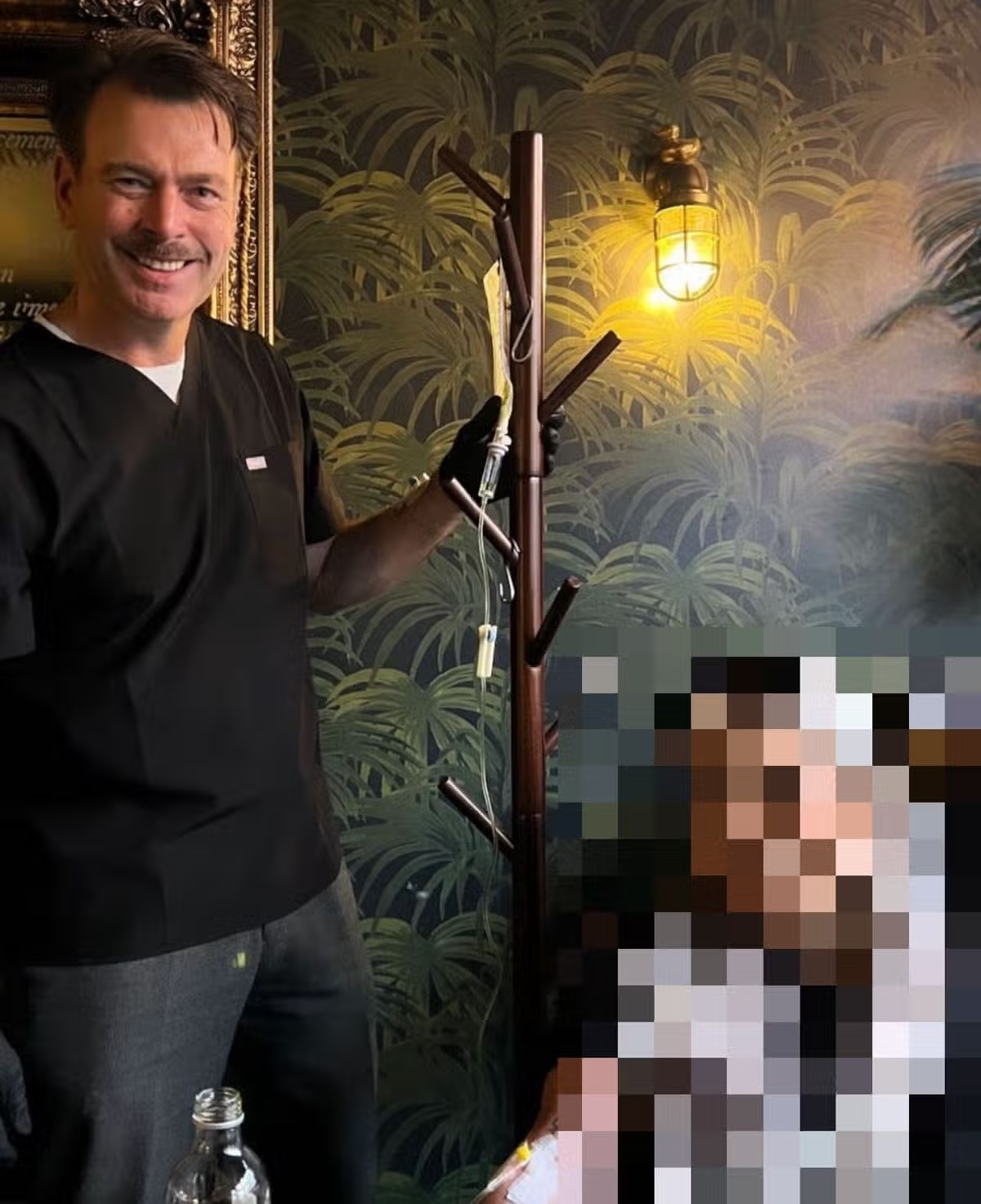
Dr Paul O’Connell at one of his IV infusion events in a Cardiff bar
We recently spoke to a source in the Welsh NHS who voiced concern over another of Dr O’Connell’s business interests – his “wellness” company, OCB Aesthetics, which offered injections of Botox and fillers as well as “intravenous nutrition therapy”.
The company’s marketing for events in 2023 showed it was charging clients £185 for sessions where they would be hooked up to a drip for an IV “infusion”.
One of the venues for these events was the Libertine cocktail bar in Cardiff High Street, where Dr O’Connell hung drip bags from coat pegs and offered a “menu” of infusions, including one called About Last Night, which promised to “wave goodbye to that post-party slump”.
“The whole thing made me feel very uncomfortable,” said our NHS source. “Injecting in a bar setting felt wholly inappropriate and unprofessional. You’d expect surgeries or clinics where people insert cannulas for IV drips to be deep-cleaned to a healthcare standard, so there are certainly questions over the infection risk of injecting in a bar.
“I’m sure Dr O’Connell used sterile needles and cleaned the skin beforehand, but it’s not something you would expect from a medical professional.
“I feel his decision to inject infusions for ‘post-party slump’ in a cocktail bar risked significantly undermining patient trust in GPs.”
Dr O’Connell did not answer when we asked whether he continues to offer this service. The health board and GMC also declined to address the issue.
‘It doesn’t have to be this way’
Cardiff GP Dr Paul O’Connell(Image: WalesOnline)
The Essex GP Dr Cormack previously explained in detail his concerns about the Gluco Support supplement, priced at £69.95 for 90 pills, which Physical Nutrition claimed would help customers “maintain healthy blood sugar levels” using “superfood” ingredients.
Wearing white scrubs in videos advertising the product, Dr O’Connell introduced characters who described experiencing health episodes such as collapsing at a wedding because of “spiking” blood sugar.
One video made the claim that Dr O’Connell had “discovered a way of controlling your blood sugar level without mad exercising, dieting or even painful injections”.
Dr Cormack felt the videos could lead to diabetics thinking they could stop taking insulin injections. He was alarmed to see one Facebook user had commented on a video: “Do you quit diabetic medication when using this medicine?”
Carter Ruck, the top libel law firm that was representing Dr O’Connell before we published our report last year, said he had “never made claims around diabetes”. They argued that the mention of “painful injections” was actually a reference to the “potentially dangerous practice of using weight loss GLP-1 injections”.
But WalesOnline found one of the ads described Dr O’Connell as a “leading diabetes expert”. Physical Nutrition’s lawyers told us this post would be removed and that it was a mistake by a marketing employee.
We then found wording on the firm’s website that specifically aimed its blood sugar product at “diabetic” people, telling them “it doesn’t have to be this way” and “it couldn’t be easier to take back control of your health”.
Physical Nutrition accepted this “ought never to have been published” and vowed to “urgently review” its marketing. Dr O’Connell’s lawyers, meanwhile, said he wasn’t aware of the diabetes references and did not endorse them.
‘Inner salamander’
A range of past scenarios involving Dr O’Connell were used to promote the company’s “joint health” supplement, Activ8 Joint Complete. In one video he could be seen wearing black leathers, sprawled on a road after what he describes as a motorbike crash. He told how the accident left him with chronic joint pain, so he carried out research to create Activ8.
In a different video he described experiencing long-term joint pain after a pedal cycle accident. In another he told of chronic pain from a “nasty car crash”. When we asked Dr O’Connell how many road accidents he had been in, his lawyers responded there had been “a number of significant accidents and numerous more minor accidents”.
Dr O’Connell said he considered himself a joint expert. He pointed to his past work which included leading teams that gave “electrical stimulation to neurologically impaired patients who suffered from foot drop”.
Activ8 was marketed as being derived from “the secrets of the salamander”, an amphibian which has the ability to regenerate its tail. Physical Nutrition justified its claims about “cartilage regrowth” by pointing to Duke University research suggesting humans have an “inner salamander capacity”.
However, the Advertising Standards Agency (ASA) found it was wrong to imply a food supplement could treat arthritis. The company agreed to remove all such references yet, as we reported in our previous story, its website continued for almost a year to claim its pills “supported cartilage regrowth”.
Dr Wendy Holden, medical advisor to the Arthritis Action charity, told us: “Duke University has shown that humans have molecules similar to those found in salamanders, which may be important in cartilage regeneration, but there is absolutely no evidence that anything in Activ8 can influence these substances, and this whole topic is very much at the basic science stage.”
The firm’s lawyers accepted its claims about cartilage regrowth “ought not to have remained live” and that standards “fell below those acceptable”. Dr O’Connell, meanwhile, denied ever claiming cartilage can be entirely regrown. His lawyers also pointed to a “substantial number of positive reviews” on the website and the offer of a 90-day refund.
‘Dangerously misleading’
Physical Nutrition also sold a “men’s health” supplement, Protect and Perform, which claimed to help “maintain a healthy prostate”. When we showed one of its past adverts to Prostate Cancer UK, the charity was disturbed.
In the video, Dr O’Connell warned of “record rates of prostate problems”, then another man’s voiceover went on to say: “It’s no wonder so few men get checked, but what if there were a way to beat these problems from the comfort of your own home?” Spotting prostate problems too late “can be fatal”, added the voiceover, before continuing: “Prostate cancer now kills more people than breast cancer.”
This appalled Prostate Cancer UK’s assistant director of health improvement Amy Rylance, who said: “Research that is about something non-cancerous is presented and conflated with cancer, which is dangerously misleading.”
Physical Nutrition’s lawyers defended the video, saying it warned against the problem of “under-investigating” prostate health and that it did not suggest supplements to be “a suitable alternative to medical care”.
We also previously reported how the Physical Nutrition website positioned the logos of the Guardian, Independent and Sky News above a picture of Dr O’Connell thoughtfully holding a finger to his head. The news outlets told us they had not licensed their logos for such use.
Physical Nutrition claimed to have been under the impression it was “permitted to use the logos”. The GP denied being aware of their use.
Journalism ‘more effective than the regulators’
Mr Rose, the HealthSense trustee, pointed out the misleading claims only stopped after WalesOnline’s reporting and had previously persisted for almost a year after the ASA ruling. “Journalism is vastly more effective at addressing this behaviour than the regulators,” he said.
The ASA is hobbled by its lack of enforcement powers and the GMC has a transparency problem, in the view of Mr Rose, who said: “In a case like Dr O’Connell’s, the GMC has made a decision not to refer to a medical practitioner’s tribunal, and I think they should have to publish the reasons for that.
“They should have to justify why they have not acted on a ruling from another regulator, in this case the ASA. An adverse ruling from another regulator must be taken into account by a fitness to practise panel.”
A spokeswoman for the health board said it was grateful for Dr O’Connell’s co-operation with its “recommendations”, though she did not explain what these were.
The health board’s HR boss Rachel Gidman added: “Patients and the public can be assured that where concerns are identified, they are managed through established governance arrangements to ensure patient safety and the delivery of high-quality care. In line with our legal and confidentiality obligations, we will not be commenting further on this matter.”
Physical Nutrition – whose directors run various other health businesses, including the multimillion-pound Malaberg Ltd – says its products were formulated “off the back of an extensive body of research from world-leading biomedical scientists, academics, and researchers”. Dr O’Connell was a co-founder but never a director.
The GMC said it would not be “fair or proportionate” to publish details about doctors in cases where the threshold for investigation is not deemed to be met.
If you would like to tell us about a story we should be investigating, email us at conor.gogarty@walesonline.co.uk