
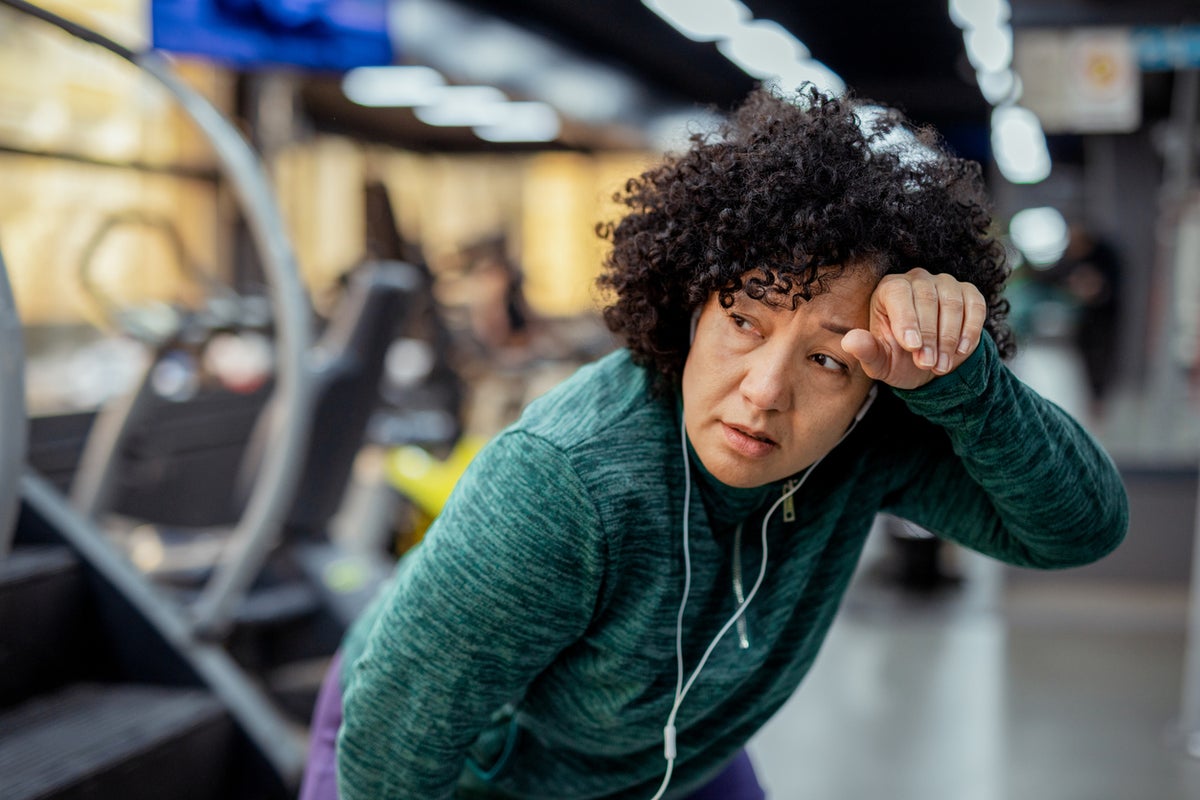
You want to be fit and healthy. You put a lot of effort into being fit and healthy – trying to exercise and eat the right things. You spend a significant amount of time, energy and money on this process. Yet you’re not as fit and healthy as you want to be. This is a common story.
Gyms appear to be busier than ever; the fitness industry is now worth billions of pounds. But according to 2024 NHS data, 66 per cent of adults in England are overweight or living with obesity – up from 53 per cent in 1993. And despite having an ageing population, the nation’s healthy life expectancy (the years we can expect to live in good health) is falling.
There seems to be a significant disconnect between wanting to be fitter and healthier, and actually achieving it. So what’s going wrong?
 Most of us are making conscious efforts to be healthier. But why, in many cases, is it not having the desired effect? (lado2016 – stock.adobe.com)
“It’s not just a case of everything going downhill,” independent sport and exercise scientist Dr Ash Cox tells me. “Sport England’s Active Life survey found that about two-thirds of people are meeting the 150 minutes of exercise per week guidelines. And the number of gym-goers has been increasing.
“People participating in exercise isn’t necessarily the issue. It’s their environment.”
The healthy behaviour that could benefit us more than the gym
Exercise is brilliant for improving every aspect of your fitness. It is a non-negotiable part of a healthy routine. But when you’re trying to get in shape, hitting the gym for an hour does not do as much heavy lifting as most people think. After all, spending 60 minutes at the gym, Monday to Friday takes up less than 3 per cent of your week, leaving 163 hours unaccounted for.
For those with limited time on their hands, this realisation represents a significant and accessible opportunity.
Formal exercise tends to contribute roughly 5 per cent of our total daily energy expenditure. For context, most people use about twice as many calories each day digesting, absorbing and processing their food.
Around 70 per cent of our daily energy output is spent simply keeping us alive and carrying out the various autonomous functions that it entails. But the greatest lever we can pull, responsible for the remaining 15 per cent, is NEAT – non-exercise activity thermogenesis.
This is a fancy way of saying “movement that isn’t formal exercise,” whether that’s walking, gardening, fidgeting or otherwise. One of the best things we can do for our health, Dr Cox says, is simply finding ways to move more throughout the day.
Read more: A sports scientist’s guide to getting the same strength gains in half the time
 Most people spend a significant portion of each day sitting down (Wasana – stock.adobe.com)
How environment impacts our health in unexpected ways
You already know exercise and wider movement are good for you – everybody does. But most people have individual and understandable reasons why they don’t do much of either – often related to time, energy, stress and money.
“What we have seen in recent years is a widening of the gap between socio-economic groups,” Dr Cox says. “Cost of living is increasing and a gym membership usually costs above £30 per month now. That is often one of the first things people will get rid of.”
Without a designated space to exercise, people tend to exercise less. But this is not the biggest problem.
“We’ve also engineered physical activity out of life,” Dr Cox continues. “We’ve developed a society where we actively have to seek movement out. We have desk jobs, we have Uber Eats, there is no need to be active.
“And for some people, that socio-economic divide is removing one of the movement options they previously had on the table – the gym.”
Many people are countering the cost of living crisis with more intense work schedules, leaving them time-poor, Dr Cox adds. And, when these individuals are stressed to the gills and forced to make snap decisions over which behaviours offer the best immediate rewards, exercise often falls by the wayside.
Pair this with the fact that cities are rarely an enticing prospect for recreational cyclists and, as nights draw in, runners swerve parks due to safety concerns. What you have, despite the best efforts of many excellent charities and organisations, is a dwindling number of exercise options for many. And people’s health suffers as a result.
In short: we are in a movement drought, and our environment is making it increasingly difficult to fight our way out.
 Many people find themselves with few movement options on account of their environment, and this takes its toll on their health (Getty/iStock)
How to add more movement into your day
“People don’t want to be unhealthy – there’s a reason why health and fitness is a multi-billion-pound industry,” says Dr Cox. “I just don’t quite think we understand how to get there.”
The biggest change he encourages people to make for better health is to stop seeing the gym as the “ticket to ride” for becoming an active person.
“The entry point should be, and has to be, increasing your daily movement,” he says, pointing to a paper published this week in the British Journal of Sports Medicine to support his argument. It found that upping your walking speed could reduce your risk of death and heart disease, despite subjects taking far fewer than the widely-pushed – but scientifically arbitrary – 10,000 steps per day.
I have a timer on my phone, and every hour I will do something – 10-15 squats, a few press-ups, getting some steps in at a slightly higher intensity
Dr Ash Cox, independent sport and exercise scientist
“When I used to look after patients who were waiting for gastric bands, and they were given physical activity advice to lose weight, it started as simply as parking on the other side of the supermarket car park and walking to the door with some intent.
“All movement adds up. Do the school run on foot; take the stairs when you can, and do it with some intensity; move around the office.
“Dedicated exercise is such a small part of someone’s day, and it has to be squeezed in. But the biggest wins come from habitual physical activity. Put more movement into your life, and go about it with more intent.”
Movement snacks – digestible chunks of exercise sprinkled throughout the day – are another sustainable way to achieve this.
“I used to do this when I would lecture or go to conferences,” Dr Cox says. “I have a timer on my phone, and every hour I will do something – 10-15 squats, a few press-ups, getting some steps in at a slightly higher intensity.
“It doesn’t seem like much, but over weeks, months and years it adds up to a significant amount of activity.”
Read more: The enjoyable exercise better than walking for lifelong fitness
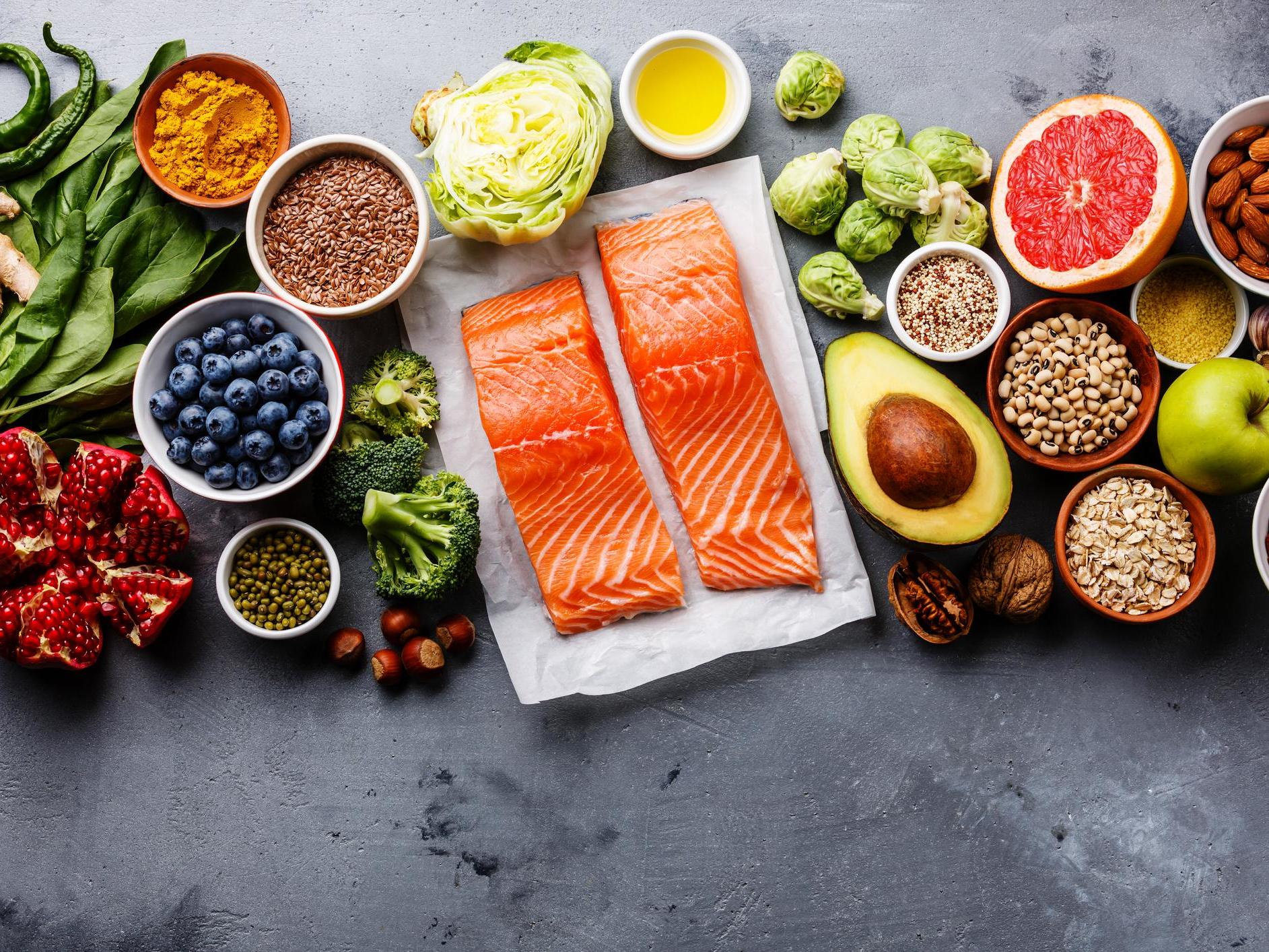 Finding a nourishing and sustainable diet – that works for you and your lifestyle – is one of the best things you can do to improve your health (Getty Images/iStockphoto)
The other pieces of the puzzle
Exercise and movement are significant pieces of the wider health puzzle. But there are other factors that influence how we look, feel and function – diet being paramount among them.
“We often get task paralysis with our diet because there is so much information coming at you nowadays,” says Dr Cox.
We are bombarded with advice on what to eat, and what not to eat, on social media. Supermarket shelves are slapped with “high protein” labels and all manner of other health claims, while supplements often promise the earth. And the food that is most affordable and readily available to us is often disproportionately high in calories while low in genuine nutritional value.
“Even when we do get a grasp of what a ‘good’ diet is, we don’t monitor it properly, because many foods nowadays are so dense in terms of calorific content,” Dr Cox continues. “Someone might burn 400 calories with a morning gym session, then almost cancel that out with a 300-calorie latte, which they don’t register as part of their diet.
“The other classic example I use is cereal portions. If you’ve ever poured a bowl of cereal as per the portion on the box, it’s pathetic.” Yet the boxes still sport health perks in bold and nutritional profiles that score “green” on the UK’s front-of-pack food traffic light system.
Sadly, I can’t give you a blanket prescription to counter this. A good diet is down to the individual’s needs, Dr Cox stresses.
“I’ve worked with clients in the past who had to work a night shift,” he says. “They had been trying to fast in the mornings as well. That will work for some people, but not them.”
But there are some general rules you can follow, Dr Cox adds. Namely, understanding what’s in your food (the piece linked below is a good place to start), swerving “overly processed foods” where possible, then applying trial and error to work out which diet strategy works for you and your lifestyle.
 The wealth of health and fitness information online can be overwhelming and misleading (PA)
The final piece of advice
“The government and practitioners like me are in a difficult position because the public want simplicity, and they want a fix-all solution,” Dr Cox says. “But we just don’t have that for everyone.
“What I would advise people to do if they are confused is to seek out a trusted professional, make sure they are qualified, and ask them questions.”
This can cut through the overload of health and fitness information in the modern world and provide actionable, individualised advice to take away. But it is not within everyone’s budget.
If this is the case, Dr Cox says the best piece of health advice he received is to find one trusted professional, then follow their work, as well as that of people they associate with. “Find someone you respect, someone who is giving out sensible information that’s underpinned by evidence, and take value from them,” he recommends.
If you can build a few beneficial behaviours into your regular routine based on their trusted insights, better health awaits.
Read more: That diet your friend swears by isn’t magic – this is why it works