
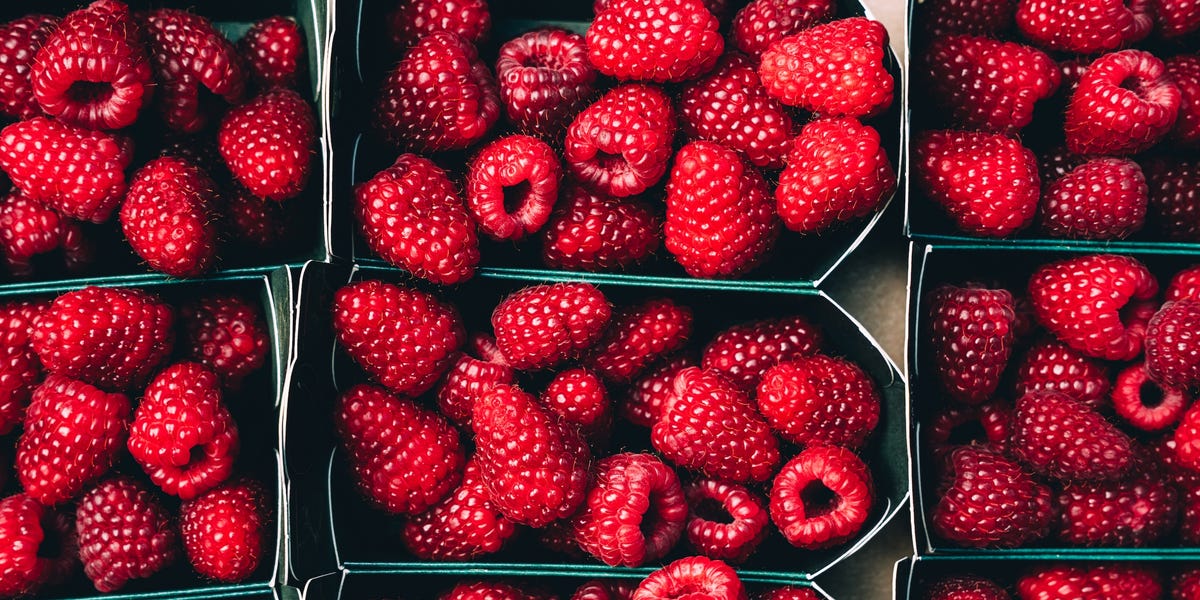
If given the choice, I’d pick a berry over almost any other kind of fruit. Blueberries, strawberries, blackberries – bring them on. So it was an easy yes when I was asked to eat raspberries every day for a week. They’re tasty, versatile, and loaded with lots of nutritional benefits.
Raspberry health benefits
Berries are a perfect example of good things coming in small packages. For starters, raspberries are some of the best sources of dietary fibre, with 8 grams per cup of fresh fruit.
‘Fibre promotes a healthy gut microbiome, helping feed beneficial gut bacteria and stimulating anti-inflammatory processes,’ says Avery Zenker, a registered dietitian at My Crohn’s and Colitis Team. ‘One cup of raspberries can provide 20 to 38% of the daily fibre recommendation. Adding a cup of raspberries to the day would bring the average adult significantly closer to their daily fibre target.’
Raspberries are basically a multivitamin all by themselves, as they contain a slew of important nutrients: vitamin C, vitamin K, iron, magnesium, potassium, and calcium.
They’re also full of powerful polyphenols, particularly ellagitannins and anthocyanins, which have antioxidant and anti-inflammatory properties. Anthocyanins have protective benefits for the heart, too. Research has found they can help lower levels of ‘bad’ LDL cholesterol.
On top of that, these polyphenols also contribute to a healthy gut microbiome. ‘Polyphenols found in raspberries could encourage growth of beneficial gut bacteria and inhibit the growth of specific bacteria that may play a role with inflammation in the brain,’ says Amanda Sauceda, a registered dietitian who specialises in gut health. ‘In fact, it’s thought that the polyphenols more than the fibre are why raspberries encourage good gut bacteria and have a prebiotic effect.’
What’s more, raspberries don’t contain a lot of natural sugar (only about 5 grams per cup), so they’re considered a low-glycemic food. For comparison’s sake, a cup of sliced banana has about 18 grams of natural sugar and a cup of sliced apple contains about 13 grams. The anthocyanins come into play here, too. Some laboratory studies have found that anthocyanins increase insulin secretion and influence genes responsible for GLP-1, Sauceda says.
‘The high fibre combined with low carbohydrate and sugar content make raspberries a great choice for supporting healthy blood sugar, especially for those with insulin resistance such as type 2 diabetes,’ adds Zenker.
What happened when I ate raspberries every day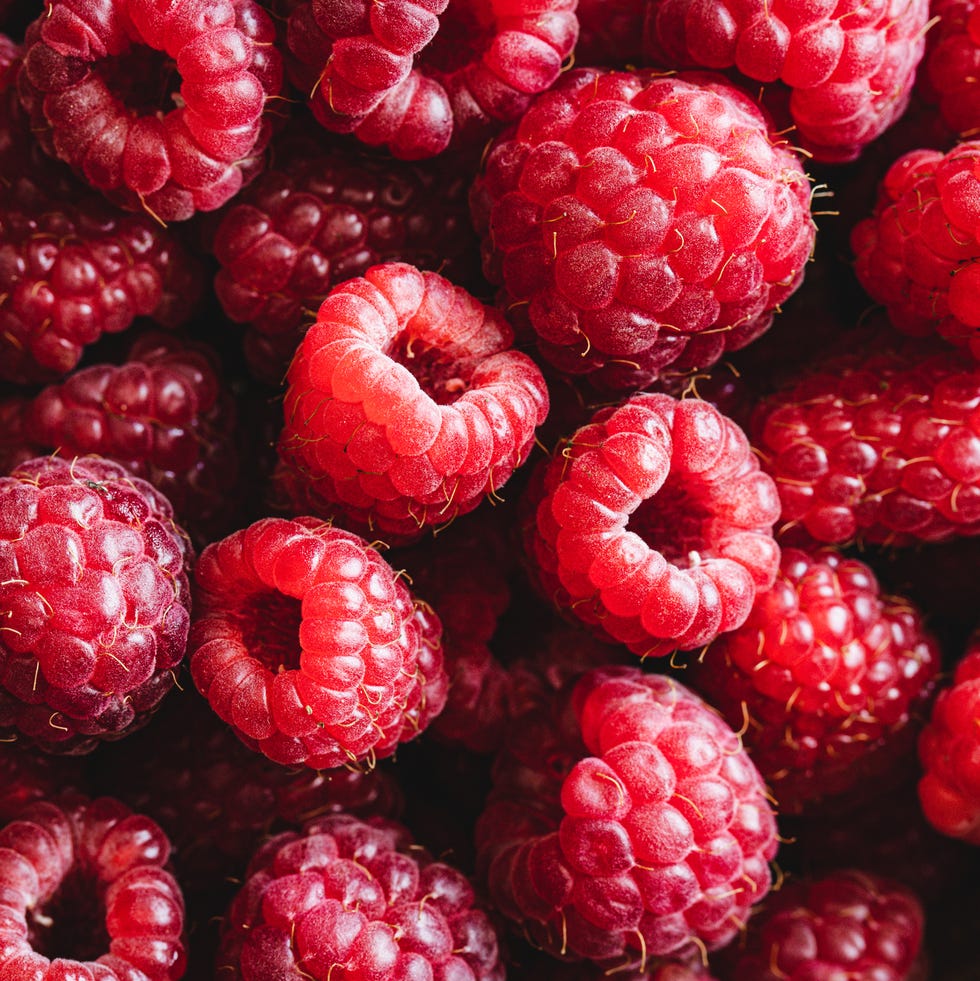
alvarez//Getty Images
To kick off Raspberry Week, I went straight to the supermarket to stock up on fresh ones. Berries (especially organic ones) are notoriously pricey, so I was thankful my store happened to be having a sale on berries that day. When I got home, I gently dumped all of them into a large bowl of water with a splash of vinegar to soak, then rinsed them several more times. After that, they went straight into my OXO Good Grips GreenSaver Produce Keeper, which I swear does actually keep berries fresher for longer. They stayed in good shape the whole week.
On that first day, I ate raspberries in the simplest way: raw, all by themselves. I measured a one-cup serving and snacked on them as I cooked dinner. I couldn’t finish the entire cup, to be honest. They filled me up pretty quickly. Even though I was hungry before I’d started cooking, I was too full to finish my dinner.
Other days I used frozen raspberries in smoothies with protein powder or mixed fresh raspberries into Greek yogurt for a light desk lunch. I also made a raspberry-chia jam (using this recipe straight from Good Housekeeping!), which I spread on top of a layer of cream cheese on whole-grain toast.
As a healthy evening treat one night, my partner and I mixed fresh raspberries into vanilla plant-based yogurt cups, topped them with a layer of melted chocolate chips, and stuck them in the fridge for about 20 minutes so the chocolate could harden, Magic Shell–style. Another night I had a small bowl of fresh raspberries with a chocolate chip nestled inside each one. Can confirm: The pairing of raspberry and chocolate is a match made in heaven.
I didn’t notice any major health changes, but my digestion did seem to be better. I found raspberries to be very satiating (probably thanks to all that fibre), and I had to spread my one-cup serving throughout the day. Unless I was ravenous, I’m not sure I could eat a full cup in one shot.
But there was another unexpected perk to Raspberry Week: Because I was eating raspberries regularly and the fridge was stocked with them, my 11-year-old son (for whom raspberries have been love at first bite) ate more during the week, too. They’d already been washed, which made it easy for him to grab some from the container for a healthy snack whenever he wanted them.
How to eat more raspberries
Raw, frozen, blended, baked – there are tons of ways to incorporate more raspberries into your diet. Sauceda also makes raspberry chia jam and spoons it on yogurt, ice cream, and into overnight oats. She tops her morning bircher muesli with fresh berries. She also recommends blending raspberries with cottage cheese for apple slices or graham crackers to create a high-protein dip. Raspberries can even be added to salsas, much like mango is.
Like me, Sauceda is also a fan of the raspberry-chocolate combo. ‘My favorite way to enjoy them is as a filling with chocolate cake,’ she says. ‘There’s something about this combo that hits the right sweet and tangy balance.’
The bottom line
Overall, Raspberry Week was a success. Raspberries seemed to help with my digestion, but the most significant difference I noticed was feeling full more quickly after eating them. Because they’re a filling, healthy snack packed with fibre and powerful polyphenols, I’ll definitely be incorporating them into my diet more often.
READ MORE ON HEALTH & WELLBEING