


Want to bookmark your favourite articles and stories to read or reference later? Start your Independent Membership today.
Already a member?
Log in
For many, exercise is synonymous with jogging. In the 90s and noughties, a running boom made it the go-to way to raise your heart rate. But recent research stresses the importance of strength training for maintaining a robust, mobile and capable body as we age.
However, if you are older and new to muscle strengthening exercises, they can represent an intimidating prospect. But getting started is not as complicated as some people might think, according to Third Space strength and conditioning master trainer with Third Space gyms, Will Pate.
“The principles are the same at 25 and 65 – we build strength, build capacity, and progress gradually,” he explains. “What changes is where we start and how carefully we manage the weights someone is lifting.”
Here, Pate explains how he would train a client in their 60s for better strength, health and longevity. He also shares his time-proven low-hanging fruit – tips that anyone can implement for free to see their fitness levels skyrocket.
Easy ways to be healthier in your 60s
Perform sit-to-stands from a chair, completing three sets of a challenging number of repetitions a few times each week. You can find a video demonstration below.Go for a daily walk, ideally with a few periods at a more brisk pace weaved in. Eat a protein-rich breakfast. Carry things whenever you can – even everyday items like shopping bags count as training. Do two strength sessions per week – consistency beats intensity, every time.
Be realistic about what you can and can’t do
Your existing fitness levels are the direct result of your time spent on this planet and your experiences during that time – whether that’s exercise, activity levels, injury or otherwise.
If someone is older, they have more history to unpack. For this reason, Pate spends extra time with older clients finding out what their body can tolerate and manage in its current state.
“This includes mobility, any concerns with joints, where they have range but lack control, and any history of injury or surgery,” he says.
“Then I choose exercises that put force exactly where we want it and nowhere else – machines, cables and supported variations are useful here as they’ll challenge the muscle hard while removing the need for balance and coordination that can make a movement feel risky.”
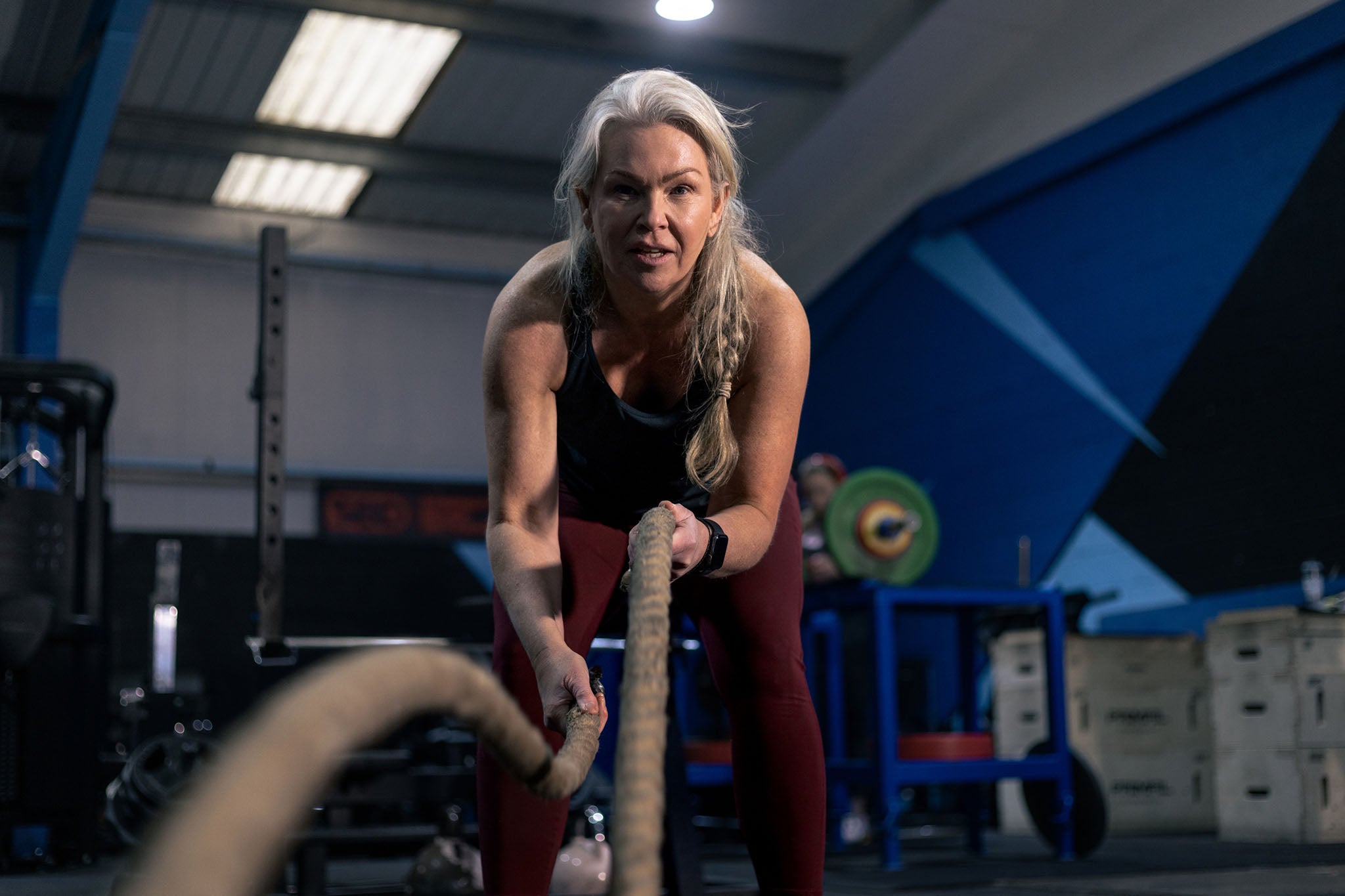 Strength training builds stronger muscles, but also bolsters your joints, tendons and ligaments while improving mobility and functional capacity. (Getty/iStock)
It is never too late to start
“It’s never too late to start strength training, and the evidence is strongly on the side of those starting later,” Pate says. “People in their 70s, 80s and beyond can build strength.”
A 1990 study reinforces this message. It took 10 frail care-home residents in their 90s and put them through eight weeks of leg strengthening exercises using a leg extension machine – similar to those found in most gyms.
By the end of the trial, all subjects had improved their strength and mobility, while some were able to walk without assistance or rise from a chair unsupported for the first time in years.
That is not to say your introduction to strength training will be completely seamless. As the body adapts to this new challenge, there is likely to be some muscle soreness. But this “is normal and not a sign of damage,” Pate assures.
“Start by using lighter weights than your ego wants and build up steadily,” he advises.
“Another one of the most important things is to be transparent with your coach. Tell them about any joint replacements, medications or conditions, and check with your GP if you have any heart or medical concerns.
“And most importantly, find a coach who explains why you’re doing each exercise, as understanding what’s happening removes most of the fear.”
Read more: I specialise in coaching people aged 40-plus – do these six things for immediate results
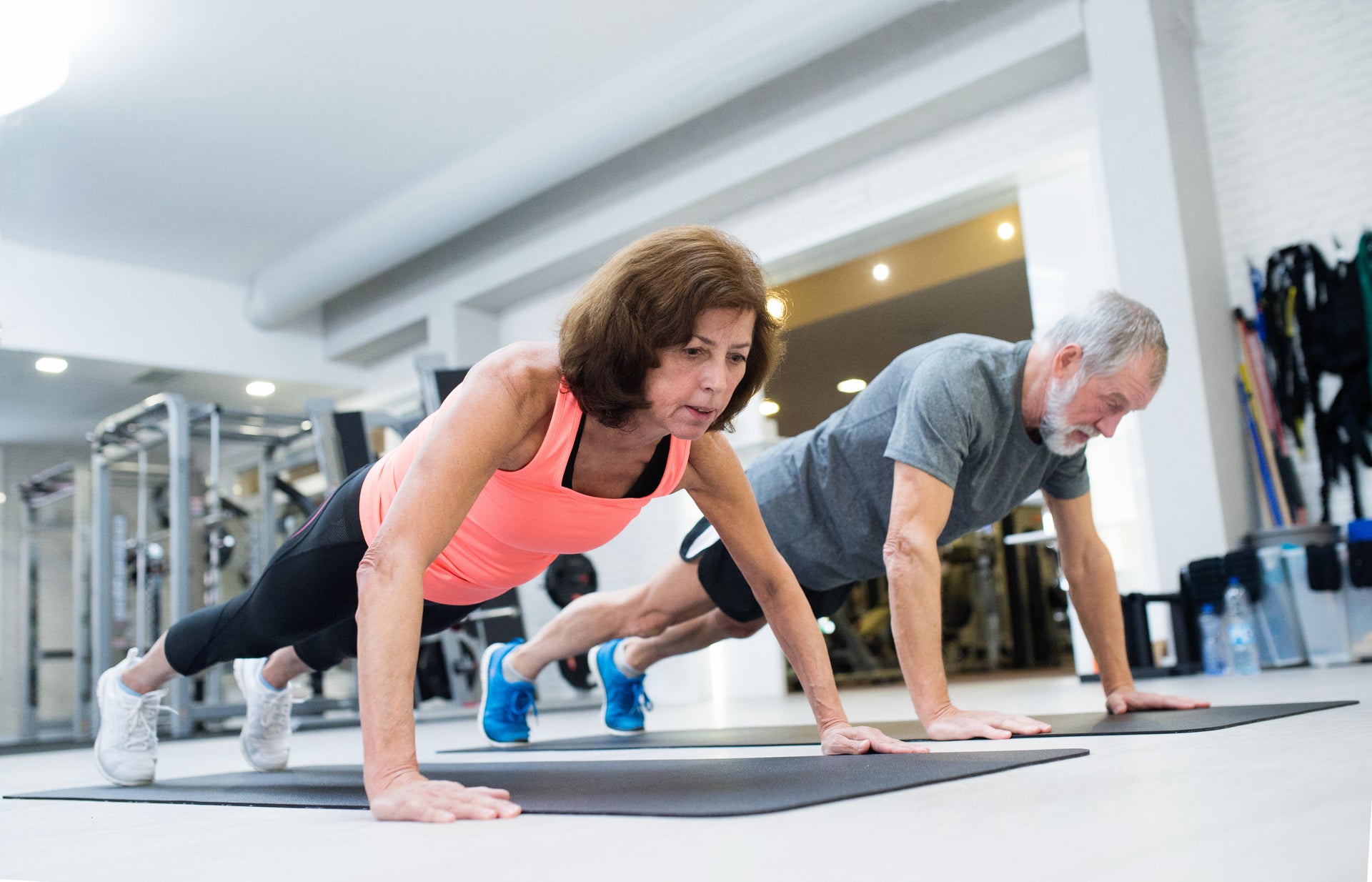 No specific movement is off limits – your exercise selection should depend on your goals, mobility and current fitness level (Alamy/PA)
The best exercises for people in their 60s
The best way to prescribe exercises is on a case-by-case basis. After all, it’s no use programming heavy barbell squats for someone fresh from knee surgery. They have to build the requisite strength back first.
But there are some general rules we can follow. Pate prioritises strength exercises as this quality underpins all movement – you can’t perform any exercise or action, even something as simple as walking or standing from a chair, unless you are strong enough to do so.
Following this, he looks to train power – one of the first physical attributes to decline with age – and then balance. His early focusses fall under four main banners:
Leg strength: These exercises include sit-to-stand variations, the leg press, step-ups and split squats. “These are the muscles that get you out of a chair, up the stairs and off the floor,” says Pate. “Losing that ability is often where independence starts to slip.” Pulling and grip: These exercises include rows – exercises where you pull weight toward your torso – and carries. “Grip strength is consistently linked with healthy ageing, and carrying shopping or grandchildren are real life needs,” Pate explains. Power: Power is the act of creating force fast. “Once someone is strong, we add speed, such as a faster sit-to-stand or a brisk step-up,” Pate says. “Power tends to decline faster than strength with age, but it is this power that lets you catch yourself when you trip.” Balance: “Practise your balance in progressively harder positions, rather than leaving it to chance,” Pate says. This could start as simply as trying to stand on one leg while brushing your teeth. Start by using a hand to support you, then make it more challenging by removing this assistance, then adding movement through hops or closing your eyes.
Read more: New research reveals the exercise six times more effective than walking
 Falls are a leading cause of mobility difficulties, but training your balance can help protect against this (Getty Images)
Pace yourself
Pate’s message is that no exercise is off limits. Instead, movements should be selected based on a risk to reward ratio determined by a client’s goals and capabilities.
“I don’t avoid exercises – instead, I avoid mismatches,” says Pate. “Almost any movement is doable once someone has built up to it. The problems come from doing too much, too soon, in positions the body can’t yet control.
“Early on, I’d hold back on high-impact jumping, maximal lifts and heavily loaded positions at the end of someone’s range. For example deep, loaded spinal flexion [the forward bending of the spine]. That doesn’t mean never, it just means it’s not suitable for beginners at an older age.”
Read more: The reason for every injury you’ll ever have, and how to prevent it
 Sleep is key for better energy levels and overall health (Getty Images/iStockphoto)
Daily habits that boost your health
Exercise is one part of the equation for better lifelong health and fitness. Diet is another significant contributor.
“To support your efforts in the gym, I’d always suggest looking at your diet as a starting point and upping your protein,” Pate says. “Your appetite and your muscle’s response to protein both tend to drop with age, so it’s important you aim for a decent portion of protein at every meal, not just dinner.”
He also highlights the value of daily movement outside the realm of formal exercise, such as walking, gardening, pottering around the house, taking the stairs and even fidgeting. If you’re moving regularly, you’re probably improving your health.
“Within this, and it may feel a little silly, I also recommend practising getting off the floor, just to keep that skill growing,” Pate adds. “And finally, however old you are, prioritise your sleep. It’s the best thing you can do.”
Read more: Expert warns why this daily habit is shortening your life – even if you exercise