
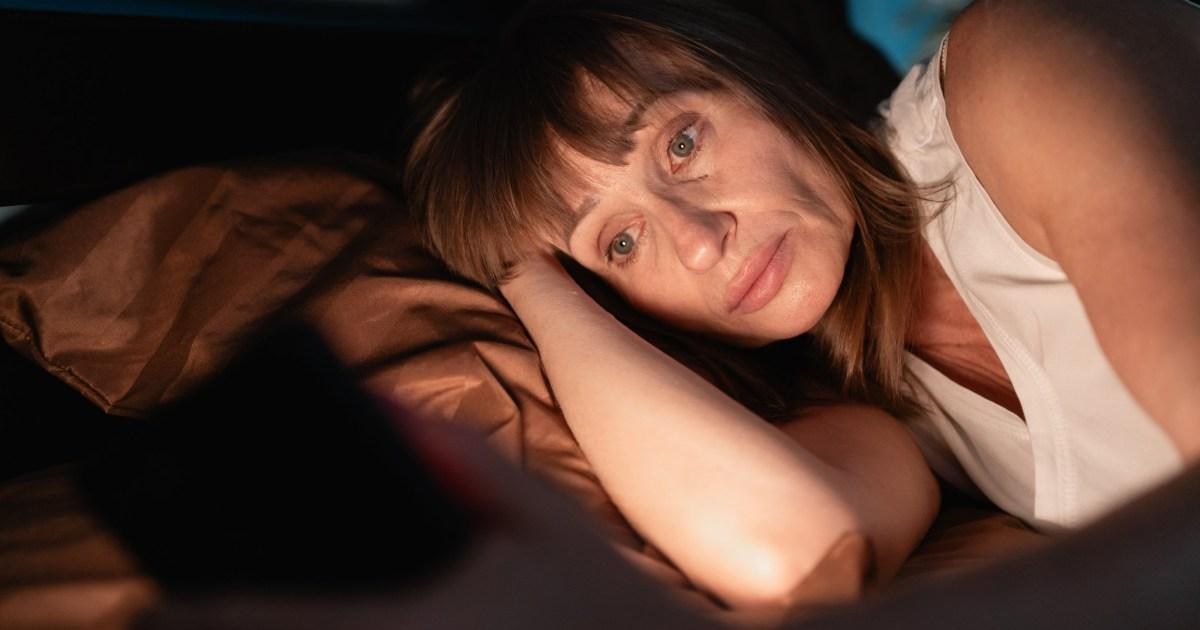

Have you ever been a member of Club 330? (Picture: Getty Images)
Few things are more frustrating than a bad night’s sleep – except, perhaps, being stuck next to a bare beater blasting music in your ears at 7am the next morning.
According to the NHS, at least one in three people in the UK suffer from poor sleep or struggle to get enough shut-eye.
And for one particular group, their own bodies seem hellbent on sabotaging their rest – and many have no idea why.
A recent survey has revealed that 84% of women over 40 are regularly waking up at in the middle of the night.
And, oddly enough, their internal alarm clocks are all set for the exact same time: 3:30am.
Could all these women be part of a late-night biker gang? Or is there something more scientific at play here?
Look beyond the headlines
Get a curated list of the most important stories of the weekend every Sunday from our weekend editor Jess Austin.
Look beyond the headlines with exclusive articles, emotive interviews and must-read explainers from our expert team of reporters across news, lifestyle and entertainment.
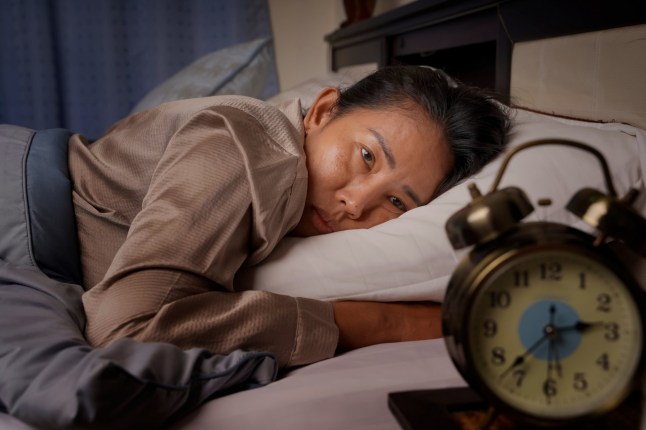
Waking up at the same time night after night is emotionally and physically draining (Picture: Getty Images)
Conducted by sleep technology firm Simba, the poll of 1,000 UK women aged 40 and over reflects just how widespread the crisis is, with nine in 10 (92%) waking at least once before 7 am.
What’s even more frustrating is that, once awake, these women are losing an average of 33 minutes and 55 seconds of sleep trying desperately to drift off again.
For more than a quarter (27%), the struggle can take closer to an hour, with at least 45 minutes spent tossing and turning before they can get back to sleep.
Ask Metro
Use AI to go deeper into the stories you care about – powered by Metro and trusted publications.
The 3:30am phenomenon, dubbed ‘Club 330’, is an unwanted membership impacting middle-aged women across the world.
Keep waking up at the same time every night? Here’s why
Dr Zoe Gotts, sleep expert and consultant clinical psychologist, tells Metro that the hormonal changes women in their 40s and 50s experience play a direct role in this frustrating pattern.
‘During perimenopause and menopause, fluctuating and declining oestrogen and progesterone can affect sleep regulation.
‘Women may experience night sweats, temperature changes and increased sensitivity to disturbances, all of which can make sleep more fragmented.’
Zoe adds that progesterone in particular ‘also has a relationship with the brain’s calming systems’, so any hormonal changes can then influence how easily we settle and stay asleep.
Despite affecting almost half of the global population, there is still a significant lack of understanding about the immense hormonal transformation middle-aged women experience.

These significant hormonal transformations can have an impact on every element of a woman’s life (Picture: Getty Images)
In one particularly harrowing study, published in Post Reproductive Health, researchers collected data from 829 postmenopausal women through an online survey in May 2021.
They found that 49% of participants did not feel informed about the menopause and 62.7% had found it either difficult or very difficult – with women describing their experiences as a ‘nightmare’ and ‘awful’.
While most women will have heard horror stories about hot flushes, other physical and emotional symptoms are often bushed over.
So, why at 3:30am specifically?
Now, Zoe can’t pinpoint exactly why so many women seem to wake up at 3.30am on the dot. But, she has some theories.
‘There is a physiological reason why waking becomes more likely during the second half of the night,’ she explains. ‘Our sleep architecture changes as the night progresses: we experience less deep sleep and more lighter sleep and REM sleep towards the early morning. This makes us more susceptible to waking, particularly if something else is disrupting our sleep.’
There’s also, of course, stress and anxiety. For example, if someone is experiencing ongoing stress or anxiety, their brain can remain more alert during the night.
‘This can make normal brief awakenings more noticeable and, for some people, trigger a cycle of clock-watching, worrying about being awake and becoming increasingly frustrated about getting back to sleep,’ Zoe shares.

Trying to fall back asleep is often more of a mental challenge (Picture: Getty Images)
One of the main things to remember, she adds, is that ‘waking during the night isn’t necessarily a sign that something is wrong.’
‘Brief awakenings are a normal part of sleep. The difficulty arises when we struggle to return to sleep or begin to associate waking with frustration, anxiety and the pressure to get back to sleep.’
While there’s no quick fix, anyone desperate to break this nightmarish pattern should try to avoid checking the time if they wake up during the night.
Zoe explains that ‘clock-watching can create a sense of urgency and activate the very alertness that makes it harder to fall asleep again.
‘If you find yourself lying awake becoming increasingly frustrated, take the pressure off sleep. If you feel properly awake, get out of bed briefly, do something quiet and relaxing in low lighting, and return when you feel sleepy again.’
Ultimately, women shouldn’t simply accept persistently disrupted sleep as an inevitable consequence of getting older. If sleep difficulties are ongoing, it’s worth exploring any underlying causes.
Arrow
MORE: The rare unbearably itchy condition Brits say is the ‘bane of their existence’
Arrow
MORE: Cases of ‘sexually transmitted diarrhoea’ bug are exploding in the UK and US
Arrow
MORE: Struggling to hit your fibre goals? These passion fruit jellies contain a third of your daily target
Comments
Add Metro as a Preferred Source on Google
Add as preferred source
The Sunday Edit
Look beyond the headlines with exclusive articles, emotive interviews and must-read explainers from our expert team of reporters across news, lifestyle and entertainment.