
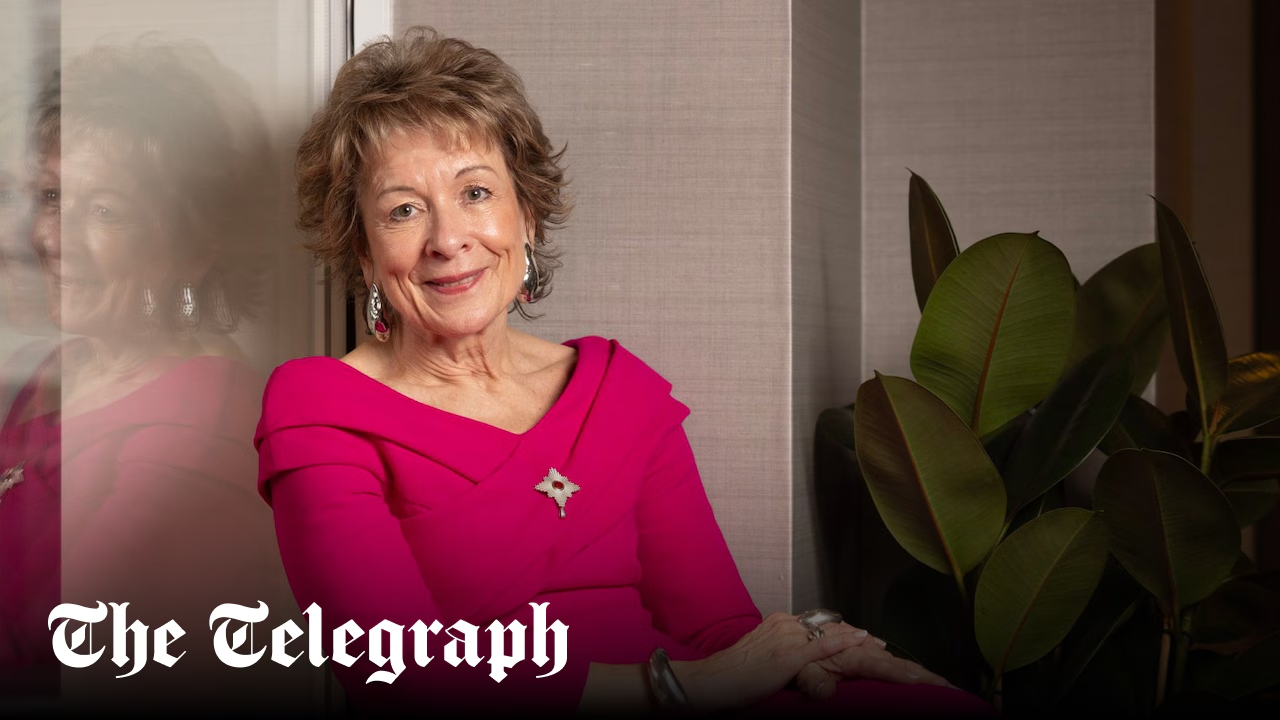
The gynaecology waiting list has fallen during her time in the role – by 30,000 between June 2024 and April 2026. “I was really shocked that there were 600,000 women, just in England, on it, and 85 per cent of them were not going to need any form of invasive procedure, inpatient admission or admission for day surgery – they shouldn’t be on a waiting list, during which time their problem could be getting worse.” She adds: “I’ve been a gynaecologist for over four decades, and I have become increasingly impatient about the fact that so many girls and women are looked after poorly.”
‘Women’s health is not just maternity care’
Regan’s time as women’s health ambassador hasn’t been without its challenges. “Many politicians and policymakers have assumed that women’s health is maternity care,” she says. “Most women aren’t pregnant for more than a couple of years of their lives.”
In her own case, she points out that she was pregnant for just seven months before her 33-year-old twin daughters, Jenny and Clare, arrived prematurely in December 1992 and spent their first month in the special-care baby unit at St Mary’s Hospital, Paddington. It was at the same hospital that she had founded the Recurrent Miscarriage Service, which would go on to become the largest of its kind in the world, earlier that same year.
“If we all focus more on menstrual health, it actually unlocks the whole of a woman’s life course,” she says. “Nothing affects any human more commonly than having 12 periods a year for 40 years of your life – so if they’re all debilitating and they mean you can’t go to school, that’s a massive problem.”
Another area where there is still room for improvement, Regan suggests, is a lack of education surrounding motherhood for those who want it. “You’d be amazed how many girls and women are not in charge of their own fertility and their own destiny in that way – to understand that our ovaries run out,” she says. “I possibly wouldn’t need to be saying to 42-year-old ladies, ‘I’m sorry, but you’re not going to be able to do this now’. They’ll say to me, ‘why didn’t someone tell me this before?’”