
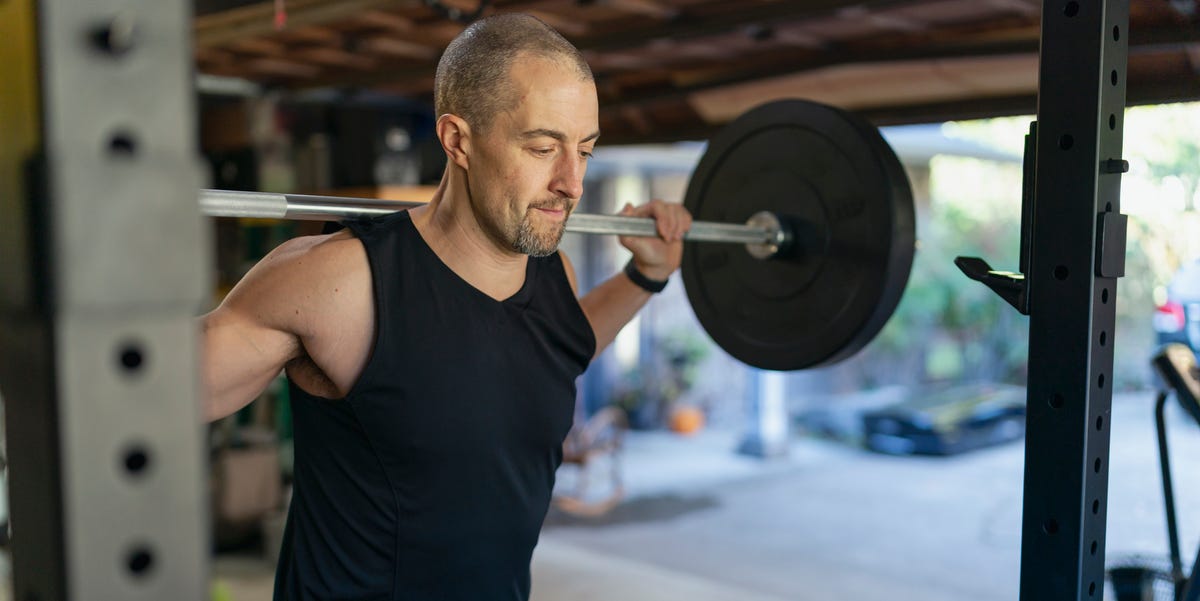
When it comes to building raw, unadulterated strength, few coaches have quite the reputation – or the uncompromising approach – of legendary strength coach Mark Rippetoe.
And few programmes have had quite the impact on the world of barbell training as his ‘Starting Strength’ method.
While fitness social media has become increasingly obsessed with complicated training splits, elaborate exercise variations and increasingly creative ways to reinvent the wheel, Rippetoe’s approach stands out as aggressively simple.
Take one piece of kit: a barbell, plus a handful of big, heavy-hitting compound movements. Perform them three times per week. Add a little weight to the bar each time you train.
Repeat.
Bosh.
No complicated periodisation, no endless accessory exercises and no need to spend half your waking hours in the gym.
Just the squat, shoulder press, bench press, deadlift and power clean, performed consistently and progressively, with the aim of getting a little bit stronger every time you walk through the gym door.
Here’s how to get it done.
What Is Starting Strength?
Developed by strength coach and author Mark Rippetoe, Starting Strength is a barbell-based training programme designed to help novice lifters build strength as quickly and efficiently as their ability to recover allows.
The programme revolves around a handful of compound exercises, performed across three full-body workouts each week, with at least one rest day between sessions.
Rather than targeting individual muscle groups with dozens of different movements, Starting Strength focuses on getting stronger at the big lifts, training large amounts of muscle mass simultaneously.
The secret sauce, however, isn’t necessarily the exercise selection. It’s the progression model.
Where more advanced strength programmes use percentages, training cycles and carefully planned increases in intensity, Starting Strength takes a much more straightforward approach.
Complete your prescribed reps with good technique, recover, then add weight to the bar at your next session.
This is known as linear progression, and it’s particularly effective for beginners, who can often recover and adapt quickly enough to increase their working weights from one workout to the next.
Of course, that doesn’t mean you can keep adding weight indefinitely. Eventually, progress slows, recovery becomes more demanding and a more nuanced approach becomes necessary.
But until that point, Rippetoe’s argument is simple: make the most of those early strength gains while they’re still on the table.

Junior Asiama / 500px
How Does Starting Strength Work?
At its simplest, Starting Strength alternates between two full-body workouts, performed three times per week.
Most of the programme’s main lifts are performed for three sets of five reps, with the deadlift initially receiving just one heavy set of five.
The squat appears in every workout, while the bench press and overhead press alternate. The deadlift is initially performed every session, before power cleans and other pulling variations are introduced as the lifter progresses.
This gives you frequent exposure to the movements you’re trying to improve, allowing you to practise your technique while steadily increasing the amount of weight you’re lifting.
And because you’re training your whole body each session, there’s no need for complicated body-part splits or an extensive menu of isolation exercises.
Just a few big lifts, performed well, with progressively heavier weights.
The Starting Strength Workout Plan
Train three times per week, leaving at least one rest day between sessions.
Alternate Workout A and Workout B each time you train. During your first week, you’ll perform A/B/A. The following week, B/A/B. Then back to A/B/A. Continue alternating in this fashion.
The programme below follows the initial novice phase, before power cleans are introduced.
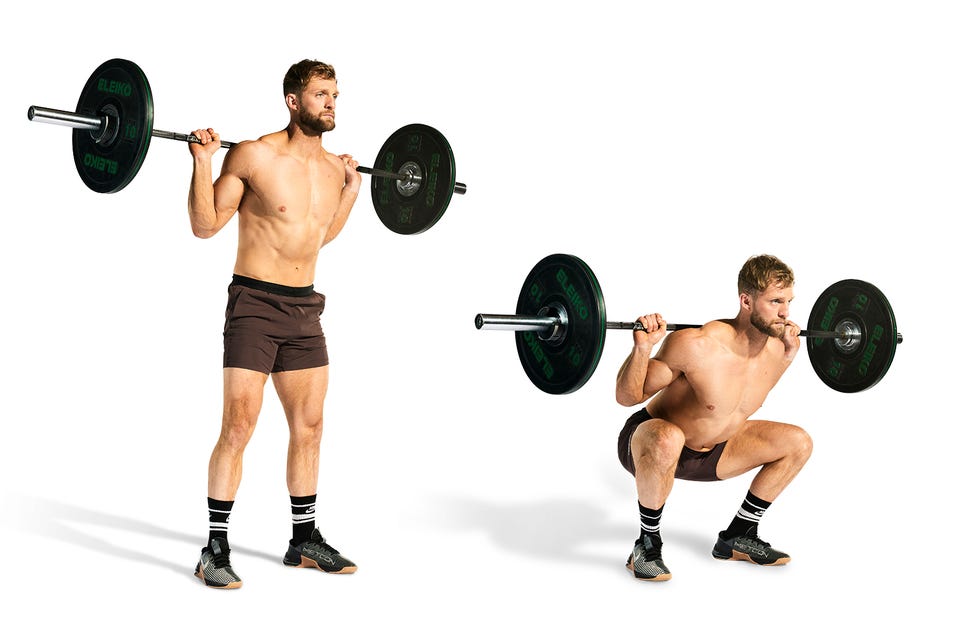 Workout AA. Barbell Back Squat – 3 × 5
After warming up, perform three working sets of five reps. Use a weight that allows you to complete every rep with good technique, but still requires some effort.
B. Barbell Bench Press – 3 × 5
Perform three working sets of five reps, controlling the bar throughout and resting sufficiently between sets to maintain your strength.
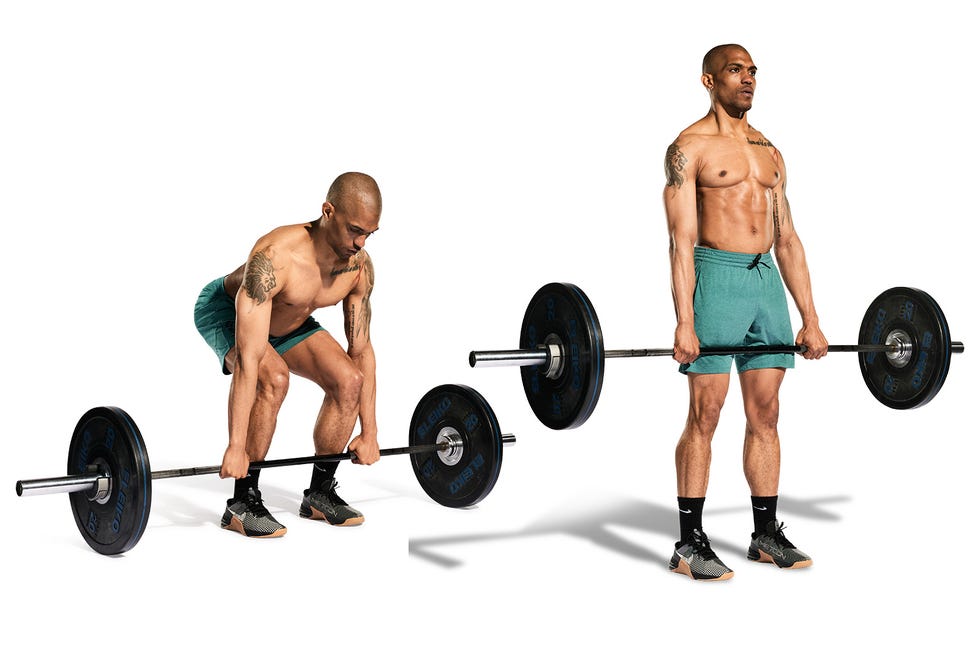
C. Barbell Deadlift – 1 × 5
After several progressively heavier warm-up sets, perform one challenging working set of five reps.
 Workout BA. Barbell Back Squat – 3 × 5
Complete three working sets of five reps, aiming to increase the weight slightly from your previous session.
B. Barbell Overhead Press – 3 × 5
Perform three working sets of five reps, pressing the bar overhead with control and maintaining a stable position throughout.
C. Barbell Deadlift – 1 × 5
Complete your warm-up sets, then perform one heavy working set of five reps.
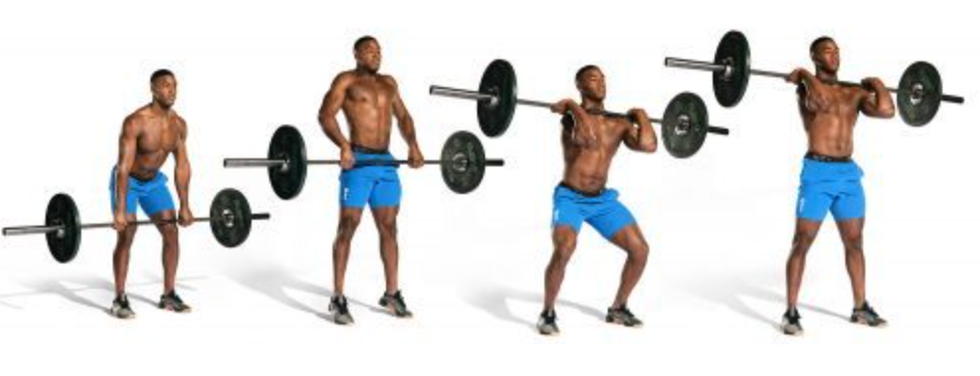 When Do You Add Power Cleans?
Once your deadlift begins to get heavy enough that performing it three times per week becomes difficult to recover from, the programme introduces the power clean.
This replaces the deadlift in alternating workouts, giving you an explosive pulling movement without quite the same loading demands.
At this stage, your workouts typically look like this:
Workout ABack Squat – 3 × 5Bench Press – 3 × 5Deadlift – 1 × 5Workout BBack Squat – 3 × 5Overhead Press – 3 × 5Power Clean – 5 × 3
Continue alternating the two workouts across your three weekly training sessions.
How to Progress with Starting Strength
This is where the magic happens. Except it’s not magic, it’s just straightforward maths.
Unlike programmes that ask you to increase your weights every few weeks, Starting Strength encourages novice lifters to add weight every single session, provided they’re completing their prescribed reps with good technique.
For example, if you squat 60kg for three sets of five on Monday, you might aim for 62.5kg on Wednesday and 65kg on Friday.
Keep that up for a few weeks and those small increases add up very quickly.
Of course, the heavier your lifts become, the smaller those jumps will need to be.
A sensible starting point is to increase your squat and deadlift by around 2.5–5kg per session, while adding approximately 1.25–2.5kg to your bench press and overhead press. The exact increases should depend on your starting strength, technical proficiency and ability to recover.
If you fail to complete your prescribed reps, don’t immediately abandon the programme or start adding more exercises. Repeat the weight, assess your technique and recovery, and make sure you’re not trying to progress faster than your body can adapt.
Repeated failures may call for a reduction in weight before building back up.
The goal isn’t to grind yourself into the ground every session. It’s to accumulate consistent, measurable progress for as long as possible.
Is Starting Strength Good for Building Muscle?
Although Starting Strength is primarily designed to increase strength, that doesn’t mean it won’t help you build muscle along the way.
Far from it.
Squats, presses and deadlifts recruit large amounts of muscle mass, and progressively increasing the weight you can lift provides a powerful stimulus for growth, particularly if you’re relatively new to resistance training.
The relatively low training volume and limited exercise selection mean that lifters whose primary goal is maximising muscle growth may eventually benefit from additional volume and more targeted accessory work.
But for beginners looking to build a solid foundation of strength, muscle and confidence under the bar, there’s a lot to be said for keeping things this simple and rinsing those gains for all they’re worth.
Who Is Starting Strength Best For?
Despite the name, Starting Strength isn’t necessarily just for people who’ve never set foot in a gym.
It’s designed for novice lifters – and in strength-training terms, that describes someone who can still make measurable progress from one workout to the next.
That might be a complete beginner, someone returning after a long break or even a reasonably seasoned gym-goer who’s never followed a structured strength programme.
More advanced lifters, on the other hand, will eventually reach a point where adding weight every session simply isn’t realistic.
At that stage, programmes such as 5/3/1, with their more gradual progression and longer training cycles, may offer a more sustainable approach.
But if you’re still in a position to get stronger every time you train, Starting Strength makes a pretty compelling case for not overcomplicating things.
Three workouts per week. Five big lifts. A little more weight on the bar each time.
All killer, no filler.

With almost 18 years in the health and fitness space as a personal trainer, nutritionist, breath coach and writer, Andrew has spent nearly half of his life exploring how to help people improve their bodies and minds.
As our fitness editor he prides himself on keeping Men’s Health at the forefront of reliable, relatable and credible fitness information, whether that’s through writing and testing thousands of workouts each year, taking deep dives into the science behind muscle building and fat loss or exploring the psychology of performance and recovery.
Whilst constantly updating his knowledge base with seminars and courses, Andrew is a lover of the practical as much as the theory and regularly puts his training to the test tackling everything from Crossfit and strongman competitions, to ultra marathons, to multiple 24 hour workout stints and (extremely unofficial) world record attempts.
You can find Andrew on Instagram at @theandrew.tracey, or simply hold up a sign for ‘free pizza’ and wait for him to appear.