

From supplements to my morning routine, here are my simple tips for staying happy and well as the cold weather descends
Winter is on its way – and we all know that however motivated we might be to stay healthy, it can be really challenging to keep well.
It is a season chock-full of inconvenient hurdles: darker and longer nights, colder and wetter days, demanding work deadlines as the festive season approaches, and less time away, not to mention winter coughs and colds.
All of these factors mean that we have to really strategise how we are going to manage the next few months. And now is the time to do it.
The key is reframing how we approach winter. We can’t simply take our usual seasonal summer portfolio of wellbeing strategies and expect them to be effective.
Instead, we have to work with the season. By accepting that winter is here and adapting our approach and our actions to it, we can succeed in our mission to stay well…
Approach
1. Prepare and plan
Just like preparing for a marathon, or a challenging period of work, it is important in the run-up to winter to put solid plans in place.
First up, find out about the vaccinations that you are eligible for or are recommended by the NHS, such as the flu jab.
Practical preparations might include digging out your warm clothing or looking for ways to get your home winter-ready.
It is also important to prepare mentally for winter to reduce stress: are there any big personal or work trips or events coming up that you need to arrange in advance, or any crunch points in your schedule that you can sort out now?
Emotionally, we need to accept that we cannot stop the approach of winter, but we can control our response to it. Planning things to look forward to is important for our wellbeing. Research shows us that anticipation of an event can give us just as big a boost to our mood as the actual event itself, so get organising.
 Get into a routine (Photo: Maskot/Getty/Maskot)
2. Routine
It is all too easy to let routines that make us feel good slip in winter time – but there is a way to avoid this.
When we do something repeatedly, our brains release dopamine, the reward chemical, creating a “habit loop”.
It takes time to form these habit loops, but when we do, they can act as a fail-safe. When our motivation is low – and let’s face it, winter makes us less motivated – it is these loops that keep us in check.
One of the most important things to get right in winter is our morning routine – it sets us up for the day and helps us feel in control.
Create three essential elements to your morning routine that will help you feel better. That might be deep breathing, which activates your parasympathetic nervous system and calms you; it might be stretching your body and meditating for five minutes to get some clarity; or it might be a cup of tea or listening to music to help lift your mood.
Get going with these routines now and keep them going; they will serve you well all winter.
3. Sleep
Our internal body clock responds to natural light reaching the back of our eyes and sets off a chain of chemical and hormonal reactions in our brains. Limited daylight during winter can have an impact on our ability to sleep because our sleep-wake cycle is affected.
The other potential disruption to our sleep in winter is our use of artificial light and electronic devices. The blue light they emit can trick our brains into thinking it is daytime, which means our sleep hormone, melatonin, is suppressed. It thus takes longer to fall asleep and our internal body clock changes, so we feel tired when we wake up.
Try to reduce your overall use of devices, use night-time mode on screens, remove devices from your bedroom and replace them with a book or an audio podcast, establish a sleep routine and stick to it: it will help your brain to expect sleep.
 Remember your vitamin D (Photo: Thana Prasongsin/Getty/Moment RF/ja)
4. Nutrition
Vitamin D helps to control the levels of calcium and phosphate in our bodies, keeping our muscles, bones and teeth healthy.
From late March or early April to the end of September, most of us will be able to make all of the vitamin D that we need from natural sunlight on our skin and from a balanced diet. However, during autumn and winter, it may be more difficult to get enough vitamin D from our diet and as there is less natural sunlight, so the NHS recommends considering taking a daily vitamin D supplement of 10 micrograms.
5. Get active
Exercise is a panacea, especially during winter. Moving our bodies helps our physical health, but it also helps our minds.
When we get active, we get a boost of endorphins, dopamine and serotonin; these lift our mood, relieve pain, lower stress and can reduce inflammation.
It can be practically harder to exercise in winter, especially if you normally do this outside. Can you go to the local leisure centre or a gym class instead? Can you run or cycle in the daytime? Can you exercise indoors or find another way of being active that feels right for you?
Winter ideas for getting active might be yoga, dancing indoors, following online workout videos or creating a mini circuit of body weight exercises.
Exercising with someone else or in a group has also been proven to encourage us to maintain the habit and motivation. Make it a daily activity in some shape or form.
Nothing is more essential for getting through winter physically and mentally than getting active.
Actions
1. Socialise
It is all too easy to say no to meeting a friend when it is dark and cold and raining outside, and sometimes we need to do just that and have a quiet night in. But if we do this too often and too many times, we become isolated, lonely and unable to decompress after a hard day at work. Our mood can drop and we can feel low.
Research tells us that when we have meaningful relationships, our brains and bodies release a host of chemicals – serotonin, dopamine, oxytocin – that boost our mood and the bond we have with others. We also experience a lowering of cortisol, our stress hormone.
Chronic loneliness has been shown to have the same impact on our physical health as smoking 10 to 15 cigarettes a day.
Set yourself a number of times you will socialise per month and stick to it. Get out your diary and plan some nights out and fun activities to look forward to.
Make sure you see or interact in some way socially every single day – on a walk, via a video call, a gym class, at work or just when you buy some groceries at the local shop.
2. Home comforts
During winter, we tend to spend more time at home, so it is worth thinking about how you can make it more nurturing for your wellbeing.
Whether you have a house, a flat, a room or a small space, there are things you can do to make yourself feel comforted. Can you have more ambient lighting? Can you buy a fleecy blanket in a calming colour? Can you buy a small pot of paint and decorate your walls or space so it feels warmer and cosier?
Bring more of whatever makes you feel relaxed into your space – it can impact how you feel.
3. Active relaxation
We tend to think of relaxation in winter as just sitting on the sofa and streaming a box set or film; and it absolutely can be. But this is more passive relaxation – have you ever tried active relaxation? By this, I mean getting involved in activities that require physical or mental focus.
Active relaxation has been shown to reduce stress and anxiety by shifting attention to the present moment, improving sleep because we are less stressed, and building confidence and self-esteem, because we develop and learn new skills or accomplish something.
During the winter months, why not try baking or cooking from scratch, painting or crafting, knitting or crocheting, gaming or designing, or gardening?
Not only do you take your mind away from itself while you are doing these activities, you also create mental space thinking about what you might create.
With Christmas coming up, you could also save some money and make someone very happy by crafting them a home-made gift.
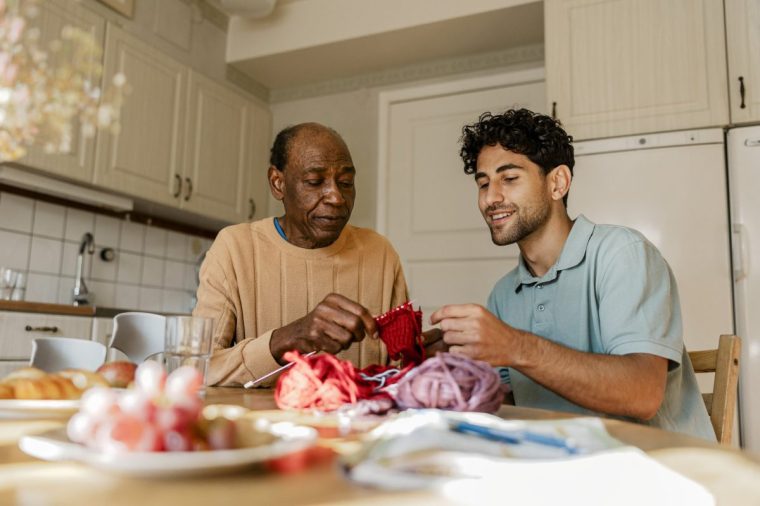 Take up a fun hobby (Photo: Maskot/Getty/Maskot)
4. Self-care
Winter provides us with an amazing opportunity to spend more time on self-care. At other times of the year, we are out and about more and it can be harder to dedicate time to care for ourselves.
The very act of self-care gives our emotional system the important message that we matter, which in itself boosts our mental health.
This winter, why not be grateful for the opportunity to wash your hair slowly and carefully, to cut your toenails or paint them nicely, to moisturise regularly, and to take time after a shower or bath or stretch your muscles. Progressive muscular relaxation has been shown to help reduce our stress levels.
For your mind, try journalling, so you can get all of your thoughts out of your head, or a gratitude notebook, which has been shown to increase happiness, optimism, and life satisfaction.
Our bodies and minds are not machines – winter allows us to slow things down and look after them.
5. Using stories
Life can be hard, and winter can make any normal challenging life event feel even harder, because our resilience and ability to bounce back is lower.
One of the things we can do to help process stressful things is to express our feelings by using stories, which help us interpret and understand life through their contexts, characters and journey arcs.
Read a book, listen to a music album, watch a film, or listen to a podcast or audiobook. When we engage with these activities, we are taken into a different world and away from what we are feeling, yet the story we engage with allows us, in parallel, to recognise certain themes, challenges and feelings, and process them in our own lives.