
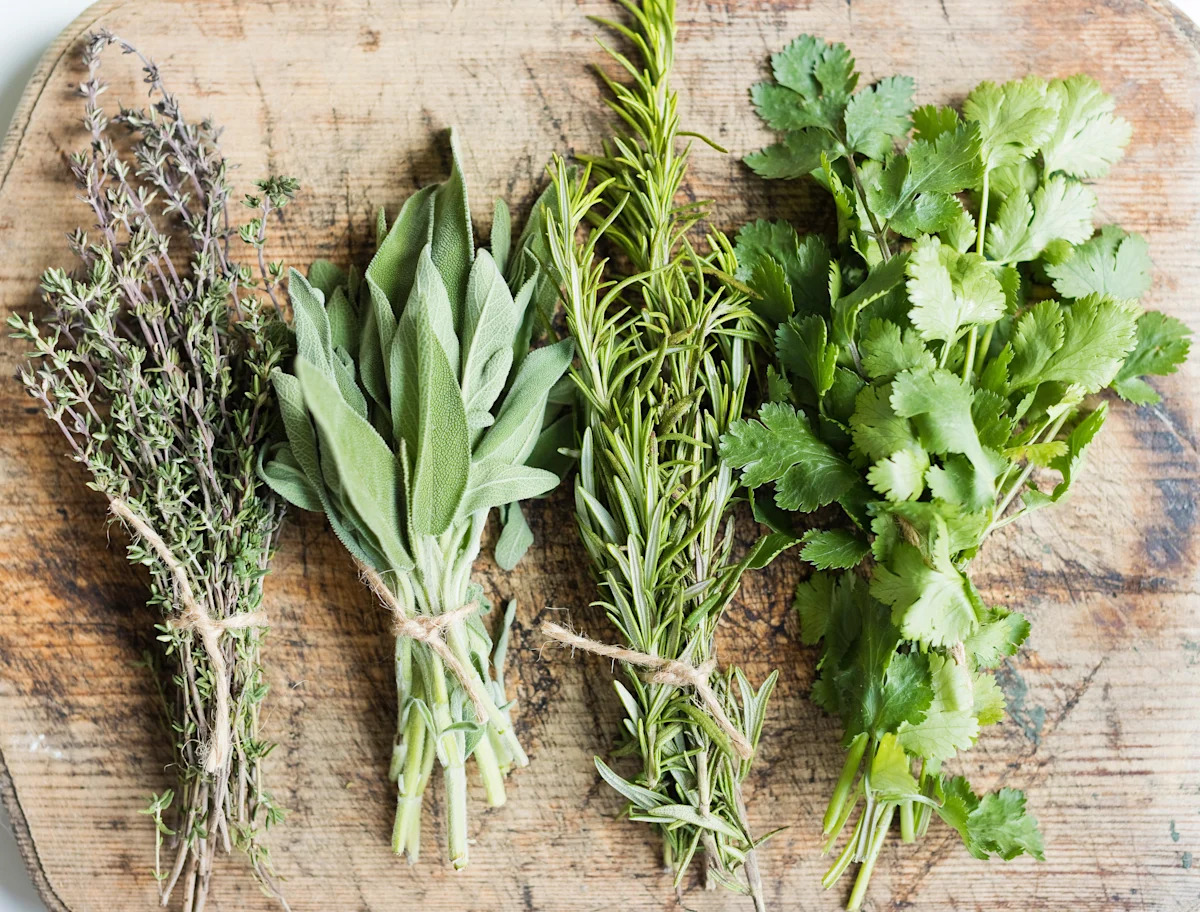
While we often use rosemary in our cooking at this time of year, adding it to roast potatoes and meats, the shrub is actually evergreen.
Not only is it available all year round and readily accessible in grocery stores and supermarkets – plus hardy and easy to grow in gardens – it’s also versatile and easy to cook with.
In addition to tasting great, it smells amazing and it’s the scent, in particular, that has been shown to have some incredible potential health benefits.
5 potential health benefits of rosemary
Rosemary is a fresh and fragrant herb that has a range of health benefits. (Getty Images)
1. May boost memory
Native to the Mediterranean region, rosemary is a potent herb that has been linked to improved memory and cognitive function.
A 2017 study found that individuals over 65 who spent time in a rosemary-scented room were more alert than those who hadn’t.
They also exhibited enhanced prospective memory – the ability to remember to do something at a given time, such as take medication – with test scores 15% higher than those who had been in a room with no aroma.
2. Could help slow down the progression of Alzheimer’s
Some studies on animals suggest that the herb could help reduce some of the symptoms of Alzheimer’s, as it contains both carnosic and rosemarinic acid compounds. The former is known to promote human brain cells to produce a nerve growth factor.
A 2016 study – carried out on mice – found that over a 90-day period, the memory and learning of the animals had improved.
More recently, a paper published in 2025 concluded that diAcCA (di-acetylated carnosic acid) – a new, stable version of carnosic acid – showed promise as a potential therapeutic for Alzheimer’s disease.
2. Could enhance mood and reduce anxiety
“There are studies that show improved mood and perceived mental fatigue,” says Rob Hobson, nutritionist and author of Unprocess Your Life. “But, it’s typically to do with the scent of rosemary rather than consuming it.”
Indeed, the herb has traditionally been used by students and scholars to sharpen their concentration. Modern studies have explored how the scent of rosemary reduces anxiety and improves sleep quality, in turn lowering stress and allowing for better focus.
3. Has anti-inflammatory properties
In traditional medicine, rosemary has been used to treat rheumatic pain, as well as stomach cramps and other afflictions.
A 2017 study carried out on rats saw a marked improvement on inflammation markers.
Meanwhile, a study looking at the impact rosemary capsules had on women with menstrual cramps and bleeding found some improvement in their flow, as well as the intensity of their pain.
There has also been some evidence to suggest that consuming rosemary may reduce the severity of rheumatoid arthritis and improve certain clinical symptoms.
4. Contains antioxidants
Antioxidants help shield our body from free radical damage, and rosemary has been found to have antioxidant properties.
5. It’s got antimicrobial properties
The herb also possesses antimicrobial properties, which can help protect against microbes and germs, including bacteria, viruses, and fungi.
“For this reason, it is often used as a preservative in foods,” Hobson adds.
How to incorporate more rosemary into your diet
Whether you use it to season steak or you add chopped rosemary to your roast potatoes – it’s very versatile. (Getty Images)
As with everything, Hobson warns that consuming more rosemary in isolation isn’t a cure-all.
“It’s not going to do magic in isolation,” he tells Yahoo UK. “But, as part of a diet, like an anti-inflammatory diet, rosemary is probably going to be beneficial.”
Additionally, as mentioned above, some of rosemary’s benefits are associated with its aroma, rather than ingesting it.
That said, there are various ways to incorporate more rosemary into your diet, beyond simply adding it to roast potatoes.
“Obviously, it goes nicely with potatoes, lamb and beef, but you can stir it into other dishes, such as a tomato sauce-based meal. You can also add it to beans, lentils or spag bol even,” the expert says.
“Then there’s oil infused with rosemary. You can serve it as a dip for breads and cook with it,” he continues.
“I also like to add it to water, instead of using lemon and cucumber.”
Read more about health and nutrition: