
She said she was aware of people waiting up to two years for a diagnosis, adding that up to 40% will die without knowing they have it.
Prof Andrews, who worked for the NHS most of her life, has teamed up with Dr Sridhar Vaitheeswaran, a consultant old age psychiatrist who previously worked for NHS Grampian.
The package includes blood tests, scans and pre and post-diagnostic support and she said the team could provide a diagnosis within weeks.
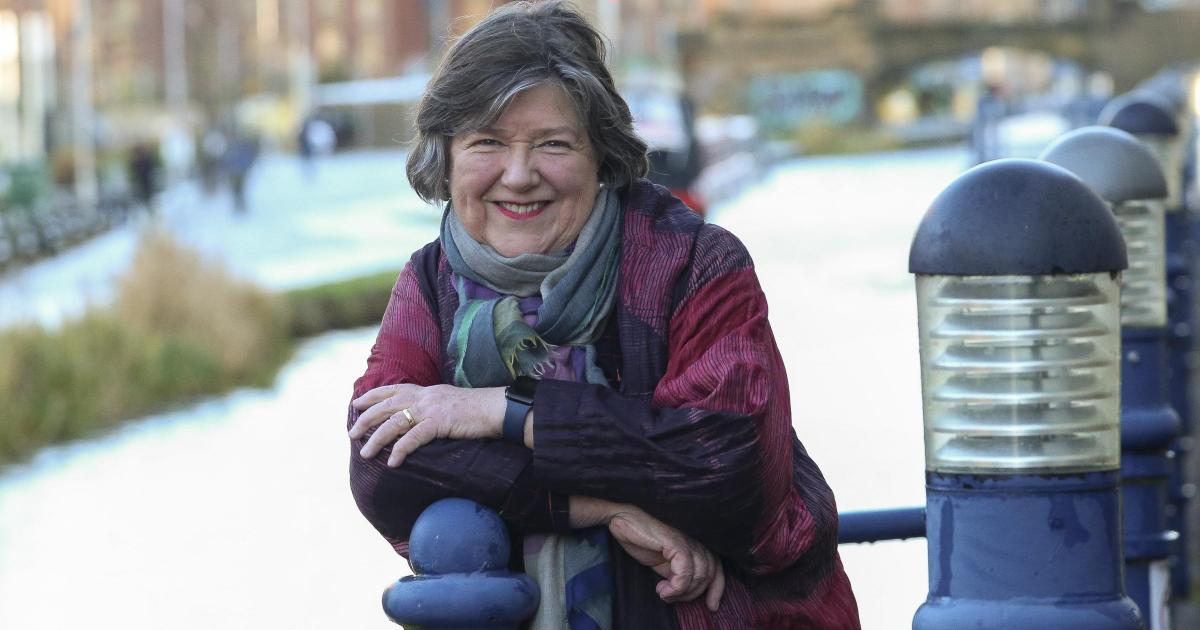
Prof June Andrews. Pic Gordon Terris /Herald & Times (Image: GT)
She said: “My colleague Dr Sridhar originally did video conferencing diagnosis in Shetland, when he was an NHS consultant in Aberdeen, because the journey to and from the clinic from the islands was brutal.
“He could go to Shetland but the number of patients was so small that he would be taking a couple of days out to see one person.
“What they did was they set up a system where the patients would be worked up in advance by the GP and healthcare staff in Shetland but all the scan and blood results would be sent to Dr Sridhar and he would give the dementia diagnosis by video conference.
“And then when that was over the local team would pick up the person for the post-diagnostic phase.
“The speed [of diagnosis] isn’t held up by our availability it’s about making sure we are doing it at a pace that is okay with the person.
“Because we are doing the scans and blood privately, we can do them straight away.”
She said the starting price would be £2,500 for the complete package.
“People challenge me all the time on the equity issue,” said Prof Andrews, who headed up the Royal College of Nursing the 1990s and was made an OBE in 2016.
” It sounds like a lot of money [but] my dad who died last summer, was paying £1600 a week for his care home.
“So in terms of equity it’s not available to people who don’t have the money but for me the sort of people who might be interested are people who say to themselves ‘In a few years we might have to start looking after dad. If I have spent £2,500 getting a diagnosis early, even if I only delay that care home by a week, I’ll have got my money back.'”
She acknowledged that some areas of Scotland fared better for treatment times and said she would always encourage people to ask their GP how long it’s likely to take for a diagnosis.
“If you live in an area where it’s going to take six weeks then great,” said Prof Andrews.
“So, this venture will charge people for diagnosis – some neurologists will already do this privately – but the difference with us is that they’ll get really good wraparound support.
Prof June Andrews. STY CW Pic Gordon Terris /Herald & Times 10/12/25 (Image: GT)
“And if they get diagnosed early there are so many benefits to be had that they will more or less get their money back and have extra years to plan and have fun.”
Prof Andrews said she had intended to leave nursing at 70 but decided to have “one more spin of the wheel’ to launch the service, having spent much of her life working with older people.
She said: “It can take ages to realise that somebody has got dementia.
“By the time you have got the GP and everyone else on the same page you’ve already passed quite a lot of time.
“When the GP says he’s going to refer someone to a memory clinic it can be as much as six months before the nurse comes to see you.”
She said there were significant financial benefits for getting a timely diagnosis of dementia.
“If you take an old man living in a bungalow, if he gets a dementia diagnosis he doesn’t have to pay council tax anymore,” said Prof Andrews.
“That’s a big financial benefit and that’s not a means-tested one.
“There are lots of other financial benefits you can have.
“The other thing is the medication in so far as there is works best in the early stages so if it takes ages to be diagnosed you’ve missed that window of opportunity.
She added: “In my view the diagnosis process for dementia is slow because when we first had medication for dementia, it was very expensive and the way of rationing it was that only consultants of old age in the NHS could give this medicine.
“So you had to go all the way up through the steps to get to the people who could prescribe.
“Whereas now the medicine is actually relatively inexpensive so there is no reason for having a complicated process to get there. However the complicated process still exists.
Patients can wait up to two years for a diagnosis (Image: Martini archive)
“This thing we are setting up can work for anyone living anywhere in the UK because you don’t absolutely have to have a face-to-face consultation for a diagnosis.”
Patients who are diagnosed with dementia are entitled to one year of post-diagnostic support on the NHS, however Prof Andrews said many don’t get it.
“Some people have a fabulous journey but for many people it doesn’t happen,” she said.
“The last freedom of information inquiry found that many health boards don’t even have the stats for who gets it.
“For many people [on the NHS] you are diagnosed and that’s the end of the story.
“What we are hoping is that we will be able to continue to have a relationship with these people but will as much as possible hand them back into the system.”