

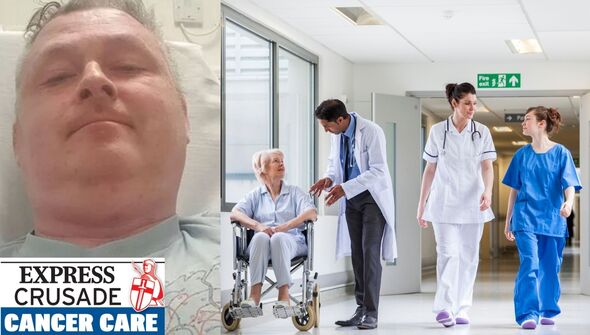
Robert Fisk (left) couldn’t believe what he heard (Image: Getty)
Conversations with the nursing staff while I’m having chemotherapy tend to be very similar to ones you’d have with a hairdresser. We talk about what they got for Christmas (soap and gift vouchers), what they are having for dinner (an M&S ready meal if it’s the third Friday of the month), and what they are doing at the weekend (taking their son to football training and then a birthday party). And even when the conversation steers away from the kind of things you would tell a barber while they are snipping your barnet, chemo side effects like diarrhoea and vomiting, the mental health side of the treatment and the disease, is never touched upon.
So while I was sitting in the day unit this week, wondering just how sick I was going to feel after my treatment, I was astounded to hear a nurse ask a question I’d never heard before. She was doing the “welcome to cancer land” chat to someone about to start their first treatment, and, before she advised them their throat may feel like it’s closing up when they have oxaliplatin, she asked if they wanted to be referred to psychological support.
Read more: ‘Cancer experts are missing one activity that can bring boost to patients’
Read more: ‘We need to admit this about NHS – things can’t continue as they are’
Yes, you read that correctly. Someone in my world-leading cancer hospital actually picked up on the fact that a patient might not be feeling emotionally fantastic and offered the option of support.
I’m still in shock, but I shouldn’t be. It should be the kind of question all cancer patients are asked, but I think it shouldn’t be down to the nurses in the chemotherapy day unit to ask it.
I am gradually getting used to the fact that when I’m having chemotherapy, the positioning of the port (the device which is used to put the medicines into my body) means I’m going to have to have a bit of my chest on show to anyone who walks past.
I am accustomed to the fact that when a nurse asks me if my diarrhoea is the consistency of porridge, what I say will be overheard by everyone sitting within earshot.
But I think that everyone should be allowed proper privacy when discussing mental health issues, and that means the questions should be asked by a member of their medical team while in a consultation room, and not in a ward where the soundtrack is beeping machines and Smooth Radio.
Doing it this way means the patient is freer to open up and express exactly how they are feeling. Additionally, they can work with their medical team to determine the level of support they require.
It is good that the nurse asked if the patient wanted to be referred to psychological support, but what if that level of help isn’t required?
This is why, as part of the Daily Express’s Cancer Care campaign, we are calling for all cancer patients to undergo a holistic needs assessment in the days between their diagnosis and the start of treatment.
Holistic needs assessment sounds a bit of a mouthful, but simply put, it is just an opportunity for a cancer patient to talk through their concerns with a member of their medical team, and this could be about all manner of things, from being lonely, how to get to appointments, hair loss, juggling childcare, and managing finances.
If psychological support is needed, then a patient can be referred. However, in many cases, patients may simply need help from a benefits adviser or a buddy who is going through the same treatment.
This isn’t the big ask some hospitals may think it is, and I hope they realise this and pledge to put in place what we want to see to support their patients.